
Politics
Omo-Agege, Stakeholders Seek End To Vote -Trading

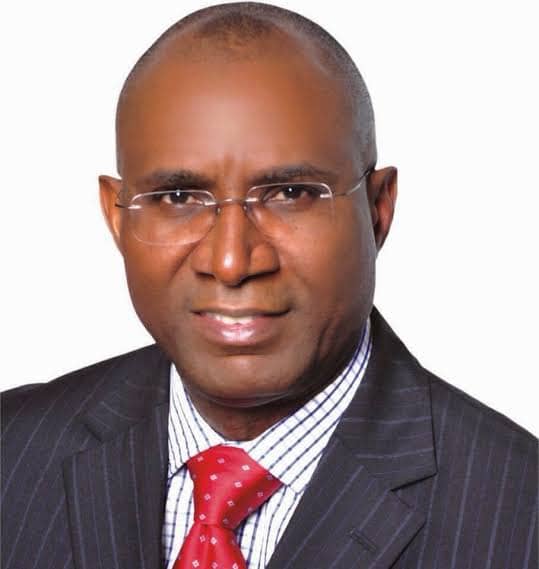
The Deputy President of the Senate, Ovie Omo-Agege; Chairman of the Independent National Electoral Commission (INEC), Prof. Mahmood Yakubu; Chairman of the Independent Corrupt Practices and other related offences Commission (ICPC), Bolaji Owasanoye and other stakeholders in Nigeria’s electoral process have identified weak sanctions and poverty as factors derailing the fight against vote buying and selling in the country.
They raised the concern at a policy dialogue on ‘Addressing Vote Trading in Nigeria from Global Comparative Experiences’ organised by The Electoral Forum in collaboration with the Open Society Initiative for West Africa (OSIWA) and MacArthur Foundation.
According to Omo-Agege, vote trading is an unusual democratic experience, which serves as a clog in the wheel of free choice and democracy.
The DSP, who was represented by his Chief of Staff, Dr Otive Igbuzor, called for stronger punitive sanctions against perpetrators as well as sustained information campaigns, community action and locally enforceable public commitments to collectively fight the menace.
“To stem the ugly behaviour, everyone should be involved, both voters and contestants. It needs sustained information campaigns, community action and locally enforceable public commitments to collectively shun vote-buying.
“Punitive sanctions strategies are more likely to be successful than moralistic pleas. Political actors who buy votes should face stringent consequences.
“Political financing reform, and ensuring election security and ballot secrecy, are equally vital in addressing vote-selling. Most of this was taken care of in the new Electoral Act 2022 passed by National Assembly and assented to by the president,” he said.
In the same vein, Prof. Yakubu not only said the speedy passage of the National Electoral Offences Commission and Tribunal Bill by the National Assembly will checkmate vote buying, but called for sustainable measures to tackle poverty as well as increased voter education and sensitisation.
“As soon as people begin to have faith in the electoral process, they will begin to see the power that they have over the people who are running for offices.
And I believe that very soon, the story will change and the power will return to the people,” the INEC boss who was represented by Mrs May Agbamuche-Mbu said.
On his part, chairman of the Independent Corrupt Practices and other related offences Commission (ICPC), Bolaji Owasanoye, warned that vote buying has a tendency of frustrating and undermining the war against corruption in Nigeria.
Earlier, Chairman of The Electoral Forum, Prof. Bayo Olukoshi said there appears to be a global consensus that seeking to eliminate the use of money in politics is almost impossible and waste of time because politicians would find ways to bring the use of money into the political equation.
He observed that democracies around the world have moved away from elimination to regulation of the use of money in politics, in a way to ensuring that the use of money does not corrupt integrity of the electoral process.
Olukoshi said: “So, money in politics is a global challenge, especially criminal money which unaccounted and very difficult to trace. However, in our context, the debate around the issue of money in politics is again not an entirely new debate for those who are old enough to know the politics of the 2nd Republic where we saw increasingly the significant role of money as opposed to issues and ideas entering the Nigerian political space.”
Speaking on the topic: ‘Sociopolitical Paradox of Vote Trading in Nigeria: Focus on the Political Party Primaries and the recent Ekiti and Osun Governorship Elections’ the immediate past Resident Electoral Commissioner in Rivers State, Obo Effanga said the malaise of vote trading requires the involvement of a multiplicity of stakeholders, agencies, and groups to address it.
He traced the root of the menace to the economic imbalance and inequality in Nigeria, which if fixed, according to him, would reduce the number of poor people in the country, to a large extent.
Effanga alleged that vote trading is also aided and abetted by officials at the polling unit, adding that this could happen either by failure to ensure adequate arrangement to guarantee secrecy of the vote or failure to take steps to prevent those who try to breach the rules.



The Independent National Electoral Commission (INEC) has extended the deadline for political parties to submit the list of candidates for the 2027 governorship and state Houses of Assembly elections from Saturday, August 8, to Tuesday, August 11, 2026.
The commission announced the extension in a statement issued on Saturday and signed by the National Commissioner and Chairman of its Information and Voter Education Committee, Mohammed Haruna.
According to INEC, the decision followed appeals by political parties for additional time to complete the submission process through the dedicated online portal.
“The submission window, which according to the revised Timetable and Schedule of Activities for the General Election was originally scheduled to close on Saturday, 8th August, 2026, has been extended to Tuesday, 11th August, 2026,” the commission said.
In a a related development, INEC announced the suspension of PVC collection in Osun State ahead of the August 15 governorship election.
The commission said voters who applied for replacement of lost, damaged or defaced Permanent Voter Cards would have until midnight on Sunday, August 9, to print downloadable copies of their cards.
The electoral body explained that the deadline was necessary to enable it compile data on downloaded PVCs and produce final statistics on the total number of cards collected ahead of the election.
INEC said PVC collection in Osun commenced at the Registration Area level from July 22 to 28, 2026, but was extended to July 31 following complaints about large crowds and difficulties experienced by voters at collection centres.
The exercise subsequently moved to the local government level and ran from August 1 to 7.
The commission also disclosed that replacement downloadable PVCs had been made available to voters in Odo-Otin and Ife Central Local Government Areas following the theft of cards during attacks on the two collection centres.
It stressed that the stolen cards could not be used to vote.
INEC reassured Osun residents of its preparedness for the August 15 governorship election.
“The commission reiterates that the stolen cards cannot be used to vote.
“INEC reassures the people of Osun State of its readiness to conduct a free, fair, credible and inclusive governorship election on 15th August, 2026,” the statement said.
The commission said the deadline, initially set for Saturday, 8 August, has been extended to Tuesday, 11 August 2026, following appeals from political parties for more time.
INEC also announced that the window for voters who applied to replace lost, damaged or defaced PVCs to download their replacement cards will close at midnight on Sunday, 9 August.
The move is to enable the commission compile final PVC collection figures ahead of the 15 August Osun governorship election.
INEC said replacement downloadable PVCs have also been provided to affected voters in Odo-Otin and Ife Central Local Government Areas after hoodlums carted away cards from two collection centres, stressing that the stolen cards cannot be used to vote.
The commission reaffirmed its readiness to conduct a free, fair, credible and inclusive election in Osun State.
Gov. Kefas made the remarks over the weekend at the Federal Medical Centre (FMC), Jalingo, during the flag-off of the second phase of the Renewed Hope Medical Outreach in Taraba State, organised as part of activities marking Prof. Yilwatda’s 58th birthday.
The governor commended Prof. Yilwatda for choosing to mark his birthday by providing medical care to people in need.
“What Professor Nentawe did is a powerful demonstration of what leadership should be,” Gov. Kefas said.
He assured that his administration would continue to support initiatives that complement government efforts to improve healthcare delivery and the wellbeing of residents.
Speaking at the event, Prof. Yilwatda called on Nigerian leaders to embrace the culture of giving and use their positions to touch the lives of the less privileged.
He said his decision to celebrate his 58th birthday in Taraba State was deliberate and informed by the needs of underserved communities, particularly people who face difficulties accessing healthcare because of distance and financial constraints.
According to him, the intervention followed a needs assessment and was extended across the three senatorial districts of the state.
He said the exercise commenced on August 3 at Takum General Hospital and covered the Federal University Teaching Hospital, Wukari; First Referral Hospital, Sunkani, Ardo-Kola Local Government Area; General Hospital, Bali; General Hospital, Gembu; and FMC Jalingo.
Prof. Yilwatda said the intervention provided medical services to thousands of beneficiaries, including people who required surgical procedures.
He said sustainable national development could only be achieved when strong institutions placed Nigerians at the centre of development.
“Leadership is about service,” he said, urging political and public leaders to make giving back to society an important part of their responsibilities.
He reaffirmed his commitment to serving Nigeria and its people, saying his personal vision was to make every day of his life useful to humanity.
“Every day that I live, the vision is: let it be useful to humanity,” he said.
The Taraba State Commissioner for Health, Dr. Bordiya Buma, commended the initiative, saying it was consistent with the Renewed Hope agenda and efforts to strengthen healthcare delivery in the state.
Dr Buma said the second phase followed the successful completion of the first phase, which was conducted simultaneously in six local government areas, with two LGAs selected from each of the three senatorial districts.
According to him, more than 10,000 patients were attended to during the first phase, including people with medical and surgical conditions.
He disclosed that 327 general surgeries, 71 eye surgeries and 575 dental procedures were carried out during the exercise.
The commissioner expressed appreciation to President Bola Tinubu for the Renewed Hope Medical Outreach and thanked Prof. Yilwatda for supporting the initiative and choosing Taraba State as a beneficiary.
The Minister of Health and Social Welfare, Prof. Muhammad Ali Pate, also commended Prof. Yilwatda for choosing Taraba State to mark his 58th birthday through a medical outreach.
Prof. Pate said making healthcare the centrepiece of the birthday celebration was significant because health affects everyone.
-

 News2 days ago
RSG Targets Nine Million Residents in Mosquito Net Distribution Campaign
-

 Oil & Energy2 days ago
Aiyedatiwa Signs New Electricity Bill
-

 Oil & Energy2 days ago
NLNG Commissions Research And Innovation Centre In RSU
-

 Maritime2 days ago
Marine Minister Commends President Tinubu On NPERA Bill Assent
-

 News2 days ago
KenPoly Holds Eight Convocations, August 29
-

 News2 days ago
RSG Begins Another Phase of Projects Commissioning Today
-

 News2 days ago
RMAFC Completes Revenue Sharing Review, Proposes New Pay
-

 Maritime2 days ago
NAGAFF Petitions IGP Over Alleged Maritime Police Harassment