
Opinion
‘It’s Our Turn To Eat’

A British author, an investigative journalist, Ms Michela Wrong, wrote a book with the above title, whose theme is corruption in Africa and the strategies to curb it, with Kenya as a case study. According to her, Africa serves as a contradiction of development and good governance, for the Western nations. In presenting her book to the Nigerian audience at Jazzhole in Lagos, some years ago, Ms Wrong was right to trace the root of Africa’s woes to Western Europe. The quest for foreign lands, slave trade, domination, exploitation, fragmentation of the continent for economic gains, and then colonial rule, contributed to the woes of the African continent. Thus Europe underdeveloped Africa!
A divide-and-rule administrative strategy adopted by colonial invaders sowed the seed of internal wrangles and disunity among the people. Thus to say: It’s our turn to eat”, is an expression of the predatory and opportunistic foundation put in place by colonial powers, which also accounts for fierce struggles for power. To hold power is to control the political economy and provision of opportunity for the section of the country holding such power. This in turn leads to fierce struggles for power, giving rise to widespread corrupt practices.
Root of Africa’s woes, according to the British author, Ms Wrong, cannot be solely attributed to colonial rule and Western economic plots or greed. In her illustration, while Africa was the “Heart of Darkness”, a whiteman, Mr. Kurtz, was a barbarian leading a bunch of natives in the jungle. Then came independence, with a black Kurtze presiding over booties derived from oil and gas resources. The transformation of a white barbarian Kurtz, into a black predatory or loot-sharing Kurtz, is an idiom which demands looking inwards for an answer.
Africa should be mature enough by now, to begin to look inwards for the sources of its woes, even when the West remains complicit and the biggest beneficiary of corruption in the continent. Sleaze funds from corrupt practices are usually stashed away in Europe. The West may be hypocritical, but African political leaders are no less culpable in the woes of the continent. Corruption is not all about money, but it includes the entrenchment of tribal, ethnic or religious cleavages, whereby politics becomes a ready instrument for such manipulations. Ms Wrong used her studies on Kenya to say that anti-corruption crusades have ethnic colouration and often sabotaged by those who set them up. A trap for opponents! A charade!
An African Union (AU) Summit in Adis Ababa in January 2009, brought to light some of the causes of the continent’s woes. President Muammar Ghadaffi of Libya was not only crowned as the new A.U. Chairman, but also as King emeritus in Africa, yet he rose to power by dismantling traditional institutions in his country. He went on to propose the formation of a United States of Africa, which some countries approved to come into being immediately, while the Monrovia group opposed it. Thus African nations became divided into a Casablanca group and a Monrovia group, with a suspicion that Ghadaffi had some hidden agenda of Arabianisation and Islamisation of Africa. Enmity grew for Ghadaffi and soon, the man died, dusty!
That Africa is the milk cow of industrialised nations came to light at the Global Warming Conference in Copenhagen where a bait was thrown to African, Caribbean and Pacific countries. The idea was to make the ACP countries to bear the brunts of saving the industrialised nations from the consequences of damage to Ozone layer, brought about by industrial wastes and emissions. To halt the depletion of the Ozone layer, forests and trees of the Third World countries must not be touched.
Surely industrialisation and over urbanisation carry some price, which includes the poisoning of the atmosphere, of which global warming is a result. Those who knew of the politics of the Copenhagen Conference had asked why Africa must always transfer resources to the industrialised nations! From the transfer of human resources in the form of slaves, to the transfer of cheap raw materials and financial resources to pay debts, Africa is always the milk cow to be exploited. Why? The answer lies in making sure that such exploited nations do not produce able and radical leaders and strong institutions that can challenge the powerful nations.
Africa must not only keep and remain in existing vast forests to save industrialised nations from global warming, but corruption and weak institutions must continue if the old exploitation pattern must continue. If there be a truly representative democracy devoid of ethnic and religious cleavages, if ethnic diversity and suspicion would end, then the possibility of continued exploitation would soon end also. Those who knew what Chief M. K. O. Abiola stood for would give him honour as an advocate of a global conference to discuss the many wrongs done to Africa, from slavery to financial resources transfer. Like Ghadaffi, he too died!
Currently in Nigeria, banditry, terrorism, insecurity and instability are among the challenges compounding an existing plight of poverty, hunger, ignorance, etc. It is obvious that external influences play some vital roles in the sad state of the nation, neither is any visible action taken about sources alleged to be sponsors and financiers of instability in the country. Apart from external forces alleged to be exploiting and impoverishing Nigeria, there are, internal forces also playing such roles, using ethnic, religious and ideological cleavages for the purpose. IPOB is the bad guy! Diversion?
Writing in The Guardian newspaper, Thursday, August 2, 2007, Edwin Madunagu asserted that “Imperialism itself is terrorism”. Broad objectives of terrorism as an unconventional warfare, include forcing political change, forcing people or a government to agree to some demands to avoid future harms, destabilising an existing government, etc. More specifically, terrorism is an expression of grievances, drawing attention to unjust situations, a means of taking some revenge, settling old grouse and getting even, etc.
Acts of terrorism which we can remember easily include what happened in Jos in September 2001, with about 700 people killed, thousands injured and houses burnt. September 11, 2001, there were attacks on New York and Washington; December 2001 Indian Parliament attack; March 27, 2002, Passover massacre in Israel; March 11, 2004 attacks in Madrid, Spain; July 7, 2005 bombings in London; July 11, 2006 Mumbai train bombings, etc. Since the “Chibok girls” incident in Nigeria, acts of banditry, kidnapping and terrorism have been regular experiences. What are the motives of such violent acts?
Today the real motives of attacks on Ukraine by Russia are not easy to figure out completely. Ms Michela Wrong’s book: It’s Our Turn To Eat, is a reminder to humanity that those who would not allow the good things of life to go round, invite the wrath of those disenfranchised and excluded. Politics of “stomach infrastructure”, expressed in “its-our-turn-to eat”, is a recipe for social instability, whereby injustice and greed force disenfranchised groups to resort to acts of violence.
By: Bright Amirize
Dr Amirize is a retired lecturer from the Rivers State University, Port Harcourt.



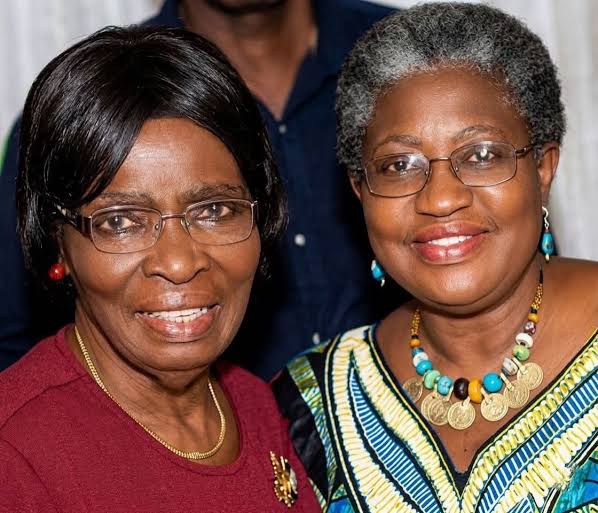
Quote “Professor Kamene Okonjo
Some women leave behind more t
Yet, to remember Professor Kam
Professor Okonjo was the belov
one of the most dramatic chapt
On December 14, 2012, the then
She leaves behind children, gr
Professor Kamene Okonjo deserv
By: Sylvia ThankGod-Amadi
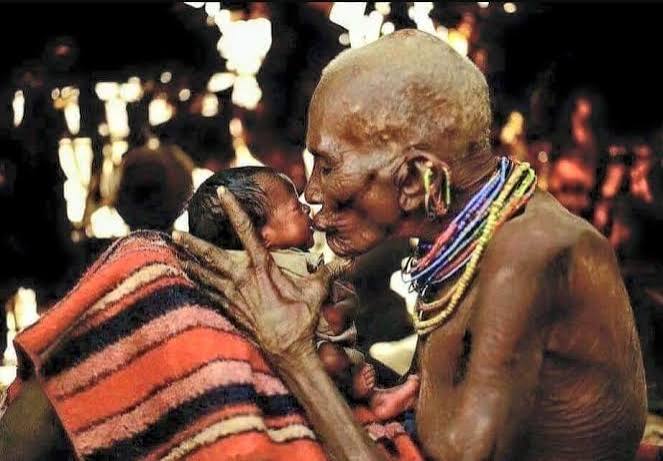
Quote: An African who invokes
This is the concluding part
… Given the fact that I was
At the end of the visit by the
Back to my apartment, at abo
Under normal circumstances, yo
That all she asks is that Chie
For some reason that I do not
I believe that everyone in hu
Our ancestors have not gone fa
By: Jason Osai
The Federal Government’s approval of a N70,000 monthly transport intervention for public service workers for six months, beginning in November 2026, offers hope to employees struggling with the rising cost of living. The agreement with the Nigeria Labour Congress (NLC), reached at a conciliation meeting in Abuja on October 27, is intended to cushion transport costs and ease pressure on workers’ incomes. But for public servants in Rivers State, it raises a familiar question: will the State Government key into the intervention and ensure that its workers benefit? The agreement provides for N70,000 monthly across all levels, for six months. The Federal Government also approved peculiar allowance arrears effective from May 1, 2026, to be paid in three equal instalments beginning in November.
The parties agreed to reconvene after one month to assess implementation. Ultimately, the value of these resolutions will be measured not by announcements but by whether eligible workers receive the money. Transport costs consume a substantial share of many civil servants’ earnings before they can meet household needs. Support for commuting is therefore not a luxury or political favour; it is temporary assistance to help workers remain at their jobs without sinking further into hardship. For lower-paid employees, transport costs can turn modest salaries into a daily exercise in difficult choices and sacrifice.
The agreement also urges State and Local Governments to participate and unions to press for implementation. The federal agreement does not automatically guarantee that every State and Local Government employee will receive the support. State authorities must clarify how it will apply to their workforce, make the necessary arrangements and publish a payment timetable. Rivers State must approach the arrangement with urgency and transparency. The Government should State whether it will implement the intervention and when payments will begin. Any administrative or financial question should be addressed promptly with organised labour, not allowed to become excuses for delay.
The concern is sharpened by the earlier N35,000 monthly wage award introduced by the Federal Government in 2023 after petrol subsidy removal. It was intended as temporary relief pending a new national minimum wage. While several States negotiated and paid wage awards or related sums, implementation nationwide was uneven. Reports in 2024 indicated that many States had failed to pay the federal award, while others provided different amounts. In Rivers, labour and media reports raised concerns about implementation of the N35,000 award for State workers, amid separate announcements and arrangements concerning Local Government employees.
The wage award was meant to ease the immediate effects of subsidy removal, yet workers faced uncertainty over whether the promised relief would reach them. In February 2024, the Rivers State Government announced approval of the N35,000 award for local government workers, but subsequent reports showed that implementation across worker categories remained a concern. The lesson is clear: approval and implementation are not the same. A declaration at a meeting offers little comfort to a worker whose account does not reflect the promised payment. For workers who travel to their offices daily, the implications of delayed support are significant. Transportation expenses compete with food, rent, school fees, healthcare and other essential household needs.
As fares rise, employees may be forced to reduce spending on necessities or borrow to sustain their families. A timely transport intervention would therefore provide practical relief and demonstrate that government understands the economic pressures confronting its workforce. Its temporary nature makes prompt implementation even more important. It is fair to acknowledge that this transport intervention is a new agreement and that its administrative details may require clarification. Rivers State should not be condemned in advance for a failure that has not occurred. Nevertheless, the earlier experience gives workers legitimate grounds to seek assurances before the November commencement date. The State should avoid allowing uncertainty to persist until workers begin asking why the promised assistance has not arrived.
The NLC and unions in Rivers State should engage the State Government immediately and seek a written commitment, an implementation plan and a process for reporting missed payments. If clarification from the Federal Government is needed, the State should seek it without abandoning the goal of providing relief. Labour leaders must also keep members informed about progress and insist that any agreed arrangements are applied fairly and transparently. The Rivers State Government should treat this intervention as an opportunity to rebuild confidence. Timely support would show that workers’ welfare is more than a talking point and that the State recognises the economic realities confronting its employees.
Silence, delay or selective implementation, by contrast, would revive frustration over earlier relief measures and weaken trust between government and labour. Every month lost to administrative delay leaves workers facing the same transport burden without the intended assistance. The State should consult labour, publish arrangements and pay eligible workers on time. Rivers workers should not have to wonder whether federal relief will reach them. The Federal Government has announced the support; now the State must make its position clear. We hope the N70,000 monthly transport intervention will not follow the troubling path of the earlier wage award. Rivers State should learn from that experience and ensure that this time, relief is not merely promised but delivered.
Sylvia ThankGod-Amadi
-
Opinion4 days ago
Ancestorial Worship: My Take (1)
-
Niger Delta14 hours ago
PANDEF Seeks 50% Oil Derivation Allocation Increase
-

 Education13 hours ago
PAMO MEDICAL UNIVERSITY -Nullifies Arrest warrant on VC
-
Rivers12 hours ago
Don Seeks Repositioning Of Tech Education For Dev
-

 News14 hours ago
Fresh Ebola Scare As NCDC Records Two Cases
-

 Education13 hours ago
IAUE MOVES TO END GHOST WORKERS SYNDROME AS 400 NEW NON-TEACHING STAFF UNDERGO MANDATORY ETHICS TRAINING
-
News14 hours ago
Customs Partners EFCC, NDLEA, Others To Tackle Money Laundering, Terrorism Financing
-

 News4 days ago
FG Must Address Nigerians’ Concerns On Reforms -Shettima …Warns Against Misuse of AI, Social Media