
Opinion
Vicious Circle Of Criminality

There is an extant theory in criminology which states that to condone crimes and pamper criminals is to foster criminality in any society. Reacting to a previous publication, a reader sent the following text: “With reference to your article: Water of Mara, (The Tide, Friday 5/3/2021), you made reference to a northern politician accusing the Niger Delta militants as the originators of kidnapping and other menaces. If we can listen to our conscience, who and where did these menaces start and so-called Amnesty by Yar’ Adua helped to worsen the situation? When you collect one gun from a bandit and pay him money worth 5 guns, what do you expect? …”
The security situation in Nigeria as a developing nation, is not new in human history. Rather, what is vital in handling social menaces should be our primary concern. It would not be wrong to say that leadership is a key factor which determines how a nation fares, with regards to development and stability. Next to leadership is the issue of social justice; but unfortunately, leadership failures usually characterised by social injustices result in social anomie and acts of impunity. Leadership is not a task for everybody.
We are told in Shakespear’s Measure for Measure that “Thieves for their robbery have authority when judges steal themselves”. Similarly, “when law can do no right, let it be lawful that law bar no wrong”. When a foundation is faulty, all forms of padding and excuses would not prevent cracks from emerging here and there; neither would cosmetic palliatives help matters.
Those who lead should have the intelligence to recognize the fact that the masses are not usually as stupid as they may appear. In the case of Nigeria, there is a growing impression that governance is an exclusive elitist affair, characterised by hustling among power-blocs. A people –oriented governance would be characterised by empathy and social justice, whereby the interests of the masses, rather than their votes alone, would count. Nigerians are yet to see the social contract theory of governance!
Let us not pretend to be ignorant of sources and causes of the insecurity and other menaces being experienced in Nigeria currently. To continue to pretend would be to postpone the evil day, because, issues are not resolved by sweeping them under the carpet. Perhaps, without knowing it, the Nigerian Civil War succeeded in installing a class of predators of which the military played a leading role. Jean-Jacques Rousseau would tell us that “legislative power belongs, and can only belong, to the people” and that any law which the people have not ratified is void.
When wealth and power and strategies to have a monopoly of them become the focus of politics, then a cult of predators emerges whereby social justice would not be an issue of concern. Let us not forget, in the words of Soyinka, that “the 1999 elections were held, and a government sworn into office without public knowledge of the contents of the enabling constitution.” As a coercive institution, can we deny the fact that the military injected coercive temperament into political practices in Nigeria?
Apart from the fact that a former military macho man described politics as a do-or-die affair, Nigerian politics can hardly foster social justice. Neither would such political culture place any value on the social-contract principle of politics. Therefore, what we have currently is a buccaneer system in which acts of brigandage, abuse of power and other forms of injustices feature in politics. Decent persons would not want to participate in such activity.
Behind all the aberrations in Nigerian politics is the issue of mineral oil and gas, which obviously brings the Nigerian political economy into the network of international power play. There’s common idiom that when two elephants fight, the grass suffers most. In the case of Nigeria, this translates into the Nigerian masses becoming the victims that must bear the brunts of the power play in whose vortex lies the Nigerian political economy. So the issues of social stability, social justice, political and economic practices in Nigeria are more complex issues than many people would appreciate.
The concept of globalisation would demand that Nigeria as a nation should be able to march along with global tempo of activities, measure for measure. Unfortunately, where a disadvantaged partner must compete with champions, there is bound to be anomalies which would place the weak partner in greater disadvantage. Nigerians may not be aware of the fact corrupt practices are deliberately foisted and promoted in the global system as a strategy to place weak nations in continuous instability. We are the manufacturers and merchants of fire arms?
Therefore, to understand the vicious circle of criminality, it is necessary to look beyond Nigeria for the mechanism of global crimes. Yes, embittered youths in the Niger Delta zone which produces the oil and gas that fuel the Nigerian economy, took up arms as a means of pursuing social justice. Kidnapping of foreigners and locals for ransom featured in the agitation for justice. As the unpleasant effects of such acts of criminality undermined the nation’s oil-based economy, the administration of Yar’Adua gave Amnesty to the Niger Delta militants. A Greek gift!
It may be wrong to resort to crime in the search for justice, but in a situation where violent reactions can send out the right message, does crime not become a weapon of justice? For obtuse and recalcitrant leaders and individuals violent reactions do have salutary effects. Now, who is to blame for the spread of crime: those who are pushed into crime or, those whose obtuse and recalcitrant postures force embittered people to resort to crime? Politics comes in.
The argument that Niger Delta militants introduced violent crimes into Nigeria, and that the Amnesty granted to them should also be granted to other violent criminals and militants, would be a faulty argument. To take up arms for purpose of justice, is not the same thing as taking up arms to force an ideology on a heterogeneous populace. Niger Delta militants agitated for resource control and a fair share of the oil and gas coming from their zone. But other militants want to spread an ideology. Who says there is nothing to restructure in Nigeria? Equity operates with clean hands!
Dr. Amirize is a retired lecturer from the Rivers State University, Port Harcourt.



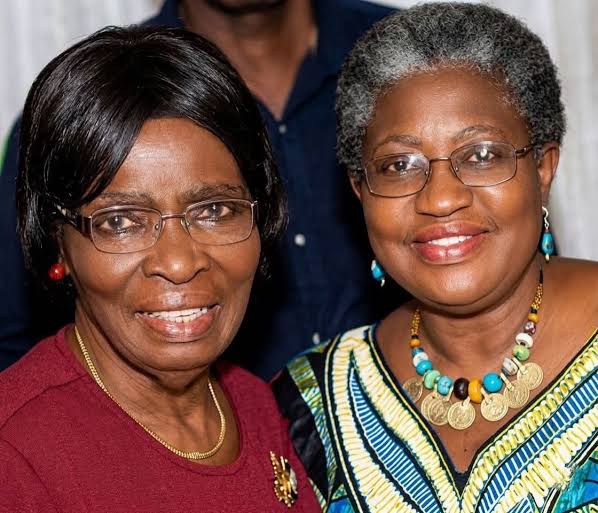
Quote “Professor Kamene Okonjo
Some women leave behind more t
Yet, to remember Professor Kam
Professor Okonjo was the belov
one of the most dramatic chapt
On December 14, 2012, the then
She leaves behind children, gr
Professor Kamene Okonjo deserv
By: Sylvia ThankGod-Amadi

Quote: An African who invokes
This is the concluding part
… Given the fact that I was
At the end of the visit by the
Back to my apartment, at abo
Under normal circumstances, yo
That all she asks is that Chie
For some reason that I do not
I believe that everyone in hu
Our ancestors have not gone fa
By: Jason Osai
The Federal Government’s approval of a N70,000 monthly transport intervention for public service workers for six months, beginning in November 2026, offers hope to employees struggling with the rising cost of living. The agreement with the Nigeria Labour Congress (NLC), reached at a conciliation meeting in Abuja on October 27, is intended to cushion transport costs and ease pressure on workers’ incomes. But for public servants in Rivers State, it raises a familiar question: will the State Government key into the intervention and ensure that its workers benefit? The agreement provides for N70,000 monthly across all levels, for six months. The Federal Government also approved peculiar allowance arrears effective from May 1, 2026, to be paid in three equal instalments beginning in November.
The parties agreed to reconvene after one month to assess implementation. Ultimately, the value of these resolutions will be measured not by announcements but by whether eligible workers receive the money. Transport costs consume a substantial share of many civil servants’ earnings before they can meet household needs. Support for commuting is therefore not a luxury or political favour; it is temporary assistance to help workers remain at their jobs without sinking further into hardship. For lower-paid employees, transport costs can turn modest salaries into a daily exercise in difficult choices and sacrifice.
The agreement also urges State and Local Governments to participate and unions to press for implementation. The federal agreement does not automatically guarantee that every State and Local Government employee will receive the support. State authorities must clarify how it will apply to their workforce, make the necessary arrangements and publish a payment timetable. Rivers State must approach the arrangement with urgency and transparency. The Government should State whether it will implement the intervention and when payments will begin. Any administrative or financial question should be addressed promptly with organised labour, not allowed to become excuses for delay.
The concern is sharpened by the earlier N35,000 monthly wage award introduced by the Federal Government in 2023 after petrol subsidy removal. It was intended as temporary relief pending a new national minimum wage. While several States negotiated and paid wage awards or related sums, implementation nationwide was uneven. Reports in 2024 indicated that many States had failed to pay the federal award, while others provided different amounts. In Rivers, labour and media reports raised concerns about implementation of the N35,000 award for State workers, amid separate announcements and arrangements concerning Local Government employees.
The wage award was meant to ease the immediate effects of subsidy removal, yet workers faced uncertainty over whether the promised relief would reach them. In February 2024, the Rivers State Government announced approval of the N35,000 award for local government workers, but subsequent reports showed that implementation across worker categories remained a concern. The lesson is clear: approval and implementation are not the same. A declaration at a meeting offers little comfort to a worker whose account does not reflect the promised payment. For workers who travel to their offices daily, the implications of delayed support are significant. Transportation expenses compete with food, rent, school fees, healthcare and other essential household needs.
As fares rise, employees may be forced to reduce spending on necessities or borrow to sustain their families. A timely transport intervention would therefore provide practical relief and demonstrate that government understands the economic pressures confronting its workforce. Its temporary nature makes prompt implementation even more important. It is fair to acknowledge that this transport intervention is a new agreement and that its administrative details may require clarification. Rivers State should not be condemned in advance for a failure that has not occurred. Nevertheless, the earlier experience gives workers legitimate grounds to seek assurances before the November commencement date. The State should avoid allowing uncertainty to persist until workers begin asking why the promised assistance has not arrived.
The NLC and unions in Rivers State should engage the State Government immediately and seek a written commitment, an implementation plan and a process for reporting missed payments. If clarification from the Federal Government is needed, the State should seek it without abandoning the goal of providing relief. Labour leaders must also keep members informed about progress and insist that any agreed arrangements are applied fairly and transparently. The Rivers State Government should treat this intervention as an opportunity to rebuild confidence. Timely support would show that workers’ welfare is more than a talking point and that the State recognises the economic realities confronting its employees.
Silence, delay or selective implementation, by contrast, would revive frustration over earlier relief measures and weaken trust between government and labour. Every month lost to administrative delay leaves workers facing the same transport burden without the intended assistance. The State should consult labour, publish arrangements and pay eligible workers on time. Rivers workers should not have to wonder whether federal relief will reach them. The Federal Government has announced the support; now the State must make its position clear. We hope the N70,000 monthly transport intervention will not follow the troubling path of the earlier wage award. Rivers State should learn from that experience and ensure that this time, relief is not merely promised but delivered.
Sylvia ThankGod-Amadi
-
Opinion4 days ago
Ancestorial Worship: My Take (1)
-

 Education1 day ago
PAMO MEDICAL UNIVERSITY -Nullifies Arrest warrant on VC
-
Niger Delta1 day ago
PANDEF Seeks 50% Oil Derivation Allocation Increase
-
Rivers1 day ago
Don Seeks Repositioning Of Tech Education For Dev
-

 Education1 day ago
IAUE MOVES TO END GHOST WORKERS SYNDROME AS 400 NEW NON-TEACHING STAFF UNDERGO MANDATORY ETHICS TRAINING
-

 News1 day ago
Fresh Ebola Scare As NCDC Records Two Cases
-
News1 day ago
Customs Partners EFCC, NDLEA, Others To Tackle Money Laundering, Terrorism Financing
-
 News4 days ago
FG Must Address Nigerians’ Concerns On Reforms -Shettima …Warns Against Misuse of AI, Social Media