
Opinion
The Nigerians’ Agony

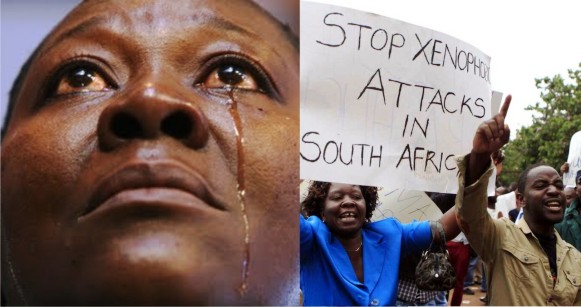
The xenophobic attacks in South Africa have become so frequent that they follow a known and triangular pattern: riots by the South Africans targeting shops and foreigners; violent clashes (in response to attacks); then arrests and dispersal of rioters by law enforcement agents. The fourth perhaps is: hypocritical speeches and admonitions by the South African authorities to the victims.
In 2008, similar attacks occurred which claimed about 60 lives. It happened again in April 2015 when at least six persons died. Now, for the past two weeks, we have been witnessing a recurrence of the xenophobic attacks. South Africans are at it again. They have never hidden their deep hatred towards foreigners for ‘hijacking’ or outrightly ‘stealing’ jobs and businesses meant for them.
Like others, the attacks this time are still directed at all foreigners. However, it seems that Nigerians are the real targets. For instance, on February 24th, protesters, brandishing all manner of dangerous weapons, stormed the South Africa’s Foreign Ministry with a petition in hand. Among other things, the document specifically asked for the following: “They are arrogant and they don’t know how to talk to people, especially Nigerians”.
The statement is clear and doesn’t need interpretation. It corroborates the widespread claims that Nigerians and their businesses have been particularly targeted in the attacks. This, without doubt, has ignited apparent backlash back home.
In Abuja, the Nigeria Labour Congress, NLC, condemned the xenophobic attacks on Nigerians. A statement signed by Ayuba Wabba, the NLC President, said the February attacks, like those of 2008 and 2015, were unacceptable. He urged the South African Government to move without further delay to prevent a recurrence.
Similarly, the Senior Special Assistant to President Muhammadu Buhari on Foreign Affairs and Diaspora, Abike Dabiri-Erewa, described the attacks as an “unnecessary setback”. She condemned the random deportations of Nigerians and claimed that “they have been arbitrarily raided”.
Still in Abuja, tension rose to fever pitch when members of the National Association of Nigerian Students, NANS, burnt a South African flag and threatened reprisals against South African corporations in Nigeria. Indeed the students broke into the headquarters of the South African company, MTN, which is Nigeria’s biggest telecommunication firm.
Relations with South Africa dominated proceedings in the Senate as lawmakers decided that they wouldn’t move for the severance of diplomatic relations, but send a delegation to South Africa to demand concrete actions and an explanation.
“This attack has become one too many,”said Senate President Bukola Saraki. “We must put a stop to these attacks. We must take the bull by the horn. That is why we have resolved to meet with the South African parliament.”
While we lament or deplore the cruel treatment by our South African friends, we must ask ourselves some obvious questions, do some deep introspection and understand the reasons for their barbaric act. Unfortunately, the South African government and its citizens believe that foreigners are responsible for their ailing economy.
It is time the federal government realized that Nigerian emigration situation has reached a crescendo and must be addressed with all seriousness. In a 2016 report, the Italian Interior Ministry claimed over 36,000 illegal Nigerian emigrants made the voyage of death across the Mediterranean Sea to Italy in that year alone. Those who journey on this route understand the degree of risk in reaching their destinations. Some get drowned in the sea, while others are either summarily executed or detained in anti-immigrant camps.
Just recently, a gory picture emerged on the internet of some African men, including Nigerians, with hands raised behind their heads while being hurled to their death in the hands of gun-wielding Libyan militiamen. The only official response to the mass execution was a travel warning from Dabiri-Erewa. After that everyone returned to passiveness or deliberate amnesia.
We cannot hide the fact that Nigeria is perceived in the eyes of the international community as exporter of crimes, such as drug business, financial crimes and human trafficking etc. We cannot deny the fact that Nigerians constitute the highest number of prostitutes in Europe and elsewhere, while we remain the all-time signature reference on Advanced Fee Fraud, locally called ‘419’.
Apparently, the root causes of emigration of Nigerians are corruption, bad governance, poverty, injustice, unemployment, insecurity and economic hardship, among others. If the incidents of bestiality against Nigerians fail to provoke government to formulate policies that will properly address the factors underlying the exodus of Nigerians, the latest xenophobic attacks should.
Despite the risk involved, it is unlikely that Nigerians facing those conditions will not jump at an offer to travel to countries where they are unwanted. Until the Nigerian government puts on its thinking cap and fashions out policies that will address the socio/economic factors underlying illegal emigration, Nigerians should expect more attacks and inhuman treatment in foreign lands.
Arnold Alalibo



Quote: “Ogoniland does not
The latest attack by Chief
Instead, the gathering and
The proposal for a unified
The question should be: who
It is easy to criticise
The people are looking beyond
onest people can reach
Society must therefore

Quote: “Privilege should
There is an old saying that
While motivations cannot
A person who benefits from a
This is why citizens should
We must not assume that
By: Michael Abraham
Quote:”Although the Federal
The recent outburst by the
The senator also alleged
They connect ports, airports,
To address these challenges,
Rwanda and Morocco, for
FERMA should also prioritize
Many Nigerians have asked
-

 News2 days ago
RSG Targets Nine Million Residents in Mosquito Net Distribution Campaign
-

 Oil & Energy2 days ago
Aiyedatiwa Signs New Electricity Bill
-

 Oil & Energy2 days ago
NLNG Commissions Research And Innovation Centre In RSU
-

 Maritime2 days ago
Marine Minister Commends President Tinubu On NPERA Bill Assent
-

 News2 days ago
KenPoly Holds Eight Convocations, August 29
-

 News2 days ago
RSG Begins Another Phase of Projects Commissioning Today
-

 News2 days ago
RMAFC Completes Revenue Sharing Review, Proposes New Pay
-

 Maritime2 days ago
NAGAFF Petitions IGP Over Alleged Maritime Police Harassment