
Business
Refiners, Dangote Officials Oppose PMS Importation

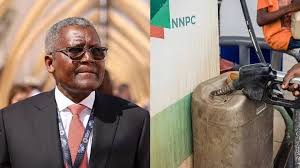
Domestic crude oil refiners and officials at the Dangote Petroleum Refinery have kicked against the commencement of the importation of Premium Motor Spirit (PMS), popularly called petrol, by major oil marketers in Nigeria.
The oil refiners alleged that some imported fuels were of low quality when compared with the ones produced by the Dangote refinery, a position that was reiterated by officials of the $20billion Lekki-based plant.
The Tide’s source had on Wednesday reportwd that three major oil marketers were expecting vessels of imported petrol this week, barring any unforeseen circumstances.
Dealers said about 141 million litres of PMS are being conveyed to Nigeria by oil vessels following the full deregulation of the downstream oil sector by the Federal Government.
They also noted that the recent hike in the pump prices of petrol produced by the Dangote refinery and released by the Nigerian National Petroleum Company Limited on Monday had allowed room for PMS imports.
Reacting to this on Thursday, officials at the Dangote refinery and the Crude Oil Refiners Association of Nigeria tackled the marketers, stressing that aside from the fact that the situation would increase the demand for United States dollars, the imported fuels were of low quality.
“These people (marketers) are importing dirty fuels that are toxic”, an impeccable source at the Dangote refinery who spoke to one of our correspondents in confidence, declared.
The source added. “They are importing substandard fuels and if allowed they will not stop importing such. We have more than enough, but these guys don’t want it. They want the game to continue, but the game will not continue”.
Another official at the plant stated that Nigerians should be concerned about the importation of substandard petroleum products into the country.
“You have to be concerned about the quality of the products they import. These are toxic fuels when you consider their blending process. All this is just to maximise profit”, the official stated.
Their positions were corroborated by the Publicity Secretary of CORAN, Eche Idoko, who alleged that some of the substandard fuels were blended in Malta or Togo.
He called for backward integration, saying some were afraid that Dangote would become a monopoly.
“The fear marketers are having is that Dangote will become a monopoly, but that has been taken care of by Dangote subscribing to our association. With the Petroleum Industry Act in place and all the agencies in play, there is no way that Dangote can become a monopoly.
“But for people who are used to a particular way, the fear of what the unknown holds keeps them back. I think that’s where a lot of marketers are now. They don’t know what to expect in this new regime and they are trying to struggle.
“So I would assure you this regime will pay them way better than the regime of importing petroleum products, where they sell to us, substandard products blended in Malta or Togo and imported into our country”, Idoko stated.
The domestic refiners’ association spokesperson condemned the continuous importation of fuel by marketers despite the coming on board of the Dangote refinery.
He said the focus at this time should be on how to export refined products instead of bringing substandard fuel into the country.
Idoko, however, recalled that some marketers who tried to import petroleum products could not do so after the removal of subsidies due to the foreign exchange crisis.
“For some people who are doing this import, at the end of the day, you import, and then you go back to CBN to give you ‘Form M’ to be able to access dollars.
“So, by importing, you are still not solving the problem because you still have to rely on dollars within Nigeria or use your naira to buy dollars from anywhere. And it will reduce the value of the naira. So you have not solved the problem.
“What enables the power of the currency is the level of its demand by other corresponding currencies. So, if you have dollars, francs, cefa, and other currencies chasing the naira because you want to buy a refined product of Nigeria, invariably, the value of the naira will appreciate”, he stated.
Responding to concerns about the quality of imported fuels, the Nigerian Midstream and Downstream Petroleum Regulatory Authority declared that all imported PMS would be subjected to at least three major tests by the agency before being allowed for sale across the country.
Its spokesperson, George Ene-Ita, earlier said marketers with approved import licenses were free to import PMS, but stressed that the products must be subjected to three major tests by the agency.
“The products must be subjected to our testing protocols at the ports. The products must conform to stipulated standards before we authorise them to move the fuels to their terminals.
“Also, before the smaller vessels bring it further inland to Nigeria our people will fly to the place to see the product and carry out some tests to ensure the right specification is upheld.
“Tests are also done at the products’ origins. And when the products come in, before they are released to the market, further tests would be conducted to ensure that they meet the specifications”, he said.


-

 News2 days ago
Amend Constitution To Accommodate State Police, Tinubu Tells Senators
-
 Politics2 days ago
Senate Urges Tinubu To Sack CAC Boss
-

 News2 days ago
Disu Takes Over As New IGP …Declares Total War On Corruption, Impunity
-
Business2 days ago
President Tinubu Extends Raw Shea Nuts Export Ban To 2027
-
Business2 days ago
Crisis Response: EU-project Delivers New Vet. Clinic To Katsina Govt.
-
Business2 days ago
President Tinubu Approves Extension Ban On Raw Shea Nut Export
-
Rivers2 days ago
Etche Clan Urges Govt On Chieftaincy Recognition
-
Sports2 days ago
NDG: Rivers Coach Appeal To NDDC In Talent Discovery