
Editorial
Another Look At Capital Punishment

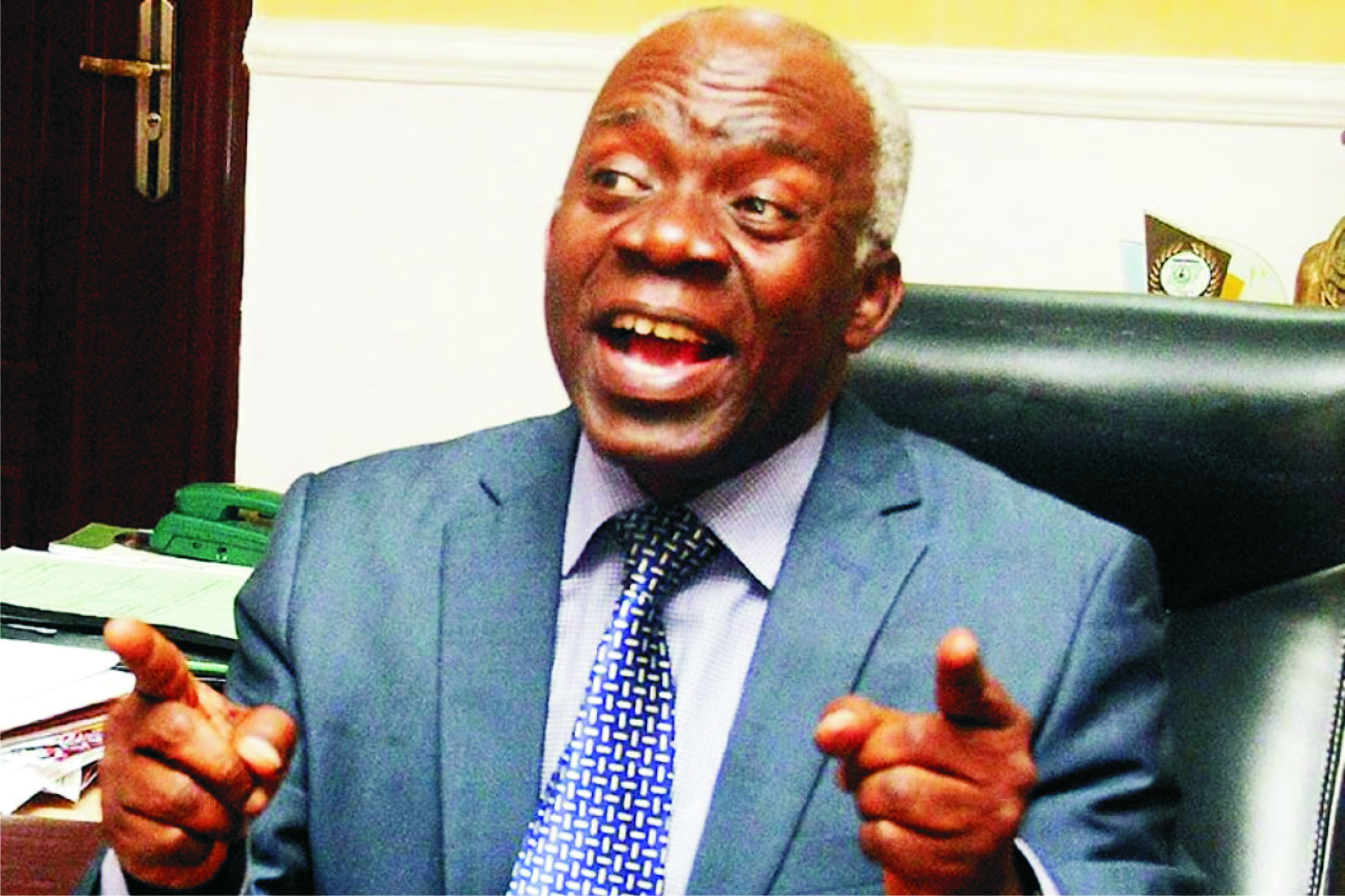
There are far too many prisoners in Nigeria’s correctional facilities. Thousands of them are awaiting trial inmates, while others are either serving their jail terms or have received death sentences. The approximate number of death row convicts in custodial facilities around the nation as of July 2022 was 3,145. Of the figure, 3,084 were men and 61 women, according to the Nigerian Correctional Service. This has over time put the process of decongesting the correctional facilities all but impossible.
As governors decline to sign the death warrants for the condemned, the number of the individuals on death row is growing, sparking reservations among human rights advocates and attorneys about what might happen to the prisoners. A few of them have proposed converting the death penalty to life in prison. Others contend that the death sentence ought to be abolished under the constitution if the governors are unwilling to sign the warrants. Femi Falana, SAN, maintains that keeping a prisoner on death row for a considerable amount of time is torture.
Despite repeated calls by the Federal Government for state governors to exercise their constitutional responsibility of signing death warrants of criminals condemned to death by courts of competent jurisdictions, no death row inmate has been executed in the last 10 years. Governors are delaying the wheel of justice and contributing to congestion in correctional centres by refusing to sign the death warrants. States should share in the burden of decongesting custodial facilities in the country.
Crimes that are punishable by death include homicide, kidnapping, and murder. The governors must still sign the warrants after the judges issue these orders for the execution to proceed. Over time, the governors, who are liable for confirming execution orders, have been dodging their role, which has made the already cramped jails even more cluttered. They justify their refusal to append the warrants by citing political correctness and feelings.
One of the most contentious and frequently discussed subjects in the world is the death penalty. Numerous organisations observe that it is cruel and barbarous. Its opponents frequently compare it to murder, pointing out that it has no effect on homicide rates and that the ends do not always substantiate the methods, particularly when people are wrongfully condemned.
Since Nigeria is yet to consider abolishing or suspending the death penalty, the onus is on the governors to take the correct course of action. The number of nations that have done so is expanding. According to the Death Penalty Information Centre, almost 70 per cent of nations worldwide have either outlawed or discontinued the death penalty. Kazakhstan and Papua New Guinea are among the most recent nations to ban it.
By the end of 2021, 108 countries had abolished the death penalty for all crimes under the law; 144 countries had done the same in practice; 28 countries had done so in effect by not carrying out an execution in the previous ten years; and 55 countries still applied the death penalty for common crimes. This information comes from data provided by Amnesty International.
However, proponents of capital punishment often view it as a necessary evil to protect society from individuals who commit the most heinous crimes. Despite the declarations from former Governors Seriake Dickson of Bayelsa State and Simon Lalong of Plateau State that they would not hesitate to approve the death penalty for convicted kidnappers, there is no concrete evidence of them following through on this promise. The only elected governor in recent Nigerian history known to have signed a death warrant was former Governor of Edo State, Adams Oshiomhole, which sparked criticism from various groups.
During his tenure as President of Nigeria, Goodluck Jonathan made a controversial statement urging state governors to sign death warrants for criminals condemned to death. Speaking at a Fathers’ Day Sunday service in 2013, Jonathan reminded the governors that their role as leaders involved both pleasant and unpleasant tasks. Jonathan’s call serves as a reminder of the dual responsibilities that come with leadership and the need for critical reflection on the consequences of such decisions.
Governors play a crucial role in the criminal justice system when it comes to deciding the fate of individuals on death row. They are faced with the weighty decision of either approving the death warrants of those who have exhausted their appeals process, converting their death sentence to life imprisonment, or offering them clemency. Failure to act on any of these options should result in the removal of Section 33, which permits the death penalty, from the constitution.
State governors must set aside personal emotions and make decisions based on the principles of justice, fairness, and compassion. Approving death warrants should only be done after careful consideration of all facts and evidence in a case, ensuring that justice is served. However, if governors find that there are mitigating circumstances or doubts about guilt, they have the option of converting the death sentence to life imprisonment or offer clemency. This allows for the possibility of exoneration or further legal proceedings to rectify any injustices.
Clearly, then, the death penalty in Nigeria should be re-evaluated. The lack of execution and the potential for injustices highlight the need for a more humane and effective form of capital punishment. Life imprisonment could provide a better alternative, ensuring that criminals are still held accountable for their actions while avoiding the risks and controversies associated with the death penalty.




Nigeria stands at a critical juncture as the world marked World Press Freedom Day (WPFD) on May 3. This annual observance is a reminder that a free press is central to democratic life, good governance, and public accountability. For Nigeria, it is also a moment for sober reflection on how far the country has come and how far it still has to go in safeguarding the independence of its media.
World Press Freedom Day exists to highlight the fundamental importance of freedom of expression and to honour journalists who risk their lives in pursuit of truth. It underscores the idea that without a free press, societies cannot function transparently, nor can citizens make informed decisions. In countries like Nigeria, where democracy continues to evolve, the observance carries particular urgency.
This year’s theme, “Shaping a Future at Peace: Promoting Press Freedom for Human Rights, Development and Security”, places journalism at the heart of global stability. It emphasises that a peaceful society cannot be built on silence, fear, or manipulated information. Rather, it depends on the free flow of accurate, timely, and independent reporting.
At its core, the theme highlights the role of journalism in fostering accountability, dialogue, and trust. These are not abstract ideals. In Nigeria, where public confidence in institutions is often fragile, the media remains one of the few platforms through which citizens can question authority and demand transparency. When press freedom declines, so too does public trust.
Journalism serves as a foundation for peace, security, and economic recovery. Countries with robust media systems tend to attract greater investment, maintain stronger institutions, and resolve conflicts more effectively. Nigeria’s economic challenges, ranging from inflation to unemployment, require open scrutiny and informed debate, both of which depend on a free press.
However, the issue of information integrity has become increasingly complex in the digital age. Artificial Intelligence (AI) and online platforms have amplified the spread of misinformation and disinformation. In Nigeria, where internet penetration has grown rapidly, false narratives can travel faster than verified facts. This makes the role of credible journalism more vital than ever.
The challenge is not only technological but also ethical. AI-driven manipulation of information threatens to distort public discourse, influence elections, and deepen social divisions. In such an environment, professional journalism must act as a stabilising force, ensuring that truth prevails over sensationalism and propaganda.
Equally troubling is the safety of journalists. Across Nigeria, reporters face growing levels of online harassment, judicial intimidation, and physical threats. Self-censorship is becoming more common, as media practitioners weigh the risks of reporting sensitive issues. This trend undermines the very essence of journalism.
A particularly alarming incident involved a serving minister in the present administration, who openly threatened to shoot a journalist during a televised exchange. Such conduct, broadcast to the public, sends a dangerous signal that hostility towards the press is acceptable. It erodes the norms of democratic engagement and places journalists in harm’s way.
This year’s theme aligns closely with the United Nations Sustainable Development Goal (SDG)16, which promotes peace, justice, and strong institutions. Freedom of expression is a cornerstone of this goal. Without it, institutions weaken, corruption thrives, and justice becomes elusive. Nigeria’s commitment to SDG 16 must therefore include genuine protection for the media.
Historically, the Nigerian press has been a formidable force. From resisting colonial rule to challenging military dictatorships, our journalists have played a central role in shaping the nation’s political landscape. Today, however, that legacy appears to be under strain, as the media operates under what can best be described as a veneer of freedom.
Beneath this facade lies a troubling reality. Journalists are routinely harassed, detained, and prosecuted for performing their constitutional duties. Reports from media watchdogs indicate that dozens of Nigerian journalists face legal threats or arrest each year, often for exposing corruption or criticising those in power.
The Cybercrimes (Prohibition, Prevention, etc.) Act of 2015 has become a focal point of concern. Originally intended to combat cyber threats, it has increasingly been used to silence dissent. Sections 24 and 27(1)(b), in particular, have been invoked to target journalists, bloggers, and social commentators.
Although amendments introduced in February 2024 were meant to safeguard journalists, concerns persist. The law continues to be wielded in ways that stifle investigative reporting and restrict freedom of expression. Legal reforms must go beyond cosmetic changes to address the root causes of misuse.
To safeguard the future of journalism in Nigeria, decisive action is required. The Cybercrimes Act must be revisited to ensure it cannot be weaponised against the press. Law enforcement agencies must operate free from political influence, upholding the rule of law and protecting journalists’ rights. Civil society and international partners must also strengthen independent media through funding, training, and platforms for wider reach.
In this rapidly evolving world shaped by artificial intelligence and digital innovation, Nigeria faces a clear choice. It can either allow press freedom to erode under pressure, or it can champion a truly independent media landscape. The path it chooses will determine not only the future of journalism, but also the strength of its democracy and the peace it seeks to build.