
News
Jan 31 Deadline For Old Naira Notes Remains, CBN Insists …Raises Interest Rate To 17.5%

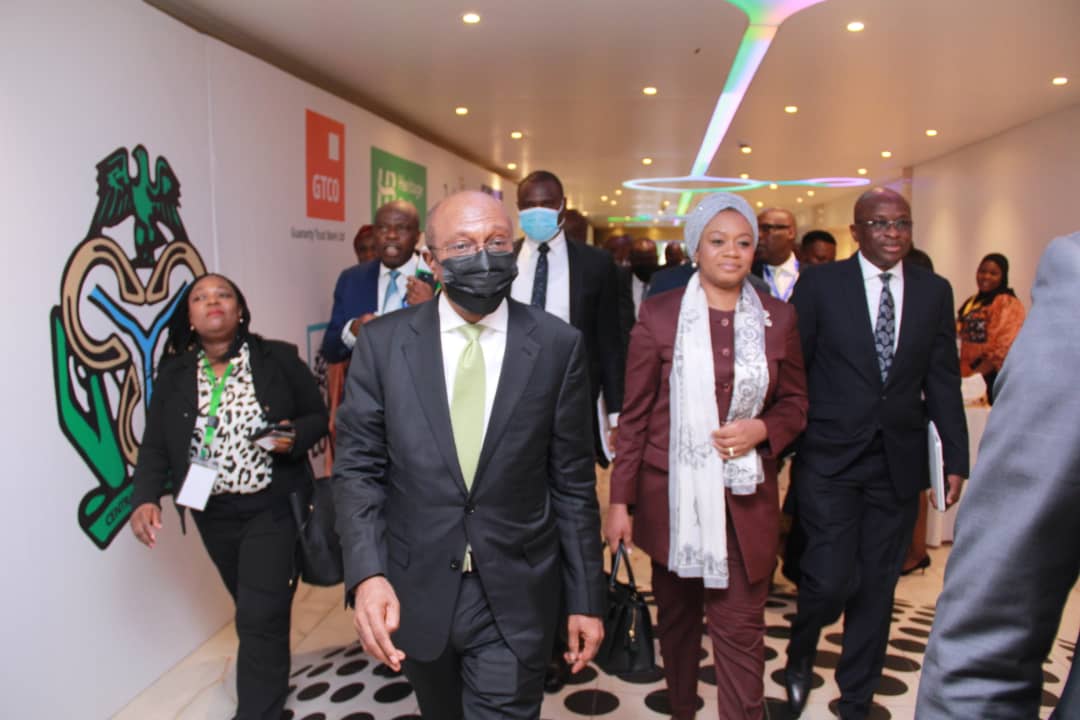
The Central Bank of Nigeria (CBN) has said that its January 31, 2023 deadline for the validity of the old N200, N500 and N1,000 notes remains.
The CBN Governor, Godwin Emefiele, announced this after the apex bank’s Monetary Policy Committee (MPC) meeting in Abuja, yesterday.
The CBN also raised the Monetary Policy Rate (MPR), which measures interest rate, to 17.5percent.
According to him, kidnapping and ransom-taking have reduced since the three banknotes were redesigned.
He also said the time given for the swap of the old naira notes with new ones were enough for Nigerians to go to commercial banks and get new notes.
The CBN on October 26, 2022 had announced its plan to redesign the three banknotes. President Muhammadu Buhari subsequently unveiled the redesigned N200, N500 and N1,000 notes on November 23, 2022, while the apex bank fixed January 31 deadline for the validity of the old notes.
There have been concerns from many Nigerians over the slow spread of the three new naira notes as the January 31, 2023 deadline approaches but the apex bank has insisted that the date stands.
The CBN also recently directed commercial banks to halt over-the-counter payment of the new notes and load their Automated Teller Machines (ATMs) with the redesigned naira notes to boost circulation.
The apex bank also launched a cash swap programme nationwide to enable those in the unbanked areas to exchange their old notes for new notes before the deadline.
On the wide clamour for the extension of the deadline for old currency usage, the CBN Governor said: “Unfortunately, I don’t have good news for them. My apologies. We can’t shift the deadline. Just like Mr President has said on some occasions, 90 days is enough for people to get their money into the bank. We ensured the banks extended banking hours and opened on Saturdays to accept the old notes. But they did not see the rush. Only the same normal deposits. So, no need for a shift”.
On the scarcity of the new naira, Emefiele said the CBN holds three meetings with the banks every week to address the challenge.
“We saw that the banks were paying the new notes to their close customers and we stopped it and said, feed it to the ATMs. It has worked. In the initial stages, they were seeing old notes and after a week, we said that only needed notes should be in ATMs and we increased the volume of new notes.
“We told the banks that we want to have zero old notes in your vaults by the 1st of February. There are adequate new notes available. Our mint is producing and we are supplying.
“I held a meeting with state governors and some said no banks in riverine areas and upland areas. But we have 1.4million super agents for cash exchanges.
“We’ve put this in place. A week ago, we told our directors and deputies to go around the country for mass sensitisation in markets, churches and mosques for weeks running. We remain focused on the weak and vulnerable even after the 31, we shall ensure new naira permeates every nook and cranny of Nigeria.
“In 2015, there was N1.42trillion currency in circulation and $3.2trillion in 2022. More than double! N2.7trillion of that is outside the banks. People are keeping vaults in their homes. They can’t be banks in their homes. We can’t allow that. They should release it back to the CBN. Ransom and kidnapping are reducing. I could be wrong.
“We have N1.5trillion back in banks and perhaps this week, we hope to get N2trillion in.
“Just bring it, no one will harass you. We’ve begged EFCC and ICPC to let us do our job. And nothing will happen to you. I promise you that on my honour,” he stated.
On the MPC decisions, Emefiele said the committee agreed to raise the interest rate from 16.5percent to 17.5percent, in a move towards taming the raging inflation in Nigeria, currently pegged at 21percent.
The MPC kept the asymmetric corridor at +100/-700 basis points around the MPR.
It also retained the Cash Reserve Ratio (CRR) by 32.5percent while the liquidity ratio was kept at 30percent.
“Tightening was the way to go. Our inflation target is 7-10percent and so we can’t rejoice at 21percent.
“We can hold or loosen when the inflation rate goes down. But right now, we remain aggressive on rates”, Emefiele explained.
However, the House of Representatives, the Senate and the Nigeria Governors’ Forum have asked the CBN to extend the date to enable more Nigerians get the new notes.
The Senate, yesterday, urged the Central Bank of Nigeria, to extend the mop-up of old Naira notes to July 31, 2023.
The upper legislative chamber, through an adopted resolution, arrived at the new deadline after a thorough debate.
This was against the backdrop of the earlier resolution in December, 2022, which the lawmakers said, was jettisoned by the apex bank.
The denominations of N200, N500 and N1000 notes have been redesigned and are already in circulation.
The redesign has been trailed by heavy criticisms, citing the timing as insensitive as a result of the general election coming up next month.
Meanwhile, the call for fresh extension was fallout of a motion sponsored by Senator Sadiq Suleiman Umar representing Kwara North Senatorial District, in which he said: “the new notes were not enough in circulation”, warning that if the deadline was not extended, there would be chaos in many parts of the country.
The House of Representatives hasalso asked the Central Bank of Nigeria to extend the deadline for acceptance of the old naira notes by six months.
The House also resolved to invite some managing directors of some banks and the CBN to brief the leadership of the House on the availability of the notes.
The decision was sequel to a motion of urgent public importance moved by Sada Soli, a lawmaker from Katsina State.
He stated that the January 31 deadline set by the CBN was not feasible as traders have started rejecting the old notes in his constituency.
He stated that banks and other financial institutions do not have the capacity to deal with the rush.
Speaking in support of the motion, Ahmed Jaha from Borno State informed the House that CBN officials were in his constituency to help, however, the measure was not enough.
“The CBN are in my constituency helping people to swap the old notes. The amount taken to my constituency, the amount is not enough. For 10 years, my constituents have not had access to banks.
“We have a lot to lose if the deadline is allowed to stand,” Jaha said.
The Speaker of the House, Hon Femi Gbajabiamila, in his reaction to the motion, said there was a need for an investigation into what was stalling the disbursement of the new notes.
“CBN is making spirited efforts. They were at the central mosques in Lagos. I am not sure if it is enough. As they say, the road to hell is paved with good intentions. The timing is what we have problems with.
“There is a need to review the policy. I think there is a need to add another prayer. The bank is saying they don’t have the money but the CBN is saying they have the money. We should invite the bank MDs to brief either the leadership or a small committee,” he said.
The House consequently resolved that an ad-hoc committee headed by the Majority Leader, Hassan Doguwa, should meet with the invited MDs.


The Rivers State Government has commended the Church of Nigeria (Anglican Communion) for its outstanding contributions to the development of Rivers State, particularly in the areas of peacebuilding, education, healthcare, and moral development.
Governor of Rivers State, Siminalayi Fubara, stated that the Church has remained a dependable partner in promoting peace, unity, justice, moral discipline, and social harmony across society.
The Governor, who was represented by the Secretary to the State Government, Dr. Dagogo Wokoma, made the remarks during the thanksgiving service marking the 30th Anniversary and First Session of the 11th Synod of the Diocese of Niger Delta North, held at St. Peter’s Anglican Church on Sunday.
Governor Fubara described the Synod’s theme, “Kingdom Advancement: The Priority of Every Believer,” as timely and relevant, considering the prevailing realities in society.
According to him, the Church continues to play a vital role in shaping societal values and inspiring hope among citizens.
“The Church remains a vital partner in promoting peace, unity, justice, and moral discipline. Its role in shaping values and inspiring hope cannot be overemphasized,” he stated.
The Governor further acknowledged the Anglican Communion’s contributions in education, healthcare delivery, youth empowerment, humanitarian services, and spiritual guidance across communities in Rivers State.
“The Rivers State Government appreciates the invaluable contributions of the Anglican Communion in education, healthcare, youth development, humanitarian support, and spiritual guidance. Your impact across communities in Rivers State continues to strengthen families and promote peaceful coexistence among our people,” he added.
Governor Fubara reaffirmed his administration’s commitment to building a peaceful, united, and prosperous Rivers State where all citizens can thrive irrespective of religion, ethnicity, or social background.
He also urged the Synod to continue praying for sustainable development and progress in Rivers State and Nigeria at large.
Earlier in his sermon, the Guest Minister, Joseph Olushola, spoke on the topic, “Kingdom Investment and Internal Rewards,” urging Christians to remain faithful stewards of God’s blessings and committed to advancing God’s kingdom through service and generosity.
The cleric emphasized that believers are custodians of the virtues and resources entrusted to them by God, stressing that divine rewards are based on faithfulness and impact rather than material possessions.
The Shell Nigeria Gas Limited, in partnership with the Manufacturers Association of Nigeria (MAN), has reaffirmed support for efforts to expand gas distribution infrastructure in Rivers State as part of initiatives aimed at improving access to affordable, cleaner and more reliable energy for industries across the South-South region.
The commitment was highlighted during the SNG–MAN Business Forum held in Port Harcourt, where stakeholders from the industrial and public sectors examined the role of natural gas in driving industrialisation, boosting local production and strengthening energy security.
Speaking at the forum on behalf of the Managing Director of Shell Nigeria Gas Limited, the company’s Head of Gas Distribution, Mr. Chukwuka Amos Ejesi, described natural gas as a critical component of Nigeria’s energy mix and a key driver of sustainable industrial growth.
According to him, Nigeria’s gas development agenda has reached a stage where policy direction must be matched with practical implementation capable of addressing the energy challenges confronting manufacturers.
He noted that pipeline gas offers industries a cleaner, more dependable and cost-effective energy alternative capable of supporting uninterrupted operations, reducing emissions and improving production efficiency.
“Gas is the backbone of manufacturing, and we are encouraged by the growing recognition among stakeholders of the need for cleaner and more reliable energy solutions,” he said.
Ejesi stressed the need for sustained collaboration among energy providers, government institutions and industrial stakeholders to maximise the country’s gas resources for economic development.
He added that improved gas infrastructure would strengthen manufacturing value chains, enhance productivity and promote more competitive industrial operations across Rivers State and the wider South-South region.
Participants at the forum also emphasised the importance of expanding energy infrastructure as a pathway to unlocking industrial capacity, reducing operating costs and promoting sustainable industrial development.
Representing Governor Siminalayi Fubara, the Director-General of the Rivers State Investment Promotion Agency, Dr. Chamberlain Peterside, reaffirmed the state government’s commitment to partnering with private sector investors to revitalise industrial activities in the state.
He identified key projects targeted under the initiative to include the revival of the Ahoada Industrial Park, the New Port City project and the proposed Bonny Industrial Park, all aimed at stimulating economic growth and expanding industrial opportunities along the Bonny corridor.
According to the governor, the long-term vision is to position Rivers State as a leading manufacturing hub in Southern Nigeria through strategic public-private partnerships.
Governor Fubara also commended Shell Nigeria Gas and MAN for sustaining engagements geared towards improving industrial energy access, noting that gas infrastructure development remains central to the state’s economic recovery plans.
He further observed that the gas sector presents enormous opportunities for economic growth, especially as global energy systems continue to shift towards cleaner energy sources.
The governor called on stakeholders to work collectively towards developing a practical and sustainable gas framework capable of supporting the state’s industrial and energy development objectives.
By; Kevin Nengia
Rivers State Deputy Governor, Prof. Ngozi Nma Odu, has charged newlywed couples to build their marriages on the virtues of love and submission as taught in the Word of God.
Prof. Odu gave the charge at the wedding ceremony of Amblessed Favour Sunny-Cookey and Samson Jesuganji at Lifegate Power Ministries, Dominion Cathedral, in Port Harcourt on Saturday, 16th May 2026.
The Deputy Governor congratulated the couple on beginning a new phase of life together and prayed for God’s blessings upon their union, noting that the couple had been raised by godly parents and encouraged them to uphold the Christian values instilled in them.
Referring to the sermon delivered during the ceremony, Prof. Odu emphasized that the principles of love and submission remain fundamental to a successful marriage.
According to her, genuine love reflects the nature of God, stressing that love should remain the foundation of the couple’s relationship as they journey through life together.
Prof. Odu further prayed for enduring peace, happiness, and progress in the home, expressing confidence that the marriage would continue to flourish under God’s guidance.
The Deputy Governor also commended the families of the couple for their support and upbringing, while urging the newlyweds to always remember the significance of the day and the commitment they had made before God and witnesses.
In his sermon at the wedding, the Founder and Presiding Pastor of Salvation Ministries, Pastor David Ibiyeomie, stated that marriage did not originate from Western culture, traditions, or human ideas, but from God, whom he described as the “manufacturer” of marriage.
According to the cleric, couples seeking lasting and peaceful homes must rely on biblical principles rather than societal trends or assumptions.
He explained that many marital crises and rising divorce rates stem from ignorance and failure to apply scriptural teachings in family life.
Drawing from the biblical parable of building a house on a rock, Pastor Ibiyeomie said the Word of God remains the only solid foundation capable of sustaining marriages through challenges and difficult times.
He noted that marriage naturally comes with unexpected realities and pressures, stressing that religious ceremonies or cultural practices alone are not enough to sustain a home without proper understanding of God’s instructions.
The pastor further warned that ignorance of scripture remains one of the greatest weapons against believers, urging Christians to study and practice the Word of God rather than merely attending church services.
It would be recalled that the bride is the daughter of Pastor Sunny Cookey the Founder and Presiding Pastor of Lifegate Ministries. The Ceremony had lots of Ministers in attendance which includes Apostle Zilly Aggrey, Pastor George Izunwa, and Bishop Winston Iwo