
News
INEC Raises Fresh Security Alerts Over 2023 Poll …Urges Media To Avoid ‘Breaking News’ Syndrome

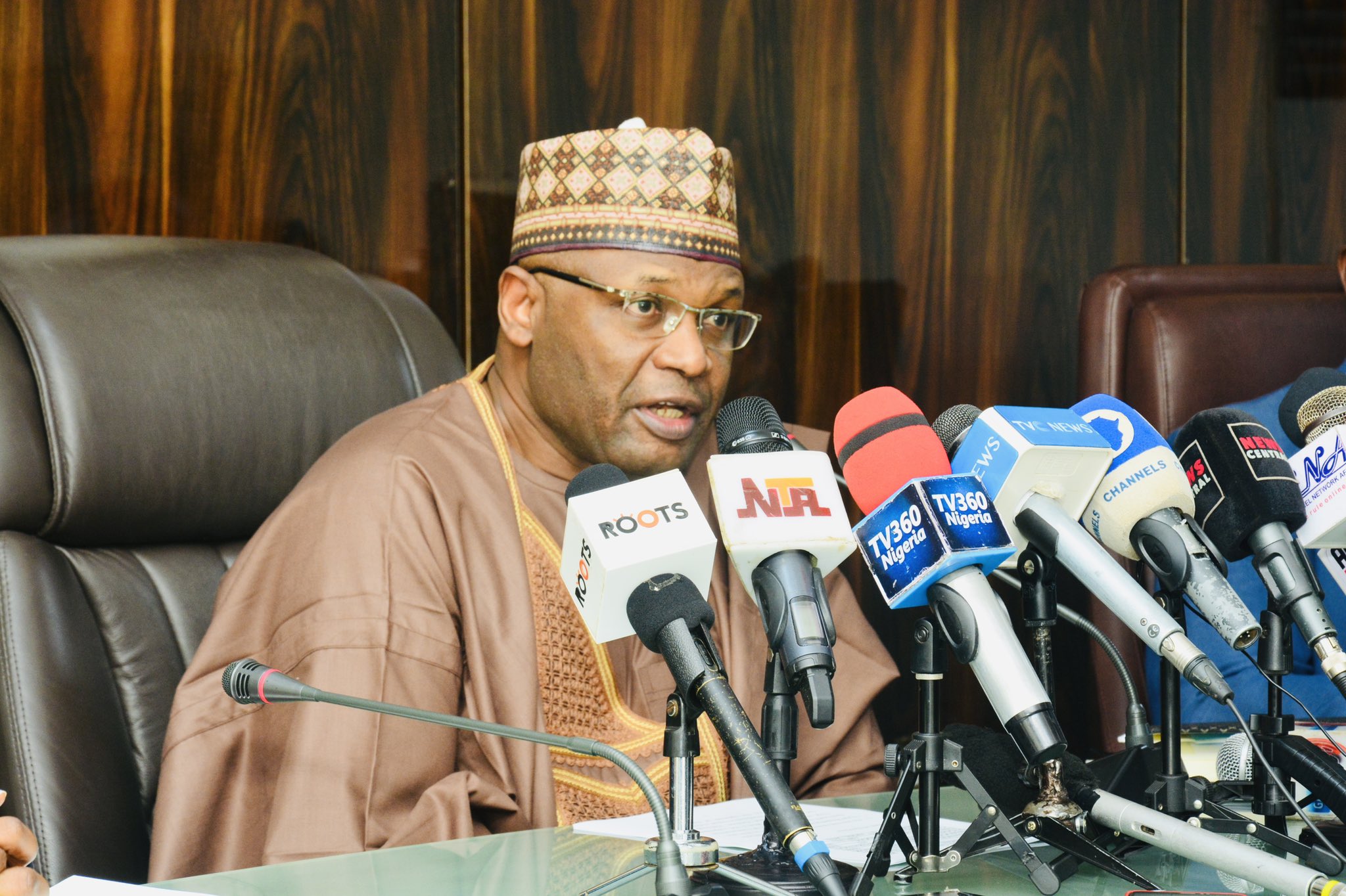
The Independent National Electoral Commission (INEC) has raised fresh concerns over security challenges confronting next year’s general elections.
It also disclosed that it would immediately publish summary of guidelines on finances and election expenses of parties and candidates and release the summary highlighting the legal provisions governing the conduct of political rallies, processions and campaigns.
INEC’s Chairman, Mahmood Yakubu, made the revelation at the stakeholders forum organised by the Nigeria Civil Society Situation Room in Abuja, yesterday.
“Arising from our experience in previous elections, the commission has expanded the scope of collaboration to include the marine union for the riverine areas. Very soon, the revised MoU will be signed with the service providers to cover both land and maritime transportation.
“However, there are four broad areas that Nigerians would like to receive assurances of the progress the commission is making and challenges (if any) being encountered. They are security, campaign finance, technology, the Permanent Voters’ Cards (PVCs) and assurances that their votes will count on Election Day.
“On security, the commission has said repeatedly that it is an area of concern. The commission has the responsibility to conduct elections. However, securing the environment for the deployment of personnel and materials as well as the peaceful conduct of elections is a shared responsibility involving the security agencies, the political actors and their supporters, the media and all other critical stakeholders.
“The perennial insecurity in the country is a source for concern. This existing challenge is compounded by the unfortunate incidents of attacks on campaigns, rallies and processions across all political parties.
“Although the provisions of the Electoral Act 2022 and the Commission’s Regulations and Guidelines for Political Parties are clear, the commission has found it necessary to remind political parties, candidates and their supporters on the provisions of the law and their responsibilities.
“Accordingly, on Thursday, November 24, 2022, the commission will release a summary highlighting the legal provisions governing the conduct of political rallies, processions and campaigns. This will be uploaded to our website and social media platforms.
“Beyond the provisions of the law, the commission held an emergency meeting of the Inter-Agency Consultative Committee on Election Security (ICCES) in the wake of the recent condemnable attacks on our Local Government offices in Ogun and Osunstates. Far-reaching resolutions were arrived at, including the deployment of joint security teams to our facilities nationwide.
“Beyond that, the Inspector General of Police summoned an extraordinary meeting with leaders of political parties on the imperative of peaceful campaigns. We will continue to follow up on that bold step in our engagement with political parties and other critical stakeholders.
“Turning to campaign finance, the commission is determined to tackle the matter frontally. Areas of violation include party and candidate expenditure beyond what is provided by law and the diabolical practice of vote buying at polling units on Election Day. Here again, the commission will on Thursday (yesterday), publish a summary of the guidelines on finances and election expenses of parties and candidates.
“Beyond that, we are mobilising every national institution with the responsibility for tracking and combating the illicit flow of funds as well as the broadcast and print media regulatory agencies to confront the problem head-on. The details of this will be unveiled shortly.
“On technology, the Electoral Act 2022 requires the commission to deploy technology on Election Day for voter accreditation and the upload of polling unit results to the INEC Result Viewing (IReV) portal. These processes will be achieved through the use of the Bimodal Voter Accreditation System (BVAS). I wish to reassure Nigerians that the BVAS has come to stay as the only means of voter accreditation.
“There will be no incident form on election day. Results from polling units will be uploaded to the IReV portal in real-time. Nigerians will view the results as they are uploaded.
“For the last two years beginning from August 2020, the commission has published results direct from polling units in 105 off-cycle Governorship and bye-elections in real-time and the results can still be viewed on the IReV portal.
“The 2023 General Election will not be different. There is no truth in any insinuation to the contrary. This should put to rest the erroneous notion that Nigerians will not have the opportunity to view polling unit results uploaded by Presiding Officers in real-time on Election Day.
“On the collection of Permanent Voters Cards (PVCs) for fresh registrations in 2022 as well as applicants for transfer to other polling units and the replacement of damaged or lost cards, we wish to assure Nigerians that the commission will soon release the timelines and procedure for the collection of PVCs.
“With the ongoing display of the register for claims and objections, the commission considered it appropriate to conclude the process so that the cards will not be in the hands of ineligible registrants who may attempt to use them during the election.
“We understand the anxiety of Nigerians to collect their PVCs and appeal for a little patience as we speedily conclude the necessary safeguards for a transparent process. The cleaning up of the voters’ register is critical to elections. We have been transparent in making the register available both online and manual copies in 9,583 locations nationwide (8,809 Wards and 774 Local Government Areas) for scrutiny by citizens as required by law.
“The voters’ register is the largest database of citizens in Nigeria. Like all databases of this size, it cannot be perfect. However, the commission believes that Nigerians are the real owners of the voters’ register.
“They are therefore in a best position to point out ineligible persons on the register, including deceased persons that will help the commission to improve on this critical national asset. I want to reassure you that based on the observations made by Nigerians; we will dutifully clean up the register ahead of the election.”
Similarly, the Independent National Electoral Commission (INEC) has called on all media organisations in Nigeria to avoid the ‘breaking news’ syndrome in their reportage as the 2023 general election draws nearer.
The National Chairman of the commission, Prof. MahmoodYakubu, made the call in Bauchi, yesterday, during a one-day capacity-building programme for journalists on conflict-sensitive reporting and the 2023 general election.
Organised by the Nigeria Union of Journalists (NUJ) and INEC, the programme was for journalists in the North Eastern part of the country.
Yakubu, represented by AlhajiNasir Mohammed, said that the tendency for the ‘breaking news’ syndrome could result in dishing out unverified or not properly processed information to the general public.
He said the media must be circumspect in casting headlines and avoid sensational headlines “because sometimes, people look at the headlines and draw conclusions without looking at the body of the report.
“The media must avoid deliberate falsehood. They must also avoid tilting of stories towards religious, zonal and ethnic narratives,” he said.
Yakubu assured that INEC would continue to partner with the media not only as key stakeholders in the electoral process but also as a veritable tool for combating misinformation, fake news and malicious falsehood in society.
Also speaking, the National President, NUJ, Chief Chris Isiguzo, represented by the National Secretary of the union, Mr ShuaibuLiman, said if there was going to be a Third World War, it would start from social media.
He added that as media professionals, journalists need to be careful about carelessly jumping on the bandwagon of emergency journalism which thrives in canvassing support for the political parties of their sentiments using social media.
“Journalists must avoid hate journalism and fake news as these evils can destroy a society.
“The advent of multimedia technology has changed the pattern and flow of communication, globally and since journalism is in the business and practice of communication, it has also impacted people tremendously”, he said.
Also, a human rights lawyer, EffiongInihebe, has disclosed that the Bimodal Voters Accreditation System(BVAS), an electronic means of reading Permanent Voter Cards(PVCs) and accreditation of voters, would guarantee free and fair elections in 2023.
Inihebe made this known on his official Twitter handle while reacting to the comment credited to the All Progressives Party Congress (APC), Chairman AbdullahiAdamu, stating that Nigeria is not ready for the use of BVAS.
Reacting to Adamu’s comment, Inihebe said: “The enemies of democracy and credible elections are unveiling themselves in the most shameful way. Adamu is telling us that they are scared of BVAS. Clearly, election riggers are terrified. If INEC succumbs to this evil agenda, we can kiss free and fair elections in 2023 goodbye.”
The Independent Electoral Commission, INEC, Chairman MahmoodYakubu, a week ago, assured Nigerians that there is no going back on the use of the BVAS and Result Viewing Portal (IReV) for the forthcoming elections.
The BVAS was used in the Ekiti and Osun elections which took place on June 18 and July 16, 2022, respectively.



The Rivers State House of Assembly has approved the 2026–2028 Medium Term Expenditure Framework (MTEF) submitted by Governor Siminalayi Fubara.
This reaffirms the lawmakers’ commitment to enacting laws and taking legislative actions geared towards the overall development of the State.
The Assembly gave the approval during its Second Legislative Sitting of the Fourth Session held last Friday.
Speaking on the MTEF document during plenary, the House Speaker, Rt. Hon. Martin Amaewhule, noted that by the provision of Section 10(1)(b) of the Rivers State Fiscal Responsibility Law No. 8 of 2010, the MTEF ought to have been laid before the House in September 2025.
Amaewhule explained that traditionally, the document is expected to be presented four months before the commencement of the next financial year and immediately after the expiration of every three-year fiscal cycle.
He, however, stated that in the interest of the State and its people, the House considered it necessary to deliberate on the document, describing it as a precursor to the 2026 Budget Estimates.
The Speaker expressed concern that the year had already progressed significantly before the presentation of the framework.
During deliberations on the document, members examined the assumptions and projections contained in the MTEF and observed that strict adherence to the outlined fiscal parameters would ultimately serve the interest of Rivers people.
The lawmakers maintained that effective implementation of the framework would promote prudent financial management and enhance developmental planning across the State.
Following the debate and positive consideration by members, the Speaker put the question to the House and members voted overwhelmingly in support of the approval of the MTEF.
Meanwhile, during the same sitting last Friday, the House also received a petition from the Chairman of Obio/Akpor Local Government Council, Dr. Gift Worlu.
The petition was presented by the member representing Obio/Akpor Constituency II, Hon. Emilia Amadi.
According to the petition, concerns were raised over an imminent security breach, threats to lives, destruction of property and alleged forceful takeover of property by some lawless persons within parts of the Local Government Area.
Presenting the petition before the House, Hon. Amadi appealed to the lawmakers to revisit the matter and take necessary steps aimed at safeguarding lives and property in the affected communities.
The House is expected to further deliberate on the petition and consider measures to address the concerns raised in order to sustain peace and security in the area.
King Onunwor
News
Fubara Reaffirms Commitment To Blue Economy, Private Sector Growth …Calls For Protection Of Marine Resources


The Rivers State Government has reaffirmed its commitment towards fostering private sector-driven economic growth and harnessing the vast opportunities within the blue economy to drive national development.
Rivers State Governor, Sir Siminalayi Fubara, made this known during the opening ceremony of the 2026 Annual General Meeting and Conference of the Nigerian Association of Chambers of Commerce, Industry, Mines and Agriculture (NACCIMA), held in Port Harcourt, last Thursday.
Represented by his deputy, Prof. Ngozi Odu, Governor Fubara described the conference theme, “The Gulf of Guinea and Blue Economy: Pathways to Trade, Investment and Security Towards a $1 Trillion Economy,” as both timely and strategic.
?
?The governor welcomed the leadership of NACCIMA, delegates from the 115 Chambers of Commerce across Nigeria, members of the diplomatic corps, captains of industry, investors, and other distinguished guests to Rivers State.
?
?He commended the National President of NACCIMA, Engr. Jani Ibrahim, for choosing Rivers State as the host of the 2026 conference, noting that the decision had drawn national attention to the immense economic opportunities embedded in the blue economy.
?
?Fubara stated that the blue economy possesses the capacity to generate revenue that could surpass earnings from the oil and gas sector if properly developed and managed.
?
?He stressed the need for Nigeria and other countries along the Gulf of Guinea to take deliberate steps toward maximizing the benefits of their maritime resources while guarding against the continued exploitation of coastal assets by foreign operators.
?
?Expressing concern over the activities of foreign fishing trawlers operating in Nigerian waters, the governor noted that many harvest seafood resources without making meaningful economic contributions to the country.
?
?He emphasized the need for stronger monitoring mechanisms and enhanced protection of Nigeria’s marine resources.
?
?”We must wake up and hit the ground running. If we do not capitalize on and utilize our blue economy, other nations will utilize it for us,” he stated.
?
?The governor thanked NACCIMA for what he described as a timely wake-up call on the importance of the blue economy and maritime security, adding that the successful hosting of the conference in Rivers State demonstrates the state’s safety, hospitality, and readiness for business and investment.
?
?Earlier in his remarks, the President of NACCIMA, Engr. Jani Ibrahim, expressed appreciation to the Rivers State Government for hosting the 66th Annual General Conference of the Association and for the warm reception accorded delegates.
?
?He noted that the state’s commitment to hosting the conference reflects its readiness for business and has helped restore investors’ confidence in its economic potential.
?
?According to him, NACCIMA highly values the cordial relationship between the Rivers State Government and the organized private sector, emphasizing that the association remains the foremost voice of the Nigerian business community.
?
?In her welcome address, the President of the Port Harcourt Chamber of Commerce, Industry, Mines and Agriculture (PHCCIMA), Dr. Chinyere Nwoga, described the conference as a historic milestone, noting that it was the first time in the Chamber’s 66-year history that it was hosting the national body of NACCIMA.
Nwoga commended the national leadership for entrusting PHCCIMA with the hosting rights and pledged the Chamber’s continued commitment to advancing the objectives of the association and promoting sustainable economic growth through private sector engagement.

Rivers State Governor, Sir Siminalayi Fubara, has ordered a complete seal-off of the site of a five-storey building which collapsed last Wednesday, killing one person and injuring several others in Port Harcourt.
Fubara gave the order during his visit to the site of the collapsed building last Thursday to assess the situation.
He said the site will remain “completely sealed off” until the government gets to the “root cause” of the incident.
He described the incident as unfortunate but observed that preliminary investigation had shown that the developer had earlier refused to subject his site to inspection by the state authorities and comply with the necessary building regulations.
The governor, who inspected the site alongside the Commissioner for Physical Planning and Urban Development, Sir Amairigha Edward Hart, and the Permanent Secretary of the Ministry of Special Duties, Dabite Sokari George, explained that he couldn’t visit the site the previous day because he was awaiting formal briefing from the relevant agency of government on the situation.
“We’re here to see for ourselves the very unfortunate incident that took place here. I didn’t come yesterday because I wanted to get the report first, and the Commissioner did brief me that the incident site, first, is not as claimed by the developer, that it’s not under the jurisdiction of the state; that it’s under the jurisdiction of the Federal Housing Authority.
“He also informed me that when the project was ongoing, they came here severally to inspect what was happening and also to see the level of compliance. But unfortunately, that the developer kept claiming that we don’t have any right to interfere,” he said.
Fubara said that the issue was no longer about interference but about the life lost to the building collapse and the collateral damage brought upon the family of the deceased.
He extended condolences to the families of the victims, insisting that the incident could have been avoided if the developer had complied with the rules guiding the engineering design and construction of such a structure in the 21st century.
“We feel very sorry and very regretful that such an incident should be happening in this 21st century because technology has advanced, engineering has developed. I wonder what kind of engineer would even allow this kind of project to go on when everything about it from inception has been faulty.
“I think that at this point, nothing is going to happen on this site any more. We are going to make sure that this place is completely sealed off until we get to the root cause of this incident,” the governor said.
-
Rivers11 hours ago
Rivers Police Uncovers Firearm Concealed In Loaf Of Bread
-

 News8 hours ago
Fubara Reaffirms Commitment To Blue Economy, Private Sector Growth …Calls For Protection Of Marine Resources
-
 Business8 hours ago
IPMAN Raises Concern Over Delay In Chinese Refinery Deal …Predicts Lower Fuel Prices Through Competition
-
Business12 hours ago
Navy Nabs 13 Black Sand Miners In Bayelsa –Impound Two Boats
-
Business11 hours ago
Gas Economy: Decade of Gas, Pi-CNG/ EV Deepen Media Engagement
-
Sports11 hours ago
Six Nigerians To Play For NBA Teams
-
Business11 hours ago
Accountable Leadership, Urgent Reforms Will Stimulate Economic Growth — Osi
-
Business12 hours ago
Navy Hands Over Five Suspected Stowaways to NIS