
Politics
Section 84 (12): To Be Or Not To Be

In the original version of the Electoral Act, Section 84 (12) comes with a sub-heading titled: “Political Appointee Not Eligible as a Voting Delegate or Aspirant.” Using this as a guide, it becomes crystal clear that the intent of the lawmakers with the introduction of Section 84 (12) was to make it impossible for a political appointee to aspire for elective office whilst still holding on to his political appointment. I honestly cannot see how this piece of legislation amounts to an amendment of the Constitution through the backdoor as some have suggested.
The definition of Section 318 of the Constitution which clarifies those to be regarded as part of the public service of the Federation also made similar provisions for public service of the State. Judicial authorities abound that political appointees hold their offices at the pleasure of the appointor and they are not civil or public servants as provided for in the Constitution. Thus, there is no apparent or implied conflict between Section 84 (12) of the Electoral Act and any of the provisions of the Constitution highlighted above, the rationale being to ensure that those who hold public office are not exposed to any situation that may lead to a conflict of interest.
In the same vein, section 84 (12) does not infringe upon the right to freely assemble and associate with other persons as provided for in Section 40 of the Constitution or the right to form a political party as provided for under Section 221 thereof. The Constitution for instance provides the right to freedom of movement for every citizen, but to travel out of Nigeria, you need a passport, without which you would not be allowed to board the plane. It is in that passport that the travelling visa to your country of destination will be imposed. The Courts have also held that the requirement for a passport as a condition to travel does not infringe upon the constitutional right of movement
In the case of Awolowo v. Ministry of Internal Affairs, a similar concept was elucidated upon by the Supreme Court, when the appellant, in that case, the late Chief Obafemi Awolowo, SAN, was standing trial for treasonable felony. He engaged the service of a British lawyer, Mr. E.F.N. Gratiaen to defend him. On arrival in Lagos, MrGratiaen was denied entry into Nigeria by the Federal Ministry of Internal affairs. The court had to determine the import of Section 21 (5) (c) of the then 1960 Constitution of the Federal Republic of Nigeria (now section 36 (6) (c ) of the 1999 Constitution, which provided that “an accused person is entitled to defend himself in person or by a legal practitioner of his own choice”. Chief Awolowo contended in that case that he was entitled to be represented by any lawyer of his choice whether indigenous or British.
Thus, the order prohibiting his lawyer, Mr Gratiaen, was ultra vires and against his right to a fair hearing. He, therefore, prayed the court to grant an order of injunction, restraining the defendant from preventing the said Mr. Gratiaen (QC) or any other British counsel who might be the counsel of his choice, from entering Nigeria to defend him in the pending charge. On the other hand, the defendants, in that case, argued that the provisions of section 13 of the Immigration Act which provides that “Notwithstanding anything in this ordinance contained, the Governor-General may, in his absolute discretion, prohibit the entry into Nigeria of any person, not being a native of Nigeria”, gives the ministry the power to refuse a non-Nigerian entry into the country. More so, in the exercise of the right conferred by Section 21 (5) (c) of the 1960 Constitution, the legal representative must be a qualified person entitled to a right of audience in Nigerian courts. Secondly, he must be available to take up the case, and therefore must be able to enter Nigeria as of right and must be a Nigerian.
The High Court of the federal territory of Lagos, per Justice Udo Udoma held that based on the above provisions, the legal representative chosen by an accused person if resident outside Nigeria must be a person who could enter Nigeria as of right and must not be anyone under any disability. In the words of the judge: “I must state at once that I do not accept as sound proposition the submission that the provision contained in Section 21 (5) (c ) of the Constitution, liberally interpreted, can be construed to entitle anyone to bring a Counsel from the United Kingdom to defend him in a criminal charge. To accept that interpretation, would be to strain language. The Constitution is a Nigerian Constitution, meant for Nigerians in Nigeria. It only runs in Nigeria. The natural consequence of this is that the legal representative contemplated in Section 21 (5) (c) ought to be someone in Nigeria, and not outside it.” This decision was affirmed by the Supreme Court in the appeal filed against it by Chief Awolowo. In a similar vein, Section 84 (12) has not stopped any citizen from contesting election but it has imposed a condition upon political appointees to first step down from their political position to seek elective office. There is no contradiction at all in this laudable provision with the Constitution.
Most political appointees are paid one form of emolument or allowance or the other by the government, with specific responsibilities to perform. Thus, even apart from the conflict of retaining an executive position and seeking elective office, how does a person occupying a political office abandon his responsibilities for which he is being paid to embark upon campaigns at the expense of the people? What justification can we give for retaining a person on the payroll of the government who already has his eyes on another assignment? Political appointees and persons in public service of the Federation and of the States are two separate and distinct classes of persons. While those in public service have not less than thirty days ahead of their party primaries to resign to contest an election, political appointees must resign before they can become voting delegates or be voted for in their party primaries or congresses. The Constitution stipulates that public office holders resign “at least” thirty days before the elections they are interested in, which presupposes that such public officers could indeed resign earlier than the 30 days, however, the Electoral Act stipulates that political appointees must resign before party primaries/congresses where candidates are to emerge.
The question to ask then is whether the National Assembly has by Section 84 (12) of the Electoral Act negated the constitutional stipulation of “at least 30 days”? Certainly not. The two concepts do not oppose themselves at all. For civil and public servants, the Constitution demands that they resign not less than thirty days prior to any election for which they seek to contest whilst Section 84 (12) simply prohibits political appointees from participating in elections to be conducted at the conventions and congresses of their political parties whilst still retaining their political appointments. In Section 228 (a), the Constitution states that the National Assembly “… may by law provide guidelines and rules to ensure internal democracy within political parties, including making laws for the conduct of the party primaries, party congresses and party convention”. Under and by virtue of Section 4 of the same Constitution, “the National Assembly shall have the power to make laws for the peace, order and good government of the Federation or any part thereof”. What then, if one may ask, could be the ‘offence’ of the National Assembly in fulfilling its mandate as directed by the Constitution?
To my mind, there is really no need for us to split hairs on this simple matter of interpretation of the Constitution and the Electoral Act. Unless as suggested by Mr. Femi Falana, SAN and many others, the executive arm has an axe to grind with the legislature over this very harmless piece of legislation, there can be no basis for the jubilation that has greeted the judgment of the Umuahia Federal High Court by the executive. We must sanitize the electoral space to remove all vestiges of manipulation and land mines. It is not in our best interest for those that we pay to perform certain duties to abscond from their sacred responsibilities in order to actualise their personal ambitions to seek elective office. They owe us the duty of fairness to surrender our mandate granted to them through their appointments should they aspire to contest any election. It is gratifying that the National Assembly and other stakeholders of our electoral system have decided to join the case to explore further interpretation by the appellate courts. That is commendable indeed or else we may soon have in our hands a ridiculous situation whereby the Chairman of INEC or even the Governor of the Central Bank of Nigeria may seek to contest election whilst still holding on to their appointments.
By: Ebun-Olu Adegboruwa
Adegboruwa, a constitutional lawyer, is a Senior Advocate of Nigeria (SAN).


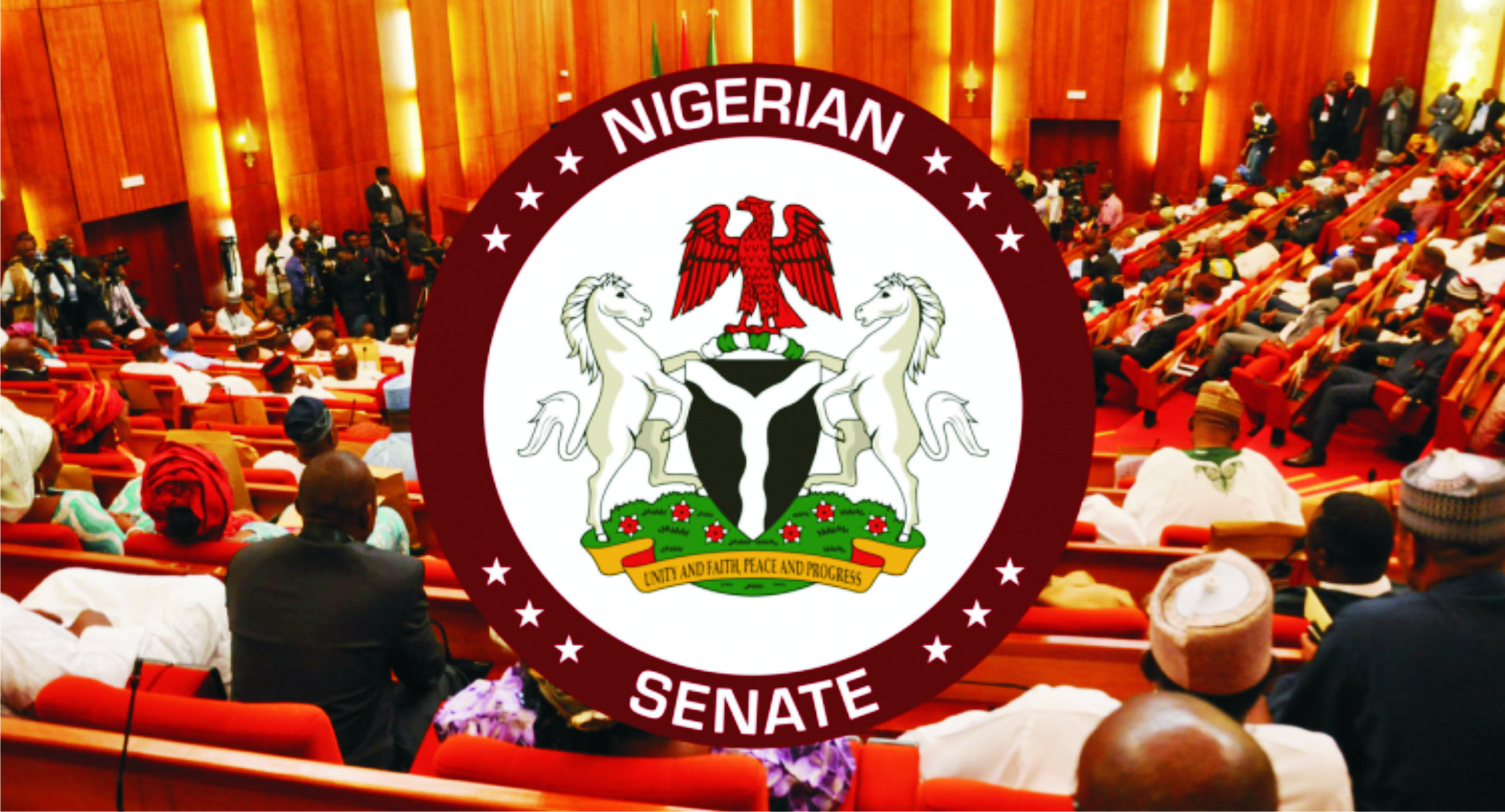
The Senate yesterday urged President Bola Tinubu to remove the Registrar-General of the Corporate Affairs Commission, Hussaini Magaji, over what lawmakers described as a persistent refusal to appear before its Committee on Finance.
The resolution followed a motion raised by Senator Orji Uzor Kalu during a session where members of the President’s economic team were present for engagement with the committee.
Tension rose at the commencement of the meeting when agency heads were introduced and senators observed the absence of the CAC Registrar-General, who had been invited to account for the commission’s activities, particularly on revenue matters.
Moving the motion, Kalu expressed anger over what he termed repeated disregard for legislative oversight, accusing the CAC boss of consistently avoiding invitations to appear before the committee.
He said, “Since I came to the Senate, this CAC man has always given excuses that he is in the Villa or going to London. He is not above the law. This man is not coming to the Senate. Look at the ministers of finance and budget. They are both here. We summoned them and they came.
“But this man thinks he’s bigger than the Senate. We’re not going to take that rubbish again. He had refused on so many occasions to honour our invitation to appear before this committee. We have issues with the reconciliation of the revenue of CAC.
“I move a motion that the man should be reported to Mr President and ask for immediate removal because we cannot continue with him. Is that what we’re doing here? He should come and give us an account of what he had done.”
The Chairman of the Senate Committee on Finance, Senator Sani Musa, corroborated the concerns, pointing to unresolved discrepancies in the reconciliation of the commission’s revenues.
He noted that despite several invitations, the registrar-general had failed to show up to address the issues raised by senators.
“The registrar-general of the Corporate Affairs Commission has refused on so many occasions to honour the calls, invitations or summons of this most important committee.
“There are only about three committees that are in the constitution of the Federal Republic of Nigeria and the Committee of Finance is one of those committees. Sections 88, and 89 have given us these powers.
“And as registrar-general, we have issues with the reconciliation of their revenue. Anytime he is invited, he will give us one reason or another, and he will send junior officers to come and talk to the Senate. That cannot be accepted,” he said.
In a further show of frustration, Senator Adams Oshiomhole proposed that the Senate escalate the matter by withholding approval of the CAC’s 2026 budget pending the registrar-general’s personal appearance before the committee.
Oshiomhole also suggested that the commission be restrained from spending its internally generated revenue without prior approval of the national assembly.
“This senate should decline to appropriate anything in the 2026 budget until we are satisfied that he has accounted for previous money and spending properly.
“And should he spend money that is not appropriated, he should be heading to Kuje prison,” Oshiomhole said.
The motion urging the President to remove the CAC Registrar-General was subsequently put to a voice vote and adopted.
The development underscores renewed assertiveness by the Senate in exercising its constitutional oversight functions, particularly over revenue-generating agencies.
The Corporate Affairs Commission, which regulates companies and business registrations in Nigeria, is a key contributor to non-oil revenue, making accountability and transparency central to its operations.

President Bola Tinubu has appealed to the leadership of the 10th Senate to amend the constitution to provide a legal framework for the establishment of State Police to tackle insecurity nationwide.
President Tinubu made the appeal during an interfaith breakfast with senators at the Presidential Villa in Abuja, yesterday.
The president said that the creation of State Police has become urgent to address Nigeria’s evolving security challenges, strengthen grassroots policing, and enhance states’ capacity to respond swiftly to threats within their jurisdictions.
He noted that a decentralised policing structure would complement existing federal security architecture and promote intelligence-led, community-focused law enforcement.
“We are facing terrorism, banditry, and insurgency. But we will never fail to make a right response to this cause. What I will ask for tonight is for you (Senators) to start thinking how best to amend the constitution to incorporate the State Police for us to secure our country, take over our forests from marauders, and free our children from fear,” he said.
The president commended the cordial relationship between the Executive and the Senate, saying that unity is needed to defeat terrorism and banditry in the country.
“It is a good thing that we are working in harmony, we are looking forward to a country that evolves, a country that takes care of its citizens and protects all.
Tinubu thanked the Senate for its unflinching support towards achieving various economic reforms of his administration, especially the fuel subsidy removal and tax reform policy.
“I have a lot of credit for bold reforms. Without your collaboration and inspiration, those reforms would not be possible. We are reformists together. What we gave up and what we stopped is monumental corruption in the subsidy system. We don’t want to participate in monumental corruption and arbitrage foreign exchange.
You don’t have to chase me for dollars; you could see what Nigeria is today. You should be proud, and I am glad you are. What we are enjoying is a stable economy, and prosperity is beckoning us. We need to work hard, and this attendance means a lot to me,” the president said.
President of the Senate, Godswill Akpabio, commended the president for hosting the leadership of the Senate to the Interfaith breaking of fast.
He commended President Tinubu for providing the visionary leadership the nation needs at this critical time, stating that the administration’s bold reforms have now brought more revenue to governors at the sub-national level for the development of critical infrastructure.
The Senate President prayed for the administration, and for the nation’s peace and prosperity.

Alhaji Mohammed Kasim, the candidate of the Peoples Democratic Party (PDP), has won the Gwagwalada Area Council chairmanship election in the Federal Capital Territory (FCT).
Philip Akpeni, the Returning Officer of the Independent National Electoral Commission (INEC), announced the results on Sunday morning.
Alhaji Kasim polled 22,165 votes to defeat Alhaji Yahaya Shehu of the All Progressives Congress (APC), who polled 17,788 votes.
Alhaji Biko Umar of the All Progressives Grand Alliance (APGA) scored 1, 687 to come in third place.
“I am the returning officer for the 2026 FCT Area Council, Gwagwalada chairmanship held on Feb. 21, 2026,” Akpeni said.
“That Mohammed Kasim of PDP, having certified the requirements of the law, is hereby declared the winner and is returned elected.”
In the Abuja Municipal Area Council (AMAC), Hon. Christopher Maikalangu, the APC candidate, was declared the winner of the chairmanship poll with 40,295 votes.
Andrew Abue, the Collation Officer for AMAC, said Hon. Maikalangu, who is the incumbent AMAC chairman, was returned elected having scored the highest number of votes cast.
The African Democratic Congress (ADC) came second with 12,109 votes, while the Peoples Democratic Party (PDP) polled 3,398 votes.
According to Abue, the total number of valid votes in the chairmanship poll was 62,861, while the total votes cast stood at 65,197.
He added that the number of registered voters in AMAC was 837,338, while the total number of accredited voters was 65,676.
Meanwhile, the Independent National Electoral Commission (INEC) has declared Mr. Joshua Ishaku of the All Progressives Congress (APC) as the winner of the Bwari Area Council Chairmanship election.
Announcing the result on Sunday in Bwari, the Returning Officer for the election, Prof. Mohammed Nurudeen, stated that Ishaku polled a total of 18,466 votes to emerge victorious in the February 21, 2026 poll.
“I am the Returning Officer for the 2026 FCT Area Council, Bwari chairmanship held on Feb. 21, 2026. That Joshua Ishaku, having satisfied the requirements of the law, is hereby declared the winner and is returned elected,” Nurudeen said.
According to the results declared, the candidate of the African Democratic Congress (ADC) secured 4,254 votes, while the Zenith Labour Party (ZLP) polled 3,515 votes to place second and third respectively.
The declaration adds to the series of results emerging from the 2026 FCT Area Council elections, as political parties assess their performance ahead of future contests.
INEC UPLOADS 2,602 OF 2,822 FCT CHAIRMANSHIP RESULTS ON IReV
The Independent National Electoral Commission (INEC) had uploaded 2,602 out of the 2,822 expected polling unit results from Saturday’s chairmanship elections in the Federal Capital Territory (FCT) as at 5:55am on Sunday, data retrieved from its Result Viewing Portal (IReV) showed.
According to The Tide source, the figure represents an overall upload rate of about 92.2 per cent across the six area councils of the territory.
A council-by-council breakdown indicates that Municipal Area Council recorded the highest number of submissions in absolute terms, with 1,309 of 1,401 polling unit results uploaded, representing 93.43 per cent.
In Gwagwalada Area Council, 330 of the expected 338 polling unit results had been uploaded, representing 97.63 per cent — the highest upload rate among the six councils.
In Bwari Area Council, INEC uploaded 463 of 485 polling unit results, translating to 95.46 per cent.
In Abaji Area Council, 129 of 135 polling unit results had been uploaded as at 5:55am, representing 95.56 per cent.
In Kwali Area Council, 164 of the expected 201 polling unit results were available on the portal, representing 81.59 per cent.
In Kuje Area Council, 207 of 262 polling unit results had been uploaded, representing 79.01 per cent — the lowest rate among the six councils as at the time of review.
-
 News2 days ago
Amend Constitution To Accommodate State Police, Tinubu Tells Senators
-
 Politics2 days ago
Senate Urges Tinubu To Sack CAC Boss
-

 News2 days ago
Disu Takes Over As New IGP …Declares Total War On Corruption, Impunity
-
Business3 days ago
President Tinubu Extends Raw Shea Nuts Export Ban To 2027
-
Business3 days ago
Crisis Response: EU-project Delivers New Vet. Clinic To Katsina Govt.
-
Business2 days ago
President Tinubu Approves Extension Ban On Raw Shea Nut Export
-
Sports2 days ago
NDG: Rivers Coach Appeal To NDDC In Talent Discovery
-
Rivers2 days ago
Etche Clan Urges Govt On Chieftaincy Recognition