
Nation
Insecurity: Experts Call For Community Policing

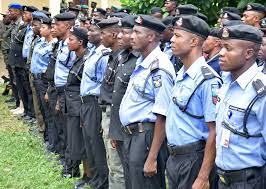
Security experts at a virtual meeting organised by the Nigeria Diaspora Network (NDN), United Kingdom (UK) chapter, have said that a well coordinated community policing system would address the present security challenge in Nigeria.
Some of the participants, who spoke at the meeting monitored in Abuja, stressed that all hands must be on deck to check security problems.
The title of the meeting was: “Security Challenges and Community Policing.”
A security expert in Global Community Policing, Dr Aminu Audu, was optimistic that if adopted in line with international best practice, community policing would work in the country.
Audu, who authored a publication titled: “Police Corruption and Community Policing in Nigeria: A Sociological Case Study,” said the issue of insecurity was not a new thing in the country.
“What we are seeing today is a product of series of activities that have transpired in the past. So it is a build up,” he said.
He said though there is insecurity in Nigeria, the way forward is community policing.
“According to Freeman in 1992, community policing is about policy and strategy to achieve more effective crime control, reduce fear of crime, improve quality of life, improve police services and police legitimacy through proactive reliance on community resources that seeks to change crime causing conditions,” he said.
He stated further that community policing would ensure the need for greater accountability of police, greater public share in decision making and greater concern for civil rights and liberty.
Audu said it was disheartening that when talking about community policing, “what comes to our minds is about forming vigilante group and arming them with weapons for them to begin to delve into prejudicial killings and manhandling of crime suspects.
The expert, who acknowledged the influence of foreign factor in the security challenge, said community policing would not be a success if the problem of poverty and other factors were not addressed.
He also said over the years, community policing had not worked effectively in the country because there has been a wide communication gap between the community and the security providers.
He urged people to desist from politicising the initiative.
Audu, however, commended President Muhammadu Buhari for his support for community policing.
“I really commend President Buhari for taking the step to implement community policing with a funding investment to the tune of about 26 million pounce.
“But how many governors or local government chairmen have taken it upon themselves to implement these policies according to specification?” he asked.
The National Economic Council (NEC) had in a virtual meeting chaired by Vice-President Yemi Osinbajo had, on Aug. 20, 2020, approved the sum of N13.3 billion for the take-off of community policing initiative across the country.
“I am happy that the Federal Government is implementing based on empirical research. Now at the moment, they are undergoing process,” Audu said.
A Preventive Terrorism Consultant, Mr Temitope Olodo, said all the stakeholders should be ready to take it seriously if community policing would work.
He said the system was the easiest way of policing but corruption had been the bane.
He said people had to own community policing to work.
“Community policing is all about people telling the authority what the security needs are and channelling the effort and resources to those areas to tackle them,” he added.
He also said to solve the problem, the country needed to look at the past and how we got to this present position.
According to Olodo, in Nigeria, we are not policing by consent, we are policing by force.
“If we police by consent, a lot of things that are happening in Nigeria will not be happening. I think that is where we have got it wrong,” he said.
Olodo, who is the president, African Security Forum and a retired Metropolitan police officer in the UK, enjoined the Federal Government to introduce a system of Key Performance Indicator (KPI) to measure the performance of all security officers in the country.
“We need practical changes that we can turn around and say, this is the change that we want.
“I was a former civil servant. If you ask me today, I have never seen the job description of IGP (inspector-general of police) and I am not making it personal.
“I don’t know what kind of KPI he is being measured against but I can tell you that we know the KPI of commissioner of police for the Metropolitan Police, we know the one for New York, Australia, etc.
“We know how police are being measured.
I was once a constable and I have KPI.
“When I was leaving the Metropolitan Police on secondment, I was measured on KPI.
“They brought out my KPI and that was the basis upon which if I am entitled to other benefits, in terms of my salary going up.
“But I don’t know what KPIs are for the Nigerian Police. If there is no KPI, what do you measure them against?” he asked.
Olodo explained that if there is no KPI, security officers’ performance indicators would not be proportionate to their work done.
A Cyber Security Professional, Mr Deji Adebayo, who is one of the NDN coordinators in the UK, said the meeting was organised as part of the effort by Nigerians living abroad to see how the security challenge could be solved towards creating a better and secured society for the country.



The University of Port Harcourt Women Association (UPWA) on Thursday staged a vibrant and memorable edition of its Annual Inter-House Sports Competition at the University of Port Harcourt Sports Village, drawing an impressive turnout of pupils, parents, staff and invited guests.
The event, organised by the UPWA International Group of Schools, brought together children from the pre-nursery, nursery and secondary sections in a colourful celebration of youth athleticism, discipline and teamwork. The arena came alive with cheers and excitement as pupils, clad in their various house colours, marched in a ceremonial parade before proceeding to compete in a wide range of track and field events, relays, novelty races and other team-based activities designed to promote physical fitness and healthy competition.
Declaring the competition open, the Vice-Chancellor of the University of Port Harcourt, Professor Owunari Georgewill, commended UPWA for sustaining a tradition that continues to nurture young talents beyond the classroom. He noted that sports remain a critical component of holistic education, helping to build resilience, confidence, leadership skills and social interaction among children.
In her remarks, the President of UPWA, Professor Udeme Georgewill, expressed appreciation to parents, teachers and members of the organising committee for their dedication and sacrifice in ensuring the success of the programme despite prevailing economic challenges. She described the event as a reflection of unity and collective effort within the school community.
“This is the first time White House is emerging overall winner, and that shows remarkable improvement and great sportsmanship,” she said. “We all had fun. It is not easy putting an event like this together considering the economic situation, but we are grateful to the parents for being part of this journey. The excitement everywhere is truly heartwarming.”
The competition featured spirited participation from the various houses, including Purple House, San Chicago Red House and White House, with pupils demonstrating strength, speed, coordination and teamwork. Parents and supporters filled the stands, cheering enthusiastically and adding colour to the spectacle, while teachers ensured orderliness and safety throughout the proceedings.
Professor Georgewill emphasized that the true essence of sports lies not merely in winning trophies but in participation and personal growth. “Sports is not just about winning. It is an avenue for growth, discipline and opportunity. The fact that a child is able to participate is already a win. Losing this year does not mean you cannot win next year. Keep trying,” she encouraged, urging pupils to see both victory and defeat as stepping stones to greater achievements.
She further observed that while there are many competing interests in the Nigerian sports sector, consistent grassroots investment remains essential for discovering and nurturing future champions.
The colourful ceremony culminated in medal presentations, trophy awards and group photographs, with UPWA executives, including Vice President I, Professor Adedamola Onyeaso, joining the participating teams to celebrate the day’s achievements.
The annual inter-house sports competition continues to stand as one of UPWA’s flagship events, reinforcing its commitment to balanced education, character formation and the promotion of healthy lifestyles among its pupils.
 Nigeria’s quest for national greatness may remain elusive if educational policies continue to suffer poor implementation, Prof Nathaniel Abraham has warned, declaring that education remains the strategic compass capable of steering the country toward sustainable growth and global competitiveness.
The respected scholar made this assertion while delivering the 206th Inaugural Lecture of the University of Port Harcourt at its Abuja Centre of Excellence. His lecture, titled, “The Rudderless Ship and Its Major Rescuer,” employed a striking maritime metaphor to illustrate the state of the nation’s educational system and, by extension, its development trajectory.
According to Prof. Abraham, the rudder, though a small and seemingly insignificant component located at the rear of a ship, determines the direction, stability, and safety of the entire vessel. Without it, even the most magnificent ship with powerful engines and sophisticated equipment will drift aimlessly and is at risk of wreckage. He likened this crucial component to educational policies in a nation’s governance structure, arguing that policies serve as the guiding mechanism that determines whether a country reaches its intended destination or wanders endlessly without direction.
In his analysis, he noted that Nigeria possesses abundant human and natural resources and is not! lacking in intellectual capacity or policy formulation. However, he emphasised that the country’s recurring challenge lies in weak implementation, inconsistency, and a culture of cutting corners.
He recalled that at independence in 1960, Nigeria stood shoulder to shoulder with several nations that are now classified among the world’s leading economies. The difference, he maintained, is not destiny or potential, but discipline and adherence to policy execution.
“What made them move forward was discipline and the will to implement policies the way they were designed. For as long as we trivialise our educational policies, we will continue to drift. But the moment we commit to proper implementation, Nigeria is destined for greatness,” he stated.
Prof. Abraham stressed that education remains the foundation upon which every other sector stands. He argued that a properly structured and effectively managed educational system produces competent manpower, ethical leadership, innovation, and national cohesion. Conversely, a poorly managed system weakens governance, slows economic growth, and undermines social stability.
Delving into higher education administration, the Professor identified funding as a critical coordinate of effective university management. Drawing from his scholarly publications in international journals, he explained that adequate and well-managed funding directly impacts teaching quality, research output, infrastructure development, staff motivation, and global competitiveness of universities.
He described the current funding situation in Nigerian universities as grossly inadequate, noting that without intentional and strategic financial investment, reforms may remain theoretical.
“Funding is very poor. If we address it deliberately and commit to doing it right, the transformation will be evident,” he affirmed.
Beyond funding, he called for collective responsibility in rebuilding the education sector, urging policymakers, administrators, lecturers, parents, and students to play active roles in restoring value and credibility to the system.
He emphasised that education should not be seen as the exclusive concern of those currently within school walls, but as a national asset that shapes future generations and determines the country’s long-term prosperity.
Respondents at the well-attended lecture described it as both diagnostic and prescriptive, noting that Prof. Abraham not only identified systemic weaknesses but also offered a roadmap for reform. Some participants expressed optimism that the insights presented could serve as a blueprint for policymakers if carefully studied and adopted.
The event drew members of the academia, deans, the clergy, stakeholders, and guests from various sectors who commended the inaugural lecturer for what many described as a courageous and timely intervention in the national conversation on education.
At the conclusion of the lecture, Prof. Abraham was flanked by deans and colleagues in recognition of his contribution to scholarship and public discourse.
The 206th Inaugural Lecture once again highlighted the role of the University of Port Harcourt as a centre for intellectual engagement and policy advocacy. More importantly, it amplified a central message: without a functional “rudder” in the form of faithfully implemented educational policies, Nigeria’s journey toward development may remain uncertain. But with discipline, adequate funding, and unwavering commitment to policy execution, the nation can chart a new course toward enduring greatness.

Former Students’ Union Government (SUG) leaders of the University of Port Harcourt, have organised a one-day symposium in honour of the institution’s outgoing Vice Chancellor, Prof Owunari Abraham Georgewill, as his tenure draws to a close.
The maiden symposium, with the theme, “Resolution: From Agitations to Negotiations,” was convened by five past presidents of the university’s SUG as a mark of appreciation for what they described as a student-friendly and peaceful administration under the 9th Vice Chancellor of the university.
The event, held recently at the University of Port Harcourt Centre of Excellence, Abuja Campus, attracted past and present student leaders, members of the academic community, and invited guests.
In his remarks, the current SUG President, Sen. Amaechi Walson Tonye, said the cordial relationship between the Vice Chancellor and the student body informed the decision to organise the symposium, noting that students were proud to associate with a Vice Chancellor who consistently listened to their concerns and prioritised dialogue in resolving issues.
He commended the past SUG leaders for taking the bold initiative to honour the Vice Chancellor, describing the gesture as a reflection of the mutual respect and understanding that characterised the administration.
Speaking in an interview, Prof. Georgewill expressed gratitude to God and the students for the recognition accorded him. He described the honour as deeply significant, recalling that from his first day in office, he pledged to work closely with students to foster peace and ensure uninterrupted academic activities.
According to him, the peaceful atmosphere enjoyed on campus over the past five years was a result of deliberate engagement and a shared commitment to negotiation rather than confrontation.
“For the five years of my administration, we did not experience student-related demonstrations, closure of the school, or management-student crises, which are common in many institutions.We are celebrating because we chose negotiation over agitation. That is the essence of today’s honour,” he said.
He urged Vice Chancellors and student union leaders across the country to prioritise dialogue in addressing grievances, stressing that negotiation remains the best pathway to stability and academic progress.
Prof. Georgewill added that he would like to be remembered for humble and humane leadership anchored on inclusiveness and constructive engagement. He attributed the stability and infrastructural development recorded during his tenure to the grace of God and the cooperation of stakeholders.
The symposium featured a keynote lecture delivered by Prof. Obari Gomba, presentation of awards to the Vice Chancellor and the Dean of Student Affairs, Prof. Wokoma Chima, as well as a drama performance and goodwill messages from former SUG presidents.
Among those who spoke were Comrade Ubabuike Gift; Comrade Dickson Senibo; Comrade Okpara Martins; and Comrade Harmony Lawrence, who initiated and coordinated the event alongside other past student leaders.
The event concluded with renewed calls for sustained collaboration between university management and students to preserve the culture of peace and dialogue at the institution.
-
Maritime5 days ago
Nigeria To Pilot Regional Fishing Vessels Register In Gulf Of Guinea —Oyetola
-

 Sports5 days ago
Gombe-Gara Rejects Chelle $130,000 monthly salary
-
Maritime5 days ago
Customs Declares War Against Narcotics Baron At Idiroko Border
-

 Sports5 days ago
TEAM RIVERS SET TO WIN 4×400 ” MORROW” …Wins Triple jump Silver
-

 Sports5 days ago
NPFL Drops To 91st In Global League Rankings
-
Maritime5 days ago
NIMASA,NAF Boost Unmanned Aerial Surveillance For Maritime Security
-

 Sports5 days ago
NIGER DELTA GAMES PANACEA TO YOUTH DEV”
-

 Sports5 days ago
NPFL Impose Fines On Kwara United Over Fans Misconduct