Connect with us

Opinion

EFCC Should Be Thorough

Published

on

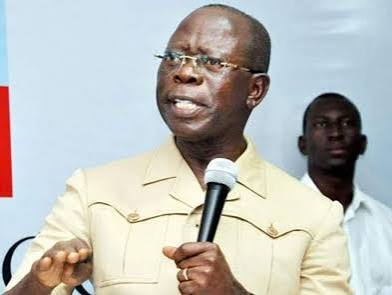
Nigeria’s anti-graft agency, the Economic and Financial Crimes Commission (EFCC), said it will as from June 1, 2021 begin to look into the banking industry with regard to financial crimes. Chairman of the Commission, Mr. Abdulrasheed Bawa, said this is in a bid to ensure transparency in the banks and that bankers would be declaring their assets in obedience to extant laws.
He also said that the focus on bankers is aimed at achieving financial sanity and to track illicitly acquired funds.
The EFCC can do this but even recently, the agency under the leadership of Bawa, started a move to check some former public office holders reportedly involved in money laundering, till now no news.
One wonders if the EFCC will be able to carry out such role because it has investigated and interrogated many with alleged misappropriation of public funds without results. But if it can implement what they have to do, I think it will make a change because it is through the banks that illegitimate funds are got.
The truth is that every financial transaction involving several thousands, millions, billions and trillions are not carried as cash, but moved through the banks across the country.
When an individual goes to withdraw certain amounts of money, the banker should be able to scrutinise that customer using relevant regulatory identification cards and bearing in mind that such person cannot possess such money. Even in the case of a group account, they should be interviewed to find out the source of the money.
The bankers have a big role to play when it comes to huge sums which may be claimed by a suspected fraudster. The managers should be able to detect when a particular amount of money cannot belong to a person. These, I think are the kinds of cases that give them bad names.
The bankers may be innocent of allegations and may not be collaborating with fraudsters to engage in bank fraud.
I recall a situation where an individual was asked to present a regulatory identification card in a commercial bank before she could have access to money deposited in her account. The reason for this was to really ascertain from where, who and perhaps how the money was generated.
That can be done to other accounts that have larger funds deposited in them. They should be able to know their customers through proper bank documentations. They have regulations on how much an individual should withdraw at a go.
Issues of money laundering like looted funds, as we have heard and seen, are not done through cash handling but electronically. It is expected that they raise alarm when huge amounts are discovered.
Some persons have argued whether the declaration of assets by the bankers will help in reducing financial crimes. The EFCC. as an agency saddled with such responsibility, would have done their homework before coming up with such move.
There is nothing wrong with bankers declaring their assets, after all, every public servant, from time to time, is mandated to declare to the Code of Conduct Bureau (CCB), depending on where they work.
According to Bawa, “We are going to see a very new EFCC in terms of the way we investigate, the way we prosecute, the way generally we execute our mandate. We will do our best to ensure that this country is free of economic and financial crimes.
“We understood that the tail end of every financial crime is for the criminal to have access to the funds that he or she has illegitimately gotten and we are worried about the roles of financial institutions and we have discussed, God willing, we hope that all financial institutions particularly the bankers will declare their assets as provided for by the law in accordance with the bank employees declaration of asset act,” he expressed.
There have been allegations that bankers help or aid fraudsters in committing financial frauds. This move by the EFCC is a step in the right direction as it will prove whether it is true or not at the end of investigations into the bankers’ financial activities.
It may not be only bankers that are allegedly involved in financial crimes. There are others who involve in illicit movement of cash. They should not focus on the banks alone.
They should look at other loopholes that may not be available to the public, because smart people may device other means of escaping with heavy amounts of money.
In fact, anybody who decides to involve in any form of financial crime should be dealt with if found guilty of the crime.
It is a good policy but to what extent it is going to work is worrisome. So many persons in the society today have declared their assets before now but we still hear and read about their unwholesome financial activities.
Some persons are smart so the EFCC and the financial institutions should also be smart to checkmate those who are associated with larger sums of money.
I think the EFCC is in the right direction because on a daily basis, many people get calls from unknown persons from different parts of the country. This is a true story as many have testified.
There was this experience of an unknown caller who claimed to be calling from a commercial bank whose headquarters is in the south-western part of the country. The caller mentioned my full name and of course through my phone number. He asked me to pick a code with which he will send another to me and then credit my account.
The anonymous caller said the managing director of his bank was celebrating his birthday and would credit his customers’ accounts with certain amount of money. Smart enough, I told him it was not possible. I’m not exaggerating, many people have had the same experience, unfortunately greater percentage of the people are aware of such trick.
Another experience from somebody I know closely has to do with an account portal for a programme of study, with N20,000 deposit. After a while, that account was credited with N200,000. When he was alerted, he went to the bank to notify of such. Surprisingly, after a week, the money increased to N400,000. So funny, the man ran to the bank knowing the implication of using money he never worked for.
For me, it doesn’t matter and it is not wrong for bankers to declare their assets if they don’t have any skeleton in their cupboards. It is better, so that they will be free of accusations from different quarters. There can be innocent persons in the bank.
I am not unaware that, before now, the EFCC had made several moves to track financial crime offenders but the outcome of the exercises is yet to be made public. The exercise should be fruitful.
I think with the youthfulness of the new EFCC boss and having risen through the ranks in the Commission, there is no doubt that Nigerians’ expectations will be met.


By: Eunice Choko-Kayode

Continue Reading

Opinion

Making the Out-of-School Children Survey Count 

Published

on

Quote: “Reliable data may reveal the scale of Nigeria’s out-of-school crisis, but only sustained political will and practical action can ensure that every child is given the opportunity to learn, thrive and contribute to national development.”

The Minister of Education, Dr. Tunji Alausa, recently announced that the Federal Government, in partnership with the National Bureau of Statistics (NBS), will conduct a nationwide household survey to determine the actual number of out-of-school children in Nigeria. The exercise is intended to provide reliable data for evidence-based education policies and targeted interventions. Current estimates put the number of out-of-school children at between 15 million and 20 million, placing Nigeria among the countries with the highest number of children excluded from formal education. At first glance, this is a commendable initiative. One of Nigeria’s greatest developmental challenges has been the absence of accurate and reliable data. Without dependable statistics, planning becomes difficult, implementation inefficient, and evaluation of government programmes almost impossible.

The nation’s actual population also remains uncertain because of the absence of an up-to-date national census. Estimates range from below 200 million to over 250 million, making effective planning a daunting task. Sound policies on education, healthcare, housing, employment and infrastructure all depend on credible population statistics. Against this backdrop, the proposed survey deserves commendation. If government succeeds in generating reliable figures, it will be better positioned to allocate resources equitably, identify areas of greatest need and design interventions based on facts rather than assumptions. Accurate data will also make it easier to monitor progress and assess whether efforts to reduce the number of out-of-school children are achieving the desired results.

However, beyond the good intentions lie important questions. Will state governments provide the enabling environment for an objective and transparent survey? Since education is on the concurrent legislative list, the cooperation of state governments will largely determine the credibility of the exercise. Politics could easily influence the process. States with higher numbers of out-of-school children may qualify for greater intervention funds from the Federal Government and development partners. Would this tempt some states to inflate their figures? On the other hand, high numbers could portray a state government as performing poorly in the education sector. Would some governors therefore seek to understate the figures to protect their image? These concerns are legitimate because whenever statistics are tied to political interests or financial benefits, the temptation to manipulate them cannot be ignored.

Equally important are questions about the survey itself. When will it begin? How long will it last? What methodology will be adopted? Will every household be covered, including those in remote rural communities and areas plagued by insecurity? Does the government have the manpower, funding, technology and security arrangements needed for such a nationwide exercise? Nigeria has witnessed several well-intentioned national programmes that fell short because of poor planning and inadequate logistics. Many Nigerians will remember that the proposed national population census scheduled a few years ago was postponed despite extensive preparations. Funding constraints and logistical challenges contributed to its suspension. What guarantees are there that this survey will not suffer a similar fate? More importantly, what becomes of the findings after the exercise? Nigeria is not short of reports or data collection initiatives.

The recurring challenge has been the lack of political will to translate findings into concrete policies and sustained action. The survey must not become another document gathering dust on government shelves. Instead, it should serve as the basis for measurable interventions, continuous monitoring and improved educational outcomes. Beyond producing accurate figures, the survey must also uncover the reasons children remain outside the classroom. Addressing the crisis requires more than counting affected children. It demands an understanding of the social, economic and cultural factors responsible for the problem. Issues such as the Almajiri system and other practices that discourage formal education should be carefully examined while respecting cultural values and protecting every child’s right to quality education. Poverty remains a major barrier, as many parents cannot afford school-related expenses, forcing children into street trading or child labour

Insecurity has also led to the closure of schools in several communities, depriving thousands of children of learning opportunities.Government must therefore complement the survey with practical measures. Strengthening social protection for vulnerable families, improving school infrastructure, recruiting and retaining qualified teachers, enhancing security around schools and enforcing compulsory basic education are all essential. Equally important is sustained collaboration with traditional rulers, religious leaders, civil society organisations and development partners to address the root causes of school exclusion. The proposed survey presents an opportunity to replace guesswork with credible evidence. However, its true value will not be measured by the number of households visited or questionnaires completed. Its success will depend on whether the findings inspire bold policies, adequate funding and sustained action that ensure every Nigerian child, regardless of location or background, has access to quality education. Only then will the exercise move beyond statistics to become a genuine instrument for national development.

By: Calista Ezeaku

Continue Reading

Opinion

African Women: Beyond the Stereotypes 

Published

on

Quote:”The story of the Tuareg women reminds us that Africa is not defined by a single narrative. Across the continent are cultures where women have long enjoyed dignity, influence and authority, proving that Africa’s history is far richer and more diverse than stereotypes suggest.”

For generations, Africa has often been portrayed through a single, narrow lens. News headlines, documentaries and social media feeds have tended to focus on poverty, conflict, disease and political instability, creating the impression that the continent has only one story to tell. While these challenges are real and deserve attention, they represent only a fraction of Africa’s rich history and cultural diversity. Reducing a continent of over a billion people and thousands of ethnic groups to one narrative does a great disservice to its people and heritage. One striking example of Africa’s diversity can be found among the Tuareg people of the Sahara Desert. Spread across Mali, Niger, Algeria, Libya and Burkina Faso, the Tuareg have preserved unique customs for centuries despite the harsh desert environment. Their society challenges many of the assumptions people hold about gender roles, particularly in African and Islamic communities.

Unlike many patriarchal societies where inheritance and authority are passed mainly through men, Tuareg tradition gives women a remarkable degree of respect, influence and autonomy. Family lineage is traced through the mother’s line, making women central to the identity and continuity of the family. This matrilineal system has helped shape a culture where women enjoy privileges that are uncommon in many parts of the world. Traditionally, Tuareg women own the family tents, which symbolise the household itself. They may also possess livestock, jewellery and other valuable property. In many families, women exercise considerable control over household wealth and inherit important possessions from their mothers. These rights are not viewed as extraordinary but as a natural part of their social structure. Marriage customs among the Tuareg are equally fascinating.

Women generally have a significant voice in choosing whom they marry, and divorce carries far less social stigma than it does in many other societies. If a marriage fails, a woman often returns to her family with her property and continues to enjoy the respect of her community. Rather than being treated as outcasts, divorced women frequently remarry if they choose. Such practices demonstrate a long-standing recognition of women’s dignity and independence. Perhaps even more intriguing is the value placed on female education and literacy. Historically, Tuareg women have often been more literate than the men. They preserve ancient poetry, songs and oral traditions that define the identity of their people. Through storytelling and cultural instruction, they pass history and values from one generation to another, ensuring that their heritage survives despite changing times.

Ironically, in Tuareg culture, it is often the men who wear the famous indigo veils that have become synonymous with the “Blue People of the Sahara.” The veil is worn for cultural and spiritual reasons and has become a symbol of maturity and honour among Tuareg men. This reversal of what many outsiders expect further illustrates how dangerous it is to judge societies using stereotypes. However, it is important to avoid replacing one stereotype with another. While Tuareg women enjoy rights that are impressive by many standards, their lives are not without challenges. Modern conflicts, climate change, economic hardship, displacement and political instability have affected Tuareg communities across the Sahara. Like many women worldwide, they continue to navigate social, economic and security concerns. Their story is therefore one of resilience rather than perfection.

The experience of the Tuareg also reminds us that Africa has never been culturally uniform. Across the continent are societies with widely varying traditions concerning leadership, inheritance, marriage and gender relations. Some communities are patriarchal, others matrilineal, while many combine elements of both. Understanding this diversity is essential if we are to appreciate Africa beyond simplistic generalisations. The colonial partition of Africa further complicated many indigenous institutions. European powers drew borders that divided ethnic groups and disrupted long-established systems of governance and social organisation. In some places, colonial administrations replaced or weakened traditional practices that had evolved over centuries. Yet many communities, including the Tuareg, have managed to preserve important aspects of their cultural identity despite these disruptions.

There is an important lesson here for Africans themselves. Too often, people accept narratives about their continent that are written entirely by outsiders. While criticism of Africa’s problems is necessary, celebrating its strengths is equally important. Indigenous knowledge, cultural diversity and historical achievements deserve the same attention as stories of crisis. Doing so creates a more balanced understanding of the continent and inspires confidence among younger generations. The story of the Tuareg women is not merely about female empowerment; it is about the richness of African civilisation. It reminds us that leadership, dignity and freedom can take different forms across cultures. Their example challenges long-held assumptions and encourages a more thoughtful appreciation of Africa’s complexity.

Ultimately, Africa cannot be understood through a single story. Its peoples, languages, traditions and histories are too vast and varied for such reduction. The Tuareg women of the Sahara stand as living proof that beneath the sweeping sands of the desert lies a civilisation whose values continue to surprise and inspire the world. As we seek to understand Africa better, we must move beyond stereotypes and embrace the many stories that together form the true identity of the continent

By: Sylvia ThankGod-Amadi  

Continue Reading

Opinion

Beyond Physical Intimacy In Relationship 

Published

on

Quote:”Love is not sustained by sharing the same bed or displaying affection in public; it is preserved by the daily investment of trust, understanding, empathy, and meaningful conversations. Two people can be physically close yet emotionally distant, because lasting relationships are built not merely on intimacy, but on the consistent nurturing of hearts that remain genuinely connected.”
In an age where relationships are often measured by appearances, social media posts, and outward displays of affection, many couples are discovering a painful truth: physical closeness does not always translate into emotional connection. Two people can share the same bed, hold hands in public, and even maintain a seemingly happy home, yet remain strangers to each other’s deepest thoughts, fears, dreams, and struggles. This reality is captured in the thought-provoking message that emotional intimacy goes far beyond physical intimacy. While physical attraction may ignite a relationship, emotional connection is what sustains it. When emotional bonds weaken, relationships begin to suffer quietly, often long before any visible signs of trouble emerge.
One of the greatest misconceptions about love is the belief that affection alone is enough to keep a relationship healthy. In reality, genuine love requires much more than romantic gestures and physical presence. It requires understanding, communication, trust, empathy, and the willingness to be vulnerable with one another. Without these elements, couples may coexist rather than truly connect. Many relationships today are experiencing a silent crisis. Couples are spending more time together physically but less time engaging meaningfully. Busy schedules, work pressures, financial challenges, digital distractions, and personal ambitions have reduced many conversations to routine exchanges about bills, children, responsibilities, and daily survival. The deeper conversations that nurture emotional intimacy are gradually disappearing.
As a result, many partners feel unseen, unheard, and misunderstood. They may be present in the relationship physically, but emotionally they feel isolated. This emotional distance often creates frustration, resentment, and loneliness. Ironically, a person can feel more alone in a relationship lacking emotional connection than when they are physically alone. The danger of emotional disconnection is that it rarely announces itself loudly. Unlike dramatic conflicts or public scandals, it develops gradually. It starts when couples stop sharing their feelings openly. It grows when assumptions replace communication. It deepens when one partner feels consistently ignored, dismissed, or taken for granted. Over time, the relationship loses its warmth and vitality.This explains why some marriages and relationships that appear perfect from the outside eventually collapse unexpectedly.
 Observers are often shocked because they only saw the physical togetherness, not the emotional distance that had been growing for years beneath the surface. Relationships do not usually break down overnight; they deteriorate through the accumulation of unresolved emotional gaps. Building emotional intimacy, therefore, requires deliberate effort. It is not a one-time achievement but a daily commitment. Emotional connection is built through consistent acts of attention, kindness, and understanding. It develops when partners genuinely listen to each other without judgment. It grows when people feel safe enough to express their fears, disappointments, and aspirations without fear of criticism or rejection. Trust plays a crucial role in this process. Emotional intimacy flourishes in an environment where honesty is valued and confidentiality is respected. When trust is broken, emotional walls quickly rise.
 Rebuilding those walls requires patience, sincerity, and a willingness to heal together. Another important ingredient is empathy. Every individual wants to feel understood. Sometimes partners do not necessarily need solutions to their problems; they simply need someone who listens and acknowledges their feelings. A relationship becomes stronger when both individuals strive to understand each other’s perspectives rather than merely defend their own positions. Quality time is equally important. In a world dominated by smartphones and endless digital distractions, couples must intentionally create moments of genuine interaction. Simple activities such as sharing a meal, taking a walk, discussing personal goals, or praying together can strengthen emotional bonds significantly.
These moments communicate an important message: “You matter to me.” Respect also forms the foundation of emotional closeness. Partners who consistently speak respectfully to each other, even during disagreements, create a healthier environment for intimacy to thrive. Emotional connection cannot flourish where there is constant criticism, ridicule, or contempt. Perhaps the most important lesson is that emotional intimacy is not built by grand gestures alone. It is cultivated through small, consistent actions repeated over time. A thoughtful conversation, a sincere apology, a word of encouragement, or a genuine expression of appreciation can have a profound impact on the health of a relationship. Ultimately, the strength of any relationship lies not merely in physical proximity but in emotional accessibility. The question is not whether two people occupy the same space, but whether they truly know and understand each other.
Lasting love is sustained when hearts remain connected even amid life’s challenges. As society continues to grapple with increasing relationship difficulties, couples must remember that emotional intimacy is not optional; it is essential. Physical attraction may bring people together, but emotional connection keeps them together. It is built daily through communication, trust, empathy, respect, and intentional effort. When emotional intimacy is nurtured, relationships become more resilient, fulfilling, and meaningful. And when two hearts remain genuinely connected, love does not merely survive—it flourishes
By: Sylvia ThankGod-Amadi
Continue Reading

Trending