
News
Constitutional Review: Lawan Solicits Role For Monarchs In Governance

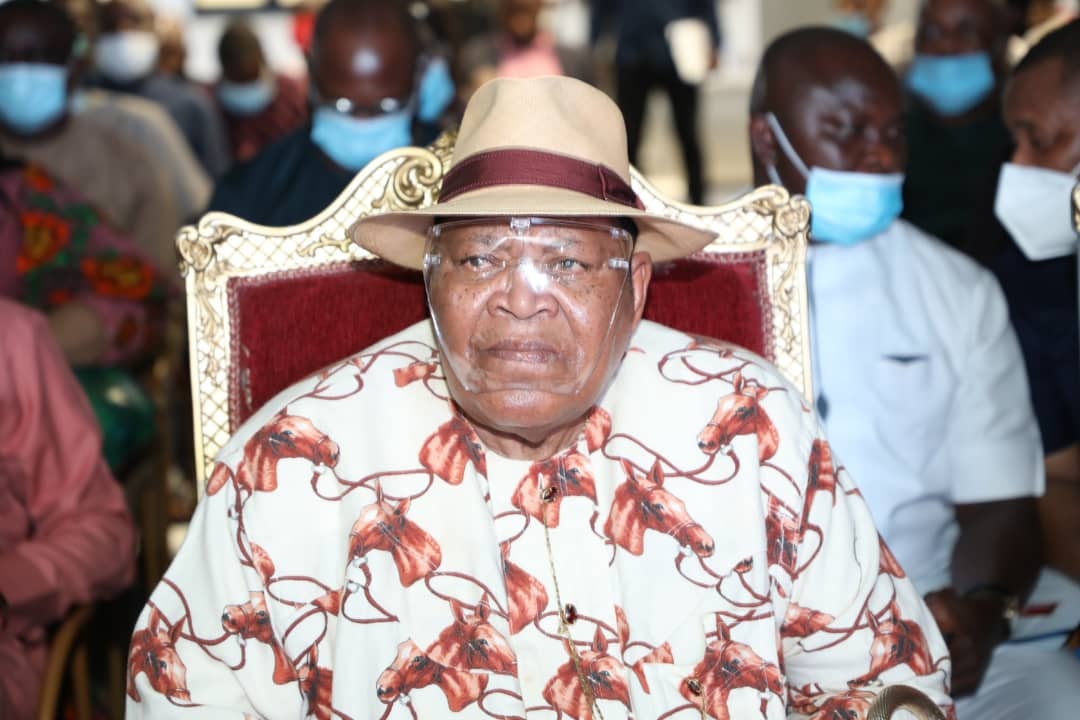
President of the Senate, Dr Ahmad Lawan, has identified the exclusion of the traditional rulers in governance and security architecture of the nation as one loophole in the 1999 Constitution which had largely aided the growth in Nigeria’s security challenges.
In same vein the National Council of Traditional Rulers in Nigeria (NCTRN) have described the neglect of the traditional rulers in governance as a disrespect to the nations roots capable of creating dangerous gaps, misunderstandings and avoidable conflicts between the grassroots and the government.
Lawan made the disclosure, yesterday, in his speech as he declared open a meeting between the Constitution Review Committee of the Senate chaired by the Deputy President of the Senate, Senator Ovie Omo-Agege-led and the National Council of Traditional Rulers in Abuja.
The Senate President, in his remarks, called for roles for traditional rulers in the Constitution linked to specific functions for them in guaranteeing the safety of lives and properties within their various jurisdictions.
According to Lawan, the worsening activities of insurgents, bandits and criminals have placed Nigeria in a dire situation that demands an urgent review of the 1999 Constitution along the lines of reorganizing the structure of governance to give specific roles to traditional rulers in various communities, as well as the incorporation of traditional institutions as part of the security architecture of the country.
Lawan said, “I’m here to show the commitment of the National Assembly in its entirety, to listening and supporting our royal fathers on the Constitutional Review currently going on, and in what many of us believe that is the right thing; that we have our royal fathers properly and formally given some roles in the governance structure or the administration of our country.
“The pre-colonial, colonial and post-colonial history of our royal fathers gives us indication of how important our traditional institution was in those days.
“In fact, at the risk of going into some avoidable history, in 1947 the British created a single traditional institution for the Tivs by creating the title of Tor Tiv. This was because they knew that the traditional institutions were playing very critical and crucial roles in running the affairs of those they governed.
“Probably, the 1979 Constitution had envisaged specific functions for the traditional institutions, but I think we missed it after that, and maybe the 1999 Constitution did not take account of certain things that could have been helpful.
“Maybe before the 1976 local government reforms, the traditional institutions might have played some roles in ensuring that our communities were secured and safe.
“So, what do we need to do to bring our country into a safer climate and more secured life for our people and their property?
“I believe that we need to take a holistic assessment of our situation. Every community, every people makes law for itself to specifically deal with some challenges, and you don’t have to copy what works elsewhere, because your history may be different. So, we have a very peculiar history when it comes to our traditional institutions playing some roles in the affairs of our people.
“This is an opportunity for our traditional institutions to ask for specific roles, but our desire as a National Assembly is to undertake this Constitutional Review because it is part of a very important legislative agenda, and also our desire to continuously work as a Legislature with the Executive arm of government to create a safer and more secured Nigeria.
The Senate President noted that the current security architecture should not be limited to the armed forces, police and other paramilitary organizations alone.
“If our traditional institutions would be part of our security architecture, so be it. Actually, what we need is to secure the lives and properties of our people. How do we achieve that? This is where the meeting of today, between our Constitution Review Committee headed by the Deputy President of the Senate, and the National Council of Traditional Rulers would be very critical”, Lawan said.
Presenting a memorandum of the National Council of Traditional Rulers of Nigeria signed by the Chairman and the Sultan of Sokoto, Alhaji Muhammad Sa’ad Abubakar; and the Co-Chair and the Ooni of Ife, Oba Adeyeye Enitan Ogunwusi, to the Constitution Review Committee, the Etsu Nupe, Alhaji Yahaya Abubakar, recalled that the Nigerian First Republic Regional Governments had bi-cameral Legislative arrangement with the Houses of Chiefs serving as the Upper chambers to those of the elected Houses of Assemblies.
“The society was at that time progressive, peaceful, decent and full of beautiful traditions and cultures. Lives and properties were sacrosanct and accountability and honesty were the hallmarks of the traditional local Administrations,” he said.
According to him, “General Ironsi 1966 Unitary Government Decree, General Gowon’s and General Obasanjo’s 1967 and 1976 Local Government Reform Decrees, respectively stripped traditional rules of their powers and gave same to the local government council thereby giving birth to the present insecurity and corruption, constitutionally and protocol wise, traditional rulers are relegated to the background.”
The Etsu Nupe lamented that under the present arrangement, “Traditional Rulers do not have the constitutional or other legal backing to perform effectively as they are not even mentioned in the 1999 Constitution.”
“This is a great departure from all earlier Constitutions that recognised them and even gave them some functions to perform.
“Indeed, all the Nigerian earlier Constitutions gave the chairmen of the States Councils of Chiefs seats in the National Council of State alongside former Presidents, Chief Justices, etc. For example, this is clearly provided for under Section 140 (l) and under Part 1 of the Third Schedule of the 1979 Constitution,” he added.
The traditional ruler, however, emphasized that “no community or nation would thrive successfully without due consideration of its historical evolution, customs, values and beliefs”, adding that, “the Nigerian Nation evolved from the amalgamation of several empires, kingdoms, caliphates, chiefdoms and autonomous communities.”
“Undermining the traditional institution through unsavoury politically motivated actions will reduce the respect accorded it by the citizenry.
“This will translate into its ineffectiveness in performing its roles. It will also affect its capacity to mobilize the people towards government programmes and projects and in managing communal, ethnic and religious conflicts and crisis.
“This will certainly not augur well for the envisaged peace, progress and wellbeing of the Nation and its people as the government will lose a respected willing partner in these regards”, he warned.
The Etsu Nupe while calling on the National Assembly to intervene in safeguarding the sanctity of the traditional institution by ensuring its insulation from politically motivated actions that run afoul of the well-established traditional settings advised that traditional rulers should be accorded specific responsibilities for conflict and security management in their domains.
He added that, “Nigeria needs to explore all available means of conflict resolution, intelligence gathering and containment of insecurities that will complement the conventional security outfits.”
The Chairman of the Constitution Review Committee, and Deputy Senate President, Ovie Omo-Agege, in his speech, raised questions on why the institution was expunged in the Constitution in the first place, if it had fostered peaceful coexistence and safety of lives and property.
His words, “What you’re seeking here today, is the reinstatement of the Council of Traditional Rulers that we had in all of our previous Constitutions which was omitted in the 1999 Constitution. The question becomes, why was there that omission?”
“With respect to this request, it shouldn’t be very demanding because we all come constituencies and we are all your subjects.
“At a time like this when we have so much insurgency in the North-East, banditry in the North-West and most of the North-Central, the same challenges we also have in the South-South, South-East and South-West; with religious tension everywhere, if His Royal Highness said that in Colonial and Pre-Colonial and Post-Colonial times, that there was need to maintain the status of traditional institutions to help us preserve peace, now is even more apt today than it was.
The NCTRN was represented by traditional rulers drawn from the six geopolitical zones of the country.
By: Nneka Amaechi-Nnadi, Abuja


The Rivers State Government has commended the Church of Nigeria (Anglican Communion) for its outstanding contributions to the development of Rivers State, particularly in the areas of peacebuilding, education, healthcare, and moral development.
Governor of Rivers State, Siminalayi Fubara, stated that the Church has remained a dependable partner in promoting peace, unity, justice, moral discipline, and social harmony across society.
The Governor, who was represented by the Secretary to the State Government, Dr. Dagogo Wokoma, made the remarks during the thanksgiving service marking the 30th Anniversary and First Session of the 11th Synod of the Diocese of Niger Delta North, held at St. Peter’s Anglican Church on Sunday.
Governor Fubara described the Synod’s theme, “Kingdom Advancement: The Priority of Every Believer,” as timely and relevant, considering the prevailing realities in society.
According to him, the Church continues to play a vital role in shaping societal values and inspiring hope among citizens.
“The Church remains a vital partner in promoting peace, unity, justice, and moral discipline. Its role in shaping values and inspiring hope cannot be overemphasized,” he stated.
The Governor further acknowledged the Anglican Communion’s contributions in education, healthcare delivery, youth empowerment, humanitarian services, and spiritual guidance across communities in Rivers State.
“The Rivers State Government appreciates the invaluable contributions of the Anglican Communion in education, healthcare, youth development, humanitarian support, and spiritual guidance. Your impact across communities in Rivers State continues to strengthen families and promote peaceful coexistence among our people,” he added.
Governor Fubara reaffirmed his administration’s commitment to building a peaceful, united, and prosperous Rivers State where all citizens can thrive irrespective of religion, ethnicity, or social background.
He also urged the Synod to continue praying for sustainable development and progress in Rivers State and Nigeria at large.
Earlier in his sermon, the Guest Minister, Joseph Olushola, spoke on the topic, “Kingdom Investment and Internal Rewards,” urging Christians to remain faithful stewards of God’s blessings and committed to advancing God’s kingdom through service and generosity.
The cleric emphasized that believers are custodians of the virtues and resources entrusted to them by God, stressing that divine rewards are based on faithfulness and impact rather than material possessions.
The Shell Nigeria Gas Limited, in partnership with the Manufacturers Association of Nigeria (MAN), has reaffirmed support for efforts to expand gas distribution infrastructure in Rivers State as part of initiatives aimed at improving access to affordable, cleaner and more reliable energy for industries across the South-South region.
The commitment was highlighted during the SNG–MAN Business Forum held in Port Harcourt, where stakeholders from the industrial and public sectors examined the role of natural gas in driving industrialisation, boosting local production and strengthening energy security.
Speaking at the forum on behalf of the Managing Director of Shell Nigeria Gas Limited, the company’s Head of Gas Distribution, Mr. Chukwuka Amos Ejesi, described natural gas as a critical component of Nigeria’s energy mix and a key driver of sustainable industrial growth.
According to him, Nigeria’s gas development agenda has reached a stage where policy direction must be matched with practical implementation capable of addressing the energy challenges confronting manufacturers.
He noted that pipeline gas offers industries a cleaner, more dependable and cost-effective energy alternative capable of supporting uninterrupted operations, reducing emissions and improving production efficiency.
“Gas is the backbone of manufacturing, and we are encouraged by the growing recognition among stakeholders of the need for cleaner and more reliable energy solutions,” he said.
Ejesi stressed the need for sustained collaboration among energy providers, government institutions and industrial stakeholders to maximise the country’s gas resources for economic development.
He added that improved gas infrastructure would strengthen manufacturing value chains, enhance productivity and promote more competitive industrial operations across Rivers State and the wider South-South region.
Participants at the forum also emphasised the importance of expanding energy infrastructure as a pathway to unlocking industrial capacity, reducing operating costs and promoting sustainable industrial development.
Representing Governor Siminalayi Fubara, the Director-General of the Rivers State Investment Promotion Agency, Dr. Chamberlain Peterside, reaffirmed the state government’s commitment to partnering with private sector investors to revitalise industrial activities in the state.
He identified key projects targeted under the initiative to include the revival of the Ahoada Industrial Park, the New Port City project and the proposed Bonny Industrial Park, all aimed at stimulating economic growth and expanding industrial opportunities along the Bonny corridor.
According to the governor, the long-term vision is to position Rivers State as a leading manufacturing hub in Southern Nigeria through strategic public-private partnerships.
Governor Fubara also commended Shell Nigeria Gas and MAN for sustaining engagements geared towards improving industrial energy access, noting that gas infrastructure development remains central to the state’s economic recovery plans.
He further observed that the gas sector presents enormous opportunities for economic growth, especially as global energy systems continue to shift towards cleaner energy sources.
The governor called on stakeholders to work collectively towards developing a practical and sustainable gas framework capable of supporting the state’s industrial and energy development objectives.
By; Kevin Nengia
Rivers State Deputy Governor, Prof. Ngozi Nma Odu, has charged newlywed couples to build their marriages on the virtues of love and submission as taught in the Word of God.
Prof. Odu gave the charge at the wedding ceremony of Amblessed Favour Sunny-Cookey and Samson Jesuganji at Lifegate Power Ministries, Dominion Cathedral, in Port Harcourt on Saturday, 16th May 2026.
The Deputy Governor congratulated the couple on beginning a new phase of life together and prayed for God’s blessings upon their union, noting that the couple had been raised by godly parents and encouraged them to uphold the Christian values instilled in them.
Referring to the sermon delivered during the ceremony, Prof. Odu emphasized that the principles of love and submission remain fundamental to a successful marriage.
According to her, genuine love reflects the nature of God, stressing that love should remain the foundation of the couple’s relationship as they journey through life together.
Prof. Odu further prayed for enduring peace, happiness, and progress in the home, expressing confidence that the marriage would continue to flourish under God’s guidance.
The Deputy Governor also commended the families of the couple for their support and upbringing, while urging the newlyweds to always remember the significance of the day and the commitment they had made before God and witnesses.
In his sermon at the wedding, the Founder and Presiding Pastor of Salvation Ministries, Pastor David Ibiyeomie, stated that marriage did not originate from Western culture, traditions, or human ideas, but from God, whom he described as the “manufacturer” of marriage.
According to the cleric, couples seeking lasting and peaceful homes must rely on biblical principles rather than societal trends or assumptions.
He explained that many marital crises and rising divorce rates stem from ignorance and failure to apply scriptural teachings in family life.
Drawing from the biblical parable of building a house on a rock, Pastor Ibiyeomie said the Word of God remains the only solid foundation capable of sustaining marriages through challenges and difficult times.
He noted that marriage naturally comes with unexpected realities and pressures, stressing that religious ceremonies or cultural practices alone are not enough to sustain a home without proper understanding of God’s instructions.
The pastor further warned that ignorance of scripture remains one of the greatest weapons against believers, urging Christians to study and practice the Word of God rather than merely attending church services.
It would be recalled that the bride is the daughter of Pastor Sunny Cookey the Founder and Presiding Pastor of Lifegate Ministries. The Ceremony had lots of Ministers in attendance which includes Apostle Zilly Aggrey, Pastor George Izunwa, and Bishop Winston Iwo


