
Sports
Sports In Nigeria In 2020: A Retrospect

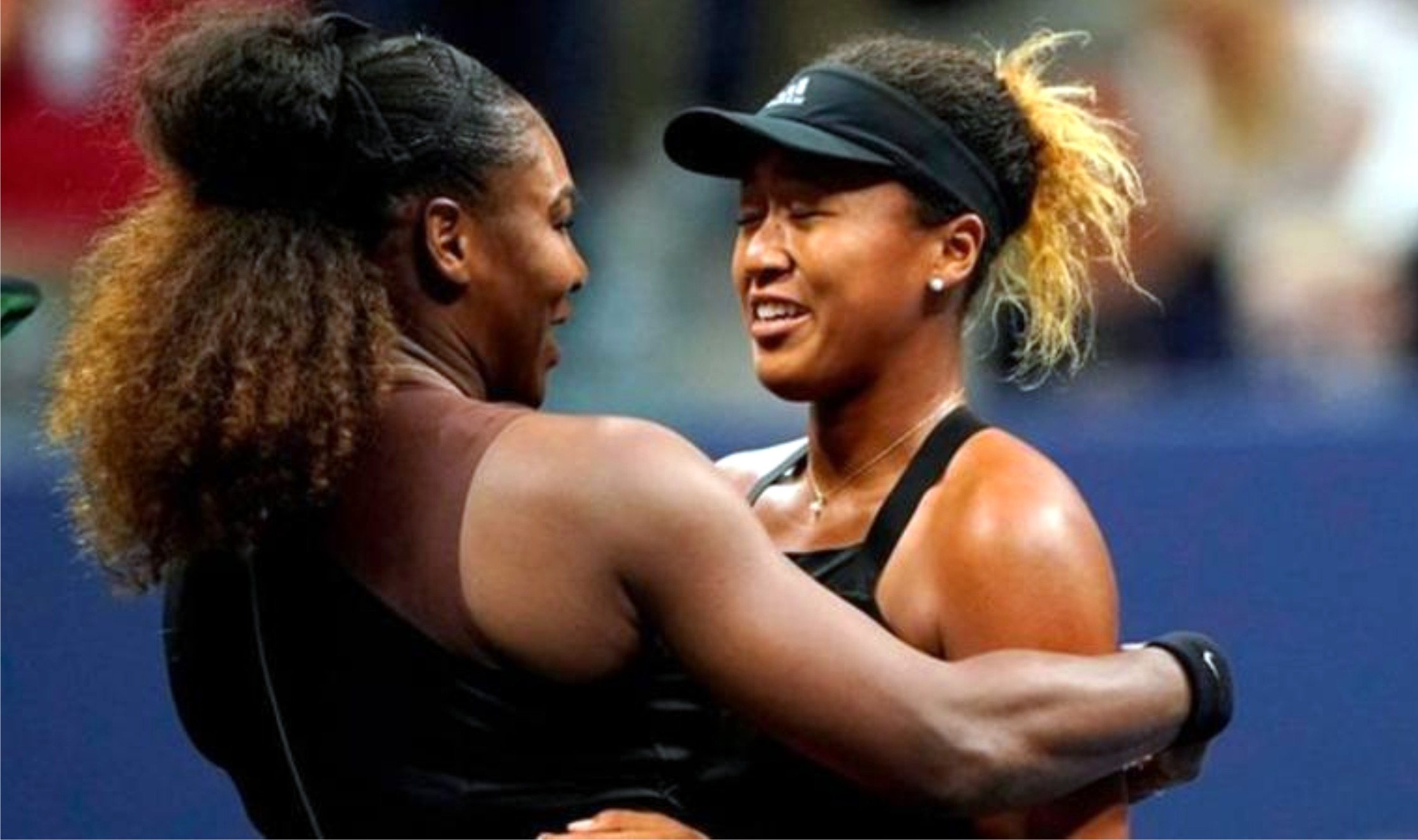
The out gone 2020 will for a long time remain memorable in the annals of history for the impact of the novel pandemic, Coronavi-rus, also known as COVID 19. Just like in other aspects of life all over the world, sports’ normal routine, calendars and schedules in Nigeria were severely dislocated and truncated, leading to the cancellation of events and postponement of others which impacted athletes sponsors and organisers negatively.
As a result, confusion reigned in the sports sector, athletes were denied competitions, even normal training sessions were regulated owing to restrictions placed by the protocols to combat COVID 19. Sadly, Nigeria was not alone in the ugly experience as the world battled to overcome the pandemic and restart normal life.
Several sports competitions were cut short, athletes could only train on their own at home, while the source of income of many athletes were threatened as governments at different levels introduced measures, including lockdowns, social distancing and outright ban on contact sports, in effort to contain and combat the pandemic
While the year could be seen as one to be wished away due to the impact of the pandemic, particularly on sports, which has become a sort of escape route for many Nigerians, the sports sector experienced a mixture of positive and negative developments just before the pandemic took root early in the year and as the country tried to resume normal life as it tapered down.
Out of about 33 virile sports associations in the country, only a handful could be said to have a sort of report card in spite of the Coronavirus pandemic in the year under review.
FOOTBALL
The king of them all as far an average Nigerian is concerned had a topsy- turvy record in 2020. In fact, the Nigeria Professional Football League, NPFL, which is the flagship of football competitions in the country was cut shot and forced to end its 2019/2020 season prematurely. This left a conundrum on how to rank teams on the season’s log towards determining the country’s representatives in CAF’s club competitions since all the teams did not play equal number of matches owing to reasons of not their own making.
Plateau united was on top with 49 points from 25 matches, Rivers United was second with 45 points from 25 matches, Lobi Stars third with43 points after 25 matches, Rangers International fourth on 37 points 24 matches and Enyimba fifth on 36 points from 20 games.
After several rounds of wrangling and merry go round, the League Management Company, LMC and the Nigeria Football Federation, NFF employed devious Points Per Game, PPG and Weighted Points Per Game, WPPG approach to place Plateau United and Enyimba first and second, respectively and to play in the CAF Champions Lea-gue, while Rivers United and Kano Pillars placed third and fourth to play in the CAF Confederation Cup.
This decision brought with it a turmoil that questioned the integrity of the country’s football managers and threatened, for the first time, to take the country’s domestic football league matters to FIFA and court of Arbitration in Sports, CAS, as Rivers United robustly questioned the veracity and legality of LMc and NFF’s decisions. At the end of the day, however, reason prevailed and Rivers United settled to play in the CAF Confederation Cup.
Sadly, as at press time, Nigeria’s waning fortune in continental and club football has continued to fester. Plateau United and Kano Pillars were bundled out of the continent at the first hurdle after losing out to Simba Fc of Congo DR and A S Jaraaf of Senegal in the Champions League and Confederation Cup, respectively. In fact, only Rivers United has a realistic chance of progressing in the Confederation Cup after surviving the Futuro Kings of Equatorial Guinea in the preliminary round and achieving a healthy 0-2 away win against Bloemfontein Celtics of South Africa in the first leg of the first round. Enyimba on their part are left with a huge mountain to climb after suffering a 3-0 defeat in the first leg of the first round of the Champions League against Al Merrick of Sudan.
The NPFL also suffered further mishap due to COVID because previous efforts to align the domestic season with that of Europe proved fruitless as the new season could only kickoff barely a week ago, this, many believed could be reason Nigerian flag bearers in the continent failed to perform as expected.
SUPER EAGLES
The national football team, Super Eagles did not have an exceptional year. In only four competitive matches and two friendlies played, they flattered to deceive. After eking out two victories against the Squirrels of Benin Republic and Lesotho in the first two qualifying games for Africa cup of Nations billed for Cameroon next year, the Eagles, in a vapid performance at the Samuel Ogbemudia Stadium, Benin City threw away a first half four goal lead against the Leone stars of Sierra Leone to draw 4-4 and failed to prove anything in the return leg, where they forced the Stars to a barren draw. Though the Eagles still lead their group in the race for the AFCON ticket, there is palpable concern that what many saw as a straight forward march to Cameroon has become a close battle, with Benin Republic breathing down the Eagles’ neck. Prior to the two legged encounter with Sierra Leone, the Super Eagles had lost to Algeria by the odd goal and drew with Tunisia in friendly games played in Austria. These performances have put the national team coach, Gernot Rohr under scrutiny with calls for his sack. It is left to be seen whether the Eagles, with young talents coming through from across the world, would pick up their game and make it to the AFCON in style that would see Nigerians becoming at ease with high expectations.
CHAN EAGLES
It was a huge disappointment for the home based Super Eagles led by coach Imama Amapakabo as they failed to qualify for the 2021 African Nations Championship, CHAN in Cameroon this year. The Nigerian team lost 3-4 aggregate to their Togolese counterparts to continue with Nigeria’s poor performance in the competition meant for players domiciled in the continent. The Eagles had beaten Togo 2-0 in the first leg at home only to collapse spectacularly 1-4 in the return leg in Togo.
FLYING EAGLES (Under 20)
The 2020 disappointments continued with the national youth teams failing to assert themselves and show the resilience and potency Nigeria has been known for in youth football. Coach Ladan Bosso led the national Under 20 team, the Flying Eagles to the WAFU Zone B Football Championship, a qualifying competition for the 2021 Africa U-20 cup of Nations in Mauritania, which will also decide Africa’s representatives for the 2021 FIFA U-20 World Cup in Indonesia. At the end of proceedings, Bosso and his boys returned empty handed, failing to secure the ticket on offer. The Flying eagles began their campaign with a 1-1 draw with their Ivory Coast counterparts and contrived to lose 1-0 to the Satellites of Ghana in their second match. This result effectively put Nigeria’s fate in the hands of their opponents and they never recovered from there.
The Flying Eagles ouster raised a bit of rumpus in the country, which saw many stakeholders blaming the leadership of Nigeria Football Federation, NFF, accusing them of recycling non productive coaches whom they would control to the detriment of national interest.
EDO 2020
Perhaps, one of the biggest victims of the COVID 19 pandemic this year, as far as sports is concerned in the country is the 20th edition of the National Sports Festival, NSF, tagged Edo 2020. The multi-sports event, which could be likened to a mini Olympic Games has suffered series of postponement, which has left athletes and administrators unsure of the fate of the fiesta.
The festival, which should have been staged in 2019 was originally billed for March this year after the Edo State government had demonstrated its readiness by revamping the Samuel Ogbemudia stadium. But owing to the outbreak of the pandemic and subsequent restrictions, the festival has been shifted from one date to another. From the match date, the festival was moved to December 3 and from the date to January 3-17 by the Presidential Task Force on COVID 19. However, athletes, coaches and other stakeholders rejected the January date with many of them complaining that the date was too close to Christmas and new year celebrations.
At the last count, the festival is said to now hold in February , making it the fourth time the festival would be postponed. The festival suffered further blow last month when the host state, Edo, dissolved all the sub committees created for the fiesta. According to the Secretary of the Local Organising Committee (LOC) for the festival, Dr. Emmanuel Igbinosa, Edo State hinged the decision to dissolve the sub-committees on the fact that no actual date has been fixed for the festival by the Federal Government and the air of uncertainty has brought some dark clouds. All these developments came at a time many states had concluded camping and were waiting for the festival to commence.
BASKETBALL
Despite basketball being in turmoil in Nigeria as a result of the power tussle between two factions led by Musa Kida and Tijani Umar, which has kept the domestic basketball league in the doldrums, the game continues to wax strong at the national level, through the male national team, D’Tigers and their female counterparts, D’Tigress. Both teams remain champions of Africa and have continued to rub shoulders with top basketball playing nations in Africa and the world. The country’s basketball received a big boost recently when Eight players of Nigerian descent were selected in the NBA Draft 2020, marking a record high for the country and, by extension, Africa.
Precious Achiuwa and Udoka Azubuike, the two born in Nigeria, were selected in the top 30, making it the first time that two players from Nigeria were selected in the first round of the same NBA Draft.
Achiuwa was selected 20th overall by the Miami Heat, becoming the third Nigerian player to be drafted in the first round since 2000: “First I want to thank God. I want to thank God for putting me in this type of position where I’m playing for a great organization and able to represent not just myself but where I’m from, my whole country behind me, my whole city. And to play for an organisation like the Heat is going to be amazing. I can’t wait to be able to get out there and compete with the rest of my teammates.”
Azubuike was selected 27th overall by the Utah Jazz: “For me, I’ve just been working hard and keeping my head down. Not listening to the people talking about projections. A lot of people had me in the second round, but I wasn’t concerned about that. I know what I bring to the table. I know what I can bring to a team. I know whatever team drafted me, I’m going to have to go there and have to prove myself and work hard.”
Achiuwa (20th overall by the Miami Heat) and Azubuike (27th overall by the Utah Jazz) are among the historic set of eight draftees from or with at least one parent from Nigeria, including Isaac Okoro (5th overall by the Cleveland Cavaliers), Onyeka Okongwu (6th overall by the Atlanta Hawks), Zeke Nnaji (22nd overall by the Denver Nuggets), Desmond Bane (30th overall by the Boston Celtics), Daniel Oturu (33rd overall by the Minnesota Timberwolves) and Jordan Nwora (45th overall by the Milwaukee Bucks).
Okoro, the 6’6 shooting guard/small forward from Auburn, delighted at being the first Nigerian to be drafted.
WRESTLING
This is one of the current leading lights in sport s in the country. The president of Nigeria Wrestling Federation, NWF, Daniel Igali has continued to achieve with his vision, dedication and commitment to the sport. With him on the saddle, wrestling has become one of Nigeria’s catchment areas as talents continue to evolve and dominate Africa and beyond. In the year under review, Nigerian wrestlers took part in the world ranking series in Rome, Italy and held their own. Out of five wrestlers, two came back with medals. While Odunayo Adekuoroye, competing in the 57kg category claimed gold, Blessing Oborodudu clinched bronze in the 68kg category in the global event.
Nigerian wrestlers also dominated the 2020 Africa Wrestling Championships in Algiers ,Algeria. The wrestlers conquered the continent after winning 14 medals, seven gold, five silver and two bronze. Following their impressive outing, Team Nigeria Women retained the title they won in 2019 with a staggering 230 points ahead of second-placed Tunisia (166points) and Egypt, who finished third with 164points.
As the next Olympics draw closer, wrestling has become one of the events where Nigeria is hopeful of medals.
ATHLETICS
The Athletics Federation of Nigeria, AFN released a list of 17 events for her athletes this year as it planned ahead of the Tokyo 2020 Games, originally billed for July 31- august 9, but the plans were scuttled by the coronavirus outbreak. Out of the 17 events , only the Lagos City Marathon and the AFn All Comers Athletics Competition in Asaba Delta State were staged. The National Sport Festival is still in abeyance, while the meets in Lagos and Benin, the Okpekpe International 10km Race,the CAA Region II Athletics Championship and the Dr Awoture Eleyae U-16 and U-18 Athletics Competition in Ozoro, among others were scuttled.
At the Lagos City Marathon, David Barmasai Tumo and Sharon Cherop of Kenya were the first male and female athletes to finish the 5th edition of Access Bank Lagos City Marathon in 2hours 10minutes and 2hours 30minutes, respectively.
The winners in both the male and female categories got the grand prize of $50,000, while the second and third placed runners claimed $40,000 and $30,000 respectively.
David broke the 2hours 16minutes record set by his fellow country man Abraham Kiptum in 2016.
The Marathon course which spanned a distance of about 42km, started at National Stadium, Surulere, Lagos, (where previous half marathons initially finished), continued along the Third Mainland Bridge, to the Lekki-Ikoyi link bridge and finished at Eko Atlantic.


-

 News3 days ago
Amend Constitution To Accommodate State Police, Tinubu Tells Senators
-
 Politics3 days ago
Senate Urges Tinubu To Sack CAC Boss
-

 News3 days ago
Disu Takes Over As New IGP …Declares Total War On Corruption, Impunity
-
Business3 days ago
President Tinubu Extends Raw Shea Nuts Export Ban To 2027
-
Business3 days ago
Crisis Response: EU-project Delivers New Vet. Clinic To Katsina Govt.
-
Business3 days ago
President Tinubu Approves Extension Ban On Raw Shea Nut Export
-
Sports3 days ago
NDG: Rivers Coach Appeal To NDDC In Talent Discovery
-
Rivers3 days ago
Etche Clan Urges Govt On Chieftaincy Recognition