
Opinion
Varsity Admission And Wonder Kids

Discussions on tertiary education in Nigeria often raise lots of questions, while also bordering on controversy. We are used to discussing the poor state of our university facilities, inadequate investment in human capital and technological development, lack of government support, high cost of education and even poor research funding but pay less attention to protection of the exceptionally gifted child.
Global education standards continue to evolve, producing child prodigies in diverse fields, with top corporate brands jumping on the brightest prospects and sponsoring them to complete degree courses.
Masters and even doctorate’s degree programmes at very tender ages, while the Nigerian varsities continue to emphasise on unwritten gold standard of a ’16 years of age’ requirement for admission.
Lots of dust have been raised on the theme. We have clearly failed to properly challenge the standard which has no legal backing but manages to occupy a spot in almost every Nigerian university’s bye-laws.
The most recent body-hit was taken by the University of Lagos (UNILAG), as it denied admission to a prospective applicant, 15-year old Franklin Ekene, who had the best JAMB (UTME) result last year, breaking the 300 mark barrier with a score of 347 in the 2019 examination. He must have felt like he had done enough to deserve his spot in one of Nigeria’s most prestigious universities, but an age-old tradition reared its ugly head to punish a prodigy for simply being too smart for his age.
While the poor lad has been offered a scholarship to further his education in Gregory University, Uturu, in Abia State, some others in his shoes may not have been as lucky as he was, and would have had to undergo the same examination procedure the following year, or whenever they are old enough; while going unrewarded for exceptional displays in a nation that celebrates mediocrity.
In my years in journalism, I have come to realise that themes, bothering on education and intellect are often resigned to the back seat, while we pay more attention to politics, entertainment and the juiciest news that make the headlines and help sell our medium, be it radio, television, newspaper or magazine.
There is a void in educational policy discourse, which needs to be properly tackled by the media and other stakeholders. Our federal universities are getting less innovative by the day, dropping in continental and global rankings while private universities continually gain supremacy by abolishing archaic practices for more flexibility.
If we are not questioning the lack of funding, innovation and inclusion of life application, at least, we should be talking about a practice that has no legal backing. The nation’s constitution, as amended, is silent on the issue of age requirement for tertiary education, giving universities the prerogative to set their requirements, thereby allowing for this injustice which has no space in the international community.
It was major news, year before last, when a 13-year-old Indian was reported to be an affiliate programmer with IBM, having developed rapidly and soared through the academic ladder with schools eager to have him.
He holds classes and teaches online today at 15.
The Guinness Book of World Records has the youngest Doctor of Philosophy (PhD) holder pegged at 13 years of age, with the top ten youngest PhDs all achieved the feat before their 21st birthdays.
But Nigeria’s federal universities law means that the only degree that a student can obtain before their 21st birthday is Bachelors.
Most federal ivory tower stakeholders have argued that the law is in place to protect the students. They claim that students below this age lack the required social skill-set and intelligence quotient to cope in an environment as competitive as the university system.
This has no scientific support. But if the varsity system believes the environment may be overwhelming for our prodigious children, why not fix the problem than avoid it? What happens to the frail 16 and 17 year olds? Why is there no provision to defer the admission and then engage these children in a distance learning programme that equips them for when they finally get in?
We run these institutions; they are funded by taxpayers’ inputs and operated by civil servants.
Whatever policies that are enforced tend to have a spiral effect on the country in general. Besides demoralising an intelligent child, you create an endless vacuum in his or her formative growth which, if not filled correctly, could stunt the academic growth of the child.
You also create doubts in the minds of younger generations, who nurture aspirations to study in one of Nigeria’s multiple viable and historic establishments, but after proper calculations, realises that they ‘lack the needed social skill set’ by virtue of being smart too early.
The possibilities are endless. Parents who are in dire need of seeing their child go into school quickly, may doctor their age and then this new identity, going on to possibly serve in the civil service and then getting exposed after proper background checks.
I feel the tertiary institutions are lazy and overstretched so much and find doing a proper screening of candidates to be so much work, thereby simply generalising with a factor that lacks merit.
If our children find it difficult to gain admission simply because they are not old enough to be educated, then it goes without saying that our society needs greater restructuring than ever fathomed.
We have come of age and would be better off without some of these ridiculous excuses for policies.



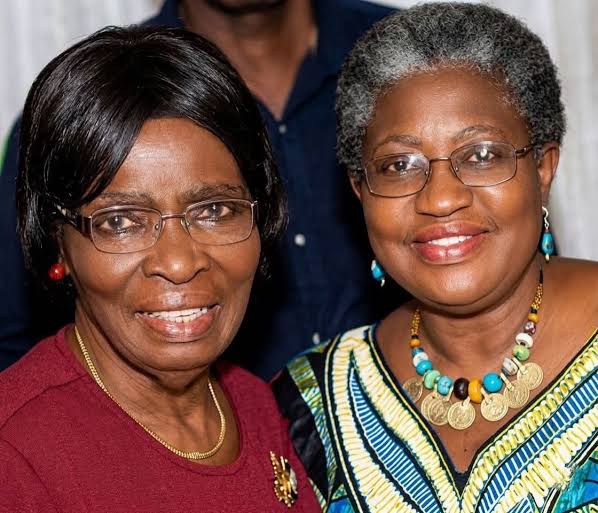
Quote “Professor Kamene Okonjo
Some women leave behind more t
Yet, to remember Professor Kam
Professor Okonjo was the belov
one of the most dramatic chapt
On December 14, 2012, the then
She leaves behind children, gr
Professor Kamene Okonjo deserv
By: Sylvia ThankGod-Amadi

Quote: An African who invokes
This is the concluding part
… Given the fact that I was
At the end of the visit by the
Back to my apartment, at abo
Under normal circumstances, yo
That all she asks is that Chie
For some reason that I do not
I believe that everyone in hu
Our ancestors have not gone fa
By: Jason Osai
The Federal Government’s approval of a N70,000 monthly transport intervention for public service workers for six months, beginning in November 2026, offers hope to employees struggling with the rising cost of living. The agreement with the Nigeria Labour Congress (NLC), reached at a conciliation meeting in Abuja on October 27, is intended to cushion transport costs and ease pressure on workers’ incomes. But for public servants in Rivers State, it raises a familiar question: will the State Government key into the intervention and ensure that its workers benefit? The agreement provides for N70,000 monthly across all levels, for six months. The Federal Government also approved peculiar allowance arrears effective from May 1, 2026, to be paid in three equal instalments beginning in November.
The parties agreed to reconvene after one month to assess implementation. Ultimately, the value of these resolutions will be measured not by announcements but by whether eligible workers receive the money. Transport costs consume a substantial share of many civil servants’ earnings before they can meet household needs. Support for commuting is therefore not a luxury or political favour; it is temporary assistance to help workers remain at their jobs without sinking further into hardship. For lower-paid employees, transport costs can turn modest salaries into a daily exercise in difficult choices and sacrifice.
The agreement also urges State and Local Governments to participate and unions to press for implementation. The federal agreement does not automatically guarantee that every State and Local Government employee will receive the support. State authorities must clarify how it will apply to their workforce, make the necessary arrangements and publish a payment timetable. Rivers State must approach the arrangement with urgency and transparency. The Government should State whether it will implement the intervention and when payments will begin. Any administrative or financial question should be addressed promptly with organised labour, not allowed to become excuses for delay.
The concern is sharpened by the earlier N35,000 monthly wage award introduced by the Federal Government in 2023 after petrol subsidy removal. It was intended as temporary relief pending a new national minimum wage. While several States negotiated and paid wage awards or related sums, implementation nationwide was uneven. Reports in 2024 indicated that many States had failed to pay the federal award, while others provided different amounts. In Rivers, labour and media reports raised concerns about implementation of the N35,000 award for State workers, amid separate announcements and arrangements concerning Local Government employees.
The wage award was meant to ease the immediate effects of subsidy removal, yet workers faced uncertainty over whether the promised relief would reach them. In February 2024, the Rivers State Government announced approval of the N35,000 award for local government workers, but subsequent reports showed that implementation across worker categories remained a concern. The lesson is clear: approval and implementation are not the same. A declaration at a meeting offers little comfort to a worker whose account does not reflect the promised payment. For workers who travel to their offices daily, the implications of delayed support are significant. Transportation expenses compete with food, rent, school fees, healthcare and other essential household needs.
As fares rise, employees may be forced to reduce spending on necessities or borrow to sustain their families. A timely transport intervention would therefore provide practical relief and demonstrate that government understands the economic pressures confronting its workforce. Its temporary nature makes prompt implementation even more important. It is fair to acknowledge that this transport intervention is a new agreement and that its administrative details may require clarification. Rivers State should not be condemned in advance for a failure that has not occurred. Nevertheless, the earlier experience gives workers legitimate grounds to seek assurances before the November commencement date. The State should avoid allowing uncertainty to persist until workers begin asking why the promised assistance has not arrived.
The NLC and unions in Rivers State should engage the State Government immediately and seek a written commitment, an implementation plan and a process for reporting missed payments. If clarification from the Federal Government is needed, the State should seek it without abandoning the goal of providing relief. Labour leaders must also keep members informed about progress and insist that any agreed arrangements are applied fairly and transparently. The Rivers State Government should treat this intervention as an opportunity to rebuild confidence. Timely support would show that workers’ welfare is more than a talking point and that the State recognises the economic realities confronting its employees.
Silence, delay or selective implementation, by contrast, would revive frustration over earlier relief measures and weaken trust between government and labour. Every month lost to administrative delay leaves workers facing the same transport burden without the intended assistance. The State should consult labour, publish arrangements and pay eligible workers on time. Rivers workers should not have to wonder whether federal relief will reach them. The Federal Government has announced the support; now the State must make its position clear. We hope the N70,000 monthly transport intervention will not follow the troubling path of the earlier wage award. Rivers State should learn from that experience and ensure that this time, relief is not merely promised but delivered.
Sylvia ThankGod-Amadi
-
Rivers3 days ago
Don Seeks Repositioning Of Tech Education For Dev
-

 Education3 days ago
PAMO MEDICAL UNIVERSITY -Nullifies Arrest warrant on VC
-
Niger Delta3 days ago
PANDEF Seeks 50% Oil Derivation Allocation Increase
-

 Education3 days ago
IAUE MOVES TO END GHOST WORKERS SYNDROME AS 400 NEW NON-TEACHING STAFF UNDERGO MANDATORY ETHICS TRAINING
-

 News3 days ago
Fresh Ebola Scare As NCDC Records Two Cases
-
News3 days ago
Customs Partners EFCC, NDLEA, Others To Tackle Money Laundering, Terrorism Financing
-

 Politics3 days ago
2027: RIVERS GUBER CANDIDATES SIGN CHARTER TO PRIORITIZE CITIZENS’ DEMANDS
-
 Politics3 days ago
2027: South-East Govs Insist On Tinubu’s Re-election