
Oil & Energy
‘Reviewing Petroleum Laws’ll Reduce Disputes’

The Minister of State for Petroleum Resources, Timipre Sylva, has said updating some of nation’s petroleum laws will help reduce or completely eliminate the spate of disagreements and lawsuits currently witnessed in the oil sector.
Sylva disclosed this in Abuja at a workshop organised by the Petroleum Technology Development Fund (PTDF) for counsels of the Federal Ministry of Justice and operators in the oil sector.
He said: “The Nigerian oil and gas industry is a dynamic one. The exploration, production and contracting processes are complex and rapidly changing. The need for state counsels to be up to date with current happenings of the industry cannot be over-emphasised.
“For many years, the Nigerian oil and gas industry has been operating in an agglomeration of legislations and guidelines, which sometimes are not in harmony with the industry trends practiced globally. The oil and gas industry had developed focusing on increasing indigenous participation.”
Sylva, who was represented by his Chief of Staff, Mr Moses Olamide, added: “Our best bet for the industry; it is better we write our laws very clearly. It is better we do all the negotiations possible. It is better we do all the reconciliation and conciliation that are possible before we sign off on our laws.
“It is going to reduce a lot of acrimony. It is going to reduce a lot of fighting in the industry. Hence, we appeal to the lawyers in this regard. It is better we write our legal matters very clearly so as to eliminate all the acrimony that might arise in the legal system.”



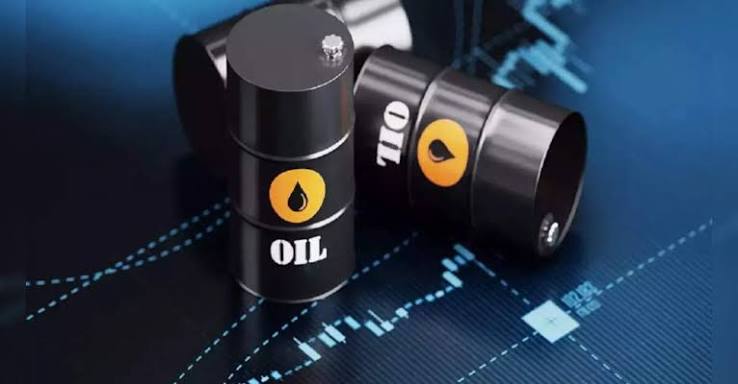
Excluding Oman, their oil exports reached 18.4 million bpd in October, although shipments remained 26 per cent below prewar levels. Crude oil exports alone totaled 15 million bpd, equivalent to 82 per cent of their volume before the conflict.
Despite the prospect of excess supply, the IEA continues to identify two major sources of uncertainty: depleted onshore inventories and the security of maritime transport.
Its latest projections indicate that the recovery in global oil supplies has outpaced its earlier expectations. The market now faces the prospect of a surplus before the end of 2026, although low inventories on land and risks to shipping routes remain unresolved.
-
News3 days ago
Parents Protest Scholarship Scheme Suspension At PAMO Varsity
-
 News3 days ago
US Hails Nigerian Military For Rescuing 125 Kidnap Victims
-
Business3 days ago
Reps Raise Alarm Over N2trn Agricultural Loan Diversion
-

 Featured3 days ago
Presidents Xi, Trump, Putin Commit To Global Stability, Denuclearisation
-
Politics3 days ago
ADC Faults INEC’s Alleged Limited Capacity To Upload Election Result On IREV
-
Politics3 days ago
Tinubu Expands 2027 Campaign Tour To 19 States
-
Politics3 days ago
Rivers INEC Set To Begin PVCs Distribution Amidst Residents’ Complaints
-
Business3 days ago
Ibom Airlines Hits 52 Percent Of N147.03billion Financial Year, -FAAN