Connect with us

Oil & Energy

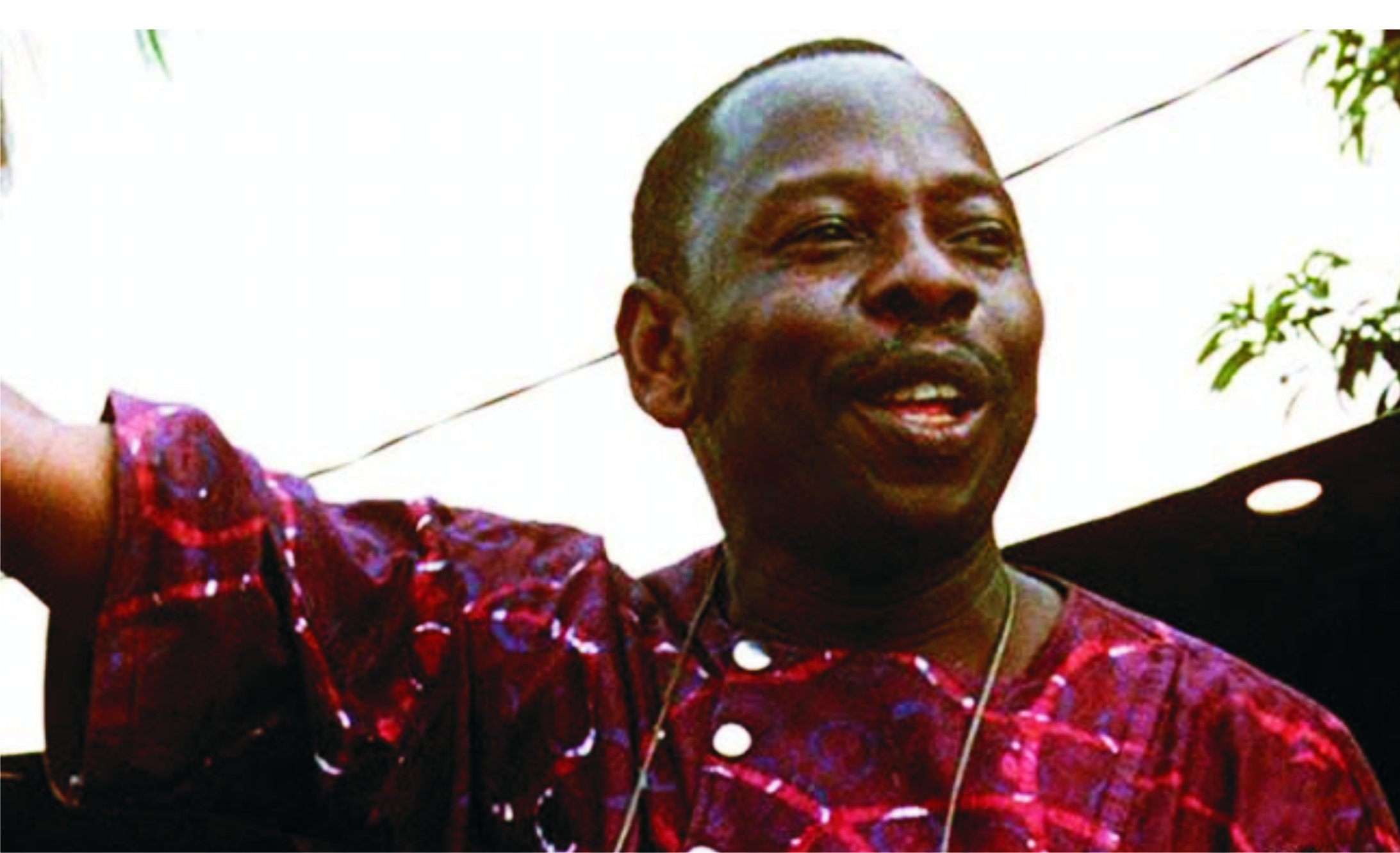
Ken Saro-Wiwa And Oil Politics In Nigeria

Published

on

The American Negro leader, Frederick Douglas, once asked, “who will stand for the downtrodden, open his mouth for the dumb and remember those in bonds as if bound with them”.
At a period when men worshipped at the altar of Nigeria’s self styled dictator and maximum ruler, when men so shackled by the ferocious cruelty of a wild and ruthless military junta, kept numb over the atrocious deeds that permeated the political waves of the country, when the chimney of injustice and institutional compromise reeked to its most repulsive and insipid taste, a bold, courageous and fearless Ogoni activist, Ken Saro- Wiwa braved the odds, putting his life on the line to question the excesses of the Abacha junta.
It was a critical period in Nigeria’s chequered political history which analysts described as a “decisive moment”.
Angered by the sad realities of the loss of the natural environment of the Niger Delta to a convoluted oil economy, where oil bearing communities existed as mere pawns in the game of power, he dusted up his hitherto docile Ogoni people to confront the deep-seated inequities and outright contraventions of the principles of justice in the Nigerian State.
He duly alerted his people that their foes; the Military Junta and Shell were formidable, but he pinned his conviction on the fact that it was better to fight the glaring environmental injustice that besieged them, than to remain silente and phase out of existence as a result of reckless oil exploratory activities by Shell which was ongoing in the area for decades. The moment was therefore ripe to confront the vilest political contraption in the history of Nigeria led by a pugnacious General, fully at home with the culture of might to subdue every real or imaginary enemy of the junta. The stage was set for the battle, and Ken Saro-Wiwa was not deterred to carry out his identified course of action.
Through the platform of the Movement for the Survival of Ogoni People, (MOSOP), he instituted a global campaign against the activities of the Royal Dutch in Ogoni. Through his oratory, activist posture and unique literary voice, he reaped cans of worms open against Shell, exposing the many social defects and corporate irresponsibilities of the company to a mass global and local audience.
As the controller of the highest stake among the IOCs in the Joint Venture agreement with the Nigeria National Petroleum Corporation, (NNPC) Shell and the Military junta were badly heated by Saro Wiwa’s campaign. Abacha was challenged to his chagrin, and he let loose his ill temper against the defenceless Ogoni people, framed up their leaders under junket of charges and summarily executed Ken Saro Wiwa and other Ogoni compatriots after a Kangaroo trial.
Shell also took cover under the Military junta to perfect it perfidy in Ogoni; the climax of which was the decimation of the elitist class in Ogoni, the wanton wastages of innocent lives, and the eventual pullout of the company from Ogoni. It is on record that during the Kangaroo trial of Ken Saro Wiwa a military Tribunal, Shell was duly represented even when they were supposedly not a party in the trial. What evidence could then be required for their complicity in the Ogoni crisis?. When Shell’s role in the prosecution of the Ogoni leaders became apparent, the company claimed it was the state’s role to ensure fairness under the law, and not a corporation’s. Such hypocrisy has continued to resonate among some unrepentant apologists of shell and other foes of Ogoni till date. But history has judged Ogoni fairly, as Shell’s record of environmental abuse and human rights abuse has continued to swell. Reports show that a Shell security fraud scandal in 2004, led to the forced resignation of the group chairman, Sir Philip Watts, who was escorted from the Shell centre by security staff.
Thus not its self righteousness or impregnable posture has saved the company from a diminishing corporate reputation globally. The denigrating poverty and unabated pollution in Ogoni and other Niger Delta communities are also glaring evidence against Shell. Reports reveal that between 1976 and 1991, over two million barrels of oil polluted Ogoni in 2,976 separate oil spills, and pipelines operated by Shell still traverse the land, creeks and water ways in Ogoni after oil production has ceased.
Although Ogonis paid dearly for their foremost role in environmental awareness in the Niger Delta, the fact remains that Saro Wiwa’s campaign has changed the face of oil politics in Nigeria. Shell and other nonchalant IOCs and corporate firms that prospect for oil in the Niger Delta have continued to incur the odium of its host communities. There is also pressure on the federal government to ensure strict compliance of international laws and politics in the oil industry.
As a Chief Proponent of true federalism, Ken Saro- Wiwa approached the leadership echelon of the country to rule by democratic ideals, rather than a surplus appropriating centralised command system immersed in an oil economy that survived vampire like on the fortune of the Niger Delta. Predictably, some leaders of Niger Delta cashed in on the Ogoni struggle and made themselves amiable tools in the hands of Shell and the military junta. Saro-Wiwa predicted this. He knew that the consequences of a failed oil-led development were conflicts, and divide and rule by the beneficiaries of the fraudulent system.
He therefore admonished the Niger Delta leaders to key into the vision and pointed out that, “Genocide was not selective”.
The implication being that such compromisers would equally become targets of destruction after aiding the external aggressors to destroy their kith and kin. History was to judge him correctly. Saro Wiwa also kicked against what he referred to as “indigenous colonialism”, a system where the minority ethnic groups in Nigeria are expected to render perpetual obedience to the majority ethnic groups, which history and colonal annexation has made a determinate superior.
He had a strong conviction in Thomas Jefferson’s Postulation during his inaugural address that, “All, too, will bear in mind this sacred principle, that though the will of the majority in all cases should prevail; that which will to be rightful must be reasonable; that the minority possess their equal rights, which equal law must protect, and to violate would be oppression”.
Saro-Wiwa was therefore deeply concerned about the moral issue that confronted Nigeria as a sovereign nation; the issue of constitutional democracy that would guarantee the rights of every citizen, irrespective of ethnic affiliation. Like the sage, Obagemi Awolowo, his idea of federalism was that all ethnic groups in Nigeria, should be given fair treatment, irrespective of size or numerical strength. Exactly 24 years after the death of Ken Saro Wiwa, the forces of oppression against Ogoni and the Niger Delta is yet to abate. The environment remains contaminated and polluted. There is more oil, more money and yet more poverty in the Niger Delta, there is more security troops and yet more insecurity in the Niger Delta.
National security as it affects the Niger Delta, at best relates to unfettered oil production. The hope of oil resumption in Ogoni is also very elusive, as Ogonis have insisted that the issues of environmental injustices raised by Saro Wiwa must be addressed before any oil resumption deal. Addressing a mammoth crowd of supporters at a memorial lecture organised to mark the 24th anniversary of Ogoni matyres day, MOSOP President, Legborsi Pyagbara, said the organisation would remain committed to the tenets of the Ogoni struggle. He called on Ogonis and the Niger Delta to remain steadfast in the pursuit of environmental justice in the region.
Speaking with The Tide in an interview, the president of a foremost pan Ogoni youth body, the Ogoni youth federation, Comrade Legborsi Yaanabana called on the federal government to expedite action on the implementation of the United Nations Environment Programme, (UNEP) report on the cleanup of Ogoni.
The Ogoni youth leader also urged the federal government to exonerate Saro Wiwa from the questionable circumstances that greeted his trial and death, by offering him post humus pardon. He said Ogoni youths will resist any forced resumption of oil exploration in Ogoni without properly negotiated settlements.
Also speaking in an exclusive interview with The Tide, foremost environmentalist, Engr Olu Andah Wai-Ogosu called for a more sustainable environmental policy to address the lingering challenges in the Niger Delta.
The environmental consultant and university don, also solicited local and international concern over the plight of the Ogoni people, to address the issues raised by Saro-Wiwa. In death, Saro Wiwa did not only set the pace for a new environmental consciousness in Nigeria, he also raised a new consciousness in minority rights activism in Nigeria. He won the Rights Livelihood Award for exemplary courage in striving nonviolently for civil economic and environmental rights, and he is one of the few Africans celebrated in the international mainstream of martyrdom.


Taneh Beemene

Continue Reading

Oil & Energy

Abia Secures $145m Investment Commitment To Establish Solar Manufacturing Plant

Published

on

Abia State Governor Alex Otti has welcomed a proposed $145 million investment to establish a solar manufacturing plant in Isiala Ngwa South Local Government Area, describing it as a major boost to the state’s industrial and renewable energy ambitions.
The development was disclosed in a statement issued last week by the Chief Press Secretary to the Governor, Ukoha Njoku Ukoha, after Otti received the investors, led by their Team Leader, Dr. Oko Jaja, at the Government House in Umuahia.
During the meeting held on July 16, 2026, Otti said he was encouraged that the proposed project had reached the Final Investment Decision (FID) stage, with the investors committing up to $145 million to establish the solar manufacturing facility in the state.
What they are saying
Governor Otti welcomed the investors’ commitment, saying the project had progressed to the stage where they were ready to invest up to $145 million in Abia.
“I’m glad that at least you have reached the final investment decision where you are investing up to $145 million.”, he said.
He also assured the investors of the state’s continued support, noting that the government had already provided the land required for the project and remained willing to address any additional requirements needed to facilitate the investment.
“We had to do everything that was required to make the land available. And we would like to assure you that if there is any other thing that you need for this investment, do not hesitate to let us know”, the Governor said.
Speaking on behalf of the investors, Dr. Oko Jaja said the project, being developed with Chinese partners, had advanced significantly and that the first tranche of funding is expected to be released by September 2026, paving the way for implementation.
Also speaking, the Chief Executive Officer of MD NWAKANMA NIGERIA Limited, Dennis Madu Nwakamma, said construction of the plant is expected to commence by the end of September under a public-private partnership with the Abia State Government. He added that the project will manufacture solar panels and related products while creating jobs and providing technical training for young people in the state.
The proposed investment adds to Abia’s growing push into the renewable energy sector. The state is among the few in Nigeria with a regulated electricity market and is home to Geometric Power, whose integrated power system supplies electricity to Aba and surrounding communities.
The development also follows Governor Otti’s recent commissioning of an upgraded 5MVA power station at Abia State University, which doubled the facility’s capacity from 2.5MVA to improve electricity supply within the institution.
Earlier, in February 2024, he commissioned the 188MW Geometric Power Plant, a landmark project aimed at expanding power generation and improving electricity access in the state.
The proposed solar manufacturing facility is the latest in a series of investment projects announced for Abia as the state seeks to attract private capital into manufacturing and infrastructure.
In March, Governor Otti commissioned a $35 million industrial facility in Aba, part of a planned $100 million investment expected to deepen the city’s manufacturing base and attract additional private sector activity.
The state government has also completed the acquisition of Afro Beverages from the Asset Management Corporation of Nigeria (AMCON) after paying N500 million to facilitate the revival of the company.
Separately, the Federal Government and the African Development Bank have urged the Abia State Government to resolve administrative delays affecting the commencement of the $263.8 million Abia State Integrated Infrastructural Development (ABSIID) project, which is expected to strengthen infrastructure and support economic growth across the state.
Continue Reading

Oil & Energy

FG Urges Against Operators’ Actions That Could Distabilise Market

Published

on

The Minister of Power, Chief Joseph Tegbe, has called on operators in the Nigerian Electricity Supply Industry (NESI) to avoid actions that could affect the decentralised electricity market.
The minister made the call at the workshop on Legal, Policy and Regulatory Harmonisation between federal and state institutions on the Decentralisation of the Nigerian Electricity Supply Industry (NESI), in Abuja.
Tegbe said the Federal Government retains an important leadership role, while state governments now have expanded responsibilities; the Nigerian Electricity Regulatory Commission (NERC)continues to regulate areas within its jurisdiction; and state regulators are emerging to supervise their respective markets.
He further stated that transmission remains a national asset; distribution companies continue to serve millions of customers; generation companies continue to supply energy into the grid; private investors provide capital; development partners provide technical support; while consumers remain at the heart of every decision.
Nothing that  none of these institutions exists in isolation, he said: “Our success is interconnected. This is why collaboration must become the defining principle of our decentralised electricity market. We must ensure collaboration rather than competition between institutions. We must build alignment instead of regulatory conflict. We must practice mutual respect instead of jurisdictional rivalry.”
He said the Electricity Act did not establish parallel electricity industries, but complementary electricity markets, operating within one national framework.
“Our objective must therefore be regulatory coherence. Investors should not encounter conflicting rules. Developers should not navigate contradictory approval processes. Consumers should not become casualties of institutional uncertainty. Market participants should enjoy clarity, predictability and confidence wherever they choose to invest,” he stated.
Continue Reading

Oil & Energy

Fuel Imports Surged By 207% In June — NMDPRA report

Published

on

Nigeria’s petrol importation surged by 207 per cent in June 2026, even as domestic Premium Motor Spirit supply fell by 22 per cent, according to the latest data released by the Nigerian Midstream and Downstream Petroleum Regulatory Authority.
The development marked a sharp reversal from the pattern recorded at the beginning of the year when domestic refining was supplying the bulk of the country’s petrol requirements.
The NMDPRA’s June 2026 Fact Sheet, obtained by our correspondent on Saturday, showed that average daily PMS imports rose from 5.9 million litres in May to 18.1 million litres in June.
The 12.2 million-litre daily increase represented a 206.8 per cent month-on-month rise.
In contrast, domestic PMS receipts fell from 41.5 million litres per day in May to 32.5 million litres per day in June, representing a decline of 9 million litres or 21.7 per cent.
Despite the sharp drop in domestic supply, total PMS receipts rose from 47.4 million litres per day in May to 50.6 million litres per day in June. This represented an increase of 3.2 million litres per day or 6.8 per cent.
The report read, “Total PMS receipts rose by seven per cent from 47.4 million litres per day in May to 50.6 million litres in June, driven by a 207 per cent surge in imports to 18.1 million litres, even as domestic supply fell by 22 per cent to 32.5 million litres per day.
“Domestic daily receipts include DPRP gantry and all coastal evacuation receipts. Consumption data is based on volumes trucked out from all facilities into the domestic market.”
The figures suggest that the increase in imports more than compensated for the decline in domestic supply during the month.
The development is significant because Nigeria entered 2026 with a much stronger domestic supply position. In January, domestic PMS supply was reported at 40.1 million litres per day, accounting for about 61.8 per cent of the country’s petrol supply, while imports averaged 24.8 million litres per day.
However, imports fell sharply to 3.0 million litres per day in February before rising to 5.9 million litres per day in March. The country’s dependence on imports then remained relatively low through the following months before the sharp increase recorded in June.
Compared with January, June’s domestic PMS receipts of 32.5 million litres per day were 7.6 million litres, or 19 per cent, lower than the 40.1 million litres recorded at the beginning of the year.
Conversely, June’s import volume of 18.1 million litres per day was 6.7 million litres, or 27 per cent, below January’s 24.8 million litres per day.
However, the composition of supply changed considerably. While domestic supply accounted for the larger share of the market in January, the June figures showed a much greater reliance on imports to supplement local production.
The June data also showed that the country’s crude oil receipts by domestic refineries improved during the month.
Crude oil receipt by domestic refineries rose from 0.578 million barrels per day in 0.632 million barrelsMay to  per day in June, an increase of 0.054 million barrels per day, or 9.3 per cent.
The NMDPRA rounded the increase to 10 per cent in its fact sheet.
The rise in crude receipts occurred at a time when domestic PMS supply decreased, indicating that higher crude deliveries alone did not immediately translate into higher petrol receipts in the domestic market.
The figures could also reflect changes in refinery operations, product yields, maintenance activities, evacuation arrangements and the balance between domestic production and imported products.
The June fact sheet further showed that average daily PMS consumption increased marginally from 46.3 million litres in May to 47.4 million litres in June.
The 1.1 million-litre increase represented a 2.4 per cent rise.
The increase in consumption, however, was far smaller than the 207 per cent jump in petrol imports.
As a result, the country’s petrol stock position improved during the month. PMS stock sufficiency rose from 16.2 days in May to 19.7 days in June.
This represented an increase of 3.5 days, or 21.6 per cent.
The improvement means that the country entered July with almost 20 days of petrol stock sufficiency, despite the increased reliance on imports.
The increase in petrol stocks is significant against the background of the supply disruptions and price volatility that have characterised the downstream petroleum market since the removal of petrol subsidy.
At the beginning of 2026, the NMDPRA reported that PMS stock sufficiency had risen to 33 days in January, compared with 29.2 days in December 2025. However, the stock position subsequently declined before recovering to 19.7 days in June.
The June data also showed a dramatic increase in imported Liquefied Petroleum Gas, popularly known as cooking gas.
Total LPG receipts rose from 4.1 kilotonnes per day in May to 5.1KT per day in June, representing a 24.4 per cent increase.
Domestic LPG receipts, however, fell from 4.0KT per day to 3.6KT per day, a decline of 0.4KT per day or 10 per cent.
Imports rose from 0.1KT per day in May to 1.5KT per day in June.
That represented an increase of 1.4KT per day, or 1,400 per cent.
The sharp increase in LPG imports helped push total receipts higher, even as domestic supply declined.
The figures indicate that LPG supply exceeded consumption during the month, potentially supporting inventory replenishment.
The supply of Automotive Gas Oil, commonly known as diesel, declined by 14 per cent in June.
AGO receipts fell from 18.8 million litres per day in May to 16.2 million litres per day in June, a decline of 2.6 million litres or 13.8 per cent.
The decline was entirely recorded in domestic receipts as the country recorded no AGO imports in either May or June.
The NMDPRA data showed that diesel consumption remained unchanged at 16 million litres per day in both months.
Consequently, June’s total AGO receipts of 16.2 million litres per day were only marginally above consumption.
Despite the lower supply, AGO stock sufficiency improved from 31 days in May to 37.1 days in June.
That represented an increase of 6.1 days or 19.7 per cent.
The rise in stock sufficiency, despite lower daily receipts, suggests that existing inventories continued to provide a substantial buffer for the diesel market.
The supply of Aviation Turbine Kerosene also fell during the month.
ATK receipts declined from 3.6 million litres per day in May to 2.5 million litres per day in June.
The 1.1 million-litre decline represented a fall of 30.6 per cent.
ATK consumption also fell from 3.1 million litres per day to 2.9 million litres per day, representing a 6.5 per cent decline.
The drop in consumption was, however, significantly smaller than the decline in receipts.
Domestic gas supply rose marginally during the period under review.
The NMDPRA reported that domestic gas supply increased from 4.984 billion standard cubic feet per day in May to 5.116Bscf/d in June.
The increase of 0.132Bscf/d represented a 2.65 per cent rise.
The authority said its domestic gas supply figure includes volumes supplied to the Nigeria LNG Limited.
The modest improvement came as the Federal Government and industry stakeholders continued to focus on increasing gas availability for power generation, industrial production and other domestic uses.
The January-to-June 2026 trend points to a petroleum market that has remained heavily influenced by the changing balance between domestic refining and imports.
Nigeria began the year with domestic PMS supply accounting for the majority of total supply. January’s 40.1 million litres per day from domestic sources compared with 24.8 million litres per day from imports.
By June, however, domestic supply had fallen to 32.5 million litres per day, while imports stood at 18.1 million litres per day.
Although the absolute volume of imports in June remained lower than January’s figure, the sharp increase from the May level showed how quickly the market could turn to imported products when domestic supply weakened.
The trend also highlights the continuing importance of domestic refining capacity to Nigeria’s fuel security.
In May, the Dangote Petroleum Refinery supplied an average of 41.5 million litres of petrol daily, according to reports based on the NMDPRA’s monthly data. The figure was significantly higher than the 40.1 million litres per day recorded in January. However, June’s domestic PMS receipt fell to 32.5 million litres per day.
The development comes amid the gradual transformation of Nigeria’s downstream petroleum sector, with the Dangote refinery increasingly supplying the domestic market while imports continue to act as a balancing source.
The figures also demonstrate that increased refinery crude supply does not automatically guarantee a corresponding increase in domestic petrol receipts. In June, crude receipts rose by about 9.3 per cent, while domestic PMS receipts fell by 21.7 per cent.
For consumers, the most immediate implication is that the country’s petrol supply system remains dependent on a combination of local refining and imports.
The June data therefore presents a mixed picture: domestic refining received more crude, total petrol supply increased and stock levels improved, but local PMS receipts fell sharply while imports surged.
In the wider downstream sector, diesel supply remained entirely domestic, LPG imports increased dramatically to supplement weaker local receipts, aviation fuel supply declined and gas availability recorded modest growth.
The data underscores the continuing transition of Nigeria’s petroleum market from an import-dependent system to a mixed supply structure in which domestic refineries are expected to provide the bulk of demand while imports fill supply gaps.
Continue Reading

Trending