
Politics
A’ Court Reserves Judgement In Suit Challenging Buhari’s Qualification

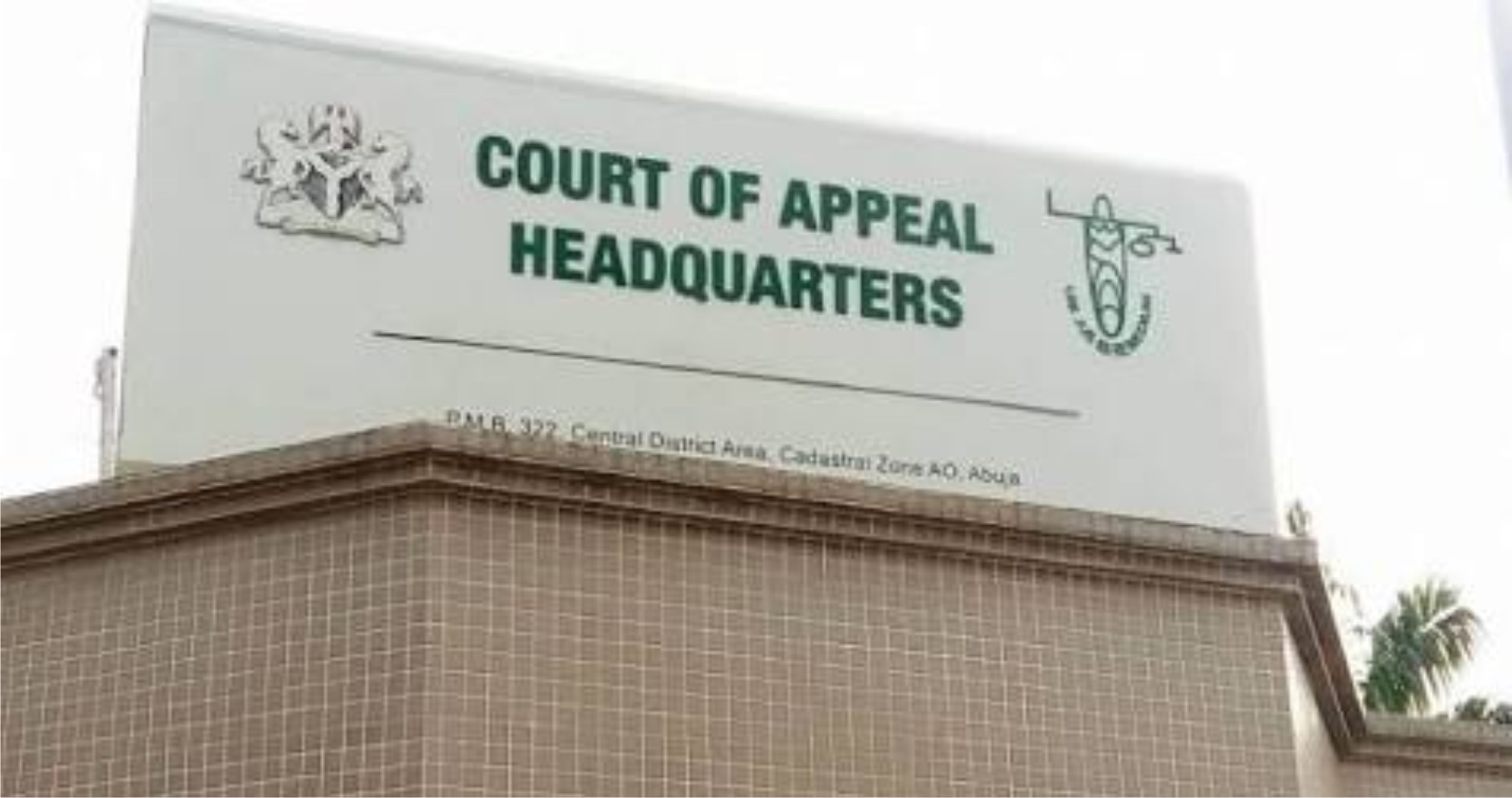
The Abuja division of the Court of Appeal has reserved its judgment in the appeal filed against President Muhammadu Buhari’s academic qualification for the 2019 presidential election.
Justice Atinuke Akomolafe-Wilson, led three- member panel of the court reserved judgment after listening to the argument canvassed by counsel to parties in the suit.
At yesterday’s proceedings, counsel to the appellant, Ukpai Ukairo, insisted that President Buhari was not educationally qualified to have stood for the presidential poll on the grounds that the required certificates were not attached to his form CF001, submitted to the Independent National Electoral Commission (INEC) for clearance to contest the presidential poll.
The counsel denied the claim that the suit of the appellant was statute barred, adding that the case was instituted on November 5, 2018 within the 14 days allowed by law. He said the cause of action started with the announcement and publication by INEC of successful candidates for the 2019 general election on October 25, 2018.
Ukairo, therefore, urged the Court of Appeal to allow the appeal and set aside the decision of the Federal High Court on grounds of miscarriage of justice.
He asked the court to nullify Buhari’s participation in the February 23 presidential election because he was not educational qualified for the poll at the time he did.
However, lawyers to the first and second respondents urged the court to dismiss the appeal for being incompetent and lacking merit.
Buhari’s counsel, Abdullahi Abubakar, specifically told the Appeal Court that the case of the appellant was statute barred, having not been filed within the mandatory period stipulated by the law.
He urged the court to uphold the decision of the Federal High Court to the effect that the suit was not filed in line with the position of the law.
Counsel to the All Progressives Congress (APC), Babatunde Ogala, argued on the line with Buhari and urged the court to dismiss the appeal, while counsel to INEC, Onyeri Anthony, said the commission is neutral and would abide by the decision of the Court.
Kalu, Ismail and El-Kuris had approached the appellate court to nullify and set aside the judgment of the Abuja division of the Federal High Court, which declined to hear their suit instituted to challenge the educational qualification of President Buhari before the conduct of the 2019 general election.
The appellants are asking the court to reverse the judgment of Justice Ahmed Mohammed on the grounds that the processes filed by Buhari and used to strike out their suit were not competent.
While faulting the judgment of the lower court, which was predicated on the grounds that the suit was statute barred, the appellants claimed that the Federal High Court erred in law and in its decision because they did not challenge the primary election that produced Buhari as candidate of the APC.
They, therefore, urged the Court of Appeal to assume jurisdiction over the suit and grant all the reliefs sought at the Federal High Court but which were refused.
Among the reliefs were a declaration that Buhari submitted false information regarding his qualification and certificate to INEC for the purpose of contesting election into the office of the President of Nigeria and that he should be disqualified.
They also prayed for an order of court directing INEC to remove Buhari’s name as a candidate of APC and another order restraining Buhari from parading himself as a candidate in the 2019 presidential election and also APC from recognizing Buhari as a candidate.


The Commission disclosed the figure in its weekly update for week 14 of the second phase of the exercise, which ended on Friday, April 17, 2026.
According to the breakdown, 2,259,288 Nigerians completed their registration through the online pre-registration portal, while 1,489,416 finalized their registration physically at designated centres nationwide.
INEC noted that the figures remain preliminary and are subject to further verification and data cleaning processes to ensure accuracy ahead of the consolidation of the national voter register.
With the conclusion of the registration phase, the Commission has now shifted focus to the display of the Register of Voters for Claims and Objections, a statutory stage aimed at strengthening the credibility and integrity of the voters register.
The display exercise is scheduled to hold from April 29 to May 5, 2026, across designated centres nationwide, providing citizens the opportunity to verify their details and raise objections where necessary.
The Commission urged all registered voters from the concluded phase to take advantage of the exercise to confirm the accuracy of their information and assist in identifying ineligible entries, including duplicate registrations, deceased persons, and non-citizens.
INEC explained that the Continuous Voter Registration exercise is being conducted in phases, with the first phase running from August 18 to December 10, 2025, while the second phase commenced on January 5, 2026 and ended on April 17, 2026.
The Commission further stated that the date for the commencement of the third phase will be announced in due course.
Reaffirming its commitment to credible elections, INEC stressed that maintaining a clean and accurate voter register remains central to ensuring free, fair, and transparent electoral processes in Nigeria.
The Executive Director of IPC, Mr Lanre Arogundade, informed the journalists that the dialogue was sponsored by the European Union, under the auspices of the EU-Support to Democratic Governance in Nigeria (EU-SDGN II), Component 4: Support to Media.
According to the veteran media practitioner, the programme is aimed at strengthening the capacity of the media to promote credible elections through factual, accurate and fair reporting.
He explained that the programme is part of a broader five-year intervention designed to support democratic governance and improve the role of the media in Nigeria’s electoral process, stressing that fact-checking and inclusive reporting are critical responsibilities for journalists, especially during electioneering.
He described the media as a central role agent with regard to upholding transparency and accountability in the democratic process.
A resource person and Director of Journalism Clinic, Lagos, Mr Taiwo Obe, enjoined journalists to embrace the evolving technology so that they would not be in the backwaters in the practice of the profession.
He advised journalists not to downplay Artificial Intelligence (AI) in their bid to remain relevant in the media environment by being abreast of the changing patterns of news consumption.
The journalism teacher explained that with digital transformation of the media industry, it had become imperative for journalists to constantly upgrade and update their skills, stressing the fundamental place of attitude and self-development and underscored the dynamic nature of media consumption in the digital age, thereby compelling journalists to embrace tools and platforms, but without much reliance on AI.
In his lecture, a Professor of Mass Communication at the Federal University Oye-Ekiti (FUOYE), Adebola Aderibigbe, advised journalists in Ekiti State to ensure that coverage of the upcoming governorship poll is issue-based rather than dwelling on personalities.
He added that sensationalism should not occupy the front-burner of any discussions concerning the 2026 election, admonishing that sustenance of democracy is anchored on responsible journalism.
”Journalists must prioritise accuracy, fairness and balance in their reports by verifying facts and giving all parties involved in political matters the opportunity to present their views”, he said.
According to the university don, the election will not be defined by personalities, but by issues. ”Let issues be the pivotal ring upon which every discussion should be made. Sensationalisation of issues should not be the bedrock of discussions in the 2026 election”, he added.
“Do not hear from Party A without hearing from Party B, otherwise the report will be skewed to one side and once issues of elections are skewed, problems will naturally arise”, he stressed.
-

 Sports5 days ago
Financial Issues Stall Chelle’s Eagles Contract Talks
-

 Sports5 days ago
NFF mourns ex-Eagles striker Eneramo
-

 Sports5 days ago
European Giants Circle For Osimhen
-
Sports5 days ago
Four Private Clubs Gain Promotion To NPFL
-

 Sports5 days ago
W/Cup Qualifier: Flamingos In Impressive Opener
-

 Sports5 days ago
Tennis Event Boosts Grassroots Development Push
-

 Sports5 days ago
Chelle Confirms Financial Issues in Eagles Contract Discussion
-

 Sports5 days ago
Nigerian Player Closes In On Historic UEFA Honour