
Business
Nigeria’s Recession’ll Not Prolong -Minister

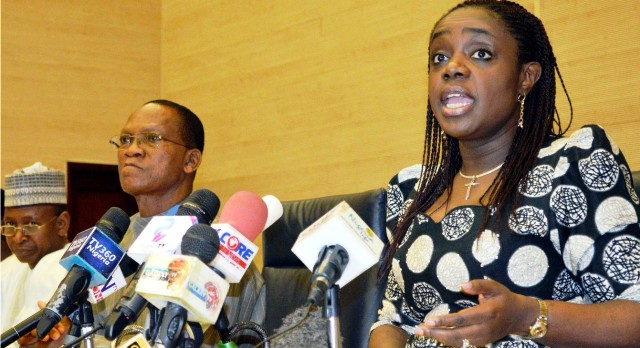
The Minister of Finance, Mrs Kemi Adeousn, has assured Nigerians that the current economic recession the nation is experiencing will not be prolonged.
She gave the assurance on Friday in Abuja while addressing a news conference.
She said that there was a strategic plan by the administration to see that the recession ended soon and also ensure that the economy recovered fully.
“We have a strategic plan that will take us out of the recession we have found ourselves in; we want to make sure the recession is as short as possible because we do not want a prolonged recession.
“From what we are looking at we do not think that it will be a prolonged recession; we think that some of the initiatives that we are working on will now begin to bear fruits.
“We are on course and are confident that the plan we have put together will work and put the economy back on track. “It is a long term plan that would reposition the economy so that we do not go into this boom and burst circles that are driven by the oil price.
“The economy has to be more resilient than that so that we do not find ourselves back where we are.’’
She said that although there was no specific date to end the recession, the fact that there were measures in place was enough indication that the end of the recession had begun and that Nigeria would come out stronger.
Listing some of the measures the administration had taken to address the situation, she said that since the budget was released in May, over N420 billion had been released and cash backed for capital projects.
She said that the largest sector that the money was spent on was Power, Works and Housing.
She also said that a lot had been done in the defence sector to rebuild the capability of the army, especially on efforts in the North East.
“Agriculture has received significant funding because of the time sensitivity of agriculture and because of the fact that food prices were rising, we needed to intervene so that we could get food prices down.
“There is activity resuming on roads, power projects and health projects and we have released money to water resources and solid minerals.’’
Adeosun also said that there was a cash plan to release another N350 billion which would go into the various MDAs.
“The focus is going to be similar, however, there would also be funding of about N60 billion for the Special Intervention Programme and that is very important in putting money into people’s pockets.
“The school feeding programme and the N-Power teachers corps we will cash back today as part of the N350 billion additional release which would take our total capital spending to about N700 billion.’’
She also said that N50 billion was set monthly as budget support plan for some state governments from the Federation Accounts Allocation Committee (FAAC) to support them with additional money to enable them to pay salaries. She said that the loan had been on for three months for the interested states because some states which were buoyant decided not to participate.
On recovery of assets, Adeosun said that the committee was in the process of collating with the non-cash assets like farmlands, vehicles and houses and that a fixed asset register would soon be opened to determine their value.
She said that the jewelries were from different locations and were being brought together to determine the market value and that the next line of action would be decided by the committee. Adeosun explained that the present recruitment by the police and some other government agencies were made possible by the reduction of ghost workers. She added that the savings that were made from the exercise would enable funding for the new recruitment.
“Sometime in January, personnel cost was N165 billion along with pension cost, but so far so good; we have reduced, through the removal of about 40,000 ghost workers, the personnel cost by around N10 billion per month. “Now we have saved about N100 billion this year.’’
She said that though the times were tough, there was hope for Nigerians, adding that issues around infrastructure were the biggest problems of Nigeria which resulted in high cost of living.
“The biggest problem we have is not wages but the cost of living which is too high so it is not how much money you have but it is what it costs you to live. “The problem we have is that many of the things that people are spending money on are the things government should be doing like roads, power and so on.
“So we have to address these things because that is what will really make impact for the average working Nigerian and so when you address the infrastructure you address the cost of living and that is what this government is working on.’’


-
Maritime4 days ago
Nigeria To Pilot Regional Fishing Vessels Register In Gulf Of Guinea —Oyetola
-

 Sports4 days ago
Gombe-Gara Rejects Chelle $130,000 monthly salary
-
Maritime4 days ago
Customs Declares War Against Narcotics Baron At Idiroko Border
-

 Sports4 days ago
TEAM RIVERS SET TO WIN 4×400 ” MORROW” …Wins Triple jump Silver
-
Maritime4 days ago
NIMASA,NAF Boost Unmanned Aerial Surveillance For Maritime Security
-

 Sports4 days ago
NPFL Drops To 91st In Global League Rankings
-

 Sports4 days ago
NIGER DELTA GAMES PANACEA TO YOUTH DEV”
-

 Sports4 days ago
NPFL Impose Fines On Kwara United Over Fans Misconduct