
Business
Airport Concession: No Job Losses, Minister Assures Avaition Workers

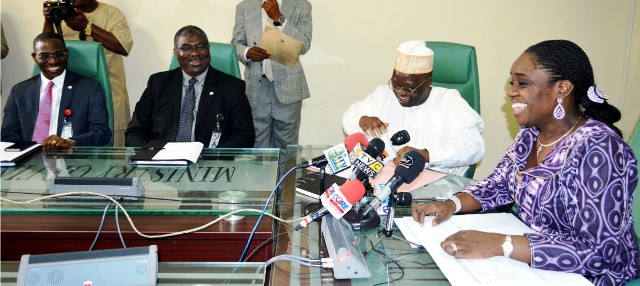
The Minister of State for Aviation, Capt. Hadi Sirika, has assured unions in the aviation industry that the proposed concessioning of the four airports will not lead to job losses.
Sirika gave the assurance at a meeting with the Air Transport Senior Staff Services of Nigeria (ATSSSAN) and the National Union of Air Transport Employees (NUATE) in Lagos.
The Federal Government had indicated its interest to concession the Lagos, Abuja, Kano and Port Harcourt Airports, toward increasing their capacity and efficiency.
Sirika disclosed that this was the first phase, noting that all the 22 airports owned by the Federal Government would be concessioned at the end of the second phase.
He said the meeting was to give the unions the opportunity to become members of the Concession Project Delivery Committee and enable them make inputs to better the process.
According to him, the government’s resolve to concession the airports is aimed at ensuring the establishment and sustenance of world-class standards in infrastructure development and service delivery.
He assured the unions that concession was not tantamount to privatisation or outright sale, explaining that the facilities being concessioned remained the properties of the Federal Airports Authority of Nigeria (FAAN) and Nigeria.
The minister said: “You see government has no plans whatsoever to sell national assets so it is sheer misconception.
“The truth is that government does not have money to invest and even if it could, with the sheer bureaucracy it could take 10 years and Nigerians are tired of what is on ground and want something new.”
He noted that private investors could provide funding for construction of world-class terminals in Nigeria under the build, operate and transfer process which would be beneficial to the country in the near future.
“The vision of the government is engage all stakeholders and people who have a stake in what we are doing, especially on the concessioning of our airports and other things we intend to do,” Sirika said.
He also said two committees had been inaugurated to mid-wife the process, stressing that there would be continuous engagement of stakeholders toward ensuring what was best for the country.
The President of ATSSSAN, Mr Benjamin Okewu, who spoke on behalf of the unions, noted that the unions were not in agreement with the concession of the revenue generating airports.
Okewu, however, agreed that concession done in other climes had resulted to increased revenue, building of infrastructure and other developments.
He also said the unions would meet to deliberate on their membership of the Project Delivery Committee which was extended to them by the minister and thanked him for the gesture.



Business
Jonathan, Diri, Others Laud Firm’s Milestone in Bayelsa …Says Project Will Drive Industrialisation, Create Jobs



-

 News4 days ago
RSG Targets Nine Million Residents in Mosquito Net Distribution Campaign
-

 Oil & Energy4 days ago
Aiyedatiwa Signs New Electricity Bill
-

 Maritime4 days ago
Marine Minister Commends President Tinubu On NPERA Bill Assent
-

 Oil & Energy4 days ago
NLNG Commissions Research And Innovation Centre In RSU
-

 News4 days ago
KenPoly Holds Eight Convocations, August 29
-

 News4 days ago
RSG Begins Another Phase of Projects Commissioning Today
-

 News4 days ago
RMAFC Completes Revenue Sharing Review, Proposes New Pay
-

 Maritime4 days ago
NAGAFF Petitions IGP Over Alleged Maritime Police Harassment