
Business
Biography Of Elder Gomba Humphrey Osarollor (April 20, 1943 – December 27, 2015)

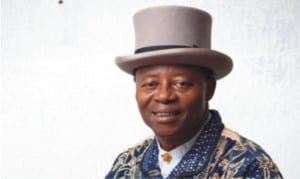
Late Elder Gomba Osarollor
Birth
Elder Gomba Humphrey
Osarollor, JP, agriculturist, environ-mentalist, administrator, politician, philanthropist and Christian leader was born on April 20, 1943 to Abel Mbie Osarollor and Selina Nwanda Ejomah in Ogale Eleme in the present day Rivers State. He was the only child of his mother.
Early Years/ Education
Though his father did not have formal western education, he ensured that young Gomba received quality education and he encouraged and worked tirelessly beyond his financial means as a palm produce dealer and a farmer to actualise his dream of having his first son acquire western education.
Early in life, his father instilled in him the core values of Christian living and education. His father always associated with people who had some level of education and his strong belief in Christ was evident for young Gomba to emulate.
He began his primary education in 1950 at Holy Trinity Anglican Primary School, Nchia Eleme and completed it in 1957. While at school, he excelled in his studies and was also a lead singer. He sang the soprano for the Holy Trinity Church Choir in the Eleme District singing competition and won so many prizes. It was during one of these competitions that one of the judges identified him and took interest in him. The judge was Mr. D.S Foulkes Roberts a Briton who was the Principal of the famous Okrika Grammar School (O.G.S). When young Gomba passed the entrance examination to O.G.S in 1957, it was Mr. Foulkes Roberts that ensured that he got the Eastern Nigeria Scholarship in the first term of his first year in the school which was unusual for children from minority areas in those days.
He finished in the Division 1 category in his West African School Certificate exams (W.A.S.C) in 1962 from Okirika Grammar School.
He had a brief stint at the School of Agriculture, Umudike from January to September 1963, as Agricultural Assistant in Training. From there he gained admission to the famous and prestigious University of Nigeria Nsukka (U.N.N) in September 1963. He performed so well that he was awarded two scholarships, one from Eastern Nigeria Government and the other from U.N.N but he chose that of Eastern Nigeria because it was a more robust one. He graduated in June 1967 with a Bachelor of Science Hons. Degree in Agriculture. (Plant/Soil Science).
In his quest for education, he obtained a Postgraduate Diploma in Food Science and Nutrition from the University of Utrecht, the Netherlands in July, 1971.
Career
Gomba Osarollor freshly out of the university started his working life in July 1967 in Enugu as Agric Officer in charge of Cocoa Extension Southern Provinces, Eastern Nigeria; also between 1968-1970, he was variously credit officer in charge of Supervised Agric Credit Guaranteed Scheme in Ahoada Division, then Senior Agric Officer in charge of Crop Production, Ministry of Agriculture of the newly created Rivers State.
He joined Shell Petroleum Development Company of Nigeria Ltd (SPDC) in 1971 as a Senior Agric Adviser in the Community Development Projects Department and rose to take over from an expatriate as Head of Department in April 1974, due to his performance on the job. He was also appointed as a director of the Rivers State Government owned Pabod Food Company LTD.
In November, 1975, he heeded the call to serve in the Military Government of Rivers State, under Lt. Col now General Zamani Lekwot as Honorable Commissioner of Agriculture and Natural Resources at barely 32 years of age. He was the youngest Commissioner in the Rivers State Executive Council at the time. It was during this tenure as Agric Commissioner that the then multi million naira Risonpalm Ltd (a palm oil plantation company)was established and it is on record that during negotiations at the World Bank headquarters in Washington in 1978, that project was reputed as the fastest in Africa, having taken six months from conception to negotiation.
As Commissioner for Agriculture and a professional in his field, he virtually single handedly wrote all the memos and cleared them every fortnight through the Rivers State Executive Council as required by the World Bank. Following a cabinet reshuffle and appointment of a new Military Administrator, Navy Commander Suleiman Saidu, he was reappointed and moved to the Ministry of Works and Transport as a Commissioner from September 1978 to September 1979.
In his time as Works and Transport Commissioner, twenty five roads were done within a period of one year. Projects like the Stadium at Elekahia, State Secretariat Complex, several roads in Borikiri were completed in his time as a Commissioner having inherited them from the previous Diete Spiff’s administration. As a policy, their regime did not allow any abandoned project to exist in Rivers State.
Having completed his service in the Rivers State Government, he returned to Shell Petroleum Development Company in October 1979 and was posted to Warri as Head of Public Affairs Department with also responsibility for community development projects. The knowledge, experience and exposure he had acquired serving in Government for four years was brought to bear in his new capacity in Shell and he excelled in his job. He appropriately connected Public Affairs into operation and this solved a lot of the Community relations challenges for the Western Division of Shell. He was highly appreciated by the Divisional Manager, Dr. Mark Moody– Stuart, who eventually became Managing Director of Shell in Nigeria and the shell group (S.L.D.P). In 1982, he was transferred from Warri to Port Harcourt as the first Nigerian Head of Environmental Department in Shell in Shell Eastern Division, a newly created department. He voluntarily disengaged from Shell to join politics in 1983 under the Unity Party of Nigeria as Deputy Governorship candidate in Rivers State. He was later appointed by the Oyakhilome administration in 1986 as the first chairman, School to land Authority, a Rivers State Government owned body for Agriculture Development and job creation for school leavers. He was at the helm of affairs there until 1988.
He was the chairman/Managing Director, VENGOMO LTD – a privately owned Company that provides services to oil companies in the areas of Field Engineering and Environmental Services. He was also the Chairman of Deballasting Nigeria Ltd from 1983 till date, a company that exported the first ship load of slops from Nigeria.
He was General Manager, Clean Nigeria Associates from July 2002 to December 2004, a cooperative of all the twelve major oil companies in Nigeria which includes Shell, Chevron, Agip, Mobile, Total etc, established to maintain major oil spill response capability in the industry. He restored their spill response capability which was dead within two and half years of leadership of the company.
Politics
Elder Gomba Osarollor had always believed in service to the people and when the opportunity beckoned on him again to serve when he was approached by Chief A.A Akene who was then the Gubernatorial Candidate on the platform of the Unity Party of Nigeria (U.P.N) to join him as his running mate, he naturally heeded to the call. This was before his fortieth birthday in 1983.
They transversed all parts of old Rivers State with their manifesto and plans for the people. The election was gallantly fought but did not end in their favour, as the election was extensively rigged.
Community Life
In his youthful days, he was actively involved as the Secretary General of NYIME ELEME ASSOCIATION, it was an association that was formed by a group of young graduates, professionals, some chiefs and its main cause was to advance the Eleme people.
He served his people in various advisory capacities and also ensured for peace. He emphasized the importance of education to his people and he put a lot of his resources to ensure they had education as he believes it was a way of emancipation of his people.
He participated activelyin peace talks concerning boundary disputes with other neighbors. He always preached peace and good neighborliness and the fact that he had friends whom he shared decades of friendship with made them trust and listen to him.
One of the notable instances was during the Dr. Peter Odili led administration in year 2000,a peace and reconciliation workshop was held following communal clashes between Eleme and in Okrika neighbours in 1999. He was the Chairman of the Eleme delegation and Co-Chairman of the workshop. At the time of the sitting he was the President General of O’Ela Obor Eleme.
In his time in Government in the mid – 70’s he made use of every opportunity to better the lives of his people, be in siting of companies/industries or placing his people in positions.
Elder Osarollor, as a community leader was the pioneer President General of the General Assembly of Eleme people, (O’Ela Obor Eleme) A socio-cultural organization of the Eleme Ethnic Nationality.
He played an active role in the quest to get Eleme to have a separate Local Government Council which was finally realized during the Abacha Government on the 4th December 1996.
He was very passionate and involved in the developmental strides of his people.
Christian Life
Elder Gomba Osarollor was born into an Anglican Christian Family. He was raised to believe in Christ and was taught by his parents that this is the only path to follow in life.
Our father having been in the church from his youth, singing soprano with the Holy Trinity Anglican Church Choir was in the choir in O.G.S, in the school of Agriculture Umudike and the protestant chaplaincy UNN choir, adjudged himself a Christian but his friends who were Christians knew better and they kept inviting him to Christian meetings.
On the 28th of April, 1984, eight days after his forty first birthdays, something happened in his life which changed his life completely. He was invited to a meeting of the Full Gospel Business Men Fellowship International at the Hotel Presidential. It was at this meeting that he gave his life to Jesus Christ and became a born again after listening to the preaching of Pastor Ayo Oritsejeafor, now the President of the Christian Association of Nigeria (CAN). Ever since, he had been greatly involved in the spread of the gospel throughout the nation and travelled extensively all over Nigeria and the world. He was appointed as International Director and was also a life member of the Full Gospel Business Men Fellowship International.


-

 News2 days ago
Amend Constitution To Accommodate State Police, Tinubu Tells Senators
-
 Politics2 days ago
Senate Urges Tinubu To Sack CAC Boss
-

 News2 days ago
Disu Takes Over As New IGP …Declares Total War On Corruption, Impunity
-
Business2 days ago
President Tinubu Extends Raw Shea Nuts Export Ban To 2027
-
Business2 days ago
Crisis Response: EU-project Delivers New Vet. Clinic To Katsina Govt.
-
Business2 days ago
President Tinubu Approves Extension Ban On Raw Shea Nut Export
-
Rivers2 days ago
Etche Clan Urges Govt On Chieftaincy Recognition
-
Business2 days ago
Fidelity Bank To Empower Women With Sustainable Entrepreneurship Skills, HAP2.0