
Oil & Energy
Oil Price Fall And Nigeria’s Economy

At the 7th All Nigeria
Guild of Editors conference held in Benin, the Edo State capital on Thursday, September 22, 2011, the former minister of the Federal Capital Territory, Mallam Nasir el-Rufai, raised alarm that should oil price drop below $80 per barrel in the international market, some state governments in Nigeria would not be able to pay salaries to their workers.
El-Rufai, who was speaking on the topic, “Perspectives on the Cost of Governance in Nigeria”, had strongly noted that pegging of oil price as high as $75 then in the national budget was unrealistic and not good for Nigeria’s economy.
The minister was being as prophetic as many individuals and organizations who believed that the nation’s economy which is oil dominated would be in a quagmire, should any unforeseen surprises affect the oil price in the global market.
Various experts had also, for too long been consistent in expressing strong need for drastic reduction in the high cost of Nigerian governance which gulps as high as 25% of the annual budget and one of the highest in the world.
They had equally suggested diversification of the economy from oil to other sectors particularly agriculture which hold high promises for food on the table of the average Nigerian, mass employment, raw material for industrialization and foreign exchange earning.
While most nations of the world had strategized to contain such possible economic fears, most African governments also took bold steps in preparations for the economic uncertainties, but some deaf-and-dumb governments had preferred what goes directly into the individual pockets of the leaders than the general good of the citizens. Billions of Dollars meant for constituency funds, furniture extravagant travelling allowances, amongst others find their ways to the law makers and their crowd of primal aides.
Today, the reality is not only knocking at our doors but is quite here with us. The present systematic drop in the oil price which experts predict could slide far below $50 per barrel benchmark before the end of 2015 has become Nigeria’s undoing.
Many state governments in Nigeria today are owing months of salaries arrears to their workers while contractors have abandoned projects execution because the oil price then predicted had fallen below budgetary calculations and states lack the funds to pay.
Some private schools in Port Harcourt have already given notice of increase in school fees, landlords are also threatening to raise rent, labour unions are ironically agitating for pay rise in view of recent devaluation of Naira occasioned by dramatic drop of oil price in global market even as state governments insist they would not review the $65 per barrel benchmark on which they proposed their 2015 budgets. Where would these excoriations take the nation to in the present economic situation determined by global economic reality?
An economist, George Clement, is of the view that time has come for Nigeria to elect leaders who have the capacity to proffer solutions to the socio-economic challenges confronting the nation as against empty promises for which most Nigerian political leaders are known.
“The era of touts aspiring for public offices should be over. It is time to look beyond sweet talks and empty promises now that campaign period in Nigeria is around the corner”, said Clement.
He said, “our leaders had since the oil boom of the 70s refused to do the right thing. Billions of Naira had consistently been swallowed up by the pockets of fraudulent leaders”, he remarked noting that the future generations may have nothing to be proud of about their nation if the real change is not effected.
Another respondent, Mrs Mary Jonathan, in her own reaction is challenging the Economic and Financial Crimes Commission (EFCC) to trace the loots of the nation wherever they might have been hidden.
“Yes, it appears late but not too late. We cannot continue to wallow in poverty in a rich country while few persons in the name of politics continue to cart away our resources”, she stressed.
Jonathan appealed to the Federal Government to review the pump price downward to reflect the price of oil in the global market. “We cannot afford to pay more when actually the price has fallen. The N97 per litre of fuel is no longer realistic”, she maintained.
A civil servant, Makel Ndah, in his own reaction called for upward review of workers salary. “Since the Naira has been devalued, its exchange power has become weak, it is important that the government reviews workers salary upward to meet with the current market reality”.
A landlord in Port Harcourt Chief Clifford Nweke, said,” it is obvious that house rent would be reviewed since government has started to have a second look at the Naira.”
We are all Nigeirans, operating in the same market, so what affects one should equally affect the other. Yes some people will say landlords are wicked shylocks, but that is mere sentiment”, he maintained.
A private school proprietor who pleaded anonymity said, “we had our first Parent Teachers Meeting last week and the issue of increase of salaries was raised by the teachers and I told the parents to pray and watch because for me to pay higher workers salary means that the fees charged students would also be reviewed upward.
“Please don’t get me wrong, we have not increased school fees yet. What I am saying is that we in my school are studying the socio-economic variables. If workers salary goes up and other schools readjust to meet with the reality, we here would also adjust because we are part of the society”, he explained.
A Port Harcourt- based public analyst, Christian Nnamdi, said the issue calls for caution. “There is no need to panic yet. It is not a Nigerian thing but a global phenomenon. It does not affect only Nigeria but other nations of the world. Nigeria has many antidotes to the problem. So all we need to do is study the situation to know the dynamic nature of the change.
According to Nnamdi, the nation should not leave everything in the hands of politicians. “We need to protect the economy from the excesses of selfish Nigerian politicians and one way of doing that is to gather together some technocrats and experts in various fields especially economists. Let the think- tank develop an economic plan that should guide the policies and programmes.
Call it 25 years economic development plan. So that whichever political group that takes the mantle of leadership, will have to build whatever programme from the economic blue print.
Nnamdi blamed the woe of the nation on inconsistency of leadership, stressing that government should be seen as a continuation from where the former ends. “But you see, in Nigeria, any new administration is in the habit of abandoning the programmes of the previous administration at the detriment of so much fund sunk into such projects because they want to take credit.
“But with a long term economic development plan, new government can no longer abandon projects started by the former government. It has to inherit it and complete it for the people. This idea will make nonsense of the penchant for second term which is common in Nigeria,” he maintained.
It would be recalled that discovery of shale oil which increase supply in American oil market, a major importer of Nigeria’s oil has affected the oil supply in the global market. This high supply has reduced oil price in the global market and Nigeria, whose economy remains oil-driven is directly affected.
Nigeria whose budget depends on oil has been forced to review its oil benchmark resulting in austerity measures to contain the economic downturn.
Medium Term Expenditure framework which the Finance Minister, Dr. Ngozi Okonjo-Iweala, submitted to the National Assembly, scaled down the nation’s budgetary estimate for 2015 to N4.661 trillion as against an initial N4.817 trillion.
Chris Oluoh
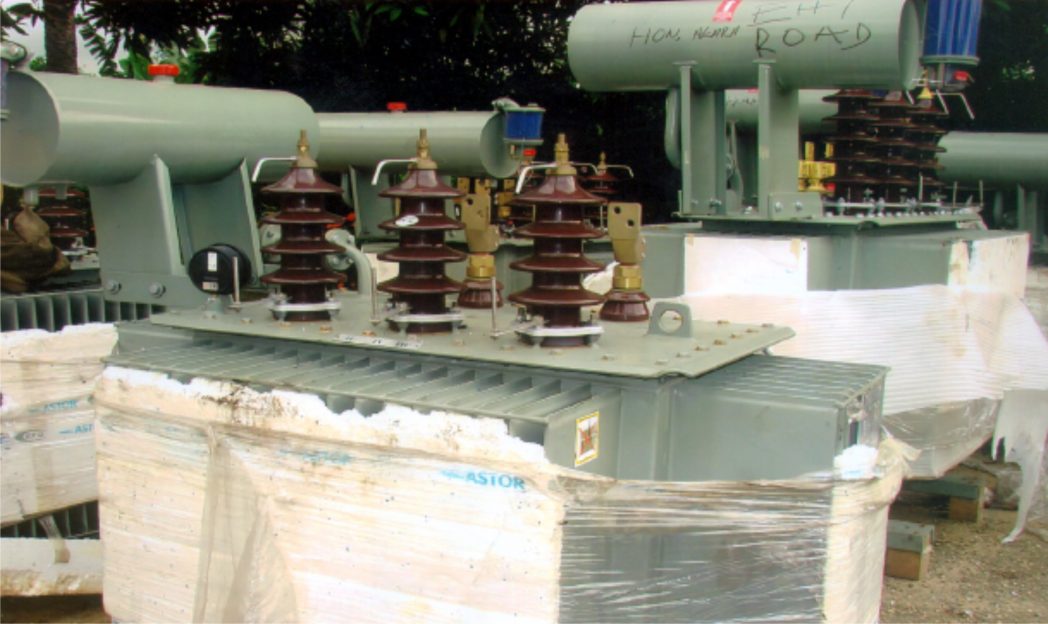
Some Transformers donated by the lawmaker representing Oyigbo in the RSHA Hon. Okechukwu .A. Nwuogu



-

 Education5 days ago
Elga boss tasks law students on academics strides
-

 News2 days ago
Amend Constitution To Accommodate State Police, Tinubu Tells Senators
-
 Politics2 days ago
Senate Urges Tinubu To Sack CAC Boss
-

 News1 day ago
Disu Takes Over As New IGP …Declares Total War On Corruption, Impunity
-
Business2 days ago
President Tinubu Extends Raw Shea Nuts Export Ban To 2027
-
Business2 days ago
Crisis Response: EU-project Delivers New Vet. Clinic To Katsina Govt.
-

 Business2 days ago
PENGASSAN Rejects Presidential EO On Oil, Gas Revenue Remittance … Seeks PIA Review
-
Business2 days ago
President Tinubu Approves Extension Ban On Raw Shea Nut Export