
Business
‘Second Abuja Airport Runway Project, A National Priority’

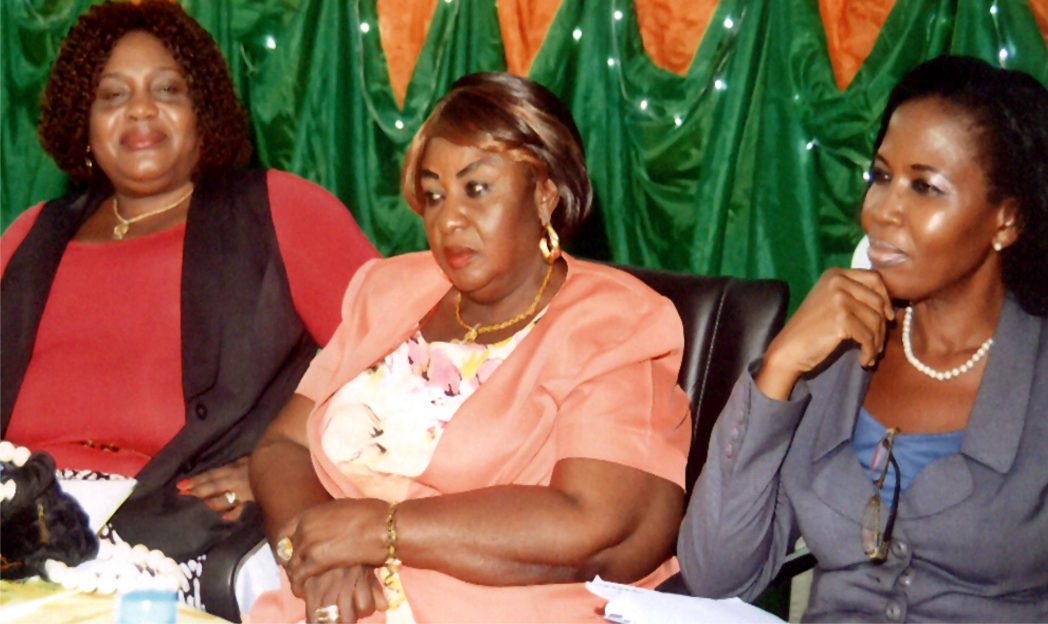
Guest Lecturer at the 5th Triennal Delegate Conference of NAWOJ, Rivers State, Mrs Victoria Opara (right) former Chairman, Rivers State, Mrs Uche Atuzie (middle) and Director, Publication ,Rivers State Newspaper, Mrs Juliet Njiowhor at the Ministry of Women Affairs, Port Harcourt, recently.
The Federal Government has said that the second runway project at the Nnamdi Azikiwe International Airport, Abuja, would be treated as a national priority.
The Senior Special Adviser to the President on Aviation, Capt. Shehu Iyal, disclosed this while briefing State House correspondents on the achievements of the Jonathan administration in the sector.
To this end, Iyal said that President Goodluck Jonathan had given aviation authorities a marching order to immediately revisit the project and bring it to fruition.
He said “President Goodluck Jonathan has approved and directed the authorities to revisit the second runway project immediately and it is being revisited.
“I am proud to inform you here that I am part of the committee of the second runway project and it is going to be treated as a priority.
“There will be a second runway in Abuja for safety, for security and for efficiency.’’
The senior special adviser said that the project would ease the busy traffic on the existing runway and minimise the delay in take-off and landing, currently experienced by passengers at the airport.
On the issue of missing luggage and touting at the nation’s airports, the president’s aide said government was aware of the situation and was putting measures in place to address them.
He, however, said that missing of luggage was not peculiar to the nation’s airports, adding that it was a global challenge in the aviation sector.
“Luggage get missing both locally and internationally. Personally, I have experienced two instances; one coming from Frankfurt in Germany of all places.
“The second instance was at the Heathrow airport in London, where I lost a luggage while coming to Nigeria; such things happen.
“I am not saying that we are right and so we should leave it unchecked. I am sure the people in charge of that are looking into it,” he added.
On touting, Iyal said that the Federal Airport Authority of Nigeria (FAAN) was currently training and retraining its security personnel to deal with the problem.
He said the Federal Government had resolved to assist airports with policemen and soldiers to check the activities of touts.
According to Iyal, the Jonathan administration has raised the country’s aviation sector to global standard in the last six years.
One of the greatest achievements, he said, was the retention of the U.S. Federal Aviation Administration (FAA) Category One Status, which Nigeria achieved in 2010 after a rigorous audit by FAA.
He said “just last month (September), we were able to retain the U.S. Federal Aviation Administration (FAA) Category One Status, which we got in 2010.
“It will interest you to know that India, which is one of the top 10 economies in the world, just lost their own Category One status, but we are able to retain our own.
“I think this is an achievement all Nigerians need to be proud of.”
The President’s aide said that the election of Mr Olumuyiwa Aliu as President of the International Civil Aviation Organisation (ICAO) Council was another major achievement of the Jonathan government.
He explained that Aliu’s election had placed Nigeria in the league of countries doing well in the global aviation sector.
“Coming back home, we have today, what is called Total Radar Coverage of Nigeria (TRACON), which actually started some years ago.
“The completion of the TRACON project under the Nigeria Airspace Management Agency (NAMA) was completed under the leadership of Jonathan.
“What TRACON means is that anywhere within the Nigerian airspace, we are able to track every aeroplane that is either flying in or out.”
Iyal said that the role played by the aviation sector in the success story of the fight against Ebola could not be overstressed.
According to him, the U.S. has started replicating the Nigerian example at the John F. Kennedy International Airport in New York. (NAN)
ARU/VI/HA



The facility will be disbursed through participating Microfinance Institutions (MFIs), which will in turn extend the loans to their customers, particularly SMEs, as they directly interface with businesses at the grassroots level.
The Executive Director of COMCIN, Mr. Micheal Ogbaa who represented the Chairman, Dr. Iredele Oyedele (FCA, FCCA), said the initiative is designed to strengthen micro-lending institutions and expand access to finance for grassroots entrepreneurs, particularly women and youths in the informal sector.
Ogbaa explained that COMCIN does not lend directly to individuals but works through its network of microfinance and cooperative institutions, which in turn provide loans to end users.
“We came together to advocate for the microfinance ecosystem. Commercial banks often exclude people at the grassroots, but our members are positioned to reach them. This facility will empower them to do more,” he said.
He noted that the loan scheme offers low interest rates and flexible repayment plans, making it more accessible to small business owners.
According to him, about 90 percent of beneficiaries are expected to be women, who play a key role in sustaining families and driving economic activities at the local level.
“Our focus is on traders, service providers, and players in the informal sector. These are the real movers of the economy. By supporting them, we are strengthening families and contributing to national development,” he added.
Ogbaa disclosed that eligible SMEs with proven integrity and business track records could access up to N5 million each through participating micro-lending institutions. The rollout has commenced in Lagos and will extend to Abuja, Enugu, and other regions, including the South-West, South-East, and North-East.
He said 12 micro-lending institutions have already benefited from the scheme, while 85 applications are currently being processed under the pilot phase.
“Our target is to reach at least 100,000 SMEs nationwide. We are building a platform that connects funding partners with credible micro-lending institutions, creating a reliable channel for financial inclusion,” Ogbaa said.
He added that COMCIN is also working to attract larger funding pools from development finance institutions and private investors, noting that successful implementation of the pilot phase would boost confidence and unlock more capital for SMEs.
“We have seen encouraging testimonies from early beneficiaries. As we demonstrate transparency and efficiency, more institutions will be willing to channel funds through us,” he said.


-
Opinion1 day ago
Ozoro Festival: Tradition or Tyranny?
-

 News2 days ago
RSG Reiterates Commitment To Youth Dev
-

 Oil & Energy2 days ago
Transcorp Energy, Renewvia Partner On Renewable Energy Gap
-
Politics1 day ago
RIVERS WOMEN RALLY SUPPORT, CONTINUOUS PRAYERS FOR TINUBU
-

 Business2 days ago
NSCDC Discloses Illegal Dump Site In Ikwerre Community
-
Politics1 day ago
AKPABIO, DIRI, OBOREVWORI, OTHERS VOW TO REELECT TINUBU …AS GIADOM RETAINS APC ZONAL CHAIR
-
 Business2 days ago
Yenagoa’s Radisson Hotel Ready December — NCDMB, Other
-

 Maritime2 days ago
MWUN Raises Alarm Over Port Security Lapses In Lagos