
Opinion
Lessons From Rwanda

In Rwanda, particularly among the minority Tutsis,
there is a saying that “God goes to work in other countries of the world, but retires to Rwwanda to sleep.”
This unfortunate remarks came about following the killing of about one million ethnic Tutsis and moderate Hutus, a majority tribe, during the 1994 genocide.
It is common knowledge that corpses of victims were thrown into rivers, creeks and other littered on the streets in the capital, Kigali, and at countryside too.
An appraisal of the 1994 genocide shows that ethnicity and the killing of former Presidnet Juvenal Habyarinmana, a Hutu, whose plane ws shut down above Kigali Airport on April 6, 1994 led to his death and that of Burundian President who was on board.
Other causes of the 1994 genocide include the inability of the Rwandan people themselves to dialogue and resolve age long disagreement and failure of the international community particularly the United Nations (UN) to acat swiftly.
Furthermore, the Hutus are actually a majority tribe while the Tutsis are in minority.
Although, both the Hutus and Tutsis speak same language, inhabit same area, the Tutsis are largely taller, thinner and their origin is traceable to Ethiopia.
In Rwanda, particularly during the genocide when the corpses of Tutsis were thrown into rivers and creek, their killers believed that the dead Tutsis were sent to Ethiopia where they originally migrated from.
Worse still, when the Belgian Colonists arrived the nation in 1916, they produced identity cards classifying people according to their ethnicity and described the Tutsis as being superior to the majority Hutus.
Consequently, the Tutsis enjoyed better jobs and educational opportunities than their Hutu neighbours and this gave birth to resentment over decades.
In fact, in 1959, more than twenty thousand Tutsis were reportedly killed after series of riots led by aggrieved Hutus. To this end, many Tutsis fled to neighbouring Burundi, Tanzania and Uganda; culminating in rebel activities led by a Tutsi leader Paul Kagame and moderate Hutu liberals.
The climax of the unrest in Rwanda was the shooting down of a plane carrying former President Juvenal Habyarimana and the President of Burundi then among other distinguished government officials.
The calamity was suspected to have been caused by Rwandan Patriotic Force led by the current President Paul Kagame who was a rebel leader at the time.
Since earlier in 1993, peace accord signed between President Juvenal Habyarimana and Rwanda Patriotic Force (RPF) failed to halt the unrest. The shooting of the plan conveying President Juvenal Habyarimana about a year after was seen as the final harbinger to the 1994 genocide.
Between April and June 1994, darkness covered Rwanda where at least eight hundred thousand people of ethnic Tutsi minority tribe were slaughteredsssd.
In her famous poem, entitled Conversation Among the Ruined, Syvia Pratt states thus: “With such blight wrought on our bankrupt estate, what ceremony of words can patch the havoc”.
Truly, no word can explain or justify the killing. Only recently, the government and the good people of Rwanda commemorated twenty years after the 1994 genocide. At a sober memorial ceremony in the Rwandan capital survivors wailed as they recounted the horrors of the era.
World leaders expressed regrets for failing to act fast. For instance, former United States President, Bill Clinton has called Rwanda one of his greatest regrets during his Presidency and admitted that had the United States and the world intervened earlier some thirty thousand people might have been saved .
The U.S. Ambassador to U.N, Samatha Power who wrote the book on Rwanda genocide titled: A problem from Hell said the U.S. government and the International community’s slow response contributed to the atrocities while the diplomat who was President of the U.N Security Council in April 1994 apologised for the council’s refusal to recognize that genocide was taking place in Rwanda and for doing nothing to halt the slaughter of people.
Even though the genocide has ended and twenty years anniversary has been commemorate~Africa and indeed the world have a lot to learn from the genocide.
Nigeria in particular and indeed other African nations must see reason to always dialogue to resolve age long disagreement. These unresolved matters could revive age long inbalance in society If to\erance is thrown to the wind.
Nigerian leaders must take advantage of the on-going National Conference and the current democratic experiment to midwife an egalitarian and just Nigeria and not a natGn where few tribes consider themselves majority and enjoy certain privileges over the rest.
The description of ethnic Tutsis to be superior to the Hutus by Belgian imperialists for which they the Tutsis enjoyed certain opportunities over the Hutus laid the foundation for the unrest in Rwanda, culminating to genocide in 1994 after previous unrest.
The U.S., U.N and indeed the international community must act fast to be our brothers keepers.
As the former New Zealand Ambassador to the U.N Colin Keating said during the commemoration, the U.N. needs to step up human rights protection and further re-appraise its failure to prevent ongoing atrocities in Syria, Central African Republic and South Sudan.
Nigerian leaders should unite to resolve the menace of Boko Haram in line with U.N. Secretary General, Ban ki Moon’s call on all countries to re-commit themselves to prevent and fight genocide and re-affirm responsibility to protect people from crimes against humanity.
It is instructive that the strong and wealthy in society learn to protect the weak and poor rather than conspire to further impoverish or kill them.
The time to act is now.
Sika, a commentator on contemporary issues, is a staff of Radio Rivers, Port Harcourt.
Baridorn Sika




Quote: “The Flamingos have conquered the world; Nigeria must now rise to its responsibility of nurturing the next generation of champions.”
Sometimes, sporting victories
More significantly, they
Umejiaku deserves special
Umejiaku received the award
Nigeria has now broken into
For too long, young girls in
But beyond the reward, this
As Nigerians celebrate this
By; Calista Ezeaku
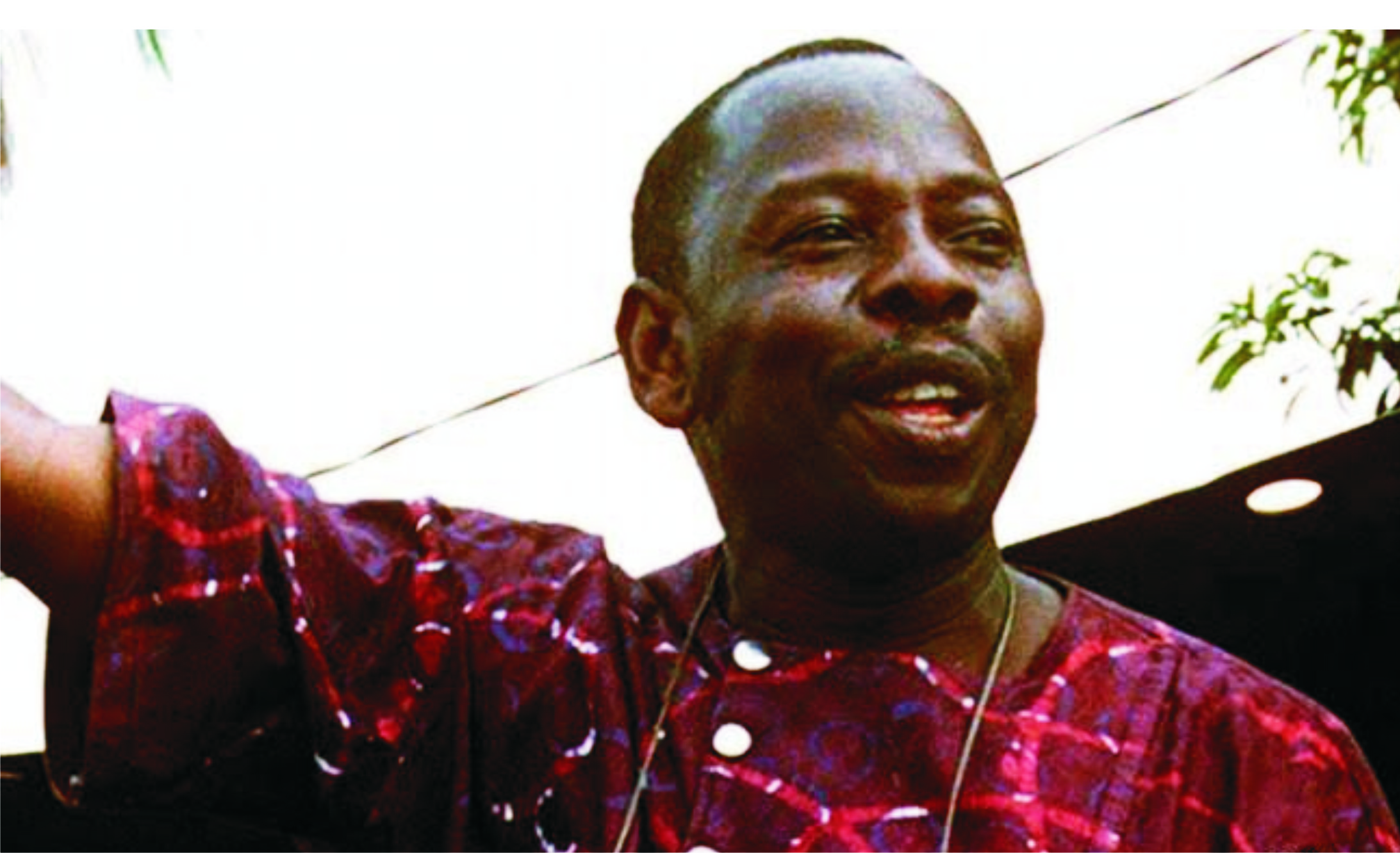
On November 10, 1995, the Nigerian military government of General Sani Abacha executed Ken Saro-Wiwa and eight other Ogoni leaders after a deeply controversial trial. Their deaths marked one of the darkest chapters in Nigeria’s history. At a time when fear silenced citizens and sycophancy flourished around military power, Saro-Wiwa chose to confront tyranny. Many Nigerians retreated into silence, while others praised the regime to secure favour. He knew the risks, yet refused to abandon a people whose land had been devastated by oil exploration and whose lives remained trapped in poverty. His courage arose from the conviction that public responsibility sometimes demands resistance to authority. Saro-Wiwa understood that speaking against a military government could lead to imprisonment or death.
Nonetheless, he believed the suffering of the Ogoni people demanded a courageous response. While oil was extracted from their land, they were left with polluted rivers, damaged farmland, declining livelihoods and an environment hostile to human survival. Fishing grounds and sources of livelihood were threatened, while the people struggled to secure basic amenities. The wealth beneath their soil brought neither adequate development nor a fair share of national resources. For him, silence in the face of injustice would have amounted to complicity. Through the Movement for the Survival of the Ogoni People (MOSOP), he organised a peaceful campaign that took the Ogoni question to the international community. MOSOP gave ordinary people an organised platform through which to express their grievances and insist on recognition.
The Ogoni Bill of Rights, presented to the Federal Government in 1990, demanded political autonomy, economic justice, environmental protection and control over the people’s resources. The campaign exposed the human and ecological costs of oil operations, particularly those associated with Shell, and challenged the apparent alliance between corporate interests and an unresponsive State. The Ogoni struggle became a defining expression of minority rights and environmental justice in Nigeria and Africa. Saro-Wiwa’s writings and mobilisation drew attention to communities treated as expendable because of their limited population and political influence. He argued that numerical strength should never determine a people’s value or rights.
A minority community does not become less deserving of justice because it cannot command electoral numbers or political power. In Nigeria, every ethnic group deserves dignity, protection and a fair opportunity to benefit from the commonwealth. Rather than respond to peaceful agitation with dialogue, the Abacha regime resorted to repression. Ogoni leaders were harassed, detained and killed; others fled into exile. The crisis intensified after four Ogoni chiefs were killed in May 1994. Saro-Wiwa and other MOSOP leaders were arrested, tried by a special tribunal and executed despite international appeals for clemency and serious concerns about the trial’s fairness. The executions drew worldwide condemnation and intensified scrutiny of Nigeria’s human-rights record and oil companies in the Niger Delta.
They demonstrated the danger of using State institutions to suppress peaceful demands. The proceedings remain a reminder of the need for judicial independence and due process. Saro-Wiwa’s courage rested on the conviction that justice must be pursued despite the cost. His method combined non-violent resistance, public education and grassroots organisation. His struggle recalled the civil-rights campaign of Martin Luther King Jr. and the power of peaceful mobilisation against injustice. Saro-Wiwa linked environmental degradation to political exclusion, economic exploitation and the denial of democratic rights. Oil-producing communities, he insisted, should not remain zones from which wealth is removed to develop other parts of the country.
Their people must benefit through roads, schools, healthcare, jobs and clean water. Resource extraction carries a duty to protect host communities. His argument extended to the structure of the Nigerian federation. He challenged a revenue-allocation system that made oil-producing communities bear the environmental and social costs of extraction without commensurate benefits. Like advocates of fiscal federalism, he believed resources should be managed and shared equitably. He envisaged a society in which no community would be disadvantaged by its size, ethnicity, political affiliation, culture or religion. His vision was a country bound together by justice and equal citizenship. Saro-Wiwa was also a gifted writer, dramatist and public intellectual.
Through books, essays, plays and television, he documented Nigerian society’s contradictions and challenged abuses of power. His popular television series, Basi and Company, demonstrated his creative range, while his leadership of the Association of Nigerian Authors encouraged writers to engage national questions. He believed literature should not be detached from society’s struggles. His pen exposed environmental injustice, political repression and the dangers of silencing courageous voices. He used storytelling, satire and drama to shape public consciousness and expose social contradictions. His literary achievements gave his activism wider reach and made the Ogoni experience part of national conversation. His commitment to the Ogoni people extended beyond the oil question.
During the Civil War, he worked to protect his vulnerable community. He urged younger generations to reject subservience and complacency and pursue change through lawful, peaceful means. Citizens, he believed, must not surrender their responsibility to challenge wrong doing. An injury to one community threatens the rights and security of all. The return to democratic government in 1999 and the establishment of the Niger Delta Development Commission, the Ministry of Niger Delta Affairs and the Hydrocarbon Pollution Remediation Project (HYPREP) are among developments that have kept the region’s demands in public view. Saro-Wiwa did not create these institutions, but his movement helped expose the urgency of intervention and sustain pressure for redress.
His death made it harder to ignore the Niger Delta’s environmental and political grievances. Yet, interventionist institutions do not prove that the original demands have been met. Their effectiveness depends on competent leadership, transparent spending, measurable outcomes and community participation. Yet, thirty-one years after his execution, the central concerns of the Ogoni struggle remain unresolved. The HYPREP-led clean-up has offered hope, but many residents await meaningful improvements. Questions persist about the programme’s pace, quality and transparency, and whether its benefits reach ordinary people. A clean-up should be judged not by ceremonies or contracts, but by restored land and waterways, safe drinking water, improved livelihoods and better public health.
It must include long-term monitoring to ensure treated sites remain safe. Residents deserve information about contamination, remediation methods and completion timelines. Reports that water projects in Gwara and Ebubu Communities, in Khana and Eleme Local Government Areas respectively, failed weeks after commissioning have raised further concerns. If confirmed, the failures would indicate weaknesses in supervision, procurement and quality control.
To be continued in our next edition.
Taneh Beemene
-
News4 days ago
RSG Reaffirms Commitment To STEM Education, Technological Advancement
-
Business4 days ago
‘NUJ, NPA’s Partnership Would Boost Port Producrivity, Economic Growth’
-
 News4 days ago
IGP Warns Police Officers Against Partisanship …Directs Regular Engagement With Journalists
-
 Oil & Energy20 hours ago
FG To Double Oil, Gas Reserves, Moves To Intensified fresh Exploration
-
Business4 days ago
Fire Threat Interrupts Asaba Air Peace Flight
-
 News4 days ago
Customs To Deploy AI, Scanners Against Snuggling
-
Business4 days ago
Fish Production Deficit, A Major Investment Opportunity – Minister
-
Sports4 days ago
CAF Awards 2026 Gets A New Date