
Opinion
Fiddling While Rome Burns

We do really have a
serious problem in our hands. The current developments in the country are evidence that we are a people that learn something but forget everything soon after. Our leaders, both past and present, have disappointed us woefully and so we don’t expect them to do anything right anymore. Rather, they will disappoint us if they do things right.
For some time now, the stories that emanate from Nigeria indicate that we are not only descending into anarchy very swiftly, we are losing our humanity. Hardly a day elapses without reports of horrifying monstrosities claiming hundreds of lives in the country.
Though some sections of the nation experience superficial normalcy, other areas, especially the north, have since become a haven of violence as rampaging terrorists unleash mayhem against the government and security agents, maiming and killing law-abiding citizens at random.
In all, the picture that is fast emerging of Nigeria is that of a country that is dangerously and incurably adrift; a country that is fast approaching the precipice.
Those who doubt that our leaders have totally lost grip of their most basic responsibility to the people (the security and welfare of the people) may have to recall the series of bombings, particularly the recent brazen bombing at the Nyanya bus park in Abuja and the abduction of 234 secondary school girls in Borno State.
The dastardly bombing incident elicited the characteristic pathetic whimpers that had followed such incidents in the past, and which Nigerians have become all too familiar with.
Characteristic of him, President Goodluck Jonathan told a grieving nation that the Boko Haram menace was a temporary problem that “we will soon overcome”. Good talk. But how? What is on ground to make anyone believe this? It is this questionable optimism which is far flung from reality that escalates our nation’s problems, including the Boko Haram challenge.
We suffer lingering dire consequences as a people because of the apparent inability of our leaders to appreciate the enormity of the nation’s problems and develop the right attitude that is required of them.
How can we explain a situation where, while the nation was still mourning and trying to ascertain the casualty figure in the Nyanya incident, the president was found at a rally of his political party in Kano frolicking, smiling, waving and castigating the Kano State Governor, Rabiu Kwakwanso, for embezzling presidential campaign and local council funds? The truth is that Jonathan was politicking while Nigerians and indeed foreign diplomats were busy donating blood for the wounded.
It is hard to understand a situation where, in the midst of gross insecurity, poor power supply, scary unemployment problem, collapsing infrastructure and badly deformed education and health care systems, the president goes round on illegal campaign trips, canvassing support for his re-election in 2015.
The economy, which we are told is on a growth trajectory, does not reflect on the people. The growth and benefits of the so-called ‘growing economy’ have continued to circulate within the small group of the rich and our oppressors, who have access to the government.
Petroleum products, which uninterrupted supply the administration had boasted of, has remained scarce for a long time. This is a country where, because of corruption, kerosene is more expensive than petrol. While we are rebasing our economy and declaring ourselves the strongest economy in Africa, poverty and hunger are ravaging the land, with over 70 percent of us living below poverty line.
Clouds are gathering the country. The very reasons for which governments all over the world exist, no longer hold in Nigeria. We have become a country where a conglomeration of evil abounds. Here in the south, if the story is not about armed robbery, kidnapping or barefaced gunrunning, it is about oil theft.
In the north, when insurgents are tied of bombing mosques, churches, police stations, military barracks, markets, schools or motor parks, they resort to the sacking of entire communities and abduct school girls.
Though it is unfair to blame the present administration entirely for the country’s predicament, our current leaders appear clueless when it matters most. Like Emperor Nero, they fiddle while Rome burns.
That bombings take place in any part of the country is bad enough. But that it is happening in the seat of power is unacceptable. If that massive attack could take place in Abuja, where else is safe? Is it Port Harcourt where I am currently based or Lagos?
The time has come for us to change the narrative and take the battle against the insurgents more seriously. The time has come to put whatever we want to do in 2015 in the back burner and rescue our country. If the approach we are using to the Boko Haram problem is not working, can’t we try another method? Can’t we?
We have to change our approach because this might be our last chance to fix this problem. Let no one think that Somalia cannot happen here. It can. Already, massive corruption, unemployment and the socio/economic condition of the country are sufficient ingredients to trigger it off.
Arnold Alalibo



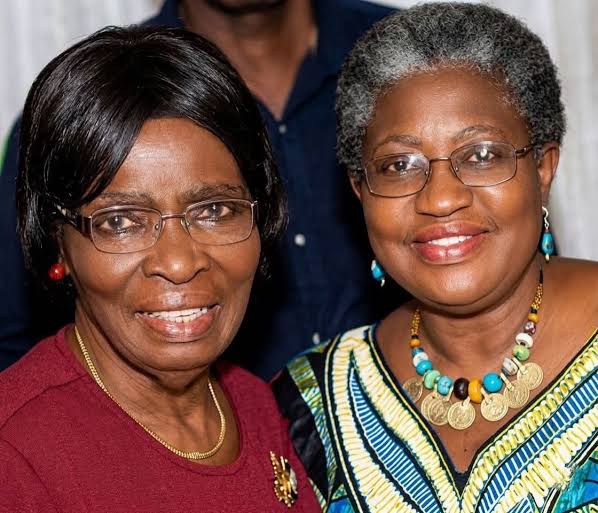
Quote “Professor Kamene Okonjo
Some women leave behind more t
Yet, to remember Professor Kam
Professor Okonjo was the belov
one of the most dramatic chapt
On December 14, 2012, the then
She leaves behind children, gr
Professor Kamene Okonjo deserv
By: Sylvia ThankGod-Amadi

Quote: An African who invokes
This is the concluding part
… Given the fact that I was
At the end of the visit by the
Back to my apartment, at abo
Under normal circumstances, yo
That all she asks is that Chie
For some reason that I do not
I believe that everyone in hu
Our ancestors have not gone fa
By: Jason Osai
The Federal Government’s approval of a N70,000 monthly transport intervention for public service workers for six months, beginning in November 2026, offers hope to employees struggling with the rising cost of living. The agreement with the Nigeria Labour Congress (NLC), reached at a conciliation meeting in Abuja on October 27, is intended to cushion transport costs and ease pressure on workers’ incomes. But for public servants in Rivers State, it raises a familiar question: will the State Government key into the intervention and ensure that its workers benefit? The agreement provides for N70,000 monthly across all levels, for six months. The Federal Government also approved peculiar allowance arrears effective from May 1, 2026, to be paid in three equal instalments beginning in November.
The parties agreed to reconvene after one month to assess implementation. Ultimately, the value of these resolutions will be measured not by announcements but by whether eligible workers receive the money. Transport costs consume a substantial share of many civil servants’ earnings before they can meet household needs. Support for commuting is therefore not a luxury or political favour; it is temporary assistance to help workers remain at their jobs without sinking further into hardship. For lower-paid employees, transport costs can turn modest salaries into a daily exercise in difficult choices and sacrifice.
The agreement also urges State and Local Governments to participate and unions to press for implementation. The federal agreement does not automatically guarantee that every State and Local Government employee will receive the support. State authorities must clarify how it will apply to their workforce, make the necessary arrangements and publish a payment timetable. Rivers State must approach the arrangement with urgency and transparency. The Government should State whether it will implement the intervention and when payments will begin. Any administrative or financial question should be addressed promptly with organised labour, not allowed to become excuses for delay.
The concern is sharpened by the earlier N35,000 monthly wage award introduced by the Federal Government in 2023 after petrol subsidy removal. It was intended as temporary relief pending a new national minimum wage. While several States negotiated and paid wage awards or related sums, implementation nationwide was uneven. Reports in 2024 indicated that many States had failed to pay the federal award, while others provided different amounts. In Rivers, labour and media reports raised concerns about implementation of the N35,000 award for State workers, amid separate announcements and arrangements concerning Local Government employees.
The wage award was meant to ease the immediate effects of subsidy removal, yet workers faced uncertainty over whether the promised relief would reach them. In February 2024, the Rivers State Government announced approval of the N35,000 award for local government workers, but subsequent reports showed that implementation across worker categories remained a concern. The lesson is clear: approval and implementation are not the same. A declaration at a meeting offers little comfort to a worker whose account does not reflect the promised payment. For workers who travel to their offices daily, the implications of delayed support are significant. Transportation expenses compete with food, rent, school fees, healthcare and other essential household needs.
As fares rise, employees may be forced to reduce spending on necessities or borrow to sustain their families. A timely transport intervention would therefore provide practical relief and demonstrate that government understands the economic pressures confronting its workforce. Its temporary nature makes prompt implementation even more important. It is fair to acknowledge that this transport intervention is a new agreement and that its administrative details may require clarification. Rivers State should not be condemned in advance for a failure that has not occurred. Nevertheless, the earlier experience gives workers legitimate grounds to seek assurances before the November commencement date. The State should avoid allowing uncertainty to persist until workers begin asking why the promised assistance has not arrived.
The NLC and unions in Rivers State should engage the State Government immediately and seek a written commitment, an implementation plan and a process for reporting missed payments. If clarification from the Federal Government is needed, the State should seek it without abandoning the goal of providing relief. Labour leaders must also keep members informed about progress and insist that any agreed arrangements are applied fairly and transparently. The Rivers State Government should treat this intervention as an opportunity to rebuild confidence. Timely support would show that workers’ welfare is more than a talking point and that the State recognises the economic realities confronting its employees.
Silence, delay or selective implementation, by contrast, would revive frustration over earlier relief measures and weaken trust between government and labour. Every month lost to administrative delay leaves workers facing the same transport burden without the intended assistance. The State should consult labour, publish arrangements and pay eligible workers on time. Rivers workers should not have to wonder whether federal relief will reach them. The Federal Government has announced the support; now the State must make its position clear. We hope the N70,000 monthly transport intervention will not follow the troubling path of the earlier wage award. Rivers State should learn from that experience and ensure that this time, relief is not merely promised but delivered.
Sylvia ThankGod-Amadi
-
Opinion3 days ago
Ancestorial Worship: My Take (1)
-

 News12 hours ago
Fresh Ebola Scare As NCDC Records Two Cases
-
Niger Delta11 hours ago
PANDEF Seeks 50% Oil Derivation Allocation Increase
-
Rivers10 hours ago
Don Seeks Repositioning Of Tech Education For Dev
-

 Education11 hours ago
PAMO MEDICAL UNIVERSITY -Nullifies Arrest warrant on VC
-
News12 hours ago
Customs Partners EFCC, NDLEA, Others To Tackle Money Laundering, Terrorism Financing
-

 Education11 hours ago
IAUE MOVES TO END GHOST WORKERS SYNDROME AS 400 NEW NON-TEACHING STAFF UNDERGO MANDATORY ETHICS TRAINING
-

 News3 days ago
FG Must Address Nigerians’ Concerns On Reforms -Shettima …Warns Against Misuse of AI, Social Media