Connect with us

Business

Shell, NDDC Partner To Deliver N24.4bn Ogbia-Nembe Road

Published

on

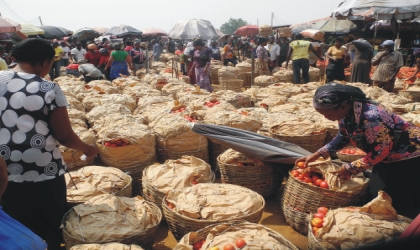
Christmas shoppers making their purchase at tomatoe and pepper market, Head-bridge, Onitsha, recently

Christmas shoppers making their purchase at tomatoe and pepper market, Head-bridge, Onitsha, recently

The Shell Petroleum Development Company of Nigeria Ltd. (SPDC) says it remains committed to meeting its 70 per cent obligation to the Ogbia-Nembe Road project in Bayelsa.

This was contained in a statement signed by the company’s spokesman, Mr Precious Okolobo, and made available to newsmen in Yenagoa, yesterday.

It said the second phase of the project had reached 60 per cent completion.

It said that Deputy Governor of Bayelsa, Chief John Jonah and officials of SPDC had taken a ride on the ongoing 27 kilometre stretch.

According to the statement, the trip marks a milestone in the construction of the key highway in the Niger Delta.

“Phase 1 of the project linking Imiringi and Ogbia, involved a 38-kilometre stretch with two major bridges, and was completed in 2005, and funded solely by the SPDC Joint Venture.

“Phase 2 links Ogbia and Nembe, measuring a distance of over 27 kilometres with six bridges and more than 50 culverts across very difficult swampy terrain.

“Contract for this phase was awarded in December 2005 and work commenced in February the following year, but has been disrupted several times by security challenges.

“Phase two costs N24.4 billion of which the SPDC JV is funding 70 per cent with the Niger Delta Development Commission (NDDC) responsible for the remaining 30 per cent,” the statement said.

The statement explained that the entourage stopped briefly at the project’s site.

“The contractor disclosed that the road was 60 per cent completed, but complained of disruptions to dredging activities by community youths.

“The deputy governor warned against such activities, saying that perpetrators would face the “full weight of the law”.

The deputy governor urged that all genuine grievances should be channelled to government for quick resolution,” the statement said.

Our Correspondent recalls that Governor Seriake Dickson had on December 18, 2013 released N3 billion “back up fund” for the completion of the Ogbia-Nembe road in the state’s eastern senatorial zone.

Dickson gave the construction firm, Setraco Nig. Ltd., up to December to complete the project.

Continue Reading

Business

Industrialism, Agriculture To End Food Imports, ex-AfDB Adviser Tells FG

Published

on

Former Senior Special Adviser on Industrialisation to the President of the African Development Bank (AfDB), Professor Banji Oyelaran-Oyeyinka, has urged the Nigerian government to urgently industrialise the agricultural sector as a pathway to food security, economic diversification, and sustainable job creation.
Professor Oyelaran-Oyeyinka made the call while speaking at the Oyo State Economic Summit held at the International Institute of Tropical Agriculture (IITA), Ibadan, during a lecture titled “Industrialising Agriculture for Economic Development and Food Security: Enhancing National Economies and Sub-National Entities.”
He cautioned that despite Nigeria’s vast arable land and its position as a leading global producer of crops such as cassava and yams, the country remains food-deficient and heavily dependent on costly food imports.
He highlighted that Nigeria spends over one trillion naira annually importing wheat, rice, sugar, and fish, a persistent trend that drains foreign exchange, undermines local farmers, weakens industrial competitiveness, and fuels unemployment.
The development economist argued that the solution lay in transforming agriculture from a subsistence activity into a modern, industrial enterprise capable of producing surplus, supporting manufacturing, and driving broad-based economic growth.
He explained that industrialising agriculture does not mean replacing rural communities with factories, but rather empowering farmers with technology, skills, infrastructure, and market access to raise productivity and incomes.
According to Professor Oyelaran-Oyeyinka, Nigeria’s low agricultural productivity reflected deeper structural challenges, including weak education systems, limited skills, and inadequate investment in technology and infrastructure.
He noted that countries that successfully transitioned from low-income to middle-income status did so by modernising agriculture alongside industrial development, creating strong linkages between farms, processing industries, and markets.
Oyelaran-Oyeyinka highlighted stark yield disparities between Africa and Asia, noting that cereal yields across African countries remain less than a third of those achieved in East Asia.
This gap, he said, explains why African economies struggle to compete globally and why industrialisation efforts have stalled.
Professor Oyelaran-Oyeyinka outlined key pillars of agricultural industrialisation, including mechanisation, value addition, integrated supply chains, access to finance, improved seed systems, and targeted investment in human and technological capabilities.
He stressed that farms must be treated as “factories without roofs,” capable of feeding into agro-processing, manufacturing, and export industries.
The visiting professor at The Open University in Milton Keynes said the economic benefits of such a transformation would be far-reaching, including reduced dependence on oil, large-scale job creation, significant foreign exchange savings, and stronger national food security.
Drawing lessons from Vietnam, he described how deliberate agricultural modernisation helped transform the Southeast Asian country from a food importer into one of the world’s leading exporters of rice, coffee, cashew, and seafood.
Vietnam’s agribusiness exports, he said, now generate tens of billions of dollars annually and underpin the country’s wider industrial success.
He attributed Vietnam’s success to consistent policies, heavy investment in agro-processing, strong farmer–industry linkages, and the use of special economic zones to drive value addition and export competitiveness.
Oyelaran-Oyeyinka noted that similar models are emerging in Nigeria, including in Oyo State, but warned that they require reliable infrastructure, policy stability, and empowered governance to succeed.
The professor called on state governments to prioritise power, roads, and logistics, strengthen agricultural extension services, and create efficient special agro-industrial processing zones that attract major domestic and international investors.
He also urged the private sector to view agriculture as a profitable business frontier rather than a social obligation, noting that Nigeria’s future prosperity depended less on oil and more on harnessing the productive potential of its land and people.
“We are a nation that can feed itself and others, yet we remain food-insecure and overly dependent on imports. This paradox is holding back our economy.”
“Industrialising agriculture does not erase our rural roots; it transforms them into engines of productivity, wealth creation and national development.”
“Subsistence agriculture is both a cause and a consequence of technological backwardness, and no country has reached middle-income status without first modernising its agriculture.”
“A farm must be treated as a factory without a roof, connected to processing, logistics, finance and markets. Vietnam shows that agricultural transformation is not accidental; it is the result of deliberate policies that link farmers to industry and global markets.”
“The seeds of Nigeria’s prosperity are not buried in oil wells; they are sown in the fertile soils of our ecological zones,” he said.
Lady Usendi
Continue Reading

Business

Cashew Industry Can Generate $10bn Annually- Association

Published

on

The President of the National Cashew Association of Nigeria (NCAN), Dr Ojo Ajanaku, has said Nigeria could earn $10 billion annually from cashew production, with $3 billion coming from cashew sales alone.
Ajanaku made this known during a press conference organised ahead of the 4th National Cashew Day, scheduled to hold from Jan. 22 to Jan. 24 in Abuja, with the the theme: “Unlocking the Full Potential of Nigeria’s Cashew Industry”.
He said that poor export documentation and weak repatriation of proceeds were causing major losses to the Nigerian economy.
“A substantial volume of cashew exported from Nigeria leaves the country without proper export proceeds forms, as exporters allegedly avoid bringing earnings back into the country,” he said.
He said during the last export season alone, Nigeria reportedly exported over 400,000 tonnes of cashew valued at about $700 million.
Ajanaku noted that deliberate investments in production and processing could unlock far greater potentials.
“If Nigeria produces just two million tonnes of cashew annually, which is achievable in less than five years, and sells at an average of $1,500 per tonne, the country would earn about $3 billion yearly,” he said.
He added that beyond raw cashew exports, enormous value lies in processing and by-products such as Cashew Nut Shell Fluid (CNSF) and cashew cake, which are largely wasted locally.
“In Vietnam, cashew cake alone sells for about 95 cents per kilogram, while in Nigeria processors pay to dispose of it as waste,” he noted.
Ajanaku explained that full local processing of cashew and its by-products could generate not less than $10 billion annually for Nigeria while creating thousands of jobs across the value chain.
He stressed that Nigeria has the production capacity, while countries like Vietnam possess advanced processing technology.
The NCAN President further disclosed that the association is strengthening partnerships with key government institutions, including the Ministry of Finance, the Federal Ministry of Agriculture and Food Security, NEXIM Bank, and other agencies to reposition the sector.
He added that a landmark Memorandum of Understanding has been signed between Nigeria and Vietnam to facilitate technology transfer and deepen cooperation in cashew processing.
He expressed optimism that with sustained government support and effective regulation, the cashew industry could become a major driver of economic growth, foreign exchange earnings, and industrial development in Nigeria.
“Producing states should be given priority. For example, Kogi State, which has the highest cashew production in the country, has no factory. A lot of potentials can come from Kogi State for the country,” he said.
Also speaking, NCAN National Secretary, Augustine Edieme, said strategic plans are being made to showcase Nigeria’s potentials during the 4th National Cashew Day, which he described as a key opportunity to attract bigger investments and investors into the industry.
“We are not just talking about the cashew seeds. We need to crack the fruit shell and discover the value in cashew shells. Industrialisation of the cashew industry is key to driving the Nigerian economy,” he said.
The representative of the Federation of Agricultural Commodity Associations of Nigeria (FACAN), Sunday Ojonugwa, pledged that FACAN would optimally support the cashew association to ensure the sector reaches its full potential.
Lady Usendi
Continue Reading

Business

KALCCIMA PROMISES KALABARI ECONOMIC GROWTH, INAUGURATES NEW EXECUTIVES

Published

on

The Kalabari Chamber of Commerce, Industry, Mines and Agriculture (KALCCIMA) has formally inaugurated its new executive council at a ceremony marked by optimism, strong institutional backing, and renewed commitment to economic development in Kalabari land.
The inauguration was performed by the National Deputy President of the National Association of Chambers of Commerce,Industry, Mines and Agriculture (NACCIMA), Dr. Emi Membere-Otaji, who charged the new leadership to position KALCCIMA as a catalyst for inclusive growth, enterprise development, and strategic engagement with government and the private sector.
The newly inaugurated officers of KALCCIMA are:
Elder Monima Daminabo (President); Amb. Clement Akanibo (First Deputy President); Boma Kaladokubo (Second Deputy President); Harry Awolayeofori Macmorrison (Executive Secretary/Director-General); Faaye Franklin (Treasurer); Engr. Robinson Success (Financial Secretary); Ibiba Don-Pedro (Public Relations Officer); Princess Nancy Boma Princewill (Organising Secretary); Barr. Idaoyibo Fortune Igbikikuno (Legal Adviser); Abiye George (Welfare Officer).
In his keynote address, Dr. Membere-Otaji congratulated the Exco and emphasized the strategic importance of a vibrant local chamber to regional and national economic growth.
He urged the leadership to align KALCCIMA’s programmes with NACCIMA’s national vision, stressing professionalism, transparency, and innovation in advancing commerce, mining, agriculture, and small and medium-scale enterprises in Kalabari.
“The Chamber must become a rallying point for entrepreneurs, investors, and policymakers. Kalabari has immense economic potential, and KALCCIMA must provide the structure and leadership to unlock it,” he said.
Also speaking, the Chairman of the Board of Trustees, Prince Billy Harry, charged the Exco to lead with integrity, unity, and purpose.
He encouraged them to move beyond ceremonial roles and focus on tangible outcomes that would uplift Kalabari communities, empower youth and women, and attract sustainable investments.
In his acceptance remarks, Elder Daminabo expressed gratitude to NACCIMA, the Board of Trustees, and stakeholders for their confidence in the new leadership.
He assured members that the Exco would prioritize stakeholder engagement, capacity building, and partnerships aimed at stimulating trade, supporting local industries, and promoting agricultural and maritime opportunities unique to the Kalabari axis.
Goodwill messages poured in from notable professionals and stakeholders, including Arc. Eniye Braide, Arc. Danny Sokari George and Ebianga Bestmann, all of whom commended the inauguration and expressed confidence in the capacity of the new Exco to reposition KALCCIMA as a strong voice for economic advocacy and development.
They urged the Chamber to leverage Kalabari’s strategic location, cultural heritage, and human capital to foster entrepreneurship, attract investments, and contribute meaningfully to the economic prosperity of Rivers State and Nigeria at large.
The inauguration ceremony ended on a note of collective resolve, with stakeholders expressing hope that the new leadership would usher in a new era of relevance, impact, and sustainable development for KALCCIMA and the entire Kalabari nation.
By: Opaka Dokubo
Continue Reading

Trending