
Business
Maritime Body Makes Case For Pre-Shipment Inspection

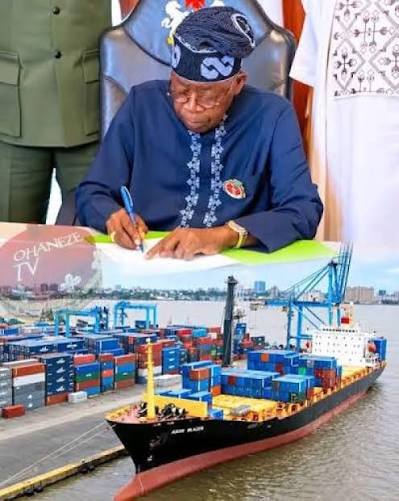
The National Council of Managing Directors of Licensed Customs Agents (NCMDLCA) has urged the Federal Government to revert from Destination Inspection to pre-shipment Inspection Scheme, a new development in the realms of international trade on the dual mission of protecting national security.
The National President of the association, Mr. Lucky Ayis Amiwero, disclosed this in an exclusive chat with our correspondent in Lagos.
According to him, NCMDLCA and the Presidential Task Force on the reform of Nigeria Customs Service are worried over the regime of destination inspection, which allows influx of unwholesome goods such as arms and ammunition, contrabands and dangerous items that expose the nation to security threat.
Amiwero declined that those who have declared their preference for destination inspection at the expenses of pre-shipment inspection have short memories to remember the position of the country economically, hence he said the government should quietly discard it and put in place pre-shipment inspection.
He said that pre-shipment inspection is embraced all over the world prior to the event of 9/11 that precipitated a change in cargo inspection based on security and safety.
Amiwero, who advised that Nigeria should not be left in the hands of greedy and selfish people, who are bent on destroying it in order to achieve their selfish objectives, cautioned that it would amount to colossal loss and disaster to the economy as well as the nation if import procedures in the country are left loose.
According to him, the international agreement on cargo security states that, “the cargo security programme developed after 9/11 emphasised on the provision of advance information of shipment of goods to the importing country, which is a new protocol for tracking and screening of cargo both from the country of origin to destination, which was adopted globally due to security threat on the supply chain”.
The customs agent, who has served on various government task force/committees noted that the pre-shipment inspection Act, Paragraph (2) (3) (4) and (5) contain the global requirement for pre-shipment and condition as contained in the safe framework for pre-screening for security safety and revenue of import adding that the global best practice on cargo information, the screening and tracking that is to be shipped to country of import before loading on board the ship, so as to safeguide the country from importation of unwholesome products such as ammunition and prohibited items.
He further explained that under the new rule, 10 + 2, before goods arrive by vessel into United States, importer or his agent must submit certain advance cargo information to CBP in form of an Import Security Filling (ISF) as to identify high-risk – shipment in order to prevent smuggling and ensure cargo safety and security.
He noted that under destination inspection, the nation has lost billions of naira through import manipulation, improper duty assessment and double handling in the ports among other corrupt practices.
On shipping lines operating in our coastal waters, Mr. Amiwero tasked the federal government to look into what these shipping lines are doing as he linked them with some of the difficulties faced in the ports.
He also carpet NIMASA for their negligence in the area of cabotage after four years of implementation, stressing that the parastatal has failed woefully on cabotage implementation while urging the government on the importance of the ports to the nation’s development, noting that the issue of security should not be forgotten.
“Without security, the nation will find it difficult to put things right and foreign investors will continue to stay away from Nigeria,” he said.





-

 Education1 day ago
FCE Yola Graduates 3,555 Teachers , Seeks Upgrade to University
-

 Sports1 day ago
Nigerian Trio Target Titles At PFL Africa Finals
-

 Niger Delta1 day ago
Diri Restates Stance On Lagos-Calabar Coastal Highway
-

 Niger Delta1 day ago
C’River, NUJ Pay Tribute To Late Guardian Editor
-

 News1 day ago
NDLEA Recovers Tons Of Illicit Drug Consignments In Nine States
-

 Opinion1 day ago
Checking Voter Apathy In Nigeria’s Electoral Process
-

 Politics1 day ago
2027: DICKSON’S EX-ALLY VOWS TO WORK AGAINST NDC INTEREST IN BAYELSA
-

 Politics1 day ago
2027: GROUP PLEDGES 40,000 SUPPORTERS FOR COALITION CANDIDATES IN RIVERS