
Featured
Nigeria Is A Failed State, Says Methodist Synod …As Baptist Convention Expresses Sadness Over Unemployment

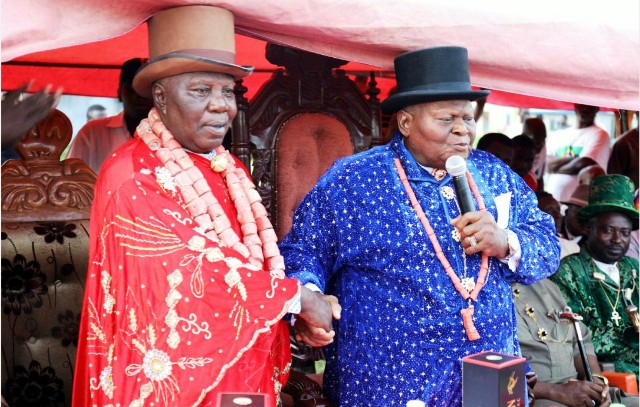
Following the findings in the 17th Annual Diocesan Synod, 2019 of the Methodist Church Nigeria, presented by Rt Rev. Biereonwu Livinus Onuagha to the members at Wesley Methodist Church, Okpoko, Ogbaru Local Government Area, Anambra State, the church yesterday declared Nigeria a failed State.
According to Bishop Onuagha, “the cardinal duties of any government are to provide security of lives and properties which the Nigerian government has failed to do from East to West, North to South of Nigeria the security situation is nothing to write home about.
Kidnappings, Boko Haram insurgency and the activities of Fulani herdsmen are some of the indices that justify our position that Nigeria is a failed state.
The mayhem causaed by these developments in the nation cannot be over-emphasised. “The most recent and newest problem now is the banditry in Zamfara State. With all these criminal activities at hand, where is this nation heading to? Can our economy improve when we do not have security of lives and properties in place? Remain apolitical, focus on ideals of the founding fathers; group urges Ohaneze
“One of the most daring challenges in the nation is also the issue of selective judgement. In Nigeria it is glaring that cases are not treated on merit, government chose those to face the wrath of the law and those not to face the wrath of the law, government chose the law to obey and the ones not to obey.
“Certain political party has become a hiding place for certain corrupt politicians with the idea, that once you belong to that political party, your sins are forgiven, but whoever that does not belong to that political party will always have his life troubled.”
On the recently concluded general elections in Nigeria, the cleric said “the political class had shown they were not prepared for anything, the elections took almost the budget of all the States in the federation put together with nothing impressive coming out of the exercise.”
“The failure of the academics in the elections left so much to be desired, and if education failed in a State, the conclusion is that the State had become moribund. In the last election, almost all the University Professors were sell-out.
“For me, there is no need to conduct elections in Nigeria. Let the National Assembly as a matter of urgency legislates on the number of political parties to exist in Nigeria. In my own personal opinion, two party state will subsist.
“Let these parties work to produce the best candidates whenever there is need for change of government, and credible candidates may emerge. This will save a lot cost,”
Meanwhile, the Nigerian Baptist Convention (NBC) has said it is dismayed by the inability of government to tame the monster of unemployment across the states of the federation.
It said the consequence of the failure to get the youths engaged in productive activities with the country manifests is the root cause of the current insecurity in the country.
This position was contained in a communiqué issued yesterday at the end of the 106th Annual Session of the Christian denomination and bloc of the Christian Association of Nigeria, CAN.
The communiqué which was signed by the Chairman of the Resolution and Communique Committee, Prof. S. AkinloluFagbemiPh.D, Esq, reads: “There is a need therefore for government to totally overhaul our school curricular with a view to focussing on entrepreneurial training of our youths.
“It should also create conducive environment such as soft loan to young graduates to start businesses of their own. The government must also focus on providing infrastructural facilities in order to overcome rising unemployment among the youths and their over reliance on white collar jobs.”
Decrying the current state of insecurity, the Convention called on both the Federal Government and the security agencies to rise up to the situation before it’s too late.
“It is an understatement to say that there are security challenges in Nigeria today. The situation has deteriorated to the extent that our law enforcement agencies appear helpless.
“Premised on the foregoing, we implore the Federal Government to uphold the sanctity of lives and protection of properties of Nigerians by leaving no stone unturned in the fight against Boko Haram insurgency and their sponsors at all levels; intensifying efforts to secure the release of Leah Sharibu and other people in the custody of Islamic Terrorist Groups; equipping and empowering our Law Enforcement Agencies to enable them tackle the security challenges in our nation,” the communiqué read.
On the state of governance, the Baptist Church condemned interference of political parties in the coming election of the next leadership of the National Assembly at the expense principle of separation of power among the three organs of government.
“We therefore call on both government, especially the executive and other Nigerians to stop putting undue pressure on members of the National Assembly and allow members to elect their leaders without external influences.
“We insist that in the election of the principal officers in the National Assembly, the principle of Federal Character and equal representation of major religions in the country should be followed,” it stated.

Featured
JUNE 12: Democracy Remains Nigeria’s Strongest Path To Unity, Progress, Says Fubara ….Extols Abiola, Wife


Governor of Rivers State, Sir Siminalayi Fubara, has reaffirmed that democracy remains the most effective system of government for Nigeria, given the country’s rich diversity of ethnic, religious, and cultural identities.
In a goodwill message to Nigerians on the occasion of the 2026 Democracy Day celebration, Governor Fubara said June 12 represents far more than a historic date; as it embodies the enduring struggle, sacrifice, and collective aspiration of Nigerians for freedom, justice, and representative governance.
The Governor extended warm felicitations to Nigerians at home and in the Diaspora, paying tribute to the heroes and heroines of the democratic struggle, particularly Chief MKO Abiola, his wife, Kudirat Abiola, and countless others whose courage and sacrifices helped secure the democratic freedoms Nigerians enjoy today.
According to him, “June 12 is a reminder of the price paid for the democracy we enjoy today. The sacrifices made by Chief MKO Abiola, Kudirat Abiola, and many other patriots who laid the foundation for the democratic journey we continue to enjoy today. Their commitment to the principle that power must ultimately reside with the people remains a source of inspiration for every generation of Nigerians.”
Governor Fubara noted that thirty-three years after the historic June 12, 1993 election, Nigeria’s democratic experiment has continued to evolve despite challenges and setbacks.
“Our democratic journey has not been without difficulties, but the resilience of our institutions and the determination of our people have kept the nation moving forward. The ability to express differing opinions, engage in constructive debate, and peacefully choose leaders through the ballot remains one of the greatest achievements of our nation,” he said.
Governor Fubara stressed that democracy provides the best framework for managing Nigeria’s diversity and transforming it into a source of national strength.
“Nigeria’s diversity should never be seen as a weakness. Properly harnessed, it is our greatest asset. Democracy offers us the opportunity to build consensus, promote inclusion, strengthen national unity, and create the conditions for sustainable development and shared prosperity,” he said.
Governor Fubara commended President Bola Ahmed Tinubu, for his commitment to the Renewed Hope Agenda and ongoing efforts aimed at economic revitalization, strengthening security, and deepening democratic institutions across the country.
He reiterated the readiness of Rivers State to continue partnering with the Federal Government in advancing policies and programmes that improve the lives of citizens through infrastructure development, job creation, enhanced security, quality education, healthcare delivery, and good governance.
The Governor further called on Nigerians, regardless of political affiliation, ethnic background, or religious belief, to use the occasion of Democracy Day to renew their commitment to the Nigerian project and the ideals that underpin democratic governance.
“Democracy must not be viewed merely as a periodic electoral exercise. It must be reflected in our daily commitment to accountability, transparency, tolerance, justice, respect for the rule of law, and responsible leadership. As citizens and leaders, we all share a collective responsibility to strengthen our democracy and build a nation that future generations will be proud to inherit,” he said.
Governor Fubara expressed optimism about Nigeria’s future, urging citizens to remain united, hopeful, and committed to the values of peace, dialogue, and national development.
“Together, we can build a stronger, more inclusive, and more prosperous Nigeria where every citizen has the opportunity to thrive and contribute meaningfully to national progress,” he said.

Governor of Rivers State, Sir Siminalayi Fubara, has reaffirmed the unwavering commitment of his administration to peace, unity, security, and inclusive development as Rivers State marked its 59th anniversary, last Wednesday.
In a goodwill message issued on Wednesday to commemorate the anniversary, Governor Fubara stated that despite the challenges faced over the years, the people of Rivers State have continued to demonstrate resilience, strength, and an enduring spirit of unity that has sustained the state since its creation.
The Governor noted that the strong bond of brotherhood among the various ethnic nationalities of the state, including the Ijaw, Ikwerre, Ogoni, Etche, Ekpeye, Andoni, Kalabari, and others, remains one of Rivers State’s greatest strengths and a critical foundation for peace, stability, and progress.
He further observed that Rivers State has remained a major driver of Nigeria’s economy for decades, not only because of its abundant oil and gas resources, but also because of the exceptional contributions of its people across diverse sectors including academia, jurisprudence, business, entertainment, public service, and sports.
Governor Fubara assured the people that his administration will continue to prioritize policies and programmes that promote peace, protect lives and property, and expand development across all parts of the state. He emphasized that governance must be people centered and impactful, with equal attention given to every Local Government Area of the state.
The Governor also paid tribute to the elders and founding leaders of the state for preserving the spirit of unity and coexistence over the years, while urging the youths to remain hopeful, responsible, and actively committed to building a greater Rivers State through innovation, hard work, and patriotism.
He equally acknowledged the invaluable role of women in strengthening families, communities, and society, describing them as indispensable partners in the continued growth and stability of the state.
Governor Fubara called on all Rivers people to use the occasion of the anniversary as a moment of reflection and renewed commitment to peaceful coexistence, mutual respect, dialogue, and collective progress, stressing that the unity and future of Rivers State must always rise above personal interests and political differences.
Rivers State was created on May 27, 1967, by General Yakubu Gowon.

-
Nation4 days ago
Asarama Kingdom Condemns Gruesome Murder of A Commercial Vehicle Driver
-
Rivers4 days ago
Monarch Raises Alarm Over Defamatory Politics … Urges For Unity In Ogoni
-
News4 days ago
Nigeria, Ethiopia Seal Agreement To Transfer 100 Nigerian Prisoners
-
News4 days ago
Nigeria No Longer Safe For Drug Cartels – Marwa
-
News4 days ago
Xenophobia: 268 Nigerian Returnees Arrive In Lagos From S’Africa
-

 News4 days ago
FG Declares Today Public Holiday To Mark Democracy Day
-
Women4 days ago
Nigerian Women And Dividends Of Democracy
-
Business4 days ago
FG Approves $1 Bn AFCFTA Credit Facility For Nigerian Exporters