
Featured
Saraki, Tambuwal Demand Service Chiefs’ Sack …Ekweremadu To Sponsor State Police Bill …Buhari’s Govt Pampering Killers -ASUU

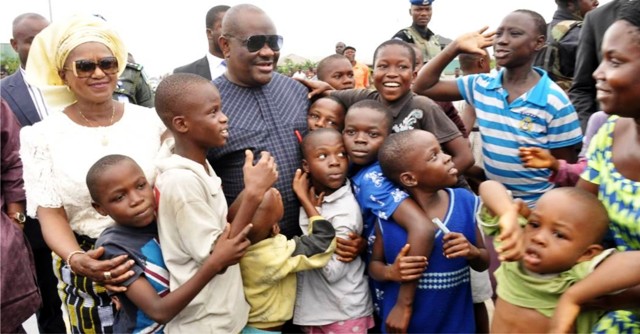
Following the increasing spate of killings across the country, Senate President, Dr Bukola Saraki and Sokoto State Governor, Hon Aminu Tambuwal have called for the immediate removal of security chiefs to allow for fresh and innovative ideas on how to protect the nation and its citizens.
Tambuwal spoke while declaring open the National Executive Council (NEC) meeting of the Nigeria Union of Journalists (NUJ), holding in Sokoto.
The governor noted that there was no need retaining security heads that could not find solution to perennial security challenges in the country.
He also charged media managers and professionals to rise against increasing rate of disseminating fake news items that had been fuelling ethnic and religious violence in the country.
On his part, Saraki said the killings in the country were abnormal because they involve loss of human lives.
Saraki, who fielded questions from journalists in Ilorin, Kwara State capital, last Saturday, particularly blamed security chiefs for working at cross purposes and for their refusal to partner with the National Assembly, insisting that incompetent hands among them must be ready to give way in order to end the current security challenges in the affected areas.
He added that the National Assembly would not shy away from its responsibility, saying that incessant killings must stop.
Meanwhile, the Peoples Democratic Party (PDP) has described as diversionary the allegation by the Buhari Media Organisation (BMO) that it sponsored the latest killings in Plateau State.
The party said that rather than shielding the President, BMO should tell its principal to live up to the responsibility of his office by stopping the bloodletting in various parts of the country.
The party was reacting to a statement by the BMO that it was behind the Plateau killings.
In a statement issued by the National Publicity Secretary of the PDP, Kola Ologbondiyan, last Saturday, the PDP said Buhari media handlers were chasing shadows with their “baseless” allegation which, it noted, was borne out of frustration.
Also reacting, the Plateau Initiative for Development and Advancement (PIDAN), in collaboration with Conference of autochthonous Ethnic Community Development Association (CONAEDA), faulted the death toll in the Plateau killings pegged at over 100, saying the toll was above 219 and many more were still missing.
PIDAN, the umbrella body for ethnic nationalities in the state, expressed concern over the Federal Government’s exclusion of the North-Central from the attention given to the North-East, noting that people in their thousands were temporarily camped in 11 different places across three local government areas of Plateau.
Another group, ‘Women for Women and He for She’, called for the overhaul of the security system in the country, saying reports from various quarters indicated that the system had been compromised.
In separate press briefings in Jos, the President of PIDAN, Dr. Aboi Madaki, and the state Coordinator of Women for Women and He for She, Dr. Jophia Gupar, lamented the untold hardship Plateau citizens were going through, saying “enough is enough.”
Meanwhile, the Deputy Senate President, Chief Ike Ekweremadu, yesterday, said that he has concluded arrangements to sponsor a bill that would decentralise nation’s policing system.
Ekweremadu has however slammed the current system as “dysfunctional and unsuitable for a federal system”.
Responding to the rising insecurity and killings in Nigeria, the Deputy Senate President said that the killings had continued mainly because the federating states were not constitutionally allowed to recruit, train, and equip enough manpower for the security of lives and property of citizens in their states.
In a statement by his Special Adviser, Media, Uche Anichukwu, Ekweremadu spoke during an interactive session with Fulbright Scholars, Exchange Scholars, and Graduate Students at the International Centre for Information and Nelson Mandela Institute of Research in his maiden lectures as a Professor and Senior Mentoring Scholar, E-Governance and Strategic Government Studies, Nelson Mandela School of Public Policy and Social Sciences, Southern University, Baton Rouge, Louisiana, USA.
Ekweremadu said, “Unlike here in the United States where the component states, counties, big institutions set up police service to address their local needs, the Nigerian constitution vests the security of a very vast, multifarious, and highly populated country in hands of the Federal Government.
“The internal security of Nigeria depends on one man or woman, who sits in Abuja as the Inspector-General of Police. The governor of a state, though designated as the chief security officer of the state by the constitution, cannot direct the police commissioner of his state on security matters.
“The commissioner will have to clear with the Assistant Inspector-General of Police, who will clear with a Deputy Inspector-General of Police, who will also clear with the Inspector-General of Police, who may in turn need to clear with the President, who is the Commander-in Chief of the Armed Forces. By the time the clearance comes, if it ever does, it would have been late.
“Nigeria is the only federal system I know, which operates a unitary or centralised policing. Ironically, it was not the case in the beginning. The founding fathers agreed on a federal constitution, which allowed the component units to set up local police organisations. But it was overturned by the military and successive civilian regimes have continued to play the ostrich.”
On the way forward, he said: “As far as I am concerned, whatever we are doing now is certainly not working and we cannot continue to do the same thing and expect a different result.
“The real tragedy of the Plateau massacre is that we risk more attacks and loss of lives unless we decentralise our policing and allow every state at least to take their fates in their own hands.
“So, despite the failure of previous attempts to decentralise the police during constitution amendments, I will introduce a bill that will bring about state police or decentrliased policing once I return to Nigeria.”
On the chances of the bill, Ekweremadu said events in recent years had proved beyond reasonable doubt that the current centralised security system would never help the government to leave up to its primary responsibility, which he explained the welfare of the people and the protection of their lives and property.
He said,”I think people are now facing the stack reality. I have been getting calls from serving and former governors and key players and interests, who were opposed to the idea of state police. They confess they have seen what some of us have been shouting from the rooftops over the years. They want the bill introduced.
“The Governors Forum is also favourably disposed to the idea now. In fact, their chairman, the governor of Zamfara State, one of the epicentres of the incessant killings, recently, ‘resigned’ his position as the chief security officer of his state as the current constitutional arrangement denies him the powers, manpower, and resources to stem the killings in his state.
“The bill will also address the fears of Nigerians opposed to state police. Just like the judiciary, the bill will provide for a central police service commission and also structure the state police services in ways that immune them from abuse by any governor or state. It is also a bill we can conclude in record time.”
Similarly, the Academic Staff Union of Universities (ASUU) has lambasted the Buhari government for “pampering” killers of innocent Nigerians.
The body also stated that the Federal Government has lost the capacity to enforce laws and protect Nigeria and Nigerians.
ASUU Chairman, University of Ibadan Chapter, Dr. Deji Omole. who made this known while speaking with journalists at the weekend in Ibadan, said the body language of the President and the police have shown incapacity to arrest, and prosecute the perpetrators of killings nationwide.
While declaring that 80 per cent of cows in the country are owned by the ruling class who have over the years exploited and impoverished the masses, Omole asserted that the move to use public fund to establish private ranches for the business of those in government and their cronies should be rejected by Nigerians.
He said public funds must be deployed for the provision of public goods such as quality education, health, water, power and road for the majority which he said the Buhari government has failed to provide.
Omole while speaking further said it was unthinkable that the Federal Government and their followers were more interested in 2019 elections, saying that the security of lives and properties of Nigerians are more vital as most people now live in fear.
He said that the killing of over 200 Nigerians in Plateau without security response revealed that Nigerians are now living in a state of nature where live is short, nasty and brutish.
Omole said, “What Nigerians demand from this government is to provide a safe and secure environment for them and their families.
“Nowhere is safe in Nigeria. The Federal Government is showing by the attitudes and behaviours of the president to killings that those killing should be pampered while those being killed should tolerate the killings. We demand to see that the rustlers and killer herdsmen are brought to face the wrath of the law.
“If killings continue, it may be difficult to have 2019 elections, which is why the lives of Nigerians are more important than any political ambition of any person. Buhari is breaching the social contract by failing to secure the lives of Nigerians and ensuring the enforcement of laws. Are there no laws against tress-pass?
“What does the law say about murder? Does the law allow private citizens to carry arms without license? Does the law talk about pampering killers and consoling the victims? Injustices will deepen hatred and distrust among Nigerians against Nigerians and against government”.



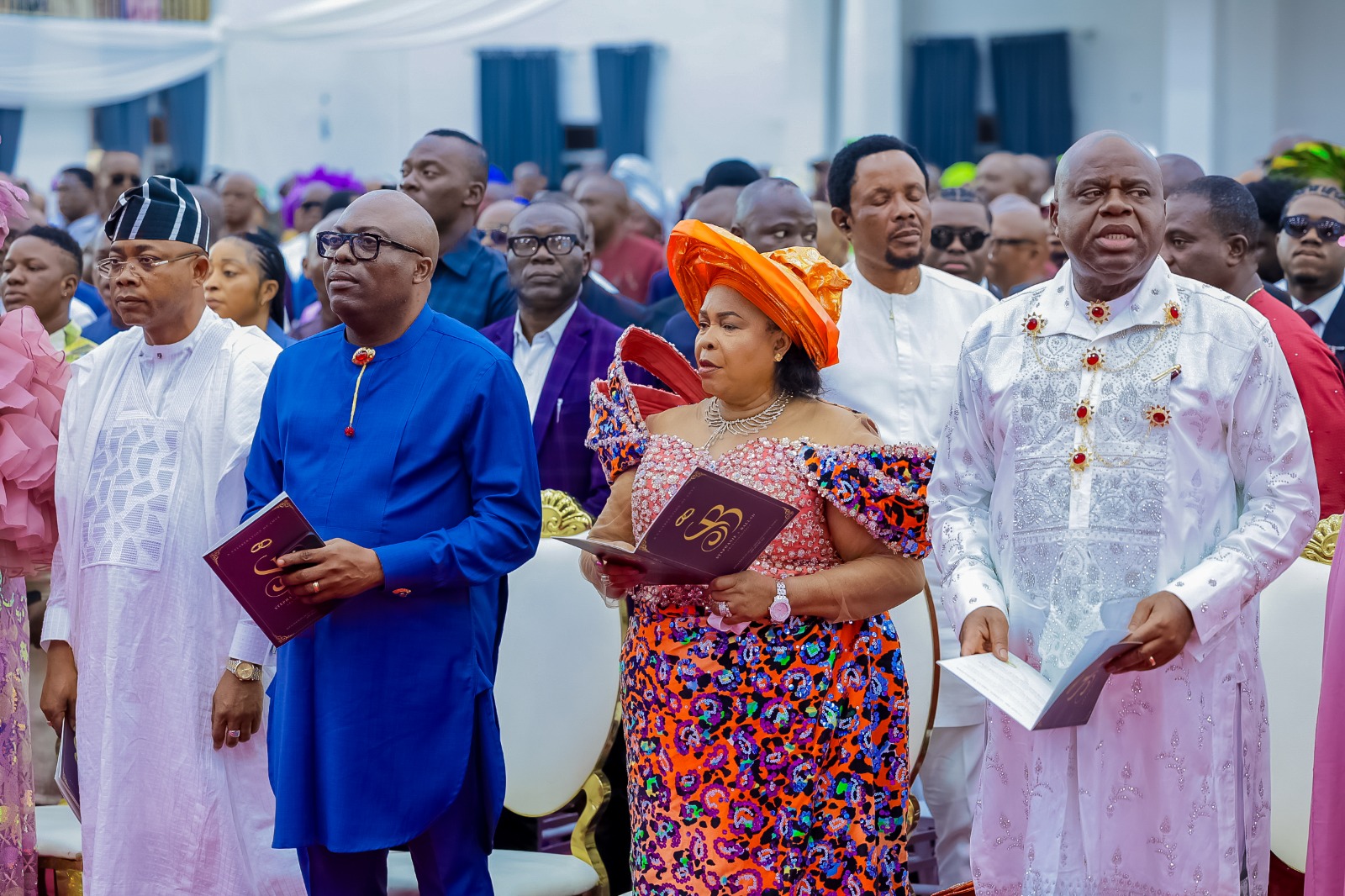
Rivers State, Sir Siminalayi Fubara, has assured members of the National Youth Service Corps (NYSC) of his administration’s commitment to supporting and strengthening the scheme in the State.
Fubara gave the assurance last Friday at the NYSC permanent orientation camp, Nonwa-Gbam, Tai Local Government Area in the State, during the swearing-in ceremony of 2026 Batch B Stream II orientation course.
Represented by the Permanent Secretary, Cabinet Bureau, Office of the Secretary to the State Government, Dr. Promise Oguzie, the governor said the State Government would remain intentional in providing the necessary support to improve the NYSC scheme and enhance the experiences of corps members deployed to the state.
He charged the corps members to be role models and quality nation-builders in their service to the good people of Rivers State in particular, and Nigeria at large.
“I charge you to be exemplary, dedicated and committed in all you do. Take full advantage of all the camp programmes and activities to enrich yourselves”, he said.
In his welcome address, the State Coordinator of NYSC in Rivers State, Mr. Moses Oleghe, urged corps members to see their deployment to Rivers State as a “veritable opportunity to make meaningful contribution to the growth of the State in particular and Nigeria at large.”
He further charged them to serve with all sense of “integrity, discipline, and the fear of God, especially when they will be engaged as INEC ad-hoc staff that will conduct the 2027 general elections.”
A total of 3,584 corps members composed of 1,421 males and 2,163 females were sworn in by the Chief Judge of Rivers State, who was represented by Justice Godspower Aguma.

Governor of Rivers State, Sir Siminalayi Fubara, says Nigeria needs God-fearing leaders for the nation to move in the right direction and make meaningful progress.
The Governor stated this yesterday when he received in audience, the World President of the Seventh Day Adventist Church, Pastor Erton Kohler; his wife, Andriene Marques Kohler; daughter Mariana Marques Kohler and a retinue of ministers of the church at Government House, Port Harcourt.
Fubara who hailed the Seventh Day Adventist Church for its contributions to education and the grooming of future leaders in Nigeria, expressed delight that the Church had over the years, been investing in education at various levels and currently runs two universities in the country.
He commended the church for not only using its institutions to spread the gospel of Christianity but to groom future leaders for the country.
According to him, religion should not be just about defending one’s faith, but also making meaningful impact on the lives of the people.
He said that by floating these educational institutions, the church has demonstrated capacity to support Nigeria in the task of producing not only educated people but a breed of God-fearing leaders.
“Our country is where it is today because we lack the fear of God. If you have the fear of God, there should be a limit to what you can do because you understand the supremacy of God. But when God is not in your equation, you’ll go beyond the line and that is what has brought us to where we are today.
“So, I feel very happy that you are contributing to the development of our future leaders in this country. We need the right people being in the right place; prepared properly with good minds; that is what we need, not just in Nigeria but round the whole world.,” he said.
Governor Fubara further observed that the absence of God-fearing people in high places to take the right decisions that could impact positively on the society, has also given rise to other problems such as social inequality, poverty, corruption and criminality. According to him, Nigeria needs a system where the average parent could afford quality education for their children and a guarantee that upon graduation, the average child will have the capacity to compete favourably with anybody, anywhere in the world.
“If we have a situation where the little money that you’re being paid as wage can also afford you quality healthcare and after working at least for 15-20 years, you have a roof over your head, tell me why you should be involved in any kind of crime? At that point, you’ll feel secured and this attitude of insecurity about the future that leads to all the social vices we have today won’t be there,” he said.
Governor Fubara expressed appreciation to the delegation for the visit and for their prayers for Rivers State, assuring them of his continued support for their programmes in the state.
Leader of the delegation and World President of the Seventh Day Adventist Church, Pastor Erton Kohler said he was in Nigeria for a special conference of the church during which thousands of the church’s ministers will be undergoing an empowerment programme to further equip them for the task of herding their flocks and serving the society.
He expressed gratitude to the Governor for the warm reception accorded his entourage, saying the memory of the visit will linger in his mind for a lifetime.
Kohler disclosed that the Church has over twenty -four million (24,000,000) members and more than 182,000 places of worship, spread across 212 countries of the world.

The Rivers State House of Assembly has approved the 2026–2028 Medium Term Expenditure Framework (MTEF) submitted by Governor Siminalayi Fubara.
This reaffirms the lawmakers’ commitment to enacting laws and taking legislative actions geared towards the overall development of the State.
The Assembly gave the approval during its Second Legislative Sitting of the Fourth Session held last Friday.
Speaking on the MTEF document during plenary, the House Speaker, Rt. Hon. Martin Amaewhule, noted that by the provision of Section 10(1)(b) of the Rivers State Fiscal Responsibility Law No. 8 of 2010, the MTEF ought to have been laid before the House in September 2025.
Amaewhule explained that traditionally, the document is expected to be presented four months before the commencement of the next financial year and immediately after the expiration of every three-year fiscal cycle.
He, however, stated that in the interest of the State and its people, the House considered it necessary to deliberate on the document, describing it as a precursor to the 2026 Budget Estimates.
The Speaker expressed concern that the year had already progressed significantly before the presentation of the framework.
During deliberations on the document, members examined the assumptions and projections contained in the MTEF and observed that strict adherence to the outlined fiscal parameters would ultimately serve the interest of Rivers people.
The lawmakers maintained that effective implementation of the framework would promote prudent financial management and enhance developmental planning across the State.
Following the debate and positive consideration by members, the Speaker put the question to the House and members voted overwhelmingly in support of the approval of the MTEF.
Meanwhile, during the same sitting last Friday, the House also received a petition from the Chairman of Obio/Akpor Local Government Council, Dr. Gift Worlu.
The petition was presented by the member representing Obio/Akpor Constituency II, Hon. Emilia Amadi.
According to the petition, concerns were raised over an imminent security breach, threats to lives, destruction of property and alleged forceful takeover of property by some lawless persons within parts of the Local Government Area.
Presenting the petition before the House, Hon. Amadi appealed to the lawmakers to revisit the matter and take necessary steps aimed at safeguarding lives and property in the affected communities.
The House is expected to further deliberate on the petition and consider measures to address the concerns raised in order to sustain peace and security in the area.
King Onunwor