
Featured
2019: Vote Buhari Out -IBB …PDP Laud’s Initial Statement …As Afenifere, Ohanaeze Fault FG, Miyetti Allah’s Talks

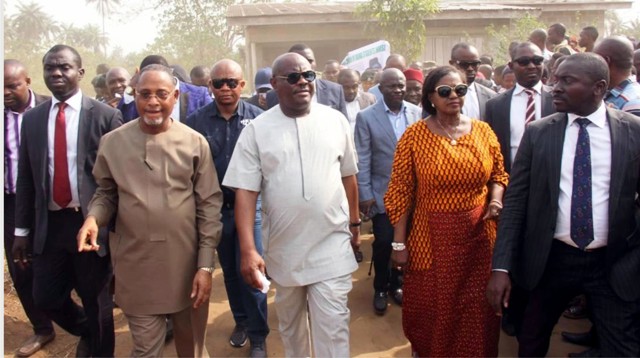
Erstwhile military dictator, Gen Ibrahim Badamasi Babangida (rtd) has warned President Muhammadu Buhari not to allow his own personal ambition for second term to override national interest.
IBB said, come 2019 and beyond, Nigerians should raise a new breed leadership with requisite capacity to manage its diversities and jump-start a process of launching the country on the super highway of technology-driven leadership in line with the dynamics of modern governance.
He called on Nigerians to cooperate with President Muhammadu Buhari to complete his term of office on May 29, 2019, and collectively prepare the way for new generation (of) leaders to assume the mantle of leadership of the country.
In what appears to be a departure from ex-President Olusegun Obasanjo’s recent open letter to President Muhammadu Buhari, IBB warned that his was not an open letter to the President, but that he had only shared his thoughts with “fellow compatriots” on the need to enthrone younger blood in the mainstream of national political leadership starting from 2019.
While expressing “fright at the “issues plaguing the country,” he said he was perplexed by the “gory” themes of killings that have engulfed certain parts of the country, from southern Kaduna to the western parts.
Babangida in a statement yesterday which was signed on his behalf by his media spokesman, Prince Kassim Afegbua said that the new leadership needed from 2019 upwards must be one that will ensure national unity and respect the nation’s diverse ethnic configurations.
IBB stated that the time has come for Nigeria to deliberately provoke systems and models that will put paid to the “recycling leadership experimentation,” while embracing what he called “new generational leadership evolution.”
He gave the qualities of the new leadership of his vision as one “with the essential attributes of responsive, responsible and proactive leadership configuration to confront the several challenges that we presently face.”
He declared: “In 2019 and beyond, we should come to a national consensus that we need new breed leadership with requisite capacity to manage our diversities and jump-start a process of launching the country on the super highway of technology-driven leadership in line with the dynamics of modern governance.
“It is short of saying enough of this analogue system. Let’s give way for digital leadership orientation with all the trappings of consultative, constructive, communicative, interactive and utility-driven approach where everyone has a role to play in the process of enthroning accountability and transparency in governance.”
While affirming the rights of President Buhari to vote and be voted for, Babangida said that Nigerians from May 29, 2019, should be led by a new set of leadership.
According to him, Nigerians should for now help Buhari to complete his term in 2019 and prepare the way for the new generation of leaders to assume the mantle of leadership.
He stated: “In the fullness of our present realities, we need to cooperate with President Muhammadu Buhari to complete his term of office on May 29, 2019 and collectively prepare the way for new generation leaders to assume the mantle of leadership of the country.
While offering this advice, I speak as a stakeholder, former President, concerned Nigerian and a patriot who desires to see new paradigms in our shared commitment to getting this country running. While saying this also, I do not intend to deny President Buhari his inalienable right to vote and be voted for, but there comes a time in the life of a nation, when personal ambition should not override national interest.
“This is the time for us to reinvent the will and tap into the resourcefulness of the younger generation, stimulate their entrepreneurial initiatives and provoke a conduce environment to grow national economy both at the micro and macro levels.
“Contemporary leadership has to be proactive and not reactive. It must factor in citizens’ participation. Its language of discourse must be persuasive, not agitated and abusive. It must give room for confidence building. It must build consensus and form the aggregate opinion on any issue to reflect the wishes of the people across the country. It must gauge the mood of the country at every point in time in order to send the right message.
“It must share in their aspirations and give them cause to have confidence in the system. Modern leadership is not just about ”fighting” corruption, it is about plugging the leakages and building systems that will militate against corruption.
“Accountability in leadership should flow from copious examples. It goes beyond mere sloganeering. My support for a new breed leadership derives from the understanding that it will show a marked departure from recycled leadership to creating new paradigms that will breathe fresh air into our present polluted leadership actuality.”
He added: “The next election in 2019, therefore, presents us a unique opportunity to reinvent the will and provoke fresh leadership that would immediately begin the process of healing the wounds in the land and ensuring that the wishes and aspirations of the people are realized in building and sustaining national cohesion and consensus.”
He lamented that Nigeria at 57 years after independence has continued to grapple with questions of leadership, while in the process losing the attributes that made it the giant of Africa at a stage.
“At 57, we are still a nation in search of the right leadership to contend with the dynamics of a 21st century Nigeria,” IBB said, adding that having been privileged to lead the country at one stage and having interacted with variety of Nigerians, he has no hesitation to conclude that Nigeria’s strength lies in her diversity.
He lamented: “But exploring and exploiting that diversity as a huge potential has remained a hard nut to crack, not because we have not made efforts, but building a consensus on any national issue often has to go through the incinerator of those diverse ethnic configurations.”
He further submitted that a lot depends on Nigerians, both as leaders and followers to get the right leadership mix, adding that these compatriots must, however, resolve to engender a Nigeria whose leaders must encapsulate the undiluted commitment to ideals that run a pluralistic society.
He said: “A lot depends on our roles both as followers and leaders in our political undertakings. As we proceed to find the right thesis that would resolve the leadership question, we must bear in mind a formula that could engender national development and the undiluted commitment of our leaders to a resurgence of the moral and ethical foundations that brought us to where we are as a pluralistic and multi-ethnic society.”
According to him, while Nigeria was on one hand “our dear native land, where tribes and tongues may differ but in brotherhood, we stand,” on the other hand, the country has continued to struggle with itself and stumbling in its quest to become a modern state.
Babangida lamented the growing violence in the society and called on the Federal Government to make necessary changes to the security apparatuses to bring it in line with the sophistication in crime in the polity.
He also advocated the adoption of State Police to complement the Federal Police.
He stated: “In the past few months also, I have taken time to reflect on a number of issues plaguing the country. I get frightened by their dimensions. I get worried by their colourations. I get perplexed by their gory themes.
“From Southern Kaduna to Taraba State, from Benue State to Rivers, from Edo State to Zamfara, it has been a theatre of blood with the cake of crimson. In Dansadau in Zamfara State recently, North-West of Nigeria, over 200 souls were wasted for no justifiable reason.
“The pogrom in Benue State has left me wondering if truly this is the same country some of us fought to keep together. I am alarmed by the amount of blood-letting across the land. Nigeria is now being described as a land where blood flows like the river, where tears have refused to dry up. Almost on a daily basis, we are both mourning and grieving, and often times left helpless by the sophistication of crimes.”
On the growing attacks by herdsmen in the states, Babangida asked the leaders to re-orient the herdsmen, adding that the growing culture of violence represents the extent of discontent in the society.
He said: “The festering nature of this crisis is an inelegant testimony to the sharp divisions and polarisations that exist across the country,” adding that the nation must collectively rise up to the occasion and do something urgently.
He further counselled: “If left unchecked, it portends danger to our collective existence as one nation bound by common destiny; and may snowball into another internecine warfare that would not be good for nation-building.
We have to reorient the minds of the herdsmen or gunmen to embrace ranching as a new and modern way to herd cattle. We also need to expand the capacity of the Nigeria Police, the Nigerian Army, the Navy and Air Force to provide the necessary security for all.”
The former military leader also stated that while the government has recorded a level of success in dealing with the insurgent Boko Haram, their activities are unrelenting. He said that he was advising as a professional that the battle is taken to the inner fortress of Sambisa Forest, rather than restricting the forces to responding to the insurgents’ ambushes from time to time.
He further submitted: “Due to the peculiarity of our country, we must begin community policing to close the gaps that presently exist in our policing system.
“We cannot continue to use old methods and expect new results. We just have to constructively engage the people from time to time through platforms that would help them ventilate their opinions and viewpoints.”
On restructuring of the polity, Babangida restated his earlier support for the agenda, adding that restructuring is an idea that the time has come.
He said: “Like I did state in my previous statement late last year, devolution of powers or restructuring is an idea whose time has come if we must be honest with ourselves. We need to critically address the issue and take informed positions based on the expectations of the people on how to make the union work better. Political parties should not exploit this as a decoy to woo voters because election time is here. We need to begin the process of restructuring both in the letter and spirit of it.”
He was unimpressed with the change mantra of the ruling All Progressives Congress (APC) so far, adding that he thought that the party, having adopted the change mantra would behave differently.
IBB said: we are still experiencing huge infrastructural deficit across the country and one had thought the APC-led Federal Government would behave differently from their counterparts in previous administrations. I am hesitant to ask; where is the promised change?”
Meanwhile, despite the fact that former President Ibrahim Babangida has denied an initial statement where he said to have asked President Muhammadu Buhari not to seek re-election in 2019, the Peoples Democratic Party (PDP) has described the counsel by the former military Head of State as timely and another confirmation that Nigerians have agreed that the President and the All Progressives Congress, APC, have failed the test of leadership.
The party also hailed Babangida’s initial statement for picking holes in the recent attempt by the ruling party to embrace restructuring, years after failing to indicate any interest in same.
The party noted that General Babangida’s stand on the imperative for a dynamic, nationalistic and development-driven leadership is a function of the yearnings of Nigerians, adding that it completely captures the focus of the repositioned PDP for a better Nigeria.
National Publicity Secretary of the party , Kola Ologbondiyan, in a statement yesterday said the fact that Babangida’s statement on President Buhari is coming on the heels of a similar one by former President Olusegun Obasanjo, has further vindicated PDP’s position on the “ misrule of the Buhari administration and the APC.”
The party further described as an understatement, Babangida’s reflection that the Buhari administration and the APC have polluted the nation’s “Leadership actuality” stressing that it is not unmindful of the yearnings of Nigerians to use the platform of the repositioned PDP to propagate a new coalition that would return the much- desired new atmosphere in the polity by producing an acceptable President to Nigerians of all walks of life.
“It is now obvious to all that the time has come for all Nigerians to jettison all personal interests and divisive tendencies and rally forces under a truly national platform as now embodied in the PDP to rescue our dear nation from total collapse.
“In line with the new consensus for the election of a truly Nigerian President in 2019, the repositioned PDP is completely open as the epicenter of the much desired new broad-based political engagement of all Nigerians in their aspirations irrespective of creed, tribe or class.
“The repositioned PDP presents that credible platform, re-engineered with best democratic standards for unhindered accommodation of all interests from all parts of the country in our collective search for a new beginning.
“We therefore urge all Nigerians, particularly our leaders across board, to join forces with the PDP to once again return the nation to its pride of place as a thriving economy and a truly democratic nation come 2019,” the statement read.
Similary, a cross-section of Nigerians have criticised the Vice President, Prof Yemi Osinbajo panel for its decision to raise a committee to hold talks with the Miyetti Allah Cattle Breeders Association of Nigeria in its probe of the herdsmen killings.
The committee, which was set up by the National Economic Council to “find lasting solutions to the increasing cases of killings by herdsmen across the country,” is headed by the Ebonyi State Governor, Chief Dave Umahi.
The Chairman of the Nigeria Governors’ Forum, Alhaji Abdulaziz Yari, had said this at the end of a meeting of the Osinbajo committee at the Presidential Villa, Abuja.
The Federal Government’s plan to meet with Miyetti Allah, however, has drawn the ire of different socio-political groups in the country.
Among those who faulted the move by the Federal Government are the Yoruba socio-political group, Afenifere; the umbrella body for the Igbo, the Ohanaeze Ndigbo and Middle Belt groups.
Others are a chieftain of the Arewa Consultative Forum, Alhaji Mohammed Abdulrahman and a Niger Delta activist, Annkio Briggs.
The ACF does not, however, see anything wrong with the talks the Umahi committee is to hold with the cattle breeders.



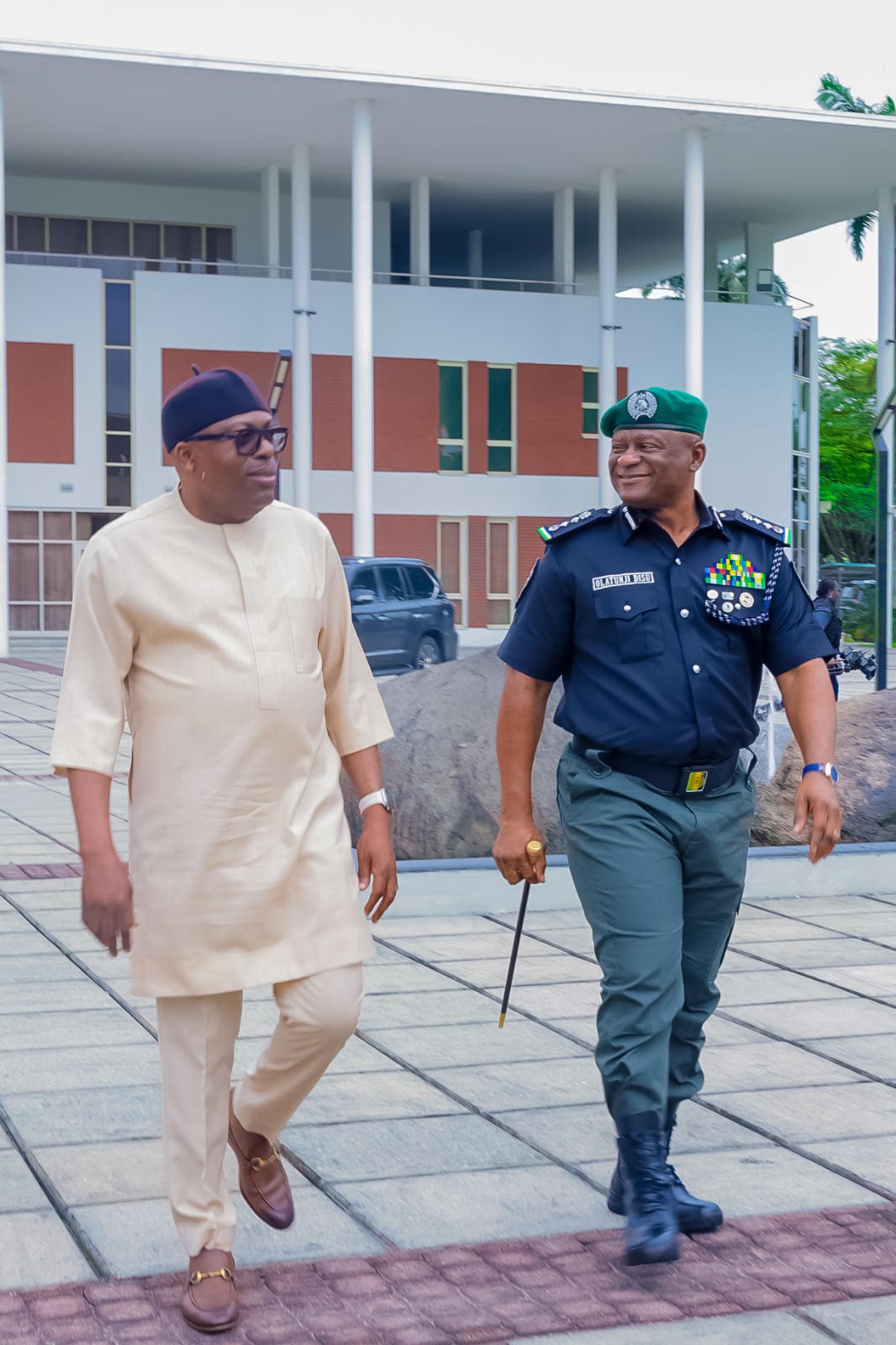
The Rivers State Government has called on stakeholders, community leaders, parents and relevant education authorities to intensify efforts to identify and enrol out-of-school children across Nigeria, stressing that every child deserves access to quality and inclusive education.
Governor Siminalayi Fubara made the call, yesterday, during the regional campaign on engaging community structures to promote the enrolment of out-of-school children and the regional flag-off of the 2026/2027 enrolment drive for southern states, held in Port Harcourt.
Represented by the Secretary to the State Government, Dr Dagogo Wokoma, Governor Fubara reaffirmed that education remains a fundamental pillar of sustainable development and emphasised the need to ensure that no child is left behind because of economic hardship, social background or other barriers to schooling.
He noted that expanding access to education was essential to promoting sustainable development, social inclusion and equal opportunities, enabling children to reach their full potential and contribute meaningfully to society.
The governor urged participating states and communities to translate their commitments into concrete and measurable actions by reaching vulnerable children, strengthening community engagement and encouraging parents and guardians to make their children’s education a priority.
He reiterated the state government’s commitment to initiatives aimed at expanding access to education, particularly for children excluded from formal schooling.
“Rivers State remains committed to supporting initiatives that expand access to inclusive and quality education, particularly for vulnerable children who may have missed the opportunity to attend formal schools,” Fubara stressed.
Also speaking, the Executive Secretary of the Universal Basic Education Commission (UBEC), Aisha Garba, described the growing number of out-of-school children as one of the major challenges confronting the education sector.
She called for a collective and collaborative approach among governments, communities, parents and other stakeholders to address the problem, stressing the need to ensure that no Nigerian child is denied the fundamental right to education.
The programme was organised by the Universal Basic Education Commission in collaboration with the Rivers State Government, as part of efforts to strengthen community participation and promote school enrolment across the southern states for the 2026/2027 academic session.

The Federation Account Allocation Committee (FAAC) has shared the sum of N2.428 trillion among the Federal Government, 36 states government and the 774 Local Government Councils (LGCs) as revenue for the month of September.
The Director, Press and Public Relations, Office of the Accountant-General of the Federation (OAGF), Mr Bawa Mokwa, said this in a statement in Abuja, yesterday.
Mokwa said the allocation was approved by FAAC at its October meeting held in Abuja.
He said the N2.428 trillion distributable revenue comprised of statutory revenue of N1.672 trillion, distributable Value Added Tax (VAT) revenue of N756.587 billion.
Mokwa quoted the FAAC communiqué as saying that total gross revenue of N3.913 trillion was available in the month of September 2026.
He said a total deduction for cost of collection was N131.758 billion while total transfers, refunds and savings of N1.352 trillion.
According to him, a gross statutory revenue of N3.096 trillion was received for the month of September 2026.
“This was higher than the sum of N2.850 trillion received in the preceeding month by N246.384 billion.
“Gross revenue of N816.872 billion was available from the Value Added Tax (VAT) in September 2026.
“This was lower than the N834.843 billion available in the month of August 2026 by N17.972 billion,” he said.
Mokwa explained that the Federal Government received N832.242 billion and the state governments received the sum of N799.872 billion.
He said the LGCs received N560.660 billion, while the sum of N236.049 billion (13% of mineral revenue) was shared to the benefiting state as derivation revenue.
Mokwa said in the N1.672 billion distributable statutory revenue, the Federal Government received N756.583 billion and the State Governments received N383.749 billion.
He said the LGCs received N295.855 billion and the sum of N236.049 billion (13% of mineral revenue) was shared to the benefiting States as derivation revenue.
The director said from the N756.587 billion distributable Value Added Tax (VAT) revenue, the Federal Government received N75.659 billion, the State Governments received N416.123 billion and the LGCs received N264.805 billion.
“In September 2026, Petroleum Profit Tax (PPT), Hydrocarbon Tax (HT), Petroleum Royalties, Import Duty, CET Levies and Excise Duty increased significantly.
“Also, Companies Income Tax (CIT), CGT & SDT, Value Added Tax (VTA), Mineral Royalties, and Gas Flared Penalty, Rental Gas Flared Fee and Misc. Oil Revenue decreased considerably,” he said.
The Nigeria Labour Congress (NLC) has given the Federal Government a two-week ultimatum to reduce the price of petrol, commence renegotiation of the national minimum wage and implement outstanding agreements with workers.
The ultimatum followed a joint meeting of the National Executive Council and Central Working Committee of the NLC held at the Olaitan Oyerinde Hall, Labour House, Abuja.
In a communiqué signed by the NLC President, Joe Ajaero, and made available to newsmen, yesterday, the union said the two-week ultimatum would commence on Friday, October 9, 2026.
It warned that failure by the government to meet its demands would compel the Congress to take further action.
The NLC specifically demanded that the government reduce the price of Premium Motor Spirit to the level it was when the current national minimum wage was signed into law in 2024.
It also demanded the immediate commencement of negotiations for a new minimum wage, implementation of the February 5, 2026, Terms of Settlement reached with the Joint Health Sector Unions and Assembly of Healthcare Professionals, and action on the demands of the Joint Public Sector Negotiating Council.
The Congress further demanded tax relief and immediate wage awards for workers, arguing that the measures were necessary to cushion the impact of rising living costs.
The NLC said, “The current national minimum wage has been rendered worthless by the relentless depreciation of the naira and the astronomical rise in the cost of living.”
It added that workers could no longer meet basic needs, including food, shelter, healthcare, transportation and education, on their current earnings.
The labour body, therefore, demanded that the Federal Government commence renegotiation of the national minimum wage before the end of October.
“NEC-in-session demands that the Federal Government commence the renegotiation of the national minimum wage before the end of this month,” the communiqué stated.
The Congress also linked the erosion of workers’ purchasing power to the high cost of petrol, saying the price of the commodity had continued to drive up transportation costs and the prices of other essential goods.
“The exorbitant pump price of petrol has had a cascading effect on the cost of transportation, food, and other essential goods, further deepening the hardship of workers and the masses,” it said.
The NLC further demanded that the government grant tax relief to workers and immediately introduce wage awards, describing the measures as “the bare minimum required to alleviate the suffering of Nigerian workers and restore a measure of dignity to their lives.”
The latest ultimatum escalates the labour movement’s pressure on the Federal Government after public-sector workers under the Joint National Public Service Negotiating Council embarked on a three-day warning strike earlier in October over rising living costs, petrol prices, wage awards and minimum wage negotiations.
The workers had demanded, among other measures, a reduction in petrol prices and the commencement of negotiations for a new minimum wage.
The NLC had also raised concerns in September over the declining purchasing power of workers, with Ajaero arguing that the N70,000 minimum wage had been overtaken by increases in the cost of food, transportation, housing, education and other essential expenses.
The current minimum wage was approved by President Bola Tinubu in July 2024 after negotiations involving the government, organised labour and the private sector.
Tinubu increased the Federal Government’s offer from N62,000 to N70,000 and agreed that the wage should be reviewed after three years rather than five years.
The NLC’s latest demand comes as the Federal Government announced fresh measures aimed at containing petrol-price pressures.
Yesterday, the Minister of Finance and Coordinating Minister of the Economy, Taiwo Oyedele, said the government was negotiating a ceiling of N1,350 per litre on the ex-gantry or landing cost of petrol, with monthly reviews, as part of measures to reduce price volatility.
The proposed ceiling does not mean petrol would necessarily sell at N1,350 per litre at filling stations.
The government also announced a 30-day discount on petrol dispensed by the Nigerian National Petroleum Company Limited (NNPCL), with priority given to public transporters.
Oyedele said the arrangement was not a return to subsidy but an effort to sell the product at cost.
However, the NLC is seeking a more substantial reduction, insisting that petrol should return to the price level that prevailed when the N70,000 minimum wage was enacted in 2024.
The Congress also called for the implementation of the agreement reached with JOHESU in February, as well as the demands presented by the Joint Public Sector Negotiating Council.
It warned that failure to respond within the two-week period would have consequences.
“Failure of which the NLC will be compelled to take remedial steps as would be directed by the relevant organs,” the communiqué said.
The union consequently directed its affiliates and allies to remain prepared for further action.
“NEC-in-session reaffirms the historical responsibility of the NLC to resist all forms of exploitation and oppression,” it stated, urging its affiliates to remain “on high alert and fully prepared to engage in decisive efforts against all anti-people policies.”
The development also comes amid fresh labour tensions in Abuja, where the FCT Council of the NLC commenced an indefinite strike on Wednesday over disputes with the FCT Administration concerning teachers’ promotion policies.
The council directed workers across public and private establishments to withdraw their services after the expiration of a seven-day ultimatum.
The latest NLC ultimatum puts renewed pressure on the Federal Government to address wage and fuel-price concerns as both sides grapple with disagreements over the implementation of previous labour agreements and measures to cushion the impact of economic reforms.
The NLC said its demands were aimed at protecting workers and the wider population from further deterioration in their standard of living, insisting that Nigerian workers must remain “resolute, organised, and uncompromising” in the struggle for improved living conditions.
-

 Niger Delta6 hours ago
C’River, NUJ Pay Tribute To Late Guardian Editor
-

 Niger Delta6 hours ago
Diri Restates Stance On Lagos-Calabar Coastal Highway
-

 News7 hours ago
NDLEA Recovers Tons Of Illicit Drug Consignments In Nine States
-

 Opinion6 hours ago
Checking Voter Apathy In Nigeria’s Electoral Process
-
 Oil & Energy7 hours ago
S&P Global Warns Hormuz Energy Shock Could Become A Global Food Crisis
-

 Politics3 hours ago
2027: DICKSON’S EX-ALLY VOWS TO WORK AGAINST NDC INTEREST IN BAYELSA
-
 Maritime5 hours ago
Association Debunks Alleged Extortion Report Against Lagos Commissioners, Others
-

 Oil & Energy7 hours ago
Gas Reserves Hit 215 Trillion Cubic Feet