
Connect with us

Women

Still On Female Circumcision

Published

on

In today’s society, there
are still some harmful cultural practices which impede on the rights of the girl child.
Observers say that such practices include Female Genital Mutilation (FGM), otherwise known as female circumcision.
The World Health Organisation (WHO) defines Female Genital Mutilation as “all procedures that involve partial or total removal of the external female genitalia or other injury to the female genital organs for non-medical reasons.
“It is practised as a cultural ritual by ethnic groups in 27 countries in sub-Saharan and Northeast Africa, and to a lesser extent in Asia, the Middle East and within immigrant communities elsewhere”.
Reports indicate that not less than 140 million women worldwide have been subjected to FGM, while three million girls are at risk each year.
“This practice is an abuse of human rights and it causes serious health complications, including fatal bleeding,’’ says the United Nations (UN) in a report.
The journal of Annals of Medical Health Sciences Research (2012) says that the subjection of girls and women to obscure traditional practices in Nigeria is legendary.
It adds that FGM is an unhealthy traditional practice inflicted on girls and women worldwide which is recognised as a violation of human rights.
“FGM is widely practiced in Nigeria, as the country has the highest absolute number of cases in the world; accounting for about one-quarter of the estimated 115 to 130 million circumcised women worldwide”.
Decrying the dangers of female circumcision, Dr Maureen Ume, a gynaecologist at National Hospital, Abuja, insists that female circumcision is a death trap for women.
According to her, FGM includes procedures which intentionally alter or cause injury to the female genital organs for non-medical reasons.
She explains that these procedures can lead to severe bleeding and urinary problems.
“It can also lead to complications in childbirth and increased risk of newborn deaths,’’ she adds.
The gynaecologist says that some women or children are exposed to some immediate complications, including bleeding, tetanus infection, urine retention, open sores in the genital region and injury to nearby genital tissues.
“The long-term consequences can include recurrent bladder and urinary tract infections, cysts, infertility, increased risks of childbirth complications and newborn deaths,” she says.
Ume also notes that some women could experience painful intercourse, thereby requiring surgery in the clitoris.
She says that FGM procedures are mostly carried out on young girls, ranging from months’ old infants to 15-year-old teens, and occasionally on adult women.
She emphasises that FGM has no health benefits, insisting that it harms girls and women in many ways, as it involves removing and damaging healthy and normal female genital tissues, while interfering with the natural functions of the victims’ bodies.
“Most of the time, it is done without anaesthesia for a child of that tender age, as the child is exposed to chronic pain and bleeding; sometimes leading to death.
“The woman goes through repeated opening and closing procedures of surgery, further increasing and repeating both immediate and long-term risks,’’ Ume says.
The gynaecologist says that the practice is mostly carried out by traditional circumcisers, who often play other central roles in communities, such as birth attendants.
Ume says that FGM has been recognised internationally as a violation of the fundamental human rights of girls and women.
“It reflects deep-rooted inequality between the sexes and constitutes an extreme form of discrimination against women.
“It is nearly always carried out on minors and it is a violation of the rights of children. The practice also violates a person’s rights to health, security and physical integrity.
“Such rights include the right to be free from torture and cruel, inhuman or degrading treatment, and the right to life when the procedure results in death,’’ she says.
Ume particularly calls for increased public awareness activities on the dangers of FGM as part of efforts to stop the cruel practice in the country.
Sharing similar sentiments, Dr Rilwanu Mohammed, the Executive Secretary, FCT Primary Health Care Board, says that female circumcision is of four types.
“There is the partial or total removal of the clitoris and/or the prepuce; partial or total removal of the clitoris and the labia minora; narrowing of the vaginal orifice with creation of a covering seal,’’ he says.
He adds that the fourth type involves all other harmful procedures on the female genitalia such as pricking and piercing.
Mohammed, who frowns at the practice, says that young girls are subjected to circumcision because of the erroneous notion that it “reduces sexual desires, in order to curtail promiscuity and promote virginity before marriage”.
He says that other reasons include promoting social integration and initiation of girls into womanhood.
The executive secretary says that female circumcision could result in Vesico Vaginal Fistula (VVF).
“Female circumcision is a social problem like HIV; it makes a woman feel inferior and incomplete,” he says.
Mohammed discloses that the FCT Primary Health Care Board has already embarked on a public enlightenment campaign to dissuade the people from engaging in FGM.
“Religious and traditional leaders are being educated on the dangers of female circumcision and we are sure this will help us in our efforts to bring female circumcision to an end,|” he says.
Mohammed, nonetheless, calls on the Federal Government to review the National Policy and Plan of Action on the Elimination of FGM in Nigeria so as to restructure it to be in line with global trends.
With Nigeria having FGM national prevalence rate of 30 per cent, experts say that elimination of female circumcision is crucial to efforts to attain national and international health goals.
“Eliminating FGM will promote gender equality, reduce infant mortality rate, improve maternal health and help control HIV/AIDS in Nigeria,” some of them say.
Besides, the experts say the fight against female circumcision will strengthen calls for the passage of the Violence against Persons Prohibition Bill.
All the same, the WHO says it is committed to the elimination of FGM in the society, adding that it is, therefore, focusing on advocacy, research and guidance for health professionals and health systems.
Sharang is of News Agency of Nigeria (NAN)


Naomi Sharang
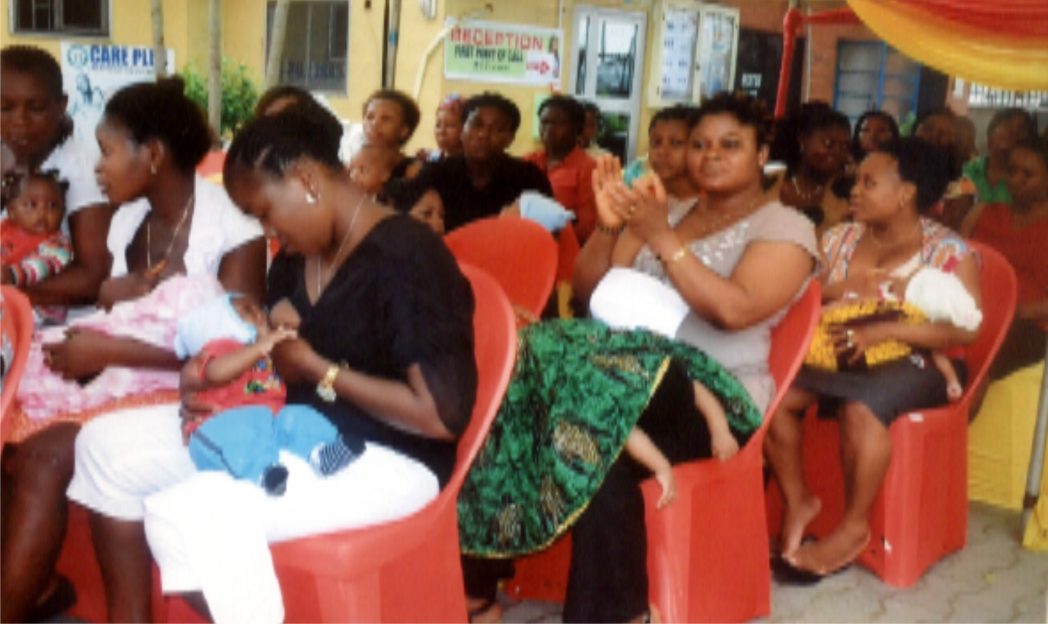
Mothers breastfeeding their babies  Photo: Nwiueh Donatus Ken

Mothers breastfeeding their babies Photo: Nwiueh Donatus Ken

Continue Reading

Women

Who Is A Classic Woman? 

Published

on

A classic woman is one  who has identified herself in terms of fashion, occupation  or the kind of business she does.
A woman can be classical in the way she entertains her audience in terms of music and movies.  You will discover that some female musicians are identified with the kind of music they sing.
A classical woman is one who always wants to appear trendy.
Generally, classical women are normally identified with the kind of things they are involved in.
There are ladies that want to be identified with wearing of shorts (short trousers) in the public. They use it to showcase their beauty. They want to be identified with such things as they see it as socialisation.
Some wear trousers that are so tight just to showcase all the curves they possess.
Consultant stylists and etiquette experts say some fashions won by some persons are inappropriate because of how and when they are won.
A classic woman is supposed to dress properly.   She should  be able to wear clothes  that will not expose hidden parts of her body. When such occurs,  then it is indecent dressing.
Ladies should be known for two things, classical and beauty.  One can be classic with minimisation.  The minimum woman should go is to look good, decent and presentable.
Some ladies like wearing short skirts but no matter  how short the skirt is,  it should look elegant. The skirt  should not be too short like the mini-skirt.
Dressing or fashion depends on the environment the persons finds herself.  The kind of clothes won to the office may be different from the one won at home. Likewise,  a dress won to a party may be different from the one won too swimming pool.
For one to look classical or decent, body shape should be taken into consideration.
Colours of a particular fashion can make one look odd or nice.  Looking model does not mean that one should go naked or dull.
Don’t wear clothes  that you need to drag from time to time in order not to expose yourself.
Eunice Choko-Kayode
Continue Reading

Women

Emohua Widows Receive Items From Ogbakor Ikwerre California

Published

on

A Non-Governmental Organization, (NGO) Ogbakor Ikwerre,California, DBA, Ikwerre Community Association, California, through it’s outreach projects has donated food items to over 300 Widows in Rumuekpe and Rumuji in Emohua Local Government Area of Rivers State.
Speaking during the handover of the items to the women leaders of the communities in Emohua, yesterday, the team leader of the Ogbakor Ikwerre Community Association in California, Dr Christiana Chukumati, said that the donation is an annual event that has  been on since 2014.
According to her, the NGO is donating the items among the four local government area of Ikwerre adding that this year is for widows in Rumuekpe and Rumuji communities.
“Today is Rumuekpe and Rumuji communities, next we are going to another Ikwerre local government area also.
” The NGO has been carrying on the activities since 2014 within the
Ikwerre communities”, Dr Chukumati said.
She thanked the Royal father of Rumuekpe, His Royal Highness, Golden Amb. Christian Amadi, Eze Chigu and the Royal Highness of Rumuji and Odegu Kingdom, Ohna Christian Okachineke Elechi Newe-Eli (the xv) for receiving them in their communities.
The team leader also promised the Royal Highness that whenever the NGO has any other items for the communities, she we do well to bring it to them.
Receiving the Ogbakor Ikwerre Community Association in California in Rumuekpe, His Royal Highness Golden Christian Amadi, praised the NGO for funding his clan among the communities.
According to the Highness, my community is the only oil producing community in Emohua Local Government Area of Rivers State, adding that his community is feeding the local government area, the state and the nation.
“I thank my children over there in California for remembering the widows in my Kingdom for the food items they brought.
” I pray to God to help them to do also to other Ikwerre communities.
” I want to tell them also that Rumuekpe Kingdom is till undeveloped.
” As you can see the community is nothing to show to the people, I want to beg the Niger Delta Development Commission (NDDC) and the Rivers State government to come to our aid to develop our community. We are underdeveloped”
“God will bless my children over there in California”,  His Royal Highness Amadi prayed.
In her words, the women leader of Rumuekpe community, Comfort Njoku, said that she was happy for the gift items given to them adding that it is not easy to remember the widows.
She explained that in Rumuekpe, the widows have not seen such a gift before and  prayed that is only God that will reward them.
“I want to thank the Ogbakor Ikweree Community Association in California for giving us this items in this festival. We thank God for them and the leader of the group,  Mrs Chukumati.
” What we received today we have not seen it in our community before for widows”, Mrs Njoku stated.
Meanwhile,  in Rumuji community, His Royal Highness, Ohna Christian Okachineke Elechi, said that he lacked words to thank the Ogbakor Ikwerre Community Association in California for the gift to the widows in his communities.
According to him, today is historic in the history of Rumuji community that our children in oversea can remember us, I am very excited and happy over the items.
“I feel very very happy, it is good that our children recognize the widows in my community today.
” I did not know them before but now I  know them, I pray to God Almighty to pay them back for their effort and that they will not lack.
“I pray God to continue to bless them in whatever things they are doing”  he stated.
Earlier, the oldest woman in Rumuji community,  Nletem Josiah, who spoke in her local language interpreted by the woman leader, Agor Leah Onugbom, thanked the Ogbakor Ikwerre Community Association in California for the gift adding that her husband died many years ago that has caused her hardship.
” In my age and these people come and give me these food items,  is only God that will bless them for me.
” This Xmas I will eat and be happy so I want to thank them and that my God, God will bless them for me”,  Mama Josiah said.
By: Kiadum Edookor
Continue Reading

Women

When Rivers Women Pray

Published

on

Port Harcourt, the Rivers State capital went agog when women from all the local government areas of Rivers State came together for a prayer conference themed: “Women Converge 2025”.
The programme in it’s second series, which held at the Alfred Diette Spiff Civic Centre was put together by the Rivers Women Unite For Sim, a foundation that is nurtured by the women of Rivers State for prayers to God for the peaceful and smooth running of the state.
 Like a delegate conference, the  Civic centre was filled to the brim with women dressed in white attires.  They sang, danced and prayed to God for sustenance of peace in Rivers State while reaffirming their support for Governor Sim Fubara and his wife, Lady Valerie.
Women Converge With the sub-theme, “Women In An Evolving World”, explains the actions and strategies that the women use in fitting and succeeding in the digital and technical era that is very competitive.
During political rallies and campaigns, with their drummers, beautifully dressed, showcase their dancing steps to entertain audience.
In everything one does in the earthly world, prayers is key. Prayer, they say conquers. Women have been conquering many odds with prayers, and God answers whenever they pour out their minds concerning issues.
Of course, due to their nature, women have always been in the forefront of championing prayers, garnering supports for those in authority, taking care of their families as well as coping with their job careers.
Since the inception of the current administration, women have been relentless in ensuring that peace reigns in the Rivers state through prayers so 2025 edition of the Women Converge which is the second edition recorded huge success.
Speaking at the ceremony, the wife of the Rivers State Governor, Lady Valerie Fubara, commended Rivers women whose continuous prayers have impacted on the state and appreciated the support by the women to the Governor, Sir Siminalayi Fubara.
She described Rivers women as wonderful for the support both in prayers and solidarity to her family.
She described Women Converge 2025 as another milestone in an effort to shape the society for good and support for the sustenance of peace and development in Rivers State.
According to her, let me enjoin our women to remain prayerful because God is ever ready to answer our prayers. In all that we do, we must not forget the hand of God and seek him for direction and help.  You have always been steadfast and I urge you not to relent and together we will move our society forward.
Describing the theme, “Women Converge 2025, Women In An Evolving World”, as apt, she said it is a reflection of the very essence of actions and strategies that women adapt in navigating the new world order.
She said that despite the complexities of managing the home front and the constraints of economic realities, women had demonstrated formidable strength and resilience to confront the odds of life.
In her words, “This event underscores the resilience of our women to succeed no matter the odds, especially with absolute faith in God and determination for greater accomplishments”.
“Whether in the industry, business, agriculture, public service or even in politics, they have always shown strong determination to adapt and to accomplish like others”, she maintained.
A guest speaker at the event, the founder and medical director of  Save A Live medical centre, Dr. Okoye, told women to always take wise decisions in things concerning maternal and infant mortality.
The medical expert reiterated that women should not misunderstand the biblical idea of “you will deliver like the Hebrew women”.
He advised women to take  instructions from medical experts concerning pregnancy and child birth as those will go a long way in saving their lives and advised the women not to patronize quacks.
In a goodwill message, the former Commissioner for Environment, Prof. Roseline Konya,  expressed hope that the peace women have been praying for is already yielding positive result.
The President of Port Harcourt Chambers of Commerce, Industry, Mines and Agriculture, PHACCIMA, Dr. Chinyere Nwoga, spoke on the sustenance of peace in Rivers State as that will move the state to greater height.
Also speaking at the
Women Converge, Pastor Ene Secondus, enjoined women to continue to pray for peace and it’s sustenance in Rivers State.
One of the guest speakers, Pastor Eno Jerry Eze, during the intercessory prayers said women are the foundation of the society and explained that development of any society depends on the strength of womanhood.
The wife of the former Deputy Governor of Rivers State, Dr Christie Toby, a daughter of Rivers State, Ann Kio Briggs also graced the occasion.
Apart from the prayer session,  women from different local government areas showcased different kinds of food items in their various canopies and stands.
The Okrikans and in fact the Riverine extraction, in a food exhibition displayed fishes, crayfish, oporo (prawn), periwinkle( isam).
The women from Etche and Omuma decorated their tables with agricultural products like Garri, fufu, vegetables (okashi ala), plantain, bananas etc.
The Ekpeyes and Ogbas were not left out as they displayed their own food crops like fish, garri, fufu and the likes.
Women from Ikwerre and Emohua local government areas came with their food stuffs.
By: Eunice Choko-kayode
Continue Reading

Trending







