
Opinion
What Is There To Talk About?

Conflict is an integral part of nature generally, and human nature in particular. When conflict of ideas or interests degenerate into hostilities, however, negotiations and positional re-alignments become imperative. The brutal, pseudo-Jihadist onslaught of the Boko Haram sect against the Nigerian state, its blatant disregard for constituted authority, and unprovoked acts of violence against hapless citizens, have created a crisis situation in northern Nigeria and sent shock waves across the entire nation. Every attempt by the beleaguered Nigerian State to contain this embarrassing, exhaustive and expensive insurrection, both militarily and through dialogue had proved abortive, resisted and undermined by the marauding “Islamic” revivalists. Hostilities continue to rage, leaving in its wake sorrow, tears and blood. Innocent Nigerians largely bear the brunt of Government’s ineptitude in stemming this ugly tide, daily losing lives, limbs and properties as the violence persists unabated. Having almost had its fill of carnage, and satisfied that it has the Nigerian Government where it wanted it, the “Haramist” sect in a rare show of magnamity, recently offered to talk on its own terms and with stringent pre-conditions. And from its body language, Government appears relieved and favourably disposed to the sect’s “gentlemanly” gesture. The question now is, “what is the basis for these talks?” Since its incursion into national and global infamy , the Boko Haram sect has left no one in doubt as to its raison d’ etre, which is to sabotage, undermine and make nonsense of Nigeria’s resolve, as a people to live in dignity and safety in a secular society, however flawed. The sect is hell-bent on spreading the spidemic of fear and the culture of hate. It is indoctrinating the vulnerable, disillusioned, educationally, handicapped politically, economically and socially oppressed in the population to inject its depraved values of extremism, intolerance and violence. The sect’s relentless and remorseless acts of terror have continued to fan the toxic flame of ethno-religious acrimony among already traumatised population and has become a global security concern. Successive Nigerian Governments have progressively and overtime, become more and more enstranged from the people. The yawning disconnect between the government and the governed has contributed immensely to the growing spate of unpatriotism, disenchantment, felonious sentiments and conducts that today permeate the entire nation. The socio-political, traditional and religious elite have by their greed and made-rush for power, Iucre and influence, inadvertently entrenched a culture of impunity, dishonesty, ethnicity, materialism, religious bigotry and ideological intolerance. For too long, this macabre dance has continued unchecked. The unconstitutional subterfuges and political gimmickry of the ruling class, its disdain for the rule of law and cluelessness in proffering solutions to the myriad of challenges that plague our country, have inspired apathy , bickering and outright disillusionment in majority of the long-suffering population. The excesses of our leaders and the docility of the led have indeed culminated in the debauchery of the state. Political anomalies, economic irresponsibility and constitutional indiscipline have sapped the sting from institutions, such that rascals now usurp constituted authority and are assured of no consequences. This sorry state of things has culminated in the rise of social recidivism, ethno-religious extremism and endemic lawlessness. The Police and Armed Forces appear overwhelmed by widespread contempt for the rule of law, and in some cases willfully aided and abetted such agents of retrogression. It is against this backdrop that the menace of Boko Haram becomes a source of worry to all men of good conscience, especially as it borders on national security and unity. There is an urgent need to nip this malaise in the bud and return to the path of sanity, equality, socio-economic justice and national cohesion. There are many ways to actualise the Nigeria of our dreams, and the divisive antics of Boko Haram is not one of such. Armed struggle the world over, is an acceptable, legitimate means of socio-political and economic liberation. All humanity respects the right of an oppressed people to re-negotiate the terms of their existence, using the instrumentality of purposeful insurgency. Boko Haram, by its modus operandi, not only cheapens that fact, it also negates the very essence of populist uprising. Its mindless acts of terror and deliberate attempts at sowing and breeding the seed of discord, along ethno-religious lines, give the group away as a rudderless, blood thirsty and lrritant organisation devoid of any noble ideology and as such, must be totally crushed. The Federal Government, as the pinnacle of power and custodian of the military might of the Nigerian nation, must begin to act the part. It must wield the big stick, mobilise men and machines, infiltrate and contain this barbaric sect. Methinks the government cannot afford to make any concession to the sect. The criminals must renounce violence and surrender their arms without pre-conditions. Combatants and collaborators arrested by the state, should and must be tried according to the laws of the land. The cost of negotiating with Boko Haram in the long run will prove too steep a price for this nation. Such escapism will send a wrong signal to millions of other equally frustrated and disenchanted Nigerians that litter the streets and creeks of this nation. People will begin to see violence as a viable vehicle for courting Government’s attention and that wise, near frequent force its hand in a particular direction or section of the country. Terror and anarchy must be discouraged and dealt with ruthlessly. Corruption and economic sabotage must incur grave penalties. We must create a Nigeria where all who try can thrive in an atmosphere of justice, equality and tranquility. We must not negotiate with terrorists, it is suicidal! Johnson resides in PH



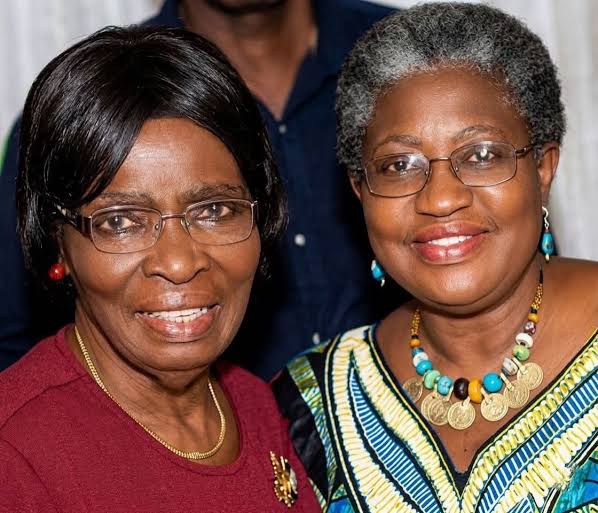
Quote “Professor Kamene Okonjo
Some women leave behind more t
Yet, to remember Professor Kam
Professor Okonjo was the belov
one of the most dramatic chapt
On December 14, 2012, the then
She leaves behind children, gr
Professor Kamene Okonjo deserv
By: Sylvia ThankGod-Amadi

Quote: An African who invokes
This is the concluding part
… Given the fact that I was
At the end of the visit by the
Back to my apartment, at abo
Under normal circumstances, yo
That all she asks is that Chie
For some reason that I do not
I believe that everyone in hu
Our ancestors have not gone fa
By: Jason Osai
The Federal Government’s approval of a N70,000 monthly transport intervention for public service workers for six months, beginning in November 2026, offers hope to employees struggling with the rising cost of living. The agreement with the Nigeria Labour Congress (NLC), reached at a conciliation meeting in Abuja on October 27, is intended to cushion transport costs and ease pressure on workers’ incomes. But for public servants in Rivers State, it raises a familiar question: will the State Government key into the intervention and ensure that its workers benefit? The agreement provides for N70,000 monthly across all levels, for six months. The Federal Government also approved peculiar allowance arrears effective from May 1, 2026, to be paid in three equal instalments beginning in November.
The parties agreed to reconvene after one month to assess implementation. Ultimately, the value of these resolutions will be measured not by announcements but by whether eligible workers receive the money. Transport costs consume a substantial share of many civil servants’ earnings before they can meet household needs. Support for commuting is therefore not a luxury or political favour; it is temporary assistance to help workers remain at their jobs without sinking further into hardship. For lower-paid employees, transport costs can turn modest salaries into a daily exercise in difficult choices and sacrifice.
The agreement also urges State and Local Governments to participate and unions to press for implementation. The federal agreement does not automatically guarantee that every State and Local Government employee will receive the support. State authorities must clarify how it will apply to their workforce, make the necessary arrangements and publish a payment timetable. Rivers State must approach the arrangement with urgency and transparency. The Government should State whether it will implement the intervention and when payments will begin. Any administrative or financial question should be addressed promptly with organised labour, not allowed to become excuses for delay.
The concern is sharpened by the earlier N35,000 monthly wage award introduced by the Federal Government in 2023 after petrol subsidy removal. It was intended as temporary relief pending a new national minimum wage. While several States negotiated and paid wage awards or related sums, implementation nationwide was uneven. Reports in 2024 indicated that many States had failed to pay the federal award, while others provided different amounts. In Rivers, labour and media reports raised concerns about implementation of the N35,000 award for State workers, amid separate announcements and arrangements concerning Local Government employees.
The wage award was meant to ease the immediate effects of subsidy removal, yet workers faced uncertainty over whether the promised relief would reach them. In February 2024, the Rivers State Government announced approval of the N35,000 award for local government workers, but subsequent reports showed that implementation across worker categories remained a concern. The lesson is clear: approval and implementation are not the same. A declaration at a meeting offers little comfort to a worker whose account does not reflect the promised payment. For workers who travel to their offices daily, the implications of delayed support are significant. Transportation expenses compete with food, rent, school fees, healthcare and other essential household needs.
As fares rise, employees may be forced to reduce spending on necessities or borrow to sustain their families. A timely transport intervention would therefore provide practical relief and demonstrate that government understands the economic pressures confronting its workforce. Its temporary nature makes prompt implementation even more important. It is fair to acknowledge that this transport intervention is a new agreement and that its administrative details may require clarification. Rivers State should not be condemned in advance for a failure that has not occurred. Nevertheless, the earlier experience gives workers legitimate grounds to seek assurances before the November commencement date. The State should avoid allowing uncertainty to persist until workers begin asking why the promised assistance has not arrived.
The NLC and unions in Rivers State should engage the State Government immediately and seek a written commitment, an implementation plan and a process for reporting missed payments. If clarification from the Federal Government is needed, the State should seek it without abandoning the goal of providing relief. Labour leaders must also keep members informed about progress and insist that any agreed arrangements are applied fairly and transparently. The Rivers State Government should treat this intervention as an opportunity to rebuild confidence. Timely support would show that workers’ welfare is more than a talking point and that the State recognises the economic realities confronting its employees.
Silence, delay or selective implementation, by contrast, would revive frustration over earlier relief measures and weaken trust between government and labour. Every month lost to administrative delay leaves workers facing the same transport burden without the intended assistance. The State should consult labour, publish arrangements and pay eligible workers on time. Rivers workers should not have to wonder whether federal relief will reach them. The Federal Government has announced the support; now the State must make its position clear. We hope the N70,000 monthly transport intervention will not follow the troubling path of the earlier wage award. Rivers State should learn from that experience and ensure that this time, relief is not merely promised but delivered.
Sylvia ThankGod-Amadi
-
Opinion4 days ago
Ancestorial Worship: My Take (1)
-

 Education1 day ago
PAMO MEDICAL UNIVERSITY -Nullifies Arrest warrant on VC
-
Niger Delta1 day ago
PANDEF Seeks 50% Oil Derivation Allocation Increase
-
Rivers1 day ago
Don Seeks Repositioning Of Tech Education For Dev
-

 Education1 day ago
IAUE MOVES TO END GHOST WORKERS SYNDROME AS 400 NEW NON-TEACHING STAFF UNDERGO MANDATORY ETHICS TRAINING
-

 News1 day ago
Fresh Ebola Scare As NCDC Records Two Cases
-
News1 day ago
Customs Partners EFCC, NDLEA, Others To Tackle Money Laundering, Terrorism Financing
-

 News4 days ago
FG Must Address Nigerians’ Concerns On Reforms -Shettima …Warns Against Misuse of AI, Social Media