
Opinion
A Dwarf at 52?

Nigeria is like a veritable paradox. And paradox, like irony
and ambiguity has always had sensational appeal to the intellectual. No wonder
Nigeria has an enduring Fascination for the genuinely restless and enquiring
mind. Those who fail to appreciate the disturbing proportion of the Nigerian
condition are those who devalorise paradox as the eternal index of confusion
and hesitation.
But paradox is itself the element of the human condition.
Human beings have contructed inventions that have taken them to the outer space
and the moon yet they are unable to fashion out a means over which the problem
of humanity such as war, hunger, corruption and pestilence can be fixed.
Against the annual rituals of regrets or sorrow over the calamities that had befallen nations, against the tear drops for the victims of the recklessness of wars, nations have continued to consummate even more encompassing and conclusive methods of human destruction. Ouer peek into the depth of hopelessness or despondency has only galvanised our resolve to live even more dangerously.
Dismayed by this endless circle of human imbecility,
Levi-Stranss, the great French anthropologist, in a moment of deep dejection,
once observed that the world began with the human race, and will terminate
without it. If we alienate ourselves from this hopelessness it is not because
we think something has not gone wrong with us as a nation, but because we hold
solidarity in derangement, which annihilates our national folly within a more
global Lunacy that holds out a paradoxical assurance that all is not yet lost
for Nigeria.
At 52, the Nigerian condition still remains paradoxical
indeed. Only those who appreciate how in the dialectics of history, natural
blessings may turn into national burdens and how natural curses can, by the
force of human will be magically transformed into nationally blessings, will
comprehend the extent of our collective predicament.
On the one hand, we are
a nation blessed with natural and
human resources. But on the other hand, we are a nation that has consistently
succumbed to a curious paralysis of the will when it comes to judiciously
harnessing the resources for our good. If nature has endowed us with so many
resources, the same nature cannot be held responsible for our bleating
resignation in the face of self- inflicted disasters.
This nation has the singular aptitude for throwing up her
worst when her best is required. It is probably the only country in the world
that is yet to evolve an organic
national character but which allows politicians and its leaders to toy with its
destiny. Nigeria is the only country where the cry of millions of men, women
and children of vision is answered by fortune tellers and “babalawos”.
But in spite of these, Nigeria still remains a robust
reality, and so cannot be wished away. It does not matter if certain aspects of
that reality fills one with appalling fear. And the inscrutable nation itself
continues to confront her own reality with the glorious assurance of a
sleep-walker. What is ambiguously re-assuring about this nation is its ability
to consistently fool professional obituaries, by simply walking away from the
operating tables after being pronounced clinically dead.
A unique characteristic of this country is that its capacity
to shock and scandalize is infinite. In moments of deep national despair and
disillusion, when everyone appears reconciled to the permanence of desperation
or hopelessness, a miracle always occurs abruptly to remind us of our potential
for greatness. But miracles as they may be, cannot take a nation far.
As we celebrate our 52nd independence anniversary, has any
one considered what the essence of our national problem is? Has any one
pondered why instead of being the giant of Africa, we have become a graceless
giant that produces unwieldy ironies and national contradiction? What then is
our problem? Does it have to do with the sheer size of our nation?
Kwame Nkrumah of Ghana was once said to have contemptuously
dismissed Nigeria as “big for nothing”. But single individuals have been known
to rule over bigger nations with consummate skill. For instance, when compared
to China, Nigeria is a minor province, and compared to the United States of
America (USA), it is only but a state, a minor nationality in a melting pot of
nationalities.
But going by the Chinese experience, for example, size is an
advantage. Only those who have lost contact with contemporary reality will
repudiate the fact that the bigger a country is the better its prospects for
future greatness.
Nothing advances the cause of a country and its development
than patriotism. This is what we lack. This is the essence of all our problems.
For the supreme example of this devotion to one’s fatherland, we might as well
borrow the illustration of Charles De
Gaulle of France. Nothing can serve as a more shining specimen than the
exemplary career of this patriot.
France was De Gaulle’s enduring love. He dreamt France. He
ate France and cultivated France. This patriot had mystical faith in his
destiny and the destiny of France. His sense of history was superb and the
ancient tradition of his country weighed over him like an albatross.
Where are our patriots? Where is our De Gaulle? The long and
short of these is that the time for real change is now, and that Nigeria should
save itself by its exertion and perhaps other African nations by its examples.
And this cannot be achieved by substituting the cultivation of slogans for the
cultivation of patriotism.
Patriotism thrives on three principles: justice, equality
and fair play. Without these being enshrined in its national life, no nation
can subdue mediocrity.
At Nigeria’s 52nd anniversary of its marriage to mediocrity
and mutual destruction, my passionate plea to President Good luck Jonathan is
to grant us a divorce from our incompatible partner. If this plea is granted,
we might soon witness the emergence of a nation from the ashes of defeat and
despondency to greatness.
Arnold Alalibo



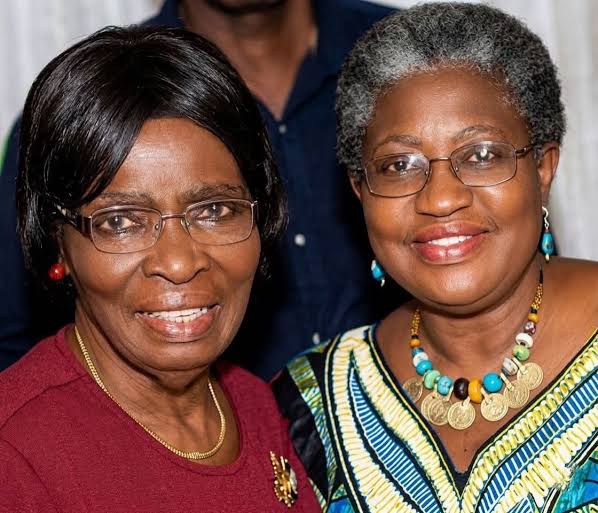
Quote “Professor Kamene Okonjo
Some women leave behind more t
Yet, to remember Professor Kam
Professor Okonjo was the belov
one of the most dramatic chapt
On December 14, 2012, the then
She leaves behind children, gr
Professor Kamene Okonjo deserv
By: Sylvia ThankGod-Amadi

Quote: An African who invokes
This is the concluding part
… Given the fact that I was
At the end of the visit by the
Back to my apartment, at abo
Under normal circumstances, yo
That all she asks is that Chie
For some reason that I do not
I believe that everyone in hu
Our ancestors have not gone fa
By: Jason Osai
The Federal Government’s approval of a N70,000 monthly transport intervention for public service workers for six months, beginning in November 2026, offers hope to employees struggling with the rising cost of living. The agreement with the Nigeria Labour Congress (NLC), reached at a conciliation meeting in Abuja on October 27, is intended to cushion transport costs and ease pressure on workers’ incomes. But for public servants in Rivers State, it raises a familiar question: will the State Government key into the intervention and ensure that its workers benefit? The agreement provides for N70,000 monthly across all levels, for six months. The Federal Government also approved peculiar allowance arrears effective from May 1, 2026, to be paid in three equal instalments beginning in November.
The parties agreed to reconvene after one month to assess implementation. Ultimately, the value of these resolutions will be measured not by announcements but by whether eligible workers receive the money. Transport costs consume a substantial share of many civil servants’ earnings before they can meet household needs. Support for commuting is therefore not a luxury or political favour; it is temporary assistance to help workers remain at their jobs without sinking further into hardship. For lower-paid employees, transport costs can turn modest salaries into a daily exercise in difficult choices and sacrifice.
The agreement also urges State and Local Governments to participate and unions to press for implementation. The federal agreement does not automatically guarantee that every State and Local Government employee will receive the support. State authorities must clarify how it will apply to their workforce, make the necessary arrangements and publish a payment timetable. Rivers State must approach the arrangement with urgency and transparency. The Government should State whether it will implement the intervention and when payments will begin. Any administrative or financial question should be addressed promptly with organised labour, not allowed to become excuses for delay.
The concern is sharpened by the earlier N35,000 monthly wage award introduced by the Federal Government in 2023 after petrol subsidy removal. It was intended as temporary relief pending a new national minimum wage. While several States negotiated and paid wage awards or related sums, implementation nationwide was uneven. Reports in 2024 indicated that many States had failed to pay the federal award, while others provided different amounts. In Rivers, labour and media reports raised concerns about implementation of the N35,000 award for State workers, amid separate announcements and arrangements concerning Local Government employees.
The wage award was meant to ease the immediate effects of subsidy removal, yet workers faced uncertainty over whether the promised relief would reach them. In February 2024, the Rivers State Government announced approval of the N35,000 award for local government workers, but subsequent reports showed that implementation across worker categories remained a concern. The lesson is clear: approval and implementation are not the same. A declaration at a meeting offers little comfort to a worker whose account does not reflect the promised payment. For workers who travel to their offices daily, the implications of delayed support are significant. Transportation expenses compete with food, rent, school fees, healthcare and other essential household needs.
As fares rise, employees may be forced to reduce spending on necessities or borrow to sustain their families. A timely transport intervention would therefore provide practical relief and demonstrate that government understands the economic pressures confronting its workforce. Its temporary nature makes prompt implementation even more important. It is fair to acknowledge that this transport intervention is a new agreement and that its administrative details may require clarification. Rivers State should not be condemned in advance for a failure that has not occurred. Nevertheless, the earlier experience gives workers legitimate grounds to seek assurances before the November commencement date. The State should avoid allowing uncertainty to persist until workers begin asking why the promised assistance has not arrived.
The NLC and unions in Rivers State should engage the State Government immediately and seek a written commitment, an implementation plan and a process for reporting missed payments. If clarification from the Federal Government is needed, the State should seek it without abandoning the goal of providing relief. Labour leaders must also keep members informed about progress and insist that any agreed arrangements are applied fairly and transparently. The Rivers State Government should treat this intervention as an opportunity to rebuild confidence. Timely support would show that workers’ welfare is more than a talking point and that the State recognises the economic realities confronting its employees.
Silence, delay or selective implementation, by contrast, would revive frustration over earlier relief measures and weaken trust between government and labour. Every month lost to administrative delay leaves workers facing the same transport burden without the intended assistance. The State should consult labour, publish arrangements and pay eligible workers on time. Rivers workers should not have to wonder whether federal relief will reach them. The Federal Government has announced the support; now the State must make its position clear. We hope the N70,000 monthly transport intervention will not follow the troubling path of the earlier wage award. Rivers State should learn from that experience and ensure that this time, relief is not merely promised but delivered.
Sylvia ThankGod-Amadi
-
Opinion4 days ago
Ancestorial Worship: My Take (1)
-
Niger Delta14 hours ago
PANDEF Seeks 50% Oil Derivation Allocation Increase
-
Rivers12 hours ago
Don Seeks Repositioning Of Tech Education For Dev
-

 Education13 hours ago
PAMO MEDICAL UNIVERSITY -Nullifies Arrest warrant on VC
-

 Education13 hours ago
IAUE MOVES TO END GHOST WORKERS SYNDROME AS 400 NEW NON-TEACHING STAFF UNDERGO MANDATORY ETHICS TRAINING
-

 News15 hours ago
Fresh Ebola Scare As NCDC Records Two Cases
-
News15 hours ago
Customs Partners EFCC, NDLEA, Others To Tackle Money Laundering, Terrorism Financing
-

 News4 days ago
FG Must Address Nigerians’ Concerns On Reforms -Shettima …Warns Against Misuse of AI, Social Media