Connect with us

Business

Bayelsa Businessman Applauds  Tinubu, Diri’s Economic Policies

Published

on

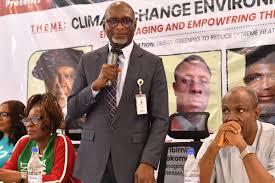
The Chief Executive Officer(CEO and Managing Director of DavJoes Consultancy Services Ltd, Chief Wisdom Oniekpar Ikuli has said the economic policies of President Bola Tinubu and those of the Bayelsa State Governor, Senator Douye Diri were yielding positive impact on businesses in Nigeria.
The CEO who is also the Technical Adviser to the Bayelsa State Governor on Media and Public Affairs also commended the governor for prioritising peace, security and infrastructure development in the State, saying the above indices have raised investors confidence in the State.
Ikuli spoke with newsmen at the newly acquired headquarters of the firm in Yenagoa, the State capital this week
According to him, the duo of President Tinubu and Governor Diri’s preference for job creation in the nation and Bayelsa necessitated his acquisition of the firm’s new office in Yenagoa.
He stressed that DavJoes which has a number of subsidiaries, including JD Cleans, Niger Delta Reality TV Show Ltd, and a non-governmental organisation, Centre for Peace Advocacy and Social Rehabilitation would usher in new realm of empowerment and employment opportunities for citizens of the State and beyond.
“Before now my conglomerate was based in Abuja, the nation’s capital. Honestly we’re doing well over there as we still have branches there. But because it is said that Charity begins at home, we deliberately moved the headquarters of the firm to Yenagoa,  capital of our dear State so that our people here too can have a feel of what we’ve been doing.
“We’ve created and are still creating jobs for our people and still counting. We’ll be organising a reality TV show soon. This reality show aims at empowering our people.
“All these are happening because President Tinubu and Governor Diri have given Nigerians the enabling environment to invest in the economy of the nation and Bayelsa State through provision of security, enablement of peace and very friendly economic policies for investment to thrive”, the CEO said.
Ariwera  Ibibo-Howells, Yenagoa
Continue Reading

Business

FRSC Boss Seeks ‘Extra Mile’ In Road Safety Service

Published

on

The Rivers State Sector Commander of the Federal Road Safety Corps (FRSC), Corps Commander Francis Ajatta, has called on the personnel of the Corps to go beyond their routine duties in serving members of the public.
Ajatta made the call as Rivers State Command commenced activities to mark the 2026 Customer Service Week, with the theme, “The Extra Mile”, in Port Harcourt, recently.
The week-long programme, according to him, is aimed at improving service delivery, strengthening engagement with road users and promoting safer roads across Rivers State.
Speaking on the significance of the theme, Ajatta said customer service in the FRSC should go beyond road enforcement, stressing the need for effective communication, prompt response, public education, courtesy and constructive engagement with road users.
He said personnel must cultivate a service-oriented approach in their dealings with motorists, transport operators and other members of the public, noting that professionalism and responsiveness were essential to building public confidence in the Corps.
According to him, the responsibilities of FRSC extend beyond enforcement, as the Corps also has a duty to educate road users, respond promptly to their concerns and work collaboratively with stakeholders to improve road safety.
The Sector Commander urged motorists, transport operators and other stakeholders in the state to participate actively in the activities lined up for the Customer Service Week.
He said stronger partnership between the FRSC and road users remained critical to addressing challenges associated with road safety and reducing crashes and fatalities on the state’s roads.
Activities lined up for the celebration include, a road show, stakeholders’ forum and lecture, free medical outreach, as well as recognition of outstanding stakeholders and staff.
Ajatta said the recognition component of the programme was intended to appreciate individuals and stakeholders who had contributed positively to the road safety mandate of the Corps.
He reaffirmed the commitment of the Rivers State Command to improving its service delivery and sustaining collaboration with relevant stakeholders towards safer roads.
The Sector Commander also urged personnel to see every interaction with the public as an opportunity to demonstrate professionalism, courtesy and the commitment of the FRSC to protecting lives on the highways.
King Onunwor
Continue Reading

Business

Lesotho, Bayelsa Explore Economic Cooperation

Published

on

The Government of Lesotho and Bayelsa State have held talks on areas of economic cooperation, including agriculture, oil and gas, tourism, cold water development and textile warehousing.
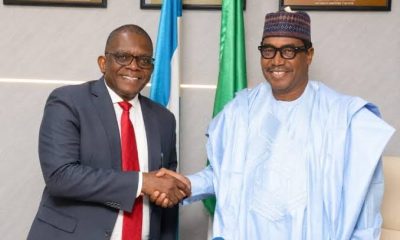
The bilateral meeting between the country’s Prime Minister,  Rt. Honourable Ntsokoane Samuel Matekane, and Governor of Bayelsa State, Senator Douye Diri, took place recently at the State House in Maseru, the nation’s capital city.
Governor Diri, who recalled an earlier meeting with Matekane in Abuja, Nigeria, said Bayelsa was interested in exploring areas of economic benefits, particularly where it had comparative advantages.
He said the state was rich in crude oil and very large gas deposits, in addition to having the longest coastline in the country that places it at a strategic position in the Gulf of Guinea.
The Tide learnt that Lesotho is one of the world’s smallest and landlocked nations located in Southern part of Africa, and it is rich in diamond and also a leader in cold water production and export as well as in textile production.
“I think this meeting was divinely orchestrated. The meeting in Abuja had so many other presidents and leaders, but at the end of the day, we were attracted to Lesotho, and Lesotho was equally attracted to us.
“Bayelsa was the first place in Nigeria where oil and gas was found in commercial quantities in 1956 by the British during colonial rule. So, Nigeria became an oil-producing country because of Bayelsa State.
“My state is in the southern part of Nigeria, in the coastal area, and it is bordered by the Atlantic Ocean and the Gulf of Guinea. We seek collaboration and partnership in oil and gas, on how to harness the vast resources in our coastal and maritime environment as well as in terms of tourism”, he said.
The Bayelsa Governor also stated that the State was looking at exporting industrial starch from its cassava processing factory.
“Our cassava starch extraction factory is now functional and it was aimed for international exports. The local demand in Nigeria is so high. But our target is export.
“Rice production is another commodity that has possibility for collaboration. Bayelsa is a massive wetland and the entire state is a rice belt”, the governor added.
On inter-African trade, Diri noted that countries on the continent do business more with those outside the region and that it was time for this to change.
“I think there is a very big opening that is going to be mutually beneficial to both Lesotho and Nigeria, particularly Bayelsa State, from what has come on the table here. I agree with you that  inter-country trade has been more with countries outside of Africa.
“But if African countries have this kind of meetings, we can begin to change the direction as the possibilities are there. We have not been able to explore them”, governor Diri stressed.
He said his administration was winding down and that both teams have to act fast to make the partnership a reality.
Also, the Director-General of the Bayelsa Investment Promotion Agency (BIPA), Patience Abah, in her presentation, said the State was following the general framework of the African Continental Free Trade Area (AfCFTA).
Abah stated the importance of the meeting and that agreements reached were just words on paper except the participating states take steps to actualise them.
“So, that is the spirit with which we are approaching this. His Excellency has spoken about our oil and gas potential. But beyond that, Bayelsa wishes to leverage also its coastal assets.
“We have two claims to fame that no other state in Nigeria can make. We have the longest coastline in the country of at least 203 kilometers. The other is we have proven gas reserves exceeding 18 trillion cubic feet. These are assets with which we can explore collaboration.
“We know Lesotho specialises and is a world leader in cold water production. But our ecosystem is different, with more of swampy terrain and fresh water. So, we can partner on resources like catfish, tilapia, shrimps, fish processing, and cold chain logistics networks to span not only the Southern African region but all the way down to West Africa as well.
“Using your expertise and terrain advantage, we can also partner on hydro energy as well as renewable and clean energy. Beyond that, we are also looking at your world-class garment manufacturing factory for export.
“Bayelsa can act as a strategic West African assembly point for warehousing and distribution of your finished textiles in the region and beyond”, she said.
The Lesotho Prime Minister, Ntsokoane Matekane, in his remarks, said the country was interested in any economic relationship and investment that was mutually beneficial.
Ntsokoane, who was a reputable businessman and the country’s richest man before winning election in 2022, said African countries must first derive the benefits from their natural resources rather than relying on the imported finished products from them.
“Africa has been home to a number of minerals and natural resources, but we always export everything we have. They get value outside and come back more expensive for us.
“Now, when you look at the trade between Lesotho and China or US and compare it with between Lesotho and Nigeria, it is a totally different story. So, it is very important for us to start these engagements to ensure that there is intra-trade between African countries” he said.
Ntsokoane stated that Lesotho was targeting 100 per cent renewable energy and export it to the Southern African region.
“We generate power using hydro because our terrain is a masterpiece. We experience eight to 12 times of snowfall in Lesotho, which is the highest source of water in the Southern African region. And, of course, the mountains and gorges are a huge potential for our hydropower. So, in partnership with Bayelsa State and other African countries, we can build a very strong base load in the mountain Kingdom of Lesotho”, the Prime Minister added.
He also spoke about the possibility of setting up data centres for digitised businesses, taking advantage of Lesotho’s cool temperatures and abundant water supply from the mountains.
The Prime Minister further stated that the country depends on Nigeria’s expertise in the oil industry and that Bayelsa will be a strategic partner in that sector because of its history and experience in oil exploration activities.
After the meeting, the Bayelsa governor participated in the Diamond Independence Jubilee celebrations of the country at the National Stadium in Maseru.
The King of Eswatini and his wife and representatives of the government of Botswana, Zambia as well as heads of diplomatic missions and international organisations joined the King of Lesotho, David Mohato Seeiso, Letsie III, at the colourful ceremony.
Ariwera Ibibo-Howells, Yenagoa
Continue Reading

Business

Economic Expert Seeks Redesign Of FG’s Cash Transfer Programme

Published

on

An economy and capital market expert, Prof. Uche Uwaleke, has urged the Federal Government to redesign its conditional cash transfer programme.

Uwaleke who is also the President, Capital Market Academics of Nigeria (CMAN), made the call in an interview with The Tide source in Abuja.

He said the cash transfer programme, one of President Bola Tinubu’s administration’s principal poverty reduction interventions, required fundamental redesign to improve transparency and public confidence.

The expert said the programme could provide temporary relief and protect vulnerable households from severe  economic shocks.

He, however, said its effectiveness would depend on credible beneficiary identification, payment integrity, adequate transfer amounts and the ability to monitor the outcomes.

Uwaleke said a programme whose beneficiaries could not be independently verified risked excluding deserving households, creating opportunities for abuse and weakening public trust.

“I recommend that the government should replace the existing approach with a more transparent, independently verifiable and better targeted social protection framework.

“Community-based verification should complement digital identification to ensure that people in remote and underserved communities are not excluded,” he said.

He also recommended a payment architecture that allowed traceability, alongside accessible grievance redress mechanisms and periodic impact assessments.

Speaking on food production, Uwaleke called for the revival of the Directorate of Food, Roads and Rural Infrastructure (DFRRI) programme.

He said the revival would help address challenges affecting food production, rural access and basic infrastructure across the country.

Uwaleke said national development could not be achieved by concentrating investment in major urban centres.

He noted that rural communities where much of the country’s agricultural production took place, needed stronger links to markets and essential services.

According to him, the underlying logic of the programme is to bring development closer to rural communities by addressing food production, rural access and basic infrastructure.

Uwaleke said a renewed DFRRI-type programme should not reproduce past institutional arrangements but be redesigned as a community-centred rural productivity and infrastructure initiative.

He said the initiative should be jointly implemented by the federal, state and local governments, with clear accountability mechanisms and measurable outcomes.

According to him, these commitments must be translated into a coordinated national agricultural productivity programme with measurable targets, clear institutional responsibilities and adequate funding.

“Its priorities should include feeder roads, small-scale irrigation, rural electrification, water supply, produce aggregation centres, storage facilities, primary healthcare access and market infrastructure.

“Such a programme can accelerate grassroots development by connecting farming communities to markets, reducing transportation costs, improving access to agricultural inputs and creating employment through rural infrastructure projects.

“The emphasis should be on raising output per hectare, increasing multiple cropping, improving yields, reducing post-harvest losses and strengthening linkages between farmers, agro-processors and domestic markets,” he said.

Uwaleke said the programme would provide a practical means of ensuring that economic recovery reached communities that had remained disconnected from the benefits of national growt.

He noted that beyond agriculture, the cost of energy remained a major constraint on domestic production.

He said manufacturers, small businesses and service providers continued to face high operating costs because of unreliable electricity supply and dependence on alternative energy sources.

The CMAN president said expansion of gas infrastructure, renewable energy, embedded generation and reliable grid supply must become integral components of the government’s prosperity agenda.

“The completion of strategic roads, railways, ports and inland logistics infrastructure should be prioritised according to their economic returns and capacity to reduce the cost of moving people and goods.

“A well-connected agricultural or industrial production centre can generate substantially greater economic value than an isolated project with limited linkages to productive activity.

“Infrastructure investment must consequently be evaluated not only by the amount spent or kilometres constructed but also by its contribution to productivity, trade and employment,” he explained.

Uwaleke said Nigeria needed a deliberate strategy to deepen domestic manufacturing, strengthen agro-processing, develop industrial clusters and encourage production of goods where the country had competitive advantage.

The expert said it demanded reliable energy, efficient ports, affordable long-term finance, predictable taxation, effective trade facilitation and a stable regulatory environment.

Uwaleke also called for stronger coordination between the fiscal and monetary authorities.

Continue Reading

Trending