
Opinion
As Powerful As Ghana

Last Tuesday, not a few Nigerians woke up to the news that President Muhammadu Buhari had ordered the sack of the managers of Abuja Electricity Distribution Company (AEDC) following a strike embarked upon on Monday by its workers over non-remittance of the firm’s counterpart contribution of their pensions for nearly two years, among other grievances.
This action by the local branch of the National Union of Electricity Employees (NUEE) was said to have resulted in power outage in the Federal Capital Territory (FCT), Niger, Kogi, Nasarawa, and parts of Kaduna and Edo States for close to 14 hours before officials of some related government agencies intervened to reassure the workers on a resolution of the matter within 21 days.
A number of power sector experts had swiftly reacted to the presidential directive, calling it an overzealous meddlesomeness that was capable of sending wrong signals to existing and potential investors in the sector. Of particular note was the former Chairman of the Nigerian Electricity Regulatory Commission (NERC), Dr Sam Amadi, who said that the president lacked the power to sack the authorities of a firm in which the federal government held a minority 40 per cent stake. Recall that KANN Utility holds 60 per cent majority interest in AEDC.
The trailing avalanche of criticisms may have prompted the Presidency to issue a rebuttal on Wednesday in which it claimed that Buhari never directed and was not inclined to authorise the sacking of the management board of AEDC or any private organisation for that matter. Power Minister, Abubakar Aliyu, who had been quoted in an earlier statement as confirming the president’s directive to BPE, would later clarify that the board reconstitution was rather the handiwork of UBA Plc following a loan repayment default by AEDC.
Electricity crisis has been with this country since the early post-Independence era when the utility was managed by the Electricity Corporation of Nigeria (ECN). And as if the name had anything to do with its persistent woes, the giant monopoly was later christened the National Electric Power Authority (NEPA) in the 1970s which simple, yet notorious acronym has remained on the lips of Nigeria’s electricity consumers to this day.
Even the NEPA name would soon morph into Power Holding Company of Nigeria (PHCN) on July 1, 2005 with the power sector reform act that saw to the establishment of several Independent Power Projects (IPPs) across the land by the President Olusegun Obasanjo administration from 1999. But considering the humongous dollar sum touted to have been expended on these undertakings with no significant alteration in the power situation, electricity consumers began to demand an unbundling of PHCN.
This call was answered in 2013 when President Goodluck Jonathan split the nation’s electricity monopoly into seven generation companies (GenCos), 11 distribution firms (DisCos), one transmission outfit (TCN), an electricity trading firm (Nigerian Bulk Electricity Trading Plc) with the establishment of NERC as the sector’s regulatory authority.
With this, Nigerians had heaved a sigh of relief believing that there would be radical departure from past experiences as was witnessed in the communications industry with the arrival of telecoms outfits like MTN, Airtel, Etisalat and Glo, among others. What many did not realise at the time was that, unlike the telecoms industry where a consumer can easily port between network providers, the power sector has no such room for migration from one DisCo to another. This means that an electricity consumer is practically stuck with the distribution firm operating in his place of residence.
The power companies are, therefore, at liberty to present their hapless and obviously frustrated customers with outrageous monthly bills – aided by NERC which keeps raising electricity tariffs every other quarter without regard to the poor service delivery by these firms. What’s more, the power firms had often blamed the power shortfall and high bills on unreliable gas supply, accumulated debts by military formations and MDAs, electricity theft mainly occasioned by meter bypass, and rising dollar cost of equipment maintenance.
But the DisCos had particularly been accused of rejecting electricity shipments to them even in normal times and at prevailing rates.
Cote d’Ivoire, Ghana and a number of other West African countries are said to be far better off in terms of access to reliable electricity supply. It was even advanced as one of the reasons firms like Dunlop and Michelin relocated from Nigeria to Ghana. Indeed, it was once circulated that a power firm in Ghana, GRIDCO, celebrated 10 years of stable supply of electricity to the country. But this is not to say that the former Gold Coast has not had its share of prolonged outages.
Between 2012 and 2016 the country reportedly suffered its worst erratic power supply, prompting consumers to stage protests in the country’s major cities over what they called Dumsor (translated as ‘off and on’ in the local Akan language). But down here, we only mutter ‘bring and take’ with listless resignation. As at last year, it was reported that 85 per cent of Ghana’s population had access to electricity — making it one of the very few African nations tipped to most likely attain 100 per cent universal access by 2030.
The bottomline here is that even as Ghana may be charging higher comparative tariffs it has managed its power supply system far better than Nigeria such that we may need to consider sending some of our engineers and energy administrators to go learn from their counterparts over there. This should be particularly so in the area of metering and tackling the issue of electricity pilfering. Surely, no one can claim that the issue of meter bypass is peculiar to Nigerian electricity consumers. There should be no shame in doing so. After all, the British did hire a Canadian and former governor of the Bank of Canada, Mr Mark Carney, to head the Bank of England for eight years, from 2013 to 2020. Or was a Nigerian jurist, Emmanuel Fagbenle, not appointed as the Chief Justice of The Gambia between 2015 and 2017?
We really need help in our power sector. And I don’t care if it comes from Ghana or wherever.
By: Ibelema Jumbo



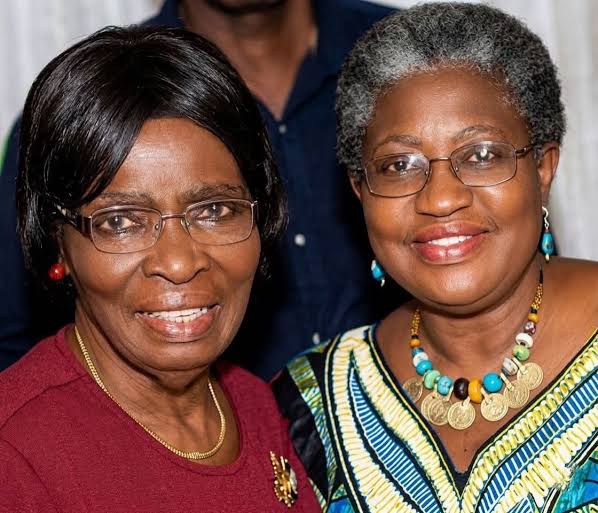
Quote “Professor Kamene Okonjo
Some women leave behind more t
Yet, to remember Professor Kam
Professor Okonjo was the belov
one of the most dramatic chapt
On December 14, 2012, the then
She leaves behind children, gr
Professor Kamene Okonjo deserv
By: Sylvia ThankGod-Amadi

Quote: An African who invokes
This is the concluding part
… Given the fact that I was
At the end of the visit by the
Back to my apartment, at abo
Under normal circumstances, yo
That all she asks is that Chie
For some reason that I do not
I believe that everyone in hu
Our ancestors have not gone fa
By: Jason Osai
The Federal Government’s approval of a N70,000 monthly transport intervention for public service workers for six months, beginning in November 2026, offers hope to employees struggling with the rising cost of living. The agreement with the Nigeria Labour Congress (NLC), reached at a conciliation meeting in Abuja on October 27, is intended to cushion transport costs and ease pressure on workers’ incomes. But for public servants in Rivers State, it raises a familiar question: will the State Government key into the intervention and ensure that its workers benefit? The agreement provides for N70,000 monthly across all levels, for six months. The Federal Government also approved peculiar allowance arrears effective from May 1, 2026, to be paid in three equal instalments beginning in November.
The parties agreed to reconvene after one month to assess implementation. Ultimately, the value of these resolutions will be measured not by announcements but by whether eligible workers receive the money. Transport costs consume a substantial share of many civil servants’ earnings before they can meet household needs. Support for commuting is therefore not a luxury or political favour; it is temporary assistance to help workers remain at their jobs without sinking further into hardship. For lower-paid employees, transport costs can turn modest salaries into a daily exercise in difficult choices and sacrifice.
The agreement also urges State and Local Governments to participate and unions to press for implementation. The federal agreement does not automatically guarantee that every State and Local Government employee will receive the support. State authorities must clarify how it will apply to their workforce, make the necessary arrangements and publish a payment timetable. Rivers State must approach the arrangement with urgency and transparency. The Government should State whether it will implement the intervention and when payments will begin. Any administrative or financial question should be addressed promptly with organised labour, not allowed to become excuses for delay.
The concern is sharpened by the earlier N35,000 monthly wage award introduced by the Federal Government in 2023 after petrol subsidy removal. It was intended as temporary relief pending a new national minimum wage. While several States negotiated and paid wage awards or related sums, implementation nationwide was uneven. Reports in 2024 indicated that many States had failed to pay the federal award, while others provided different amounts. In Rivers, labour and media reports raised concerns about implementation of the N35,000 award for State workers, amid separate announcements and arrangements concerning Local Government employees.
The wage award was meant to ease the immediate effects of subsidy removal, yet workers faced uncertainty over whether the promised relief would reach them. In February 2024, the Rivers State Government announced approval of the N35,000 award for local government workers, but subsequent reports showed that implementation across worker categories remained a concern. The lesson is clear: approval and implementation are not the same. A declaration at a meeting offers little comfort to a worker whose account does not reflect the promised payment. For workers who travel to their offices daily, the implications of delayed support are significant. Transportation expenses compete with food, rent, school fees, healthcare and other essential household needs.
As fares rise, employees may be forced to reduce spending on necessities or borrow to sustain their families. A timely transport intervention would therefore provide practical relief and demonstrate that government understands the economic pressures confronting its workforce. Its temporary nature makes prompt implementation even more important. It is fair to acknowledge that this transport intervention is a new agreement and that its administrative details may require clarification. Rivers State should not be condemned in advance for a failure that has not occurred. Nevertheless, the earlier experience gives workers legitimate grounds to seek assurances before the November commencement date. The State should avoid allowing uncertainty to persist until workers begin asking why the promised assistance has not arrived.
The NLC and unions in Rivers State should engage the State Government immediately and seek a written commitment, an implementation plan and a process for reporting missed payments. If clarification from the Federal Government is needed, the State should seek it without abandoning the goal of providing relief. Labour leaders must also keep members informed about progress and insist that any agreed arrangements are applied fairly and transparently. The Rivers State Government should treat this intervention as an opportunity to rebuild confidence. Timely support would show that workers’ welfare is more than a talking point and that the State recognises the economic realities confronting its employees.
Silence, delay or selective implementation, by contrast, would revive frustration over earlier relief measures and weaken trust between government and labour. Every month lost to administrative delay leaves workers facing the same transport burden without the intended assistance. The State should consult labour, publish arrangements and pay eligible workers on time. Rivers workers should not have to wonder whether federal relief will reach them. The Federal Government has announced the support; now the State must make its position clear. We hope the N70,000 monthly transport intervention will not follow the troubling path of the earlier wage award. Rivers State should learn from that experience and ensure that this time, relief is not merely promised but delivered.
Sylvia ThankGod-Amadi
-
Rivers3 days ago
Don Seeks Repositioning Of Tech Education For Dev
-

 Education3 days ago
PAMO MEDICAL UNIVERSITY -Nullifies Arrest warrant on VC
-
Niger Delta3 days ago
PANDEF Seeks 50% Oil Derivation Allocation Increase
-

 Education3 days ago
IAUE MOVES TO END GHOST WORKERS SYNDROME AS 400 NEW NON-TEACHING STAFF UNDERGO MANDATORY ETHICS TRAINING
-

 News3 days ago
Fresh Ebola Scare As NCDC Records Two Cases
-
News3 days ago
Customs Partners EFCC, NDLEA, Others To Tackle Money Laundering, Terrorism Financing
-
 Politics3 days ago
2027: South-East Govs Insist On Tinubu’s Re-election
-
 Politics3 days ago
2027: RIVERS GUBER CANDIDATES SIGN CHARTER TO PRIORITIZE CITIZENS’ DEMANDS