
Politics
Of Civil Demonstrations, Democracy And The Law

The Federal Government of Nigeria is a state based on the principles of democracy and social justice, where sovereignty belongs to the people.
Civil demonstrations cannot be over emphasised in any state based on the principles of democracy and social justice.
The theory and practice of civil governance all over the world have endorsed and accepted civil demonstration as capstone in civil governance, and as such, ought to be protected and guided jealously. As a non-violent approach used as a feedback from the governed, over the impact of government policies and programmes on the lives of the masses characterise democracy in civilized societies.
Civil demonstrations as it were have suffered tremendous setback in recent times. We shall take a chronicle of different occasions were this important component of democracy was abused and as a result threatened the rule of law in Nigerian evolving democracy.
The Nigerian state have had several cases where the Nigerian police force disrupted the political rallies, for instance on the 22nd day of September, 2003, the police disrupted the rally conveyed by the defunct All Nigerian People’s Party (ANPP) which they justified the disruption by claiming that the organizers of the rally did not obtain police permit.
This reason was not genuine enough for General Mohammadu Buhari as he then was, and other leaders of the party as they quickly seek for justice in a court of competent jurisdiction over the perceived denial of their groups Fundamental right for Assembly and expression in a suit filed at the Federal High Court Abuja, against the then Inspector General of Police, the claimants challenged the provision of the constitutionality of the public order Act relating to police permit. In a thorough examined judgment, the learned trial judge (Justice Chinyere J.) held that the police permit was inconsistent with sections 39 and 40 of the African charter on Human and peoples Right Act (Cap A9) Laws of the federation of Nigeria, 2004.
The appeal filed against the judgment was dismissed. In affirming the decision of the lower court, Olufunmilayo Adekeye (JCA) as he then was, after a critical examination, observed that “A rally or placard carrying demonstration has become a medium of expression of views in current issues with regards to government and the governed in any given sovereign state, that it is the trend recognised and deeply entrenched in the system of governance in civilized societies and that it will not only be primitive but debasing and retrogressive if Nigerians continue to require a police permit before rallies and the civil demonstrations can be held”.
With respect to the epochal judgment of the court of Appeal and the expansion of the democratic space the National Assembly was compelled to amend the electoral Act to facilitate the observance of the people fundamental rights to Freedoms of expression and Assembly. Thus, section 94(4) of electoral Amendment Act, 2001 stipulated that notwithstanding any order or any regulations made there under, or any other law to the contrary, the role of the Nigerian Police Force in political rallies and other nonviolent civil processions shall be limited to the provision of adequate security for the protesters.
Another case of violation of the rights of protesters is the disruption and violent attack on the peaceful rally of “Our Mumu don do group” led by Charley Oputa. It was a violation of section 42 of the federation constitution which has prohibited discrimination on the grounds of public opinions. As democracy admits of freedoms of expression. Therefore, the incessant disruption of public meetings and other forms of civil demonstrations by the police and other security agencies is illegal and unconstitutional and against the progress of any developing democracy, such as the Nigerian state.
Furthermore, in a society where the rule of law is supreme, orders of court are obeyed and adhered to until set aside, for instance, recently in England, the supreme court held that the suspension of parliament was unlawful and the prime minister and other agencies of government complied with the order for parliament to resume, despite country opinions. In the contrary, the Nigerian state has continued to wave or even defy the courts. A typical example is the case of Mr. Omoyele Sowore, the revolutionNow convener, who called for a civil revolution as he could not sit down and watch any longer as the nation continues to fall off in almost all its key areas of survival; such as insecurity, banditry, poverty, unemployment, anti people’s policies and unending terrorism.
Mr. Sowere was detained and charged for treason, in spite of a court order from the Federal High Court, Abuja, which on September 24, 2019 ordered his release. The Department of State Security (D.S.S) insisted and appealed for a higher court to grant him further detention and arraignment, it is unfortunate that the present administration has thrown caution to the wind in disrespecting the rule of law.
In conclusion, may I remind the presidency as well as the Nigerian Police Force that the president of Nigeria, President Mohammadu Buhari had in the recent past taken part in peaceful demonstrations to protest against alleged manipulations of election results and perceived areas of failures of government in the country, and as such, using State Security Agencies to clamp down on peaceful demonstrations such as protests/people revolutions only amounts to adopting military principles into a civil government such as ours, thereby backsliding our democratic progress.
Going forward, Nigerians hope to see the Nigerian State compete with other growing nations and seek to uphold true democratic tenants.
Nigerians hope to see where the rule of law and the fundamental rights of citizens are guaranteed.
Nigerians hope that the security agencies will understand transparency as against impunity in the discharge of executive powers.
In the same vein, the Nigerian police should know that it is a creation of the law and cannot act above the law that created it and cannot therefore, reenact through the back door decree No. 2 and 4 of the Dark Military Era restraining democratic voices.
Oguzie is a civil rights agitator.
Kingdom Oguzie



Prof. Amupitan gave the warning on Saturday, in Port Harcourt, Rivers State, during the South-South Zonal Readiness Assessment and Interactive Staff Engagement organised ahead of the 2027 general elections.
He said insecurity remained a potential challenge to the electoral process but stressed that the Commission would not allow threats against its personnel to undermine its constitutional responsibilities.
“Insecurity may pose a challenge, but our collective constitutional resolve is far stronger. Let me again send a clear message from Port Harcourt: anyone who attempts to threaten, intimidate, or harm our ad-hoc staff, NYSC members, or permanent personnel will be brought to justice under the full weight of the law,” he said.
The INEC Chairman, who was accompanied by National Commissioners, directors and technical aides, disclosed that the South-South engagement was the fifth in a series of zonal assessments, following similar exercises in the South-West, North-West, South-East and North-East.
He explained that his physical presence across the geopolitical zones reflected the Commission’s field-first approach, emphasising that electoral integrity must be established through effective operations at the grassroots.
According to him, the assessment would cover operational preparedness across the 123 Local Government Areas in the six South-South states.
On election security, Prof. Amupitan said INEC had moved away from reactive security arrangements traditionally activated around election day to a proactive, intelligence-driven framework known as the “ICCES Tentacle”.
He explained that the framework was designed to extend inter-agency security coordination from national and state headquarters to local government areas and Registration Area Centres, including remote communities.
He identified three critical pillars of the framework as mapping and mitigating security threats, protecting electoral personnel and infrastructure, and guaranteeing safe access to polling units.
The INEC boss said the security arrangement would provide comprehensive protection for electoral personnel, technological infrastructure, including Bimodal Voter Accreditation System (BVAS) devices and server infrastructure, as well as voters.
He added that the framework was intended to ensure that every polling unit, irrespective of its geographical location or history of security challenges, remained safe and accessible for the exercise of democratic rights.
Prof. Amupitan disclosed that the South-South security architecture comprised approximately 60 major operational formations, headquarters and state commands operating under the Inter-Agency Consultative Committee on Election Security (ICCES).
The network, he said, brings together military, naval, air, police and other security and intelligence agencies across the six states.
“Together, this integrated multi-agency network represents the operational backbone that guarantees intelligence-led protection across every riverine creek, coastal axis, and land-based polling unit in the Niger Delta,” he stated.
Providing an overview of the region’s electoral significance, the INEC Chairman said the South-South had the fourth-largest voting bloc in the country, with 15,823,550 registered voters, representing 15.30 per cent of the national register.
Rivers State alone, he said, accounts for 3,736,434 registered voters spread across the 23 local government areas.
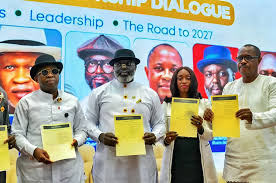
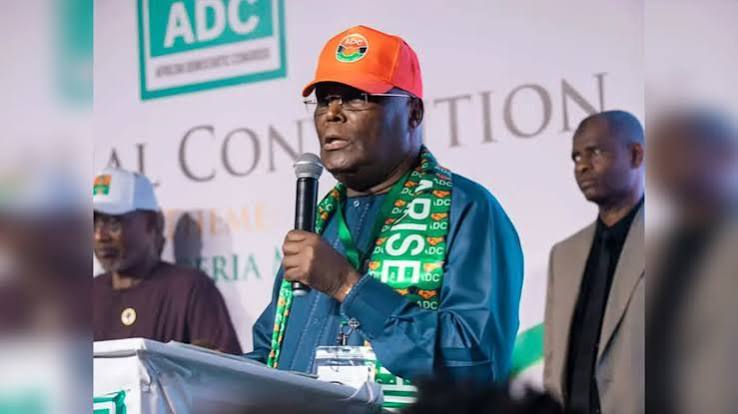
Alhaji Abubakar made the demand following revelations that some INEC registration officers allegedly abused their access to the voter registration system to introduce irregular records into the database.
In a statement issued by his Director of Strategic Communications, Mr Phrank Shaibu, the former vice-president described the development as a serious breach of the Commission’s internal safeguards and raised concerns about the integrity of the electoral process.
He urged INEC to identify the officials implicated in the alleged misconduct and explain what disciplinary or legal measures had been taken against them.
Alhaji Abubakar also called for an independent forensic audit of the preliminary voters’ register to establish the scale of the alleged manipulation, identify affected records and determine how the questionable entries were introduced into the system.
He further insisted that INEC preserve all relevant voter records, image files, system access logs and electronic audit trails to prevent the destruction or alteration of evidence before an independent examination could be conducted.
The former vice-president also demanded that the Commission disclose the identities of companies contracted to produce sensitive election materials ahead of the 2027 polls, arguing that transparency was essential to building public confidence in the electoral process.
INEC’s Director of Information and Communication Technology, Dr Lawrence Bayode, had earlier disclosed during a television interview that some registration officers across the country allegedly used their official login credentials to introduce irregularities into the voters’ database.
Dr Bayode explained that the Commission’s Automated Biometric Identification System helped identify questionable records and establish how some irregularities entered the system.
He, however, clarified that not all suspicious photographs were AI-generated, as some resulted from poor registration procedures.
The development followed public concerns over suspected AI-generated photographs, alleged duplicate entries and other inconsistencies discovered in the preliminary voters’ register published online on October 26, 2026.
INEC has maintained that the published document is a preliminary register and that it is reviewing questionable records ahead of the certification of the final Register of Voters.
The controversy has intensified calls for greater transparency and accountability in the management of the voters’ register as preparations gather momentum for the 2027 general elections.
-
Rivers3 days ago
Don Seeks Repositioning Of Tech Education For Dev
-

 Education3 days ago
PAMO MEDICAL UNIVERSITY -Nullifies Arrest warrant on VC
-
Niger Delta3 days ago
PANDEF Seeks 50% Oil Derivation Allocation Increase
-

 Education3 days ago
IAUE MOVES TO END GHOST WORKERS SYNDROME AS 400 NEW NON-TEACHING STAFF UNDERGO MANDATORY ETHICS TRAINING
-

 News3 days ago
Fresh Ebola Scare As NCDC Records Two Cases
-
News3 days ago
Customs Partners EFCC, NDLEA, Others To Tackle Money Laundering, Terrorism Financing
-
 Politics3 days ago
2027: RIVERS GUBER CANDIDATES SIGN CHARTER TO PRIORITIZE CITIZENS’ DEMANDS
-
 Politics3 days ago
2027: South-East Govs Insist On Tinubu’s Re-election