
Opinion
The Cost Of Women Emancipation

The current clamour for a unisex world by women emancipation apostles all over the world is now a topical issue. The clamour has gained so much ground. Its popularity was made possible by its patronage by the United Nations and some other countries of the world especially the developed world.
Considering a unisex world from human angle might be plausible, but what kind of world is it going to bequeath to us? A world which is completely unisex in which one has to look very closely before knowing whether a human being is a male or female to me is going to be a very strange world full of confusions and negativities.
History has it that a wife’s name was recorded in her husband’s ledger book which made her husband’s property. In those days, the relationship between man and woman was cordial and harmonious. Men were actually the breadwinners, while women of the time used to support their husband in obedience and humility. The warmth of women at home when their husbands return from their daily toils was always felt.
In a nutshell, a deep exploration of available antecedents proves that public life has not been the lots of women. But today, the case is surprisingly different. Modern women today tend to rise from a sudden realisation and have rejected their naturally assistant position. Instead, they opt for public life and have chosen to rub shoulders with men. It is now a popular jingle to hear that whatever a man can do, a woman can do, even better.
Armed with this belief, women are aggressively demanding for equal space in the governance of their various societies. Nigerian women, in order to toe the lines of western women in their agitation, have degenerated to doing things that were hitherto anathema to our moral and cultural values. Nigerian women today are not only involved in politics but want to edge the men out.
It is no longer uncommon to see women attending late night political meetings leaving their husbands at home with children.
For all I know, it is not our culture that a woman becomes a soldier and carries arms, or a police man that runs night duties. I have also never heard where a woman was a taxi driver in the good olden days. But today, we have a lot of them as taxi drivers and bus conductors. That women want to be like men, talk as men, sit as men, dress as men, work as men, think and behave as men, to me portends doom.
Recorded women agitations started in America in the 1840s. in a conference held by women in New York. They called for the amendment of the American Constitution to reflect the existence of women. They argued that the then American Constitution did not recognise women in national life. During this period, American women were disenfranchised and therefore took no part in the politics of America.
In Europe, the German experience gives the picture of women struggle. The Welmer Constitution therefore gave equal political class to both genders. The German women were also granted legal rights to acquire land and own properties. Also in 1970, Britain passed the property act to law which gave British women the right to own properties like their American and German counterparts.
In the fourth international conference held in Beijing China in 1995, women recorded another milestone in their emancipation struggle. Their request for reservation of 30 per cent of positions in governments all over the world was granted.
Nigeria too, during the Second Republic, adopted the U.N. human rights clause through the African Charter on Human and People’s Rights (Ratification and Enforcement) Act and the 1979 Constitution subsequently granted equal rights to all.
There is nothing wrong in granting some rights to women. Women are human beings and so should not be treated otherwise. But the clamour for equality between men and women is unacceptable.
From the Christian point of view, man is older than the woman. God gave man the charge over everything including woman. This makes sex differences a natural factor that cannot be done away with. Unisex world, therefore, is grossly destructive and shamefully anti-nature.
Aristotle, the great Greek philosopher, emphatically stated that the woman is cut out to be rated by man. He stated that the “relationship between the male and the female is naturally that of the superior to the inferior, of the ruler to the ruled”.
Hegel whose works have helped greatly in shaping the human community said inter alia that, the place of the woman is in the home and that the spheres of politics and the state belong to the man.
The intense longing for equality with men by women has grave consequences. We must admit that the moral decadence and chaotic nonsense we are facing today is traceable to this agitation. Today, public and social life has taken women out of their family responsibilities as they struggle to gain a good chunk of the economy. And this has created a yawning gap at home with its great consequences on the children.
If something is not done fast to check the excesses of our women in public life, the brunt will be gross lack of good leaders tomorrow.
Ordy wrote in from Port Harcourt.
John Ordy



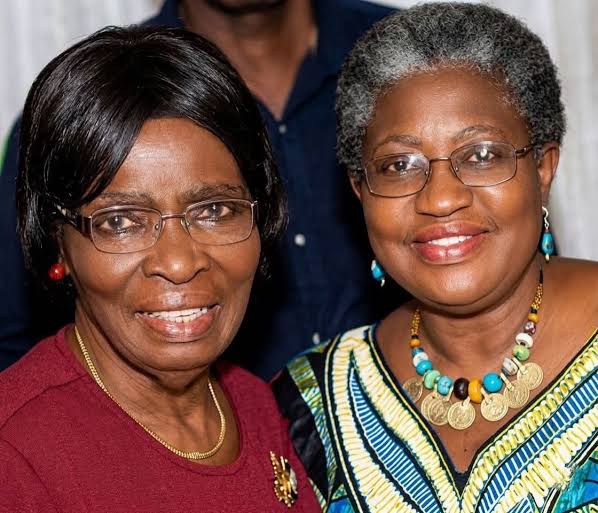
Quote “Professor Kamene Okonjo
Some women leave behind more t
Yet, to remember Professor Kam
Professor Okonjo was the belov
one of the most dramatic chapt
On December 14, 2012, the then
She leaves behind children, gr
Professor Kamene Okonjo deserv
By: Sylvia ThankGod-Amadi

Quote: An African who invokes
This is the concluding part
… Given the fact that I was
At the end of the visit by the
Back to my apartment, at abo
Under normal circumstances, yo
That all she asks is that Chie
For some reason that I do not
I believe that everyone in hu
Our ancestors have not gone fa
By: Jason Osai
The Federal Government’s approval of a N70,000 monthly transport intervention for public service workers for six months, beginning in November 2026, offers hope to employees struggling with the rising cost of living. The agreement with the Nigeria Labour Congress (NLC), reached at a conciliation meeting in Abuja on October 27, is intended to cushion transport costs and ease pressure on workers’ incomes. But for public servants in Rivers State, it raises a familiar question: will the State Government key into the intervention and ensure that its workers benefit? The agreement provides for N70,000 monthly across all levels, for six months. The Federal Government also approved peculiar allowance arrears effective from May 1, 2026, to be paid in three equal instalments beginning in November.
The parties agreed to reconvene after one month to assess implementation. Ultimately, the value of these resolutions will be measured not by announcements but by whether eligible workers receive the money. Transport costs consume a substantial share of many civil servants’ earnings before they can meet household needs. Support for commuting is therefore not a luxury or political favour; it is temporary assistance to help workers remain at their jobs without sinking further into hardship. For lower-paid employees, transport costs can turn modest salaries into a daily exercise in difficult choices and sacrifice.
The agreement also urges State and Local Governments to participate and unions to press for implementation. The federal agreement does not automatically guarantee that every State and Local Government employee will receive the support. State authorities must clarify how it will apply to their workforce, make the necessary arrangements and publish a payment timetable. Rivers State must approach the arrangement with urgency and transparency. The Government should State whether it will implement the intervention and when payments will begin. Any administrative or financial question should be addressed promptly with organised labour, not allowed to become excuses for delay.
The concern is sharpened by the earlier N35,000 monthly wage award introduced by the Federal Government in 2023 after petrol subsidy removal. It was intended as temporary relief pending a new national minimum wage. While several States negotiated and paid wage awards or related sums, implementation nationwide was uneven. Reports in 2024 indicated that many States had failed to pay the federal award, while others provided different amounts. In Rivers, labour and media reports raised concerns about implementation of the N35,000 award for State workers, amid separate announcements and arrangements concerning Local Government employees.
The wage award was meant to ease the immediate effects of subsidy removal, yet workers faced uncertainty over whether the promised relief would reach them. In February 2024, the Rivers State Government announced approval of the N35,000 award for local government workers, but subsequent reports showed that implementation across worker categories remained a concern. The lesson is clear: approval and implementation are not the same. A declaration at a meeting offers little comfort to a worker whose account does not reflect the promised payment. For workers who travel to their offices daily, the implications of delayed support are significant. Transportation expenses compete with food, rent, school fees, healthcare and other essential household needs.
As fares rise, employees may be forced to reduce spending on necessities or borrow to sustain their families. A timely transport intervention would therefore provide practical relief and demonstrate that government understands the economic pressures confronting its workforce. Its temporary nature makes prompt implementation even more important. It is fair to acknowledge that this transport intervention is a new agreement and that its administrative details may require clarification. Rivers State should not be condemned in advance for a failure that has not occurred. Nevertheless, the earlier experience gives workers legitimate grounds to seek assurances before the November commencement date. The State should avoid allowing uncertainty to persist until workers begin asking why the promised assistance has not arrived.
The NLC and unions in Rivers State should engage the State Government immediately and seek a written commitment, an implementation plan and a process for reporting missed payments. If clarification from the Federal Government is needed, the State should seek it without abandoning the goal of providing relief. Labour leaders must also keep members informed about progress and insist that any agreed arrangements are applied fairly and transparently. The Rivers State Government should treat this intervention as an opportunity to rebuild confidence. Timely support would show that workers’ welfare is more than a talking point and that the State recognises the economic realities confronting its employees.
Silence, delay or selective implementation, by contrast, would revive frustration over earlier relief measures and weaken trust between government and labour. Every month lost to administrative delay leaves workers facing the same transport burden without the intended assistance. The State should consult labour, publish arrangements and pay eligible workers on time. Rivers workers should not have to wonder whether federal relief will reach them. The Federal Government has announced the support; now the State must make its position clear. We hope the N70,000 monthly transport intervention will not follow the troubling path of the earlier wage award. Rivers State should learn from that experience and ensure that this time, relief is not merely promised but delivered.
Sylvia ThankGod-Amadi
-
Opinion3 days ago
Ancestorial Worship: My Take (1)
-

 News13 hours ago
Fresh Ebola Scare As NCDC Records Two Cases
-
Niger Delta12 hours ago
PANDEF Seeks 50% Oil Derivation Allocation Increase
-
Rivers10 hours ago
Don Seeks Repositioning Of Tech Education For Dev
-

 Education11 hours ago
PAMO MEDICAL UNIVERSITY -Nullifies Arrest warrant on VC
-
News13 hours ago
Customs Partners EFCC, NDLEA, Others To Tackle Money Laundering, Terrorism Financing
-

 Education11 hours ago
IAUE MOVES TO END GHOST WORKERS SYNDROME AS 400 NEW NON-TEACHING STAFF UNDERGO MANDATORY ETHICS TRAINING
-

 News3 days ago
FG Must Address Nigerians’ Concerns On Reforms -Shettima …Warns Against Misuse of AI, Social Media