
Nation
THE STATES


Bauchi
A non-governmental organisation in Bauchi State,”Save
Bauchi State”, has donated assorted assorted drinks and beverages worth about N200,000 to the family of Late Prime Minister of Nigeria, Sir Abubakar Tafawa Balewa.
Delivering the items, chairman of the organization, Alhaji Zaharadeen Baba-Tako, said he and other members of the organisation were in the family house to pay homage.
He said that the late prime minister could not be easily forgotten considering the role he played both in the struggle for the nation’s independence and political development.
He said that the least the sons and daughters of Bauchi could do in appreciation, was to identify with the family of the deceased leader.
Borno
Governor Kashim Shettima of Borno State has assured
that government would reconstruct structures damaged by Boko Haram terrorists in the liberated border community of Damsak to enable residents return to their normal lives.
He made the promise while addressing some residents in Damasak, headquarters of Mobbar Local Government Area of the state.
The governor, who expressed sadness over the level of destruction by the terrorists, said “it is sad that the lunatics chose to engage in wanton destruction of lives and property in the guise of religion.
“We will strive hard to ensure that all the structures destroyed are reconstructed within our limited resources.”
He said government would conduct a census of the damaged structures to determine the actual figure before embarking on the reconstruction programme.
FCT
WaterAid, an International Organisation, has reiter
ated its commitment to partner government at all levels, especially the Local Government Areas to provide Water, Sanitation and Hygiene (WASH) facilities for Nigerians.
WaterAid made the commitment in its five years strategic plan (2016-2021).
The report stated that the organisation planned to achieve access to WASH for everyone everywhere by 2030,
According to the report, WaterAid works in six focal states of Bauchi, Benue, Enugu, Ekiti, Jigawa and Plateau.
It quoted the organisation’s Country Director, Dr Michael Ojo, as describing the strategy as “ambitious and challenging”, but optimistic about the future.
Gombe
Former Vice President Atiku Abubakar said that Nigeria
and the North East would be at peace when the internally displaced persons returned to their homes.
Speaking at the 20th anniversary celebration of Gombe State in Gombe, Abubakar, who was also the chairman of the occasion, said that complete peace could only be achieved when the displaced persons returned to their homes, farms and businesses.
“There will be complete peace when hospitals and markets reopen. There will be complete peace when children and women are no longer malnourished or when people no longer in fear or traumatised,” he said.
He said that for peace to be sustained in the region, the unquestionable level of poverty, illiteracy and unemployment must be treated as a national emergency.
Kaduna
The Nigeria Union of Teachers (NUT) Kaduna State
branch, said on Monday that it would embark on strike over non payment of entitlements to primary school teachers.
State Chairman of the union, Audu Amba, made this known in an interview with newsmen on the side line of the emergency meeting of the NUT National Executive Council, held in Kaduna.
Amba said the union had exhausted all areas of dialogue with the state government, without getting any positive response.
He said that the state government had failed to settle the Leave Transport Grant (LTG) of primary school teachers since 2015 even though it had been deducted from their salaries.
Kano
The Acting Director-General, Bureau of Public Enter
prises (BPE), Dr Vincent Onome, has commended the management of Kano Electricity Distribution Company (KEDCO) for the steps it has taken to reduce loss.
A statement by KEDCO said Onome was impressed by the minimal Aggregate Technical, Commercial and Collections Loss (ATC&C).
The statement was signed by the Public Relations Officer of KEDCO, Mr Mohammed Kandi.
Onome, the statement said, also applauded the ongoing Geographic Information System (GIS) based customer enumeration exercise being carried out by the Company.
It added that the BPE boss, who was represented by the Deputy Director, Post-Privatisation Monitoring Department, Mr Balogun Omotunde, led the Bureau’s team on inspection exercise to Kano.
Kebbi
The Kebbi State Government has commended President
Muhammadu Buhari for curtailing insecurity in the North-East.
Governor Atiku Bagudu made the commendation in Birnin Kebbi in a statewide broadcast to mark the 56th anniversary of Nigeria’s independence.
Bagudu said this was the first time the nation was celebrating the anniversary devoid of fear and uncertainty.
He said the last six years were characterised by palpable fear and uncertainty due to instances of bomb blasts and explosion in the North-East.
He said determination, commitment, prayers and political will of present Nigeria’s leadership was the factor responsible for decimating the insurgents’ activities in the region.
Kwara
A medical expert in Ilorin, Dr Misbau Lawal, has ad
vised people to imbibe the habit of regular hand washing to avoid contracting viral and bacterial infection of the eye currently spreading .
Our correspondent reports that the infection, known as ‘conjunctivitis’ in medical parlance and ‘appollo’ in local parlance, is inflammation of the conjunctiva, a thin, filmy membrane that covers the white portion of the eyes.
Lawal advised people to keep their hands away from the eyes and thoroughly wash hands before and after applying eye medications on infected children.
Nasarawa
Governor Tanko Al-makura of Nasarawa State has com
miserated with police authority over the death of the Deputy Commissioner of Police in charge of Operations in the state, Mr Usman Sabo-Longlong.
In a condolence message signed on his behalf by his Special Assistant, Media, Tukur Ahmed, the governor described the death of the officer as ‘tragic’.
“The death of the late DCP, Operations, is a great loss, not only to the police family, but the people of the state and the country in general.
“Late police officer was a vibrant, committed and dedicated man, who has contributed immensely in ensuring the security and peaceful development of the state.
Niger
Niger Government has flagged off sales of N183 million
worth of grains at 50 per cent subsidy, to reduce people’s hardship in the current economic recession.
Our Correspodent reports that selling at the subsidised rate will be cheaper than the current market price of grains in the state.
Speaking at the occasion recently, Governor Sani Bello of Niger State, said that the intervention was coming against the persistent hike in prices of food items due to the economic situation in the country.
Bello said that the sales of staple food items at subsidised rates were palliative measures toward easing the high costs of foods across major markets in the state.
“Foods and shelter are considered to be very important things in life. A lot of people have problems in buying foods, especially during festive periods.
“`We feel the pains of our people and that is why we made it a priority to embark on the sale of grains across the 25 local government councils”.
Sokoto
Prof. Lawali Abubakar, Director Centre For Agriculture
and Pastoral Research of the Usmanu Danfodio University, Sokoto has called for the diversification of the economy through huge investment in agriculture and mining.
Abubakar told newsmen in Sokoto that diversification of the economy in the two sectors could tackle poverty and the economic challenges bedevilling the county.
He said that the Federal and state governments should make available farm inputs to farmers between April and June every year at affordable rates to enable them access the commodity in time.
He emphasised that this would prepare ground for farmers to plant various crops and ensure massive production with a view to enhancing food security in the country .
He also called for provision of seeds as well as retraining of agriculture extension workers by experts to properly educate farmers on the new methods and techniques of farming.
Taraba
Over 700 cases involving political parties and the Inde
pendent National Electoral Commission (INEC) are pending in various Nigerian courts.
The National Financial Secretary of Inter-Party Advisory Council of Nigeria (IPAC), Alhaji Shuaibu Bobboi, made this known at a press conference in Jalingo.
According to Bobboi, the cases are between various political parties on one hand, and between the political parties and INEC on the other.
He said that IPAC was working assiduously to seek for out-of-court settlement on majority of the cases.
“ We are working to see that majority of these cases are resolved out-of-court for the sake of unity and democratic development,” he said.
Bobboi, who is also the Returning Officer in IPACs executive’s election in the state, said the organisation was playing a key role in achieving a “balanced relationship between political parties.”



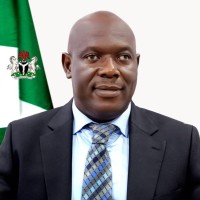
The Hydrocarbon Pollution Remediation Project (HYPREP) has commemorated the 15th anniversary of the release of the United Nations Environment Programme (UNEP) Environmental Assessment Report on Ogoniland, reaffirming its commitment to restoring the environment and improving the livelihoods of affected communities.
In a statement signed by the Project Coordinator, Prof Nenibarini Zabbey, to commemorate the anniversary, HYPREP described the anniversary as a significant milestone in Nigeria’s environmental restoration efforts, noting that the project has made remarkable progress in implementing the recommendations of the landmark UNEP report released on August 4, 2011.
The UNEP report had revealed extensive oil pollution across Ogoniland, severe environmental degradation, and serious public health risks resulting from decades of petroleum operations. It also recommended an initial $1 billion fund to commence the cleanup of the affected communities.
According to HYPREP, the Federal Government formally launched the Ogoni clean-up in 2016, while the Project Coordination Office was established in 2017 to drive the implementation of UNEP’s recommendations.
Zabbey said the current administration has continued to prioritise the project under the Renewed Hope Agenda.
Providing an update on the cleanup, the Project Coordinator disclosed that 30 of the 65 contaminated sites identified by UNEP have been fully remediated, while work is ongoing at several medium- and high-risk locations. It also stated that more than 1.5 million mangrove seedlings have been planted as part of what it described as the world’s largest restoration of oil-degraded mangroves, with over 1,000 hectares of shoreline already rehabilitated.
Zabbey further revealed that 49 Ogoni communities have been connected to potable water schemes through multiple water projects and booster stations aimed at providing safe drinking water across the region.
In the health sector, he said the 100-bed Ogoni Specialist Hospital in Kpite and the 43-bed Cottage Hospital in Buan are nearing completion, adding that several existing health facilities have been upgraded with modern medical equipment, while five ambulances have been donated to improve emergency healthcare services. The Project Coordinator also disclosed that a three-year human health biomonitoring study is being conducted in collaboration with the World Health Organization’s International Agency for Research on Cancer (IARC).
On economic empowerment, Zabbey stated that the Project has created more than 8,000 direct jobs and trained thousands of Ogoni youths and women in various vocational and technical skills, including software development, cybersecurity, aviation, commercial diving, seafaring, mechatronics, and creative arts. The project also reported awarding scholarships to more than 1,000 students, providing grants to small businesses, and supporting persons living with special needs through skills acquisition programmes.
The statement further highlighted ongoing legacy projects, including the Ogoni Power Project and the Centre of Excellence for Environmental Restoration, which it said is about 96 per cent complete. HYPREP also welcomed the recent designation of the Ogoni Wetland as a Ramsar Site of International Importance and pledged to continue promoting biodiversity conservation and sustainable management of the ecosystem.
Marking the anniversary, Zabbey said the progress achieved over the past 15 years demonstrates the collective commitment of government, development partners, stakeholders, and local communities to restoring Ogoniland. He called for renewed collaboration to sustain the cleanup effort, promote environmental sustainability, and support the long-term development of the region. 3
-

 News2 days ago
RSG Targets Nine Million Residents in Mosquito Net Distribution Campaign
-

 Oil & Energy2 days ago
Aiyedatiwa Signs New Electricity Bill
-

 Maritime2 days ago
Marine Minister Commends President Tinubu On NPERA Bill Assent
-

 Oil & Energy2 days ago
NLNG Commissions Research And Innovation Centre In RSU
-

 News2 days ago
KenPoly Holds Eight Convocations, August 29
-

 News2 days ago
RMAFC Completes Revenue Sharing Review, Proposes New Pay
-

 News2 days ago
RSG Begins Another Phase of Projects Commissioning Today
-

 Maritime2 days ago
NAGAFF Petitions IGP Over Alleged Maritime Police Harassment