
Editorial
NBA Confab 2026: Matters Arising

The 66th Annual General Conference of the Nigerian Bar Association (NBA), which held in Port Harcourt, Rivers State, from 21 to 28 August 2026 under the theme “Beyond Limits”, has since been concluded. Thousands of lawyers, judges, policymakers, and other stakeholders had gathered in the Garden City to deliberate on the state of the legal profession, justice, and democratic governance. However, the question that follows is what difference has the conference made to Nigeria?
The question is not that of pertinence or unfairness. The NBA has long convened annual conferences at the expense of millions of naira, resulting in communiqués, resolutions, and lofty declarations on the rule of law, accountability, judicial independence, and corruption. Nevertheless, the ordinary Nigerian still faces a justice system riddled with delays, costs, inaccessible courts, and declining confidence. According to the World Justice Project’s 2025 Rule of Law Index, Nigeria ranks 120 out of 143 countries, although its overall score had improved marginally as compared to the previous score. The statistics should be a concern to the profession.
Therefore, it is time for the NBA to show how the previous conferences have resulted in reforms that strengthened the rule of law, enhanced accountability, and reduced corruption in the judiciary. The Association has repeatedly placed judicial reform, professional ethics, and anti-corruption on the agenda. For example, in 2023, the ICPC publicly urged lawyers to cooperate more closely with anti-corruption agencies and comply with professional obligations regarding dubious financial activities. Nigerians need a clearer account of what happened after the conference lights went out.
The problem is disconcerting as the NBA is not an ordinary professional association. It is one of the country’s foremost pressure groups and occupies a unique position at the intersection of law, government, and citizenship. Its members appear before virtually every important court, advise governments, draft legislation, prosecute and defend cases, and influence public policy. The Association should be an unequivocal check on governmental excesses. Its voice should not only be loud when lawyers’ professional interests are threatened; it should also be audible whenever constitutionalism, human rights, and institutional independence are imperilled.
In this regard, Governor Siminalayi Fubara’s charge at the opening of the conference was salutary and deserves more than polite applause. He reminded lawyers and judges that whatever they do affects the country, urging judges to consider the wider consequences of their judgments and insisting that truth must prevail regardless of the status or social affiliations of litigants. He also warned against undue delays, political manipulation, corruption, rigid technicalities, and outdated precedents that can obstruct access to justice. His main point was that the quality of justice delivered by the courts is inseparable from the quality of national development.
That argument goes to the very raison d’être of the legal profession. Law is not an ornamental institution reserved for courtrooms and legal textbooks; it is the framework through which the government exercises power, citizens assert rights, and institutions settle disputes. Thus, every critical decision of the Bench or the Bar can have ramifications that go beyond the litigants immediately involved. Where judgments are respected and consistently enforced, confidence grows; where justice seems selective, tardy, or susceptible to influence, cynicism flourishes, and the social contract frays.
The present moment makes the NBA’s responsibility even more exigent. When other institutions appear weakened or compromised, lawyers cannot afford to become passive spectators. They should be the nation’s conscience, defending constitutional government without fear or favour. This requires the Association to challenge unlawful executive conduct, scrutinise legislative actions, defend judicial independence, and insist that court orders be obeyed by all, including government officials. The NBA cannot legitimately demand respect for the law from ordinary citizens while it remains reticent when those entrusted with public authority ignore it.
Governor Fubara’s insistence that judges should be neither apologists nor conformists is pertinent. Judicial courage does not mean judicial recklessness and independence does not mean immunity from accountability. What citizens need is a Bench whose decisions are based on law, reason, and integrity rather than political calculations or social connections. The Governor rightly argued that public confidence will improve when judges demonstrate sound knowledge, excellent legal reasoning, courage, and commitment while holding both the government and the governed equally accountable under the Constitution.
The statistics are a sobering indictment of the distance between aspiration and reality. The World Justice Project’s assessment looks at constraints on government powers, absence of corruption, open government, fundamental rights, civil justice, and criminal justice, among other things. Globally, 68 per cent of the 143 jurisdictions assessed declined in rule-of-law performance in 2025, with judicial limits on government power declining in 61 per cent. Nigeria’s marginal improvement is welcome, but its 120th position should hardly inspire complacency.
There is also a lesson in the NBA’s own conduct during the controversy around the 2025 conference. The Association moved the conference from Rivers to Enugu after a declaration of a state of emergency and concerns about constitutional governance. Whatever one’s view of the episode, it demonstrated that the NBA can take a consequential institutional position when it chooses to do so. Hence, its return to Port Harcourt for the 2026 conference should be accompanied by an equally courageous commitment to the principles that informed its earlier stance.
Former Liberian President George Weah reinforced this axiomatic truth in his keynote address. Elections do not sustain democracy, but strong institutions do. He warned that democracy can be weakened not only by military intervention or defeated politicians refusing to surrender power but also by elected governments gradually compromising institutions designed to restrict executive authority. For Nigeria’s lawyers, the message is that the Bar must remain a shield against executive overreach, while the Bench remains sufficiently independent to decide cases according to law rather than political convenience.
“Beyond Limits” must become more than a conference slogan; it must grow into an institutional mandate. The NBA should publish measurable post-conference commitments, report annually on their implementation, monitor critical court and constitutional issues, strengthen legal aid and access to justice, and speak up promptly whenever government’s conduct threatens constitutional order. It should also ask itself whether its conferences are producing sufficient national impact.
Nigerians do not need another eloquent gathering whose resolutions gather dust. They need a Bar that is visible, vigilant, and resolute; a Bench that is independent and incorruptible; and a legal profession prepared to defend democracy not merely in speeches, but in the daily life of the nation. That is the real measure of going beyond limits.


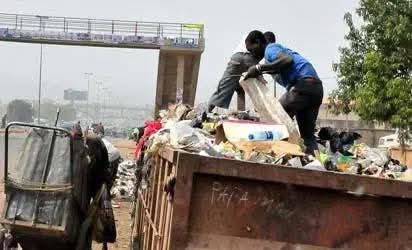
Rivers State is grappling with an unusual and increasingly dangerous adversary. They do not carry guns, nor do they announce their presence with any great fanfare, but the damage they inflict on public infrastructure and private property is proving every bit as costly as more conventional forms of crime. Many now refer to them as silent terrorists — men and women who strip bridges, drains, and homes of anything that can be exchanged for cash at a scrapyard. What was once dismissed as a nuisance has hardened into a genuine threat to public safety, and it deserves the full attention of those charged with governing the state.
These itinerant scrap collectors, widely known on the streets as “iron condemn,” have moved well beyond their original trade of gathering discarded metal and household refuse. Driven largely by hardship, rogue operators now roam freely through Port Harcourt and Obio/Akpor, and their activities have shifted from harmless salvage to outright vandalism of public assets. Manhole covers vanish overnight. Wire mesh is stripped from bridges. In some instances, these characters have also been accused of serving as lookouts for more serious criminal enterprises, lending their apparent innocence to darker purposes.
Social commentators across the state have not minced their words, describing the phenomenon as a fresh strain of economic terrorism visited upon ordinary citizens. Their argument is a compelling one: infrastructure paid for with public funds is being quietly dismantled, piece by piece, while those responsible melt back into the crowd before anyone can react. Consequently, there have been repeated calls for governments at every tier to reinforce security around the installations most likely to attract these scavengers, before more of the state’s assets are lost to the scrap dealer’s scale.
What makes this menace particularly disingenuous is how ordinary its perpetrators appear. Pushing carts or dragging sacks, they blend into the everyday bustle of the city, arousing little suspicion until the damage is discovered. Bridges have been left structurally weakened, road furniture damaged beyond easy repair, manhole covers stripped from major roads, rail tracks compromised, drainage systems rendered useless, and electrical installations left exposed to the elements and to further theft. Each of these represents not merely an inconvenience but a genuine hazard to motorists, pedestrians, and residents alike.
Nor do these individuals confine themselves to public property. Homes across the state have been invaded and stripped of gas cylinders, generators, ceiling fans, handrails, and window and door metal frames. The pattern of their movements is rarely virtuous; there is method, and often menace, behind it. Some have taken to prising manhole covers from the roads specifically to sell them on to iron smelters elsewhere in the country, where the metal is melted down and recycled into other products. In doing so, they have become, in the truest sense, a danger to the society that once tolerated their presence.
Their impact on the physical environment is scarcely less troubling. Scavengers descend upon refuse dumps and leave them in disarray, tearing open bags of waste that had been properly sorted and disposed of, scattering the contents across roads and drainage channels. What was meant to be a tidy, managed process of waste collection instead becomes another source of filth and blockage, undermining the very sanitation efforts the state government has invested in.
The scale of the damage this behaviour can cause was laid bare recently in a disturbing video that circulated widely on social media, showing scavengers dismantling a bridge linking Festac Town and Alakija in Lagos. The footage showed them breaking into the structure’s concrete pillars to extract the iron rods and steel reinforcements buried within — components essential to the bridge’s structural integrity. Although the incident occurred outside Rivers State, it stands as a dyed-in-the-wool warning of what unchecked scavenging can ultimately do to critical infrastructure, and Rivers cannot afford to wait for a similar calamity before acting.
Understandably, some communities have already taken matters into their own hands, barring scavengers from entering their neighbourhoods altogether. Reports suggest that many of these operators can turn confrontational when challenged, and there have been troubling accounts of violence associated with their activities. Beyond the immediate safety concerns, the informal dumps some scavengers have established have visibly defaced parts of Port Harcourt, compounding the city’s existing environmental difficulties.
Given all this, the moment has surely arrived for the Rivers State Government to step in decisively, either to regulate the trade or to curtail it outright where it cannot be safely managed. The economic argument for tolerating informal scavenging is easily outweighed by the criminal tendencies it has come to harbour and the environmental hazards it continues to generate.
Nigeria’s poverty statistics help explain, without excusing, why so many are drawn into this line of work. The National Bureau of Statistics has found that roughly 40 per cent of the population, some 83 million people, live below the national poverty line, while 63 per cent of Nigerians, around 133 million people, were classified as multidimensionally poor in the 2022 National Multidimensional Poverty Index survey. Desperation of that magnitude will always find an outlet, and scavenging has become one of the more visible ones in Port Harcourt.
It has also been observed that the ranks of scavengers in the state capital appear to swell month on month, as newcomers arrive and quickly join their peers already established in the trade. This steady influx has made the problem harder to contain through piecemeal, reactive policing, and points instead to the need for a coordinated registration and monitoring system that can distinguish legitimate waste pickers from those with more sinister intent.
Complicating matters further, some of these individuals go about their business in a manner deliberately designed to resemble that of genuine refuse disposal personnel, complete with carts and sacks that mimic official waste collection equipment. The dangers this disguise can conceal were illustrated by a deeply unsettling episode, where a scavenger was intercepted with a child hidden inside a refuse cart before fleeing the scene, abandoning his equipment in the process. That such a case could occur at all should alarm every parent and guardian in Rivers State, and it underlines why scrutiny of anyone operating under the guise of waste collection can no longer be treated as optional.
If scavenging is to continue in any form, it must be brought under proper control. Operators should be required to confine their activities to designated dumpsites within the city rather than being left free to roam residential streets, construction sites, and public infrastructure at will. Rivers State can licence, monitor, and confine this trade to where it belongs; what has been missing is the determination to do so. The longer it is withheld, the more bridges, drains, and homes will be quietly stripped bare, and the greater the risk that the next viral video of infrastructural vandalism will be filmed not in Lagos, but in Port Harcourt itself.
-
Sports1 hour ago
Edo Queens Emerge WAFU B Champions, Qualify For CAF WCL
-
Sports1 hour ago
African V’Ball: Amaka Paul Emerges 4th Best Scorer
-
 Metro5 days ago
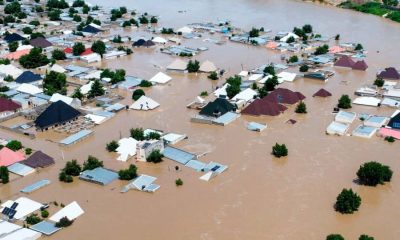
From Himalayan Ice to Niger Delta Floods: How Melting Glaciers Will Reshape Nigeria’s Coastline
-
Business58 minutes ago
FG Seek Stronger Collaboration Among Government Agencies
-
Sports2 hours ago
Nigerian Female Keeper Joins Crystal Palace
-
Rivers39 minutes ago
PR, Tool For Mutual Relationship With Public – NSCDC Boss
-
Sports2 hours ago
D’Tigress suffer defeat in 2026 FIBA World Cup opener
-
Sports1 hour ago
Shooting stars edge CS Sfaxien 1-0 in CAF confederation cup