Connect with us

Editorial

Checkmating ‘One-Chance’ Menaces In PH

Published

on

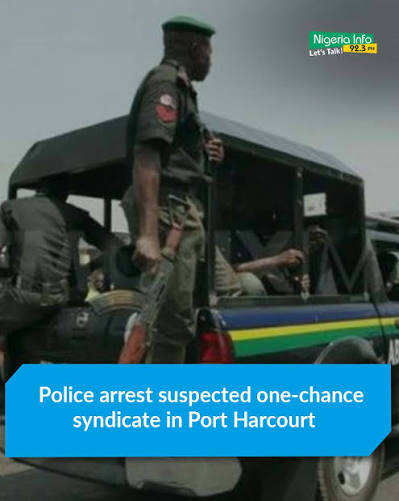
The dramatic apprehension of three suspected ‘one-chance’ robbers at Rumuosi Junction in Port Harcourt offers both relief and a sober nudge. According to the Rivers State Police Command’s spokesperson, ASP Blessing Agabe, the syndicate’s vehicle was intercepted by courageous residents after a trapped passenger raised an alarm. One victim had already been thrown from the moving minibus, while another cried for help, prompting a chase that ended at Rumuekini Junction where an enraged mob set the operational bus ablaze before operatives of the Nigeria Police, Choba Division intervened. The suspects, who reportedly confessed to the crime, were taken into custody.
But this single success cannot mask a deeply entrenched crisis. ‘One-chance’ operations have become alarmingly rampant in the Garden City, evolving from isolated incidents into a daily nightmare for commuters. Only lately, a nurse with the University of Port Harcourt Teaching Hospital was abducted right before the UPTH gate upon boarding a commercial vehicle after close of work. Her ordeal is no longer an exception but a pattern that has instilled palpable fear amongst many who depend on public transport for their livelihood.
The lamentations are loudest around the University of Port Harcourt axis and its environs. In recent months, several students and lecturers have reported being dispossessed of phones, laptops, and cash along the Choba, Alakahia, and Aluu routes. A postgraduate student had recounted losing her tuition fee inside a supposedly commercial bus at Rumuosi, while a trader at Choba market was pushed out of a moving vehicle and sustained severe injuries. These recurring episodes have turned routine commuting into a gamble with safety.
What makes this criminal enterprise particularly insidious is its elaborate deception. The syndicates have perfected a guise of legitimacy. Their operational vehicles often contain accomplices disguised as market women, nursing mothers, who act as decoys to lure unsuspecting passengers. They occupy strategic seats, feign normal conversations, and create a false sense of security. After an unsuspecting commuter boards, the victim is robbed and assaulted before being ejected from the moving bus. Others are abducted to unknown destinations where they are held for ransom, and in the most tragic cases, killed.
Even more disconcerting is the shifting demography of the perpetrators. Contrary to the archetypal image of male street urchins, there is now a disturbingly high rate of female involvement in these robberies, either as active robbers or as collaborators who provide the all-important veneer of innocence. The most vulnerable targets appear to be women themselves, particularly petty traders and workers who set out for business between 5 and 6 a.m. when the streets are still dim. They are routinely robbed, brutalised, and shoved out of moving vehicles, often before the day has truly begun.
It was this accumulated public fury that triggered the near-lynching at Rumuosi. As a stakeholder in the community, Joseph Owhortee, rightly noted, the mob’s rage was inflamed by the yet-unresolved killing of a community member, Nkiruka Jennifer Ihunda, in a previous ‘one-chance’ incident. While jungle justice can never be condoned, its recurrence signals a dangerous erosion of public confidence in formal law enforcement. When citizens feel compelled to become enforcers, it is a damning verdict on the protective capacity of the state.
That verdict is made starker by the visible presence of numerous police checkpoints across Port Harcourt. Commuters legitimately question how these criminals operate with such impunity despite security barricades at almost every major intersection. A major part of the answer, sadly, lies in compromised enforcement. Too often, stop-and-search operations appear to prioritise pecuniary gains over diligent scrutiny. It is disheartening that operatives routinely allow vehicles with heavily tinted glasses to pass without proper checks, swayed by monetary inducements or assumptions about the personality inside. In doing so, they unwittingly provide a safe passage for felons.
The scale of this threat is corroborated by credible data. According to the National Bureau of Statistics’ Crime Experience and Security Perception Survey 2024, 31.6 per cent of Nigerians who reported being victims of robbery experienced it inside or around public commercial transport. Similarly, a 2023 report by SBM Intelligence on urban crime in Port Harcourt indicated that transport-related robbery accounted for 27 per cent of all reported street crimes in the city, with 62 per cent of incidents occurring between 5:00 a.m. and 9:00 p.m. The Rivers State Police Command itself, in its end-of-year briefing in December 2024, acknowledged 89 reported cases of ‘one-chance’ robbery in the metropolis alone. These figures, likely under-reported, underscore that we are confronting a full-blown emergency.
The police must, therefore, sit up and adopt a more strategic posture. Beefing up security cannot be generic; it must be intelligence-led and focused on designated hotspots where these syndicates thrive. Areas such as Elelenwo, Airforce Junction, Peter Odili Road, Eleme Junction, Rumuokoro Roundabout, and the entire East-West Road stretch from Rumuosi to Choba have become notorious corridors for this menace. Constant, unpredictable patrols, plain-clothes surveillance at these flashpoints, and thorough, non-discriminatory vehicle searches are non-negotiable.
Intelligence gathering remains the weakest link. If the Command had responded proactively to the deluge of complaints from residents, especially those plying the UNIPORT and Eleme areas, the situation would not have deteriorated to this frightening level. The police have enough human sources to map the operational routes, identify the ringleaders, and infiltrate the networks. What is required is seriousness in apprehending and dismantling these gangs rather than merely reacting after an alarm is raised.
Beyond policing, there is an urgent need for regulatory action by the Rivers State Government. The profiling of all commercial vehicle owners and operators has become imperative for easy identification and tracing. The long-proposed policy compelling all commercial vehicles, including buses and taxis, to be painted in the official Rivers colours of blue-white-blue must finally be enforced. Several attempts by previous administrations faltered due to lack of political will. This administration must muster the courage to implement it. Uniform colouration, with bold registration numbers on the body, would enable commuters to distinguish genuine commercial motors from criminal contraptions at a glance.
Public enlightenment is vital. Law enforcement agencies should carry out sustained sensitisation on the kind of vehicles commuters should board and the warning signs to watch for while also providing functional emergency numbers for swift response during attacks. Simultaneously, communities should be encouraged and properly supervised to establish vigilante groups to complement police efforts in their localities. The rescue at Rumuosi Junction proves that vigilant citizens can make a difference, but they should not have to replace the police. A synergy of professional policing, responsible governance, and security-conscious citizenry may be the way to finally checkmate this scourge.
Continue Reading

Editorial

Restructure the UN Power Arrangement

Published

on

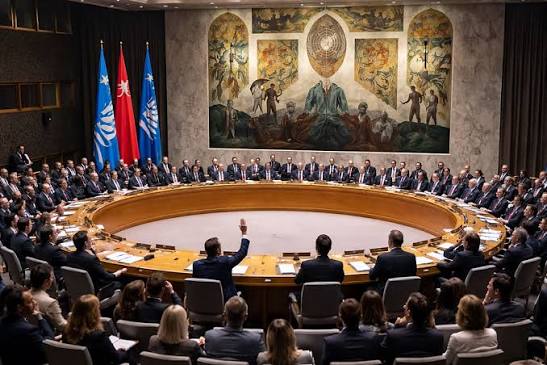
When Vice-President Kashim Shettima rose in New York on behalf of President Bola Tinubu to address the general debate of the 81st session of the United Nations General Assembly, he carried a message that Africa has whispered, petitioned and pleaded for far too long: the world’s highest table of peace and security must make room for the continent. Nigeria’s demand is unambiguous: at least two permanent seats for Africa on the Security Council, with full rights, including the veto, alongside five non-permanent seats. It is a demand that deserves a fair hearing and a decisive response.
The President’s argument rests on a simple proposition: the architecture erected in 1945 cannot credibly govern the world of 2026. Reform of the United Nations, he insisted, must begin with the Security Council, where African representation remains grossly inadequate. Nigeria’s position, he reminded delegates, is anchored in the Ezulwini Consensus and the Sirte Declaration, which together articulate the African Union’s common position on Security Council reform. His most compelling point was also his simplest: Africa cannot continue to dominate the Council’s agenda while remaining absent from its permanent membership.
Consider how exclusive the club remains. Since the organisation’s founding, only five countries—the United States, the United Kingdom, France, Russia, which inherited the Soviet Union’s seat, and China—have held permanent membership, with the privilege of the veto. When the UN Charter entered into force, the United Nations had 51 member states; today, it has 193. The organisation’s membership has nearly quadrupled, yet its inner sanctum has admitted no new permanent member in eight decades. A body that refuses to evolve invites the charge that it remains a monument to the victors of a long-concluded war.
The imbalance becomes even more striking when viewed through the lens of geography. Europe has two permanent seats held by European states, while Asia has one held by China. The United States holds another, and Russia, whose territory spans Europe and Asia, occupies the fifth. Africa, home to 54 countries and more than a quarter of the General Assembly’s membership, has none. We are entitled to ask why the historical circumstances of 1945 should continue to determine who sits permanently at the head of the table in the third decade of the twenty-first century.
The irony is bitter. According to Security Council Report, an independent monitoring organisation, Africa accounts for a substantial share of the Council’s formal meetings, while many of its peacekeeping and Chapter VII enforcement mandates concern African states. The Council, in effect, helps determine the fate of African nations without a permanent African voice in its deliberations. To make decisions with far-reaching consequences for a continent while excluding it from permanent decision-making is unjust, outdated and corrosive of the very legitimacy the Council claims.
Nor does the existing arrangement for African participation offer much consolation. Three non-permanent seats are allocated to Africa, but their occupants serve two-year terms, have no veto and enjoy no guaranteed continuity. The so-called A3 must repeatedly learn the corridors of power just as their tenure expires, while the permanent five enjoy continuity, influence and the power to block decisions. How can the United Nations credibly claim to represent the world equitably when an entire continent is excluded from permanent membership? If it is truly a global institution, Africa must have a seat at the table as of right, not at the discretion of others.
Demography reinforces the case. Africa is home to about 1.5 billion people, roughly a fifth of humanity, and its share of the global population is projected to rise. Nigeria, the continent’s most populous country, has an estimated population of more than 230 million and a long record of contributing to peacekeeping and regional stabilisation. Africa’s permanent representatives must be chosen through a process that reflects the continent’s collective interests, and Nigeria, by virtue of its population, diplomatic standing and record of service, is well placed to be considered for one of the two seats. We, therefore, endorse the Federal Government’s position that Africa should have at least two permanent seats on the Security Council.
The vexed question of the veto deserves equal candour. Our considered view is that the veto should be abolished. Where four members agree, a single dissenting voice should not be allowed to frustrate the will of the majority. Time and again, the veto has paralysed the Council in the face of atrocities and aggression, turning deliberation into deadlock and undermining collective action.
The African Union’s formal position is pragmatic: if the veto is abolished for all, so be it; but for as long as it survives, Africa must not be saddled with second-class membership without the same privilege. This is a logical and defensible position, even if the complete abolition of the veto remains the more desirable goal.
The lopsided composition of the Council helps explain why the international community has struggled to make meaningful progress on some of the world’s gravest conflicts. A chamber in which a handful of powers pursue their strategic interests, with limited accountability to the regions most affected by its decisions, can hardly be described as democratic. Legitimacy is the currency of any international institution. When that legitimacy is squandered, confidence in the Council’s decisions weakens, and the cause of multilateralism suffers.
Several practical steps should follow. First, Abuja and the African Union must speak with one voice, agreeing on the criteria for selecting Africa’s representatives and establishing a credible process for identifying candidates for the two seats. This would prevent internal divisions from being exploited by opponents of reform. Second, Nigeria should build alliances beyond the continent, notably with Brazil, Germany, India and Japan, as well as Caribbean and Pacific states that share an interest in reforming the international system. Third, Nigeria must continue to strengthen its credentials through sustained contributions to peacekeeping, sound democratic governance, and timely financial contributions to international institutions.
The Security Council was fashioned for a world that has long since vanished. To pretend otherwise is to court irrelevance. Africa is asking not for charity but for representation commensurate with its population, its responsibilities and its potential. Reform is long overdue, and the international community can no longer afford to ignore the issue. President Tinubu has set out Nigeria’s case with clarity; it is now incumbent on the major powers to demonstrate that the United Nations is a community of nations, not a private club reserved for the victors of a bygone era. History will judge them by how seriously and swiftly they respond.
Continue Reading

Editorial

Time To Resolve The Pension Crisis In Rivers

Published

on

The prolonged suffering of Rivers State pensioners who have remained unpaid since retiring in July 2025 demands urgent executive and legislative intervention. The Nigeria Labour Congress (NLC) has rightly put its finger on the Contributory Pension Scheme (CPS) as the root cause of this crisis. The state government must now bite the bullet, dismantle this failed experiment, and bring the pensioners’ protracted ordeal to an end.

Since July 2025, the affected retirees have been left high and dry, their monthly pensions unpaid, and their dignity worn away. The NLC, under the leadership of Comrade Alex Agwuanwon, has also linked this deplorable situation to the political storm that engulfed the state, while expressing cautious optimism that the prevailing calm will pave the way for the payment of outstanding arrears. The Tide shares that optimism. However, optimism alone will not put food on the table for men and women who gave the best years of their lives to the service of the state.

The genesis of this crisis is not shrouded in mystery. The CPS was introduced in Rivers State in 2012 under the administration of former Governor Chibuike Rotimi Amaechi, pursuant to the Rivers State Pension Reform Law of that year. The scheme was ostensibly designed to bring the state into line with the federal Pension Reform Act of 2004, which had established a contributory framework for retirement benefits across the country. What was sold as a progressive reform has, in truth, become a millstone round the neck of the very workers it was meant to protect.

The CPS has failed in the state, and it has failed spectacularly. Its fundamental flaw lies in the government’s chronic inability, or unwillingness, to honour its counterpart funding obligations. The arrangement was meant to be a joint endeavour: employees contribute a portion of their salaries, and the employer matches it. But the state has consistently failed to keep its side of the bargain, leaving the pension fund anaemic and unable to meet its obligations. The result is as predictable as it is unconscionable. Retirees are left with only their own contributions to fall back on, a mere pittance that cannot see them through their twilight years.

The human cost of this institutional failure is staggering. Men and women who devoted decades to the civil service now find themselves cast adrift, their legitimate expectation of a secure retirement shattered. The psychological toll of such betrayal is beyond measure. A pension is not an act of charity. It is a contractual obligation, a deferred wage for services already rendered. To withhold it is to break a sacred trust. The authorities must understand that every delay in resolving this crisis costs lives, both in the literal sense as elderly retirees struggle to pay for healthcare and sustenance, and in the figurative sense as the social contract between the state and its workforce wears thinner with each passing month.

This development does not show the government in a favourable light. For a state to allow people who served it with dedication and integrity to languish in penury after retirement is morally indefensible. It sends a chilling message to serving civil servants that loyalty will be repaid with abandonment. This is precisely why organised labour must not rest on its oars. The NLC’s call for the termination of the CPS is not mere grandstanding. It is a necessary corrective. The scheme, as presently administered, is irredeemably broken and must be done away with.

The most damning indictment of the CPS since its inception is its one-sidedness. The government has failed to pay its counterpart funding, reducing the scheme to a hollow shell. Of what use is a contributory arrangement when only one party contributes? Retirees cannot be expected to live on the meagre sums they themselves set aside, sums which have been steadily eroded by inflation and administrative charges. Workers have been short-changed, left to carry the can while the government looked the other way. It is a quiet expropriation of their future.

The time to put this right is now in the interest of justice, equity, and fairness. The NLC should push harder for the swift implementation of its committee’s report to Governor Siminalayi Fubara. That report contains a sensible and pragmatic recommendation: that the CPS should apply only to those employed in the year it was enacted, thereby allowing existing civil servants to remain under the Defined Benefit Scheme (DBS) to which they were originally entitled. This is not a radical proposal. It is a reasonable compromise that recognises the legitimate expectations of long-serving workers and rights the wrongs of the past.

The authorities must act with dispatch. Governor Fubara should, without further ado, send a draft amendment of the Pension Law to the House of Assembly for passage into law. With such legislative intervention, those who retired from July 2025 to date would be returned to the DBS, receiving pensions calculated on their terminal salaries and years of service rather than the paltry sums available under the failed contributory arrangement. The NLC, for its part, should keep its foot on the pedal through dialogue, advocacy, and, if necessary, peaceful protest. Pensioners deserve not just fine words but concrete action.

Rivers State cannot lay claim to be progressive while its retirees are forced to go cap in hand for their rightful entitlements. The measure of any civilised society is how it treats its elderly. By that yardstick, the present situation is a blot on the state’s escutcheon. The government must clear the backlog of arrears, scrap the CPS for the category of workers it should never have applied to, and restore the DBS in full. Nothing less will suffice.
Continue Reading

Editorial

Forestalling Ondo Herbal Drink Tragedy

Published

on

The recent public health disaster in Ondo State, which claimed 48 lives and left 182 people severely ill, is a gloomy reminder of the dangers posed by unregulated beverages. According to NAFDAC Director-General, Prof. Mojisola Adeyeye, the victims consumed contaminated local alcoholic and herbal drinks in communities in Odigbo Local Government Area. The drinks contained high levels of industrial methanol, while 11 of 15 samples also contained Cannabis indica. The substances were linked to organ failure, neurological deterioration, and permanent blindness. The tragedy should serve as a warning to the entire country.

The incident underscores the wider problem of unregulated and adulterated drinks across Nigeria. From roadside kiosks and motor parks to informal markets, unverified alcoholic and herbal products are readily available, often marketed as cheap alternatives or medicines. The World Health Organisation estimates that about 25 per cent of alcohol consumed globally is unrecorded. Such products operate outside formal regulatory control and may expose consumers to toxic substances and serious health risks.

The problem is compounded by deliberate evasion of regulatory requirements. Products under NAFDAC’s mandate must be registered and subjected to regulatory checks before manufacture, distribution, or sale. Yet some producers ignore these requirements for profit, while others falsify NAFDAC registration numbers and markings and use them on substandard products. Such practices deceive consumers and undermine public confidence in the regulatory system.

The reported arrest of 15 suspects linked to the Ondo distribution network is an important first step. Those found responsible should be prosecuted and, where convicted, appropriately punished. However, enforcement must go beyond responding to tragedies. NAFDAC should strengthen preventive measures through regular post-market surveillance, random testing at transit points, and intelligence-led inspections of informal production centres.

Consumers also have a responsibility to exercise caution. Economic hardship, high inflation, and declining purchasing power have created opportunities for unscrupulous producers to market cheaper but potentially dangerous products. Consumers should, therefore, avoid unlabelled drinks, suspiciously cheap products, and goods sold through unverified outlets. Public education and consumer vigilance can help deny unscrupulous traders the opportunity to put profit before human life.

The danger extends beyond alcoholic and herbal drinks to medicines. Counterfeit and substandard medicines have entered both formal and informal supply chains, causing treatment failure, poisoning, and avoidable deaths. The WHO estimates that at least one in 10 medicines in low and middle-income countries is substandard or falsified, although the prevalence varies. Ensuring the safety and authenticity of medicines is essential to protecting lives and maintaining confidence in the healthcare system.

Food safety is another concern. Poor practices in food handling, processing, and preservation expose consumers to serious health risks, particularly when commercial interests override safety. Concerns over the improper use of chemical agents such as calcium carbide to accelerate the ripening of fruits further demonstrate the need for stronger monitoring throughout the food-supply chain.

These challenges expose weaknesses in Nigeria’s regulatory system and reinforce the need to strengthen it. NAFDAC faces the enormous task of monitoring products across all 774 local government areas. Meeting this challenge requires greater operational capacity, reduced bureaucratic delays, and modern systems capable of tracking regulated products from production to the point of sale.

Inadequate personnel, laboratory facilities, equipment, and logistics remain major obstacles. NAFDAC field offices, especially those serving remote communities, need modern testing equipment, reliable screening tools, and adequate transportation. The Federal Government should provide sustained funding to recruit specialised personnel, upgrade laboratories, and deploy technologies capable of rapidly detecting dangerous substances such as methanol.

Preventing the spread of adulterated products also requires coordinated action by federal and state governments. The Federal Ministry of Health, NAFDAC, and other relevant agencies should intensify operations to remove unregistered alcoholic and herbal products from motor parks, transit centres, and informal markets. The National Assembly should review existing laws and strengthen penalties for deliberately producing, falsifying, or distributing toxic and unregistered food, beverages, and medicines.

NAFDAC should expand its digital verification systems to enable consumers to confirm product registration before purchase. State ministries of health, local government councils, and community institutions should intensify grassroots education on the dangers of unlabelled drinks, unsafe food practices, and counterfeit medicines. Traditional, religious, and community leaders can also help identify and report illegal production and distribution activities.

The Ondo tragedy must not become another statistic that is quickly forgotten. The loss of 48 lives and the permanent blindness suffered by some survivors are devastating and unacceptable. Nigeria must respond by strengthening regulatory institutions, providing adequate funding, enforcing the law, and educating the public. A sustained, coordinated effort is essential to protect the nation’s food, beverage, and medicine supply chains and prevent another tragedy caused by products that should never have reached the market.

Continue Reading

Trending