
Editorial
Confronting Scavengers’ Threat in Rivers

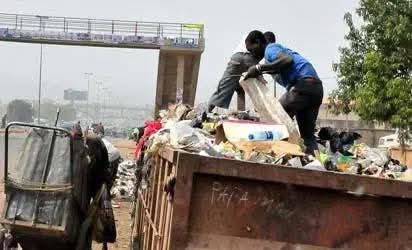
Rivers State is grappling with an unusual and increasingly dangerous adversary. They do not carry guns, nor do they announce their presence with any great fanfare, but the damage they inflict on public infrastructure and private property is proving every bit as costly as more conventional forms of crime. Many now refer to them as silent terrorists — men and women who strip bridges, drains, and homes of anything that can be exchanged for cash at a scrapyard. What was once dismissed as a nuisance has hardened into a genuine threat to public safety, and it deserves the full attention of those charged with governing the state.
These itinerant scrap collectors, widely known on the streets as “iron condemn,” have moved well beyond their original trade of gathering discarded metal and household refuse. Driven largely by hardship, rogue operators now roam freely through Port Harcourt and Obio/Akpor, and their activities have shifted from harmless salvage to outright vandalism of public assets. Manhole covers vanish overnight. Wire mesh is stripped from bridges. In some instances, these characters have also been accused of serving as lookouts for more serious criminal enterprises, lending their apparent innocence to darker purposes.
Social commentators across the state have not minced their words, describing the phenomenon as a fresh strain of economic terrorism visited upon ordinary citizens. Their argument is a compelling one: infrastructure paid for with public funds is being quietly dismantled, piece by piece, while those responsible melt back into the crowd before anyone can react. Consequently, there have been repeated calls for governments at every tier to reinforce security around the installations most likely to attract these scavengers, before more of the state’s assets are lost to the scrap dealer’s scale.
What makes this menace particularly disingenuous is how ordinary its perpetrators appear. Pushing carts or dragging sacks, they blend into the everyday bustle of the city, arousing little suspicion until the damage is discovered. Bridges have been left structurally weakened, road furniture damaged beyond easy repair, manhole covers stripped from major roads, rail tracks compromised, drainage systems rendered useless, and electrical installations left exposed to the elements and to further theft. Each of these represents not merely an inconvenience but a genuine hazard to motorists, pedestrians, and residents alike.
Nor do these individuals confine themselves to public property. Homes across the state have been invaded and stripped of gas cylinders, generators, ceiling fans, handrails, and window and door metal frames. The pattern of their movements is rarely virtuous; there is method, and often menace, behind it. Some have taken to prising manhole covers from the roads specifically to sell them on to iron smelters elsewhere in the country, where the metal is melted down and recycled into other products. In doing so, they have become, in the truest sense, a danger to the society that once tolerated their presence.
Their impact on the physical environment is scarcely less troubling. Scavengers descend upon refuse dumps and leave them in disarray, tearing open bags of waste that had been properly sorted and disposed of, scattering the contents across roads and drainage channels. What was meant to be a tidy, managed process of waste collection instead becomes another source of filth and blockage, undermining the very sanitation efforts the state government has invested in.
The scale of the damage this behaviour can cause was laid bare recently in a disturbing video that circulated widely on social media, showing scavengers dismantling a bridge linking Festac Town and Alakija in Lagos. The footage showed them breaking into the structure’s concrete pillars to extract the iron rods and steel reinforcements buried within — components essential to the bridge’s structural integrity. Although the incident occurred outside Rivers State, it stands as a dyed-in-the-wool warning of what unchecked scavenging can ultimately do to critical infrastructure, and Rivers cannot afford to wait for a similar calamity before acting.
Understandably, some communities have already taken matters into their own hands, barring scavengers from entering their neighbourhoods altogether. Reports suggest that many of these operators can turn confrontational when challenged, and there have been troubling accounts of violence associated with their activities. Beyond the immediate safety concerns, the informal dumps some scavengers have established have visibly defaced parts of Port Harcourt, compounding the city’s existing environmental difficulties.
Given all this, the moment has surely arrived for the Rivers State Government to step in decisively, either to regulate the trade or to curtail it outright where it cannot be safely managed. The economic argument for tolerating informal scavenging is easily outweighed by the criminal tendencies it has come to harbour and the environmental hazards it continues to generate.
Nigeria’s poverty statistics help explain, without excusing, why so many are drawn into this line of work. The National Bureau of Statistics has found that roughly 40 per cent of the population, some 83 million people, live below the national poverty line, while 63 per cent of Nigerians, around 133 million people, were classified as multidimensionally poor in the 2022 National Multidimensional Poverty Index survey. Desperation of that magnitude will always find an outlet, and scavenging has become one of the more visible ones in Port Harcourt.
It has also been observed that the ranks of scavengers in the state capital appear to swell month on month, as newcomers arrive and quickly join their peers already established in the trade. This steady influx has made the problem harder to contain through piecemeal, reactive policing, and points instead to the need for a coordinated registration and monitoring system that can distinguish legitimate waste pickers from those with more sinister intent.
Complicating matters further, some of these individuals go about their business in a manner deliberately designed to resemble that of genuine refuse disposal personnel, complete with carts and sacks that mimic official waste collection equipment. The dangers this disguise can conceal were illustrated by a deeply unsettling episode, where a scavenger was intercepted with a child hidden inside a refuse cart before fleeing the scene, abandoning his equipment in the process. That such a case could occur at all should alarm every parent and guardian in Rivers State, and it underlines why scrutiny of anyone operating under the guise of waste collection can no longer be treated as optional.
If scavenging is to continue in any form, it must be brought under proper control. Operators should be required to confine their activities to designated dumpsites within the city rather than being left free to roam residential streets, construction sites, and public infrastructure at will. Rivers State can licence, monitor, and confine this trade to where it belongs; what has been missing is the determination to do so. The longer it is withheld, the more bridges, drains, and homes will be quietly stripped bare, and the greater the risk that the next viral video of infrastructural vandalism will be filmed not in Lagos, but in Port Harcourt itself.


There are moments in the life of a legislature when plain speaking becomes a public service. Senator Adams Oshiomhole provided such a moment on the floor of the Senate when he accused the Minister of Works, Senator David Umahi, of manifestly neglecting critical federal arteries in Edo and Delta States, and implored his colleagues to prevail on the Minister to adopt a more equitable and genuinely national approach to road infrastructure delivery. It was blunt, it was uncomfortable, and it was necessary.
The specifics of his complaint deserve restating. Drawing attention to the recent approval of some 20 new road projects despite the parlous state of existing ones, the former Edo State governor lamented that Nigerians cannot travel from Benin to Warri, Benin to Asaba, Benin to Auchi, or Auchi to Okene without encountering severe distress. He alleged a deliberate omission of these corridors from the national budget in the last three years, save for palliative interventions directed by President Bola Tinubu through tax credit arrangements. His question — “What have we done wrong?” — resonates far beyond the chambers of the National Assembly.
We lend our full and unequivocal support to that call. The Auchi-Benin Road, for instance, has been in a deplorable and near-impassable condition for several years, turning what should be a two-hour journey into an all-day ordeal of broken axles, extortionate fares, and despondent commuters. The media have, on multiple occasions, chronicled the suffering of motorists, traders, and students who ply that route. To describe it as a federal road today is to stretch the meaning of the term beyond recognition.
This pattern of sidelining is not confined to Edo or Delta. Even here in Rivers State, the disposition of the Federal Ministry of Works has left much to be desired, particularly along the Eleme axis of the East-West Road. That road, which ought to be a flagship of federal presence in the Niger Delta, has remained in a wretched state for long. Those who use it daily — workers at the Eleme Petrochemical Complex, the two refineries, Onne Port, and the countless ancillary industries — can attest to its deterioration. Work has proceeded in fits and starts without the sustained urgency such a strategic road demands.
The Eleme stretch is not a mere intra-state byway. It is the gateway to the nation’s economic jugular. According to the Federal Ministry of Works and Housing’s 2023 Highway Condition Survey, only about 35 per cent of the country’s 36,000 kilometres of federal roads are rated as being in good or fair condition, with the remainder classified as poor or very poor. The East-West Road, conceived in the 1970s to bind the entire Niger Delta, remains unfinished in critical sections more than four decades after. If it had been treated as a priority, the perennial gridlock, carnage, and economic loss on the Eleme-Refinery junction would have long been consigned to history.
The irony is as painful as it is glaring. The Niger Delta remains the goose that lays the golden eggs. Data from the Nigeria Extractive Industries Transparency Initiative [NEITI 2023 Oil and Gas Audit] show that the region still accounts for over 78 per cent of Nigeria’s federally collected export earnings and about 65 per cent of total government revenue. The National Bureau of Statistics [NBS Foreign Trade Report Q4 2024] similarly confirms that crude oil continues to dominate export receipts. By every metric of equity and economic logic, a region that sustains the national purse deserves first-rate consideration in the allocation of infrastructure, not afterthoughts and tokenism.
Road infrastructure is not largesse to be dispensed by favour; it is the skeleton upon which commerce, cohesion, and citizenship hang. When contracts are concentrated in one geopolitical zone while other zones are left to contend with craters, it erodes trust in the federation itself. The World Bank’s Nigeria Development Update [June 2023] estimated that poor transport connectivity inflates the cost of moving goods by up to 40 per cent and costs the Nigerian economy an estimated $1.5 billion annually in lost man-hours and vehicle maintenance. If we profess to be one country, then equity must be the compass that guides key institutions before any project is executed. Development must spread round, not pool in one place as though other regions do not matter.
There is also a grave security dimension that can no longer be ignored. The deplorable condition of federal roads has become a veritable enabler of criminality. The NBS Crime Experience and Security Perception Survey reported over 2.5 million incidents of kidnapping-related occurrences nationally, with transport workers identifying bad road spots as prime ambush points. When vehicles are forced to crawl at 10 kilometres per hour through failed sections at Auchi, Sapele Road, or Eleme, they become sitting ducks for armed gangs. Fixing bad roads, therefore, is not merely about convenience; it is about safeguarding lives.
By his intervention, Senator Oshiomhole has hit the nail on the head and reminded Minister Umahi of a fundamental constitutional truth: public office is held in trust. The Ministry of Works is not a personal estate where contracts are awarded according to whim or political convenience. It is a national institution funded by the collective resources of Nigerians, including the oil and gas rents from the very communities whose roads are now neglected. The Minister must demonstrate balance, transparency, and a pan-Nigerian outlook in the distribution of projects that impact the daily existence of citizens. Selective neglect breeds suspicion, and suspicion is corrosive at a time when the nation is preaching unity, oneness, equity, and justice.
Consequently, the National Assembly must go beyond rhetoric and assert its oversight powers with vigour. Sections 88 and 89 of the 1999 Constitution [as amended] empower the legislature to investigate and expose any maladministration in the execution of federal projects. If an office holder is not acting rightly, it is the duty of the Senate and the House of Representatives to call him to order. Oversight must not be reduced to budget approval ceremonies; it must translate to field verification, public hearings, and insistence that the Federal Character principle, as enshrined in Section 14(3) of the Constitution, reflects in road awards.
Let the Auchi-Okene, Benin-Warri, Benin-Asaba, and Eleme East-West gangways be restored to motorable dignity. Let priority be given to completing existing, economically vital roads before embarking on new ones. If those who, through their resources, sustain the federation are sidelined in the distribution of tangible dividends, it tells poorly of our nationhood. Bad roads must be fixed, and they must be fixed now, with fairness as the guiding standard.
-
 Business37 seconds ago
Manufacturers Pay N74.5bn Tax As Reforms Offer Relief
-
Rivers1 hour ago
Belema Community Voids Power Of Attorney Claim
-
 News2 hours ago
FG Expresses Concern Over Political Crisis In Niger Republic
-
 Business20 minutes ago
RMAFC, NEITI deepen collaboration on revenue transparency
-
News2 hours ago
Inadequate Infrastructure Worries Kenpoly –Rector
-

 Business40 seconds ago
ACCI advocates private sector inclusivity to revitalise enterprises
-
 News2 hours ago
NDLEA intercepts N6.2bn drugs hidden in Ghana soap, opioids at Lagos airport
-
 Business39 seconds ago
NCC Pushes Local Tech Investment To Cut Imports