
Business
Manufacturers Pay N74.5bn Tax As Reforms Offer Relief

Saturday PUNCH found that N74.48bn paid by manufacturers accounted for 13.82 per cent of the N538.91bn total local Company Income Tax collected during the period, according to data from the National Bureau of Statistics.
However, the sector’s tax remittance fell by 30.98 per cent year-on-year from N107.90bn in Q1 2025, highlighting the changing tax landscape as the four new tax laws introduced a simplified framework for businesses from January 1, 2026.
The Federal Government and the Manufacturers Association of Nigeria agree that the reforms should ensure that manufacturers meet their tax obligations without facing the multiple assessments, levies and administrative costs that previously burdened the productive sector.
Following a recent presentation to manufacturers, the Executive Secretary of the Joint Revenue Board, Olusegun Adesokan, said the new tax framework fundamentally changed manufacturers’ position within the tax system.
“The new law reframes the Nigerian manufacturer from an endlessly assessed target to a protected taxpayer. The law provides stronger safeguards than ever before. Our shared responsibility is to ensure these safeguards are consistently applied across every level of government,” Adesokan said.
He urged manufacturers to hold valid Tax Identification Numbers, maintain accurate records, file employees’ returns on time, pay undisputed assessments and raise valid objections where necessary.
Adesokan also urged manufacturers to comply with the Model Taxes and Levies Law, reject cash transactions for tax payments and use available dispute-resolution channels.
“The success of tax reform will ultimately be measured not by the taxes we impose, but by the businesses we enable to grow, the jobs we enable to create, and the prosperity we enable to share,” he said.
He said the four new tax laws had created an opportunity to reposition taxation as a strategic tool for growing the productive sector.
“In more recent times, the issue of tax has generated a lot of attention, both from the government and the private sector. And the four new tax laws that took effect from 1st of January 2026 have so far been a bigger platform for engaging and for deciding whether tax should support productivity or it should continue to burden the productive sector,” Ajayi-Kadir said.
He said manufacturers previously paid between 120 and 160 taxes and levies, which increased operating costs and created uncertainty for businesses.
The MAN DG said the Tax Ombud would provide manufacturers with a formal avenue for resolving disputes over assessments and other tax-related grievances.
“And we have a recourse in the tax ombudsman where we can address our grievances, our disagreements, and we’ll be sure to have a dispassionate settlement,” he said.


The Executive Vice Chairman of the NCC, Dr Aminu Maida, made the call last week at the closing ceremony of the fourth NCC Hackathon Live Show in Abuja, where innovators showcased technology solutions targeted at persons with disabilities and other digitally excluded Nigerians.
Maida, who was represented by the Executive Commissioner, Stakeholder Management, Rimini Makama, said Nigeria must move from being largely dependent on imported software to developing technologies tailored to local needs.
“Through this hackathon, we are transforming Nigeria from a passive importer of foreign software into a creator of locally engineered assistive technology that serves the ability of all its citizens,” he said.
He added that the solutions developed at the hackathon, ranging from artificial intelligence-powered speech-to-text technologies to voice-enabled public platforms, accessible USSD solutions and inclusive mobile applications, represented building blocks for technological self-reliance.
“By investing in a homegrown, universally accessible codebase, we guarantee Nigeria’s digital economy remains operational, secure, affordable, and responsive to Nigeria’s realities, immune to external shocks,” Maida said.
The NCC boss further urged venture capitalists, telecommunications operators and state governments to provide the investment and partnerships required to move the innovations beyond prototypes.
“We ask you not to view these innovators as contestants, but as future founders, future partners, and future vendors,” he said. “We encourage you to step forward, invest in these accessible prototypes, and help us remove digital exclusion.”
Maida said the need for locally relevant technologies had become more urgent because millions of Nigerians remained at risk of exclusion as economic and social activities increasingly moved online.
Citing World Bank estimates, he said about 25 million Nigerians experience at least one form of disability, while approximately 3.6 million experience significant difficulties in functioning.
He added that persons with disabilities could be excluded not only from connectivity but also from education, employment, financial services, healthcare and participation in society if digital products were not designed with accessibility in mind.
Representing MTN Nigeria, the Senior Manager, Strategy and Innovation, Chinyelu Chikwendu, pledged the telecom operator’s support for the innovators, saying the company was willing to provide infrastructure and explore partnerships with startups whose technologies aligned with its operations.
“We are happy to support your growth. We are happy to support these beautiful ideas that you are all working on, and we are here to help you with the various infrastructures that we have,” Chikwendu said.
She said MTN had infrastructure and platforms that startups could leverage to scale their products, including cloud services, its data centre and API marketplace.
Chikwendu also invited the 20 innovators who participated in the hackathon to apply for the company’s next Cloud Accelerator Programme, which provides startups with mentorship, funding and infrastructure support.
Also speaking, Amadi Kenneth of the Central Bank of Nigeria’s Consumer Protection and Financial Inclusion Department said the apex bank saw opportunities to deploy some of the innovations to expand financial inclusion.
“We want to see that the excluded Nigerians are brought into the financial system,” he said, identifying women, youths, persons with disabilities and people in remote communities as priority groups.
Kenneth said the CBN would collaborate with the NCC and could invite some participants to its Digital Channel Working Group to examine how their applications could support financial inclusion.
The NCC Director of Digital Economy, Helen Obi, said the commission expected the partnerships emerging from the event to help innovators scale their technologies beyond the competition.
She also urged financial institutions to consider dedicated funding for young innovators, saying, “Youths need to be encouraged. Let’s begin to have a huge fund projected for this sector of the economy.”
At the end of the competition, Sora emerged winner and received N3m, while ClearSignal won N2m in second place and Ikor received N1m for finishing third. The three were selected from five finalists, which also included Aditus and Axol.
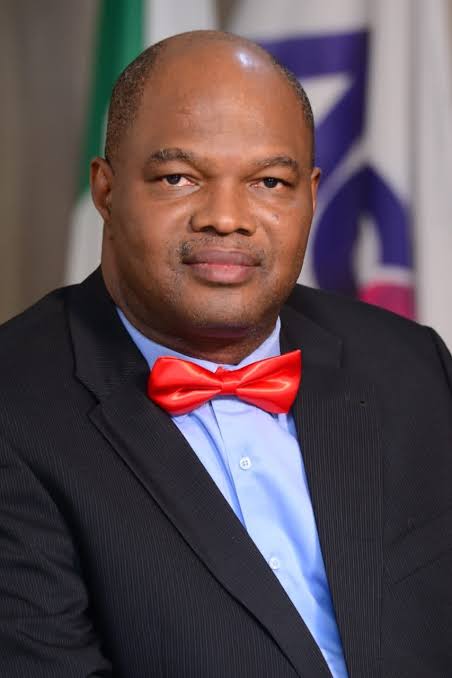
Jideani said that collaboration between government and private investors was critical to restoring viable state-owned enterprises, while calling for comprehensive reforms and professional management to revive the sector.
According to him, stronger private-sector participation through PPPs will strongly support the reviving of the viable enterprises.
“The revival required treating the enterprises as economic assets that must be commercially viable, professionally managed and accountable for results,” he said.
The director-general also recommended comprehensive audits to determine the enterprises’ financial positions, assets, liabilities, infrastructure conditions, market potential and reasons for their decline.
He said that the government should classify enterprises based on their strategic importance, commercial viability and the need for restructuring or repurposing.
He suggested that viable enterprises should undergo recapitalisation, debt restructuring, technology upgrades and rehabilitation of critical infrastructure to restore their productive capacity.
He emphasised the need for strong corporate governance and professional management, with boards appointed based on competence, integrity and relevant industry experience.
Jideani, however, called for clear and measurable performance targets, adding that management should enjoy operational autonomy while remaining accountable for productivity and service delivery.
“Operating challenges, including unreliable power, inadequate infrastructure, regulatory bottlenecks and limited access to finance, must be addressed.
“The reviving of the enterprise should go beyond government funding to include corporate restructuring, technology, innovation, access to finance, competitive markets and accountability.
The ACCI D-G described PPPs as an important instrument for reviving viable enterprises where government lacked sufficient capital, technology or managerial expertise.
He noted that the PPPs arrangement should involve clearly defined responsibilities, risks, rewards and performance obligations for both government and private investors.
He said various PPPs models could be considered, including management contracts, leases, concessions, joint ventures and strategic equity partnerships.
He added that the appropriate model should depend on the nature, strategic importance and commercial potential of each enterprise.
He said Nigeria could learn from Asian economies by pursuing consistent industrial policies, investing in infrastructure and human capital, promoting manufacturing and strengthening enterprise competitiveness.
The director-general added that Nigeria’s enterprise revival should form part of a broader industrial transformation agenda focused on productivity, technology, local value addition and global competitiveness.
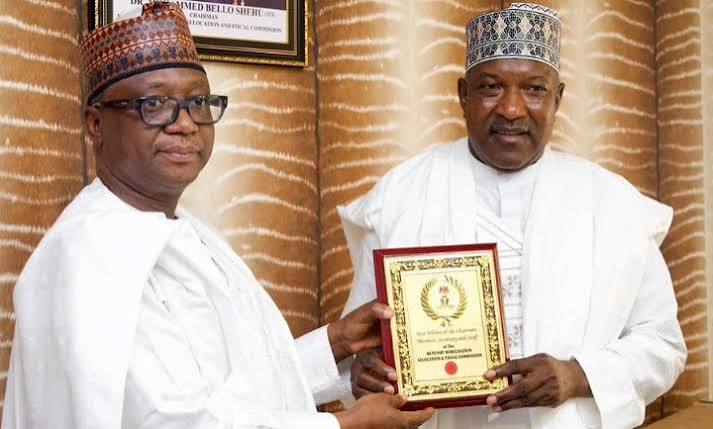
The RMAFC Chairman, Dr Mohammed Shehu, said this when NEITI Executive Secretary, Mr Musa Adar, paid him a courtesy visit in Abuja on Friday.
Shehu said that the partnership would improve revenue monitoring, transparency and accountability in Nigeria’s extractive industries.
He described the longstanding partnership between RMAFC and NEITI as strategic and mutually beneficial to both institutions and the country.
He commended NEITI for providing credible information on operations and financial flows in the extractive industries, adding that its efforts had strengthened accountability.
According to him, NEITI’s work had also improved public understanding of Nigeria’s extractive sector and promoted openness in managing the country’s natural resources.
Shehu said NEITI had earned a strong reputation through efforts to uncover facts, reconcile information and promote transparency in the extractive industries.
He expressed hope that NEITI’s international partners would continue to support its capacity in information gathering, data verification, revenue transparency and accountability.
The RMAFC chairman assured NEITI of the commission’s continued support and openness to collaboration in data sharing, research, revenue monitoring and policy engagement.
He congratulated Adar on his appointment as NEITI executive secretary, describing it as well deserved and expressing confidence in his leadership.
“Your experience, competence and diligence will contribute to greater achievements in promoting transparency and accountability in Nigeria’s extractive sector,” he said.
In his remarks, Adar described the relationship between NEITI and RMAFC as a longstanding partnership built on transparency, accountability and improved revenue mobilisation.
The NEITI executive secretary said both institutions needed to strengthen the partnership to achieve greater impact in revenue monitoring, resource governance and accountability.
He highlighted RMAFC’s role in monitoring revenues accruing to the Federation Account and advising on measures to improve revenue collection and accountability.
Adar said reliable information on revenues from oil, gas and mining activities was essential for fiscal management, public accountability and informed decision-making.
According to him, NEITI’s independent reconciliation of financial and physical flows provides useful data on revenues, payments, production, exports and company activities.
“NEITI’s reports can support RMAFC’s work in revenue monitoring, verification, policy analysis and developing measures to improve revenue mobilisation,” he said.
He highlighted Nigeria’s presence at the ongoing 2026 Extractive Industries Transparency Initiative (EITI) implementation, under the 2023 EITI Standard, describing it as an opportunity to demonstrate measurable progress in strengthening governance across the industries.
Adar invited RMAFC to participate in the Global EITI Conference scheduled for Oct. 8 and Oct. 9 in Brussels, Belgium.
He called for stronger collaboration among NEITI, RMAFC and other institutions in data sharing, revenue mobilisation, research, capacity building and policy dialogue.
-

 News2 hours ago
Flood Sacks Okachalla Community As Residents Seek Govt Intervention
-

 News2 hours ago
Jonathan, Obi Of Onitsha To Attend Opobo Monarch’s Coronation
-
 News2 hours ago
Take Action Over Xenophobic Attacks In S’Africa, Tinubu Tells AU
-
Rivers1 hour ago
AWLA Seeks Renewed Recognition, Support For Women
-
 News2 hours ago
Fubara Scores Double On Health, Unveils New General Hospital
-
Rivers1 hour ago
Stakeholders Chart Course For Nigeria’s Oil, Gas Industry
-

 News2 hours ago
2027: My Legacy Projects ‘ll Give APC Advantage In Rivers -Fubara …Commissions 14.5km Agba-Ndele Road, Bridge
-
Rivers1 hour ago
Ogoni Dialogue Committee Denies Role In 40 NNPCL Jobs, Contract Awards