Connect with us

Opinion

What Do Nigerians Want?

Published

on

Quote:” … that is a vicious cycle; government provides, vandals destroy, government repairs, and citizens pay again.”
Sometimes, one is forced to ask a painful question: What exactly do Nigerians want? We complain when the government fails to provide infrastructure. We demand good roads, functional hospitals, electricity, railways, bridges, water and other public amenities. But when these facilities are eventually provided, some Nigerians turn around to steal, vandalize, destroy or misuse them. So, what exactly do we want? The contradiction is disturbing. Recently, a report stated that Sa’ad Abdullahi, an APC member of the Nasarawa State House of Assembly representing Umaisha/Ugya Constituency, donated 50 ceiling fans, 40 standing fans and 50 orthopedic mattresses to Umaisha General Hospital in Toto Local Government Area. According to the report, when he returned to the hospital a few days later for a follow-up visit, he discovered that all the items had allegedly been sold.
If the report is accurate, it is simply outrageous. A hospital is supposed to serve the sick, particularly poor Nigerians who cannot afford expensive private healthcare. How can equipment donated to improve healthcare delivery suddenly become somebody’s merchandise? And this is not an isolated case. A video currently circulating on social media shows a man raising the alarm over the alleged theft of bolts from the First Niger Bridge. We have also seen reports of people breaking concrete pavements to remove iron rods. Railway components such as bolts, nuts, clips and fish plates have reportedly been stolen in different parts of the country. Electrical cables and wires are also routinely stolen, disrupting electricity supply and sometimes exposing entire communities to danger. Then there are manhole covers. In many cities across the country, stealing manhole covers has become so common that it hardly generates outrage anymore.
 Yet an uncovered manhole can become a death trap. A pedestrian, cyclist, motorcyclist or driver could plunge into one at night and suffer serious injury or even death. Why do we keep doing this to ourselves? Perhaps the person stealing a bridge bolt thinks it is only a small piece of metal. The person removing a railway component may think it is just another piece of scrap. The person stealing an electricity cable may see only the money he will make from selling it. But public infrastructure does not work that way. A single missing bolt may appear insignificant, but hundreds of missing components can compromise the integrity of a structure. Tampering with railway tracks can cause derailments and mass casualties. Stealing electricity cables can disrupt power supply and cause electrocution. Removing iron rods from public structures can weaken them.
Infrastructure vandalism is therefore not ordinary theft. It is a crime against human life. What is even more disturbing is that those who engage in these acts often steal from facilities they themselves complain are inadequate. We complain about poor healthcare, yet hospital equipment is stolen. We complain about bad roads, yet drainage infrastructure is vandalized. We complain about insecurity, yet streetlights and electricity installations are destroyed. We complain about poor transportation, yet railway infrastructure is vandalized. We complain about government waste, yet public property is treated as though it belongs to nobody. This mentality must change. Government property is not really “government property”. It is our property. It is paid for with public funds. When a public facility is destroyed, taxpayers ultimately pay for its repair or replacement.
 Every vandalized facility means money that could have been used to build something new must instead be spent replacing what we already had. That is a vicious cycle: government provides, vandals destroy, government repairs, and citizens pay again. Of course, poverty is often cited as a reason for stealing public infrastructure. Poverty is real, and the economic hardship confronting many citizens cannot be ignored. But poverty cannot justify an action that deliberately endangers the lives of others. A hungry man stealing food is one thing. A person removing a bolt from a bridge or railway track, knowing that its absence could cause an accident, is something entirely different. There must be a line between economic hardship and criminality. Government must also take enforcement seriously. Those caught vandalizing critical infrastructure should face the full consequences of the law.
But enforcement must not stop with the person physically removing the material. Who bought it? Who financed the operation? Where was it taken? Who is making money from the trade? There is often a market behind every stolen piece of infrastructure. Scrap dealers and other buyers who knowingly purchase stolen government property must therefore be investigated and held accountable. If there is no buyer, there will be little incentive for the vandal. Technology can also help. Critical infrastructure such as bridges, railway lines and electricity installations should, where practicable, be protected with surveillance cameras, alarms and other monitoring systems. Regular inspections should be carried out to identify missing or damaged components before they become hazards. Engineers should equally explore practical anti-vandalism measures, including securing vulnerable bridge and railway components in ways that make unauthorised removal more difficult.
But the government cannot do everything. Citizens must become the first line of defence. Community leaders, traditional rulers, religious organisations, youth groups, transport unions and residents’ associations should encourage people to report suspicious activities. Nobody should watch someone dismantling a public facility and simply walk away because “it is government property”. It is not. It is our property. If we want good infrastructure, we must protect it. If we want functional hospitals, we must safeguard their equipment. If we want safe roads, bridges and railways, we must stop stealing their vital components. And perhaps, before asking what the government can do for Nigerians, we should also ask ourselves: What are we doing to protect what belongs to all of us?
By: Calista Ezeaku

Continue Reading

Opinion

Life’s Strange Sense of Humour

Published

on

Quote:”We come with nothing. We fight for everything. We leave with nothing”. 
Life has a strange sense of humour. It welcomes us into the world empty-handed, places us in a battlefield called survival and, after all our struggles, eventually escorts us out almost exactly as we came—with nothing. Between those two points lies the drama of human existence: ambition, love, loss, greed, pride, fear, hope, disappointment and regret. We arrive naked, helpless and owning nothing. We have no certificates, titles, bank accounts, houses, cars, followers or enemies. Yet, almost immediately, life begins to measure us. By the time we learn to walk, we are being compared. By the time we learn to speak, expectations are already being placed upon us. As we grow older, the race becomes more intense. We begin to chase education, employment, money, recognition, influence and power. First, we fight for food. Then we fight for comfort.
We fight for education, jobs and promotions. We fight for relevance and recognition. We fight to build businesses, acquire property and secure our children’s future. There is nothing inherently wrong with ambition. Indeed, the desire to improve one’s circumstances is part of what drives human progress.The problem begins when the pursuit of success becomes the purpose of existence. Some people sacrifice their peace for wealth. Others sacrifice family for political power, friendships for influence and integrity for material gain. In the race to become somebody, they forget that they were already somebody before they acquired the things they are desperately trying to possess. Ironically, the more we acquire, the more complicated life can become. Wealth may bring comfort, but it can also bring anxiety about protecting what has been accumulated.
Power can bring influence, but it may also produce suspicion and loneliness. Fame can bring applause, but applause is temporary. Even success can attract people whose interest is not in the person but in what the person possesses. We build large houses, sometimes bigger than our actual needs. We acquire several vehicles, accumulate properties and protect our possessions with security. We spend years gathering things that may eventually outlive us. And still, we keep running. We run even when the body is tired. We continue competing when the soul is exhausted. We chase approval from people who may not remember our names tomorrow. Society often teaches us to equate possession with achievement and busyness with importance. We are sometimes made to feel that slowing down is failure and contentment is a sign of weakness.
But life eventually asks a question that money cannot answer: What was the purpose of all the chasing? One day, the race ends. Death is the great equaliser. It does not negotiate with billionaires or beggars. It does not ask about political office, academic degrees, social-media followers, family connections or bank balances. Before death, the distinctions we spend our lives protecting become remarkably insignificant. The powerful and powerless eventually return to the same earth. The rich and poor ultimately face the same silence. The hands that spent years accumulating possessions eventually become empty. That is life’s strange sense of humour. We spend decades fighting to possess things we cannot take with us. This does not mean that wealth, education, career advancement or material success are meaningless. They are valuable and can make life better for ourselves and others.
The issue is what we do with them and what they do to us. A wealthy person who uses his resources to transform lives has achieved something greater than mere accumulation. A person in authority who uses power to serve rather than oppress has created a legacy. A successful professional who opens doors for others has made success meaningful. In the end, what matters most is not merely what we had but what we did. How many people did we encourage when they were discouraged? How many lives did we touch? How many people did we lift instead of crush? How many hungry mouths did we feed? How many broken hearts did we help heal? How many people became better because they encountered us? These are the questions that possessions cannot answer. Life is not ultimately remembered by the size of our houses but by the warmth of our hearts.
Not by the number of titles before our names but by the testimonies behind our names. Not by the wealth we accumulated but by the worth we demonstrated. Kindness costs little, but its memory can last for generations. Integrity cannot be deposited in a bank, yet it can become a priceless inheritance. Love occupies no physical space, yet it can outlive the person who gave it. Perhaps, therefore, the wisest way to live is to pursue success without becoming enslaved by it; to acquire wealth without allowing wealth to acquire us; to seek influence without losing humility; and to build a future without forgetting to live in the present. Tomorrow is waiting, but tomorrow is not guaranteed. So, while we are here, let us build, but let us also give. Let us succeed, but let us also serve. Let us acquire but  let us remember to share. Let us pursue our dreams, but let us not sacrifice the people who make life worth living.
Life is funny, not because it is meaningless, but because we often misunderstand its meaning. We come with nothing. We fight for everything. We leave with nothing. The real question is not how much we will leave behind in material possessions, but what kind of footprints we will leave behind in human hearts.That is the legacy that matters.
By: Sylvia ThankGod-Amadi
Continue Reading

Opinion

One Attack Too Many 

Published

on

Quote: “Ogoniland does not need leaders competing over who can destroy another’s platform; it needs leaders competing over who can create more opportunities, empower youths and build a better future.”

The latest attack by Chief Gani Topba on the President of KAGOTE and Chief Executive Officer of Giolee Global Resources Ltd, Chief Lesi Maol, appears to have opened another troubling chapter in the politics of leadership and influence in Ogoniland. While disagreements are inevitable, the frequency and manner of attacks directed at individuals or organisations contributing to Ogoni development should concern every stakeholder. The concluded extraordinary meeting of Ogoni stakeholders in Bori was convened to deliberate on challenges confronting the people, including insecurity, farmers-herders clashes, youth disunity, education and development. It also considered harmonising the numerous youth organisations operating across Ogoniland under a strong and representative umbrella capable of giving Ogoni youths a more coordinated voice. One would have expected such an initiative to attract constructive contributions, especially from those with reservations about it.

Instead, the gathering and its organisers have come under criticism, raising a fundamental question: what exactly is wrong with Ogoni stakeholders coming together to discuss problems affecting their people? If there are legitimate concerns about the meeting, its organisers or resolutions, such concerns should be supported by facts and subjected to constructive engagement rather than personalised attacks. Leadership is demonstrated through service, sacrifice, participation and results. If Chief Gani Topba believes the stakeholders’ meeting was unnecessary or lacked legitimacy, nothing prevents him from convening another meeting and demonstrating that he can attract traditional rulers, professionals, academics, clergy and youths. Different approaches to development should therefore be allowed to compete on their merits.

The proposal for a unified youth platform should equally not be presented as an attempt to silence Ogoni youths. Rather, it should be examined against the reality of numerous organisations claiming to represent different segments of Ogoni youths. Too many competing organisations can create confusion, weaken collective bargaining power and make it difficult for genuine concerns affecting young people to receive coordinated attention. A credible umbrella body, if properly constituted and broadly accepted, could strengthen the voice of Ogoni youths and provide an organised platform for employment, education, skills acquisition, security and governance. Ogoniland has experienced enough institutional fragmentation. Its history contains painful lessons about divisions that allow personal interests, leadership struggles and competing platforms to overshadow collective objectives. The present generation should learn that destroying institutions one does not control damages society.

The question should be: who benefits when Ogoni youths remain divided and every attempt at unity is interpreted as rivalry? Against this background, KAGOTE deserves objective scrutiny rather than blanket condemnation. Any organisation with influence must be accountable, but accountability is different from a campaign aimed at delegitimising initiatives associated with its leadership. Chief Lesi Maol’s activities through KAGOTE and Giolee Global Resources Ltd have attracted attention in areas including skills development, education, youth empowerment and community support. Such interventions should be assessed on their impact and encouraged where they serve the public good. Those who believe Chief Maol is not doing enough should not stop at criticism. They should show Ogoni what they can do better. Where are the alternative skills programmes? Where are the educational interventions? Where are the youth empowerment schemes? Where are the community development initiatives?

It is easy to criticise someone who is building; it is harder to mobilise resources and sustain programmes that benefit ordinary people. This is not to suggest that Chief Maol or KAGOTE should be immune from criticism. No leader or institution should be beyond scrutiny, and legitimate questions about accountability must be welcomed. But responsible criticism should be based on facts, evidence and alternative ideas. Personal attacks and attempts to destroy initiatives simply because their leadership is not controlled by particular interests cannot provide the solutions Ogoniland needs. What is unfolding is bigger than one meeting, one statement or even two individuals. It reflects a broader contest over influence and leadership. If anyone believes KAGOTE is taking Ogoni in the wrong direction, the response is to present a better direction. If anyone believes Lesi Maol is not doing enough, the answer is to demonstrate what more can be done. Ogoni does not need leaders competing over who can destroy another’s platform; it needs leaders competing over who can create opportunities, improve education, promote security, empower youths and contribute to development.

The people are looking beyond rhetoric. They are examining records, observing programmes and measuring results. No individual owns the permanent right to speak for Ogoni or determine which organisation must survive or collapse. Ogoni must replace the politics of personal control with a culture of ideas, service, accountability and measurable achievement. Differences should produce better alternatives, not destruction. Every Ogoni leader and stakeholder should ask whether his actions are strengthening the region or deepening divisions. Ogoni needs people who can build bridges, institutions, opportunities and hope. Those who genuinely love Ogoni should support what is good, correct what is wrong and offer better alternatives. The future of Ogoni will not be secured by destroying its builders, but by encouraging more people to build.

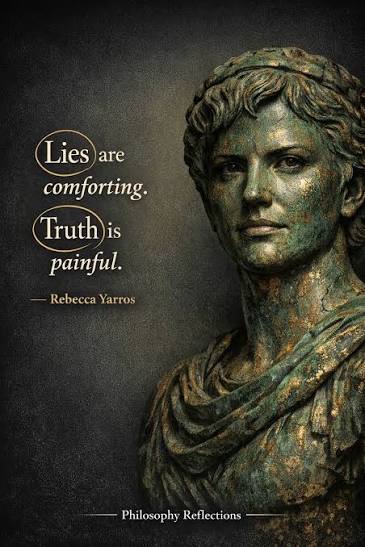
onest people can reach different conclusions based on different experiences and information. Public debate should therefore remain respectful, evidence-based and open to correction. Truth is strengthened by honest examination, not insults, suspicion or personal attacks. The phrase “Truth has no agenda” carries a powerful message. Truth does not belong to any political party, ethnic group, religion or ideology. It cannot be permanently owned or manipulated by those in power. Governments change, institutions rise and fall, and public opinion shifts, but truth remains indifferent to popularity.The real test of character comes when speaking honestly threatens influence, privilege or personal advantage. It is easy to defend justice when there is nothing to lose. It is far more difficult when the truth may cost us something. That is when conscience must rise above convenience.

Society must therefore cultivate a culture where integrity is valued more than comfort and accountability is welcomed rather than feared. Leaders should learn to accept criticism without hostility, while citizens should express disagreement responsibly. Progress becomes difficult when honest questions are treated as acts of disloyalty. Ultimately, every society must choose the future it desires. A nation built on silence cannot sustain justice, while a community where comfort consistently outweighs conscience risks making injustice ordinary. But people committed to truth, even when inconvenient, lay the foundation for stronger institutions, trustworthy leadership and lasting progress. The call is not to condemn those who succeed or to glorify perpetual criticism. It is to remember that privilege should never silence principle, influence should never replace integrity, and personal gain should never outweigh the public good. Truth has no hidden agenda. It seeks neither applause nor favour. It simply asks to be spoken, defended and lived. When truth is silenced by comfort, everyone eventually pays the price.

By:  King Onunwor
Continue Reading

Opinion

When Comfort Silences The Truth  

Published

on

Quote: “Privilege should never silence principle, influence should never replace integrity, and personal gain should never outweigh the public good.”

There is an old saying that truth does not fear investigation. Genuine truth neither depends on applause nor seeks permission to exist. It remains constant whether celebrated or rejected, defended or ignored. Yet, in today’s society, truth often competes with comfort, convenience, loyalty and personal interest. This raises an important question: Can a person remain objective after beginning to benefit from the very system he once criticised? Throughout history, reform movements have been driven by courageous individuals willing to challenge injustice despite personal risks. Their commitment to truth sometimes cost them popularity, comfort, freedom and even their lives. History has also recorded instances where influential voices became quieter after receiving appointments, promotions, contracts, political favours or other advantages.

While motivations cannot always be known, such patterns remind us that personal benefit can sometimes influence public conviction. Human beings naturally seek security, stability and opportunities for themselves and their families. There is nothing wrong with success or advancement. The concern arises when personal comfort replaces public responsibility, or privilege becomes a reason to ignore problems affecting others. One of the greatest dangers facing society is not only corruption or poor governance but the normalisation of silence. Systems rarely collapse overnight. They deteriorate gradually when people who know better decide that speaking the truth is no longer worth the personal cost. Every society therefore depends on citizens willing to ask difficult questions, demand accountability and defend justice, regardless of who benefits or feels uncomfortable.

A person who benefits from a broken system may become less inclined to challenge it. This is not true of everyone, and individuals should not be judged without evidence. Many principled people continue to advocate reform while working within imperfect institutions. Nevertheless, personal interests can sometimes soften criticism, dilute conviction or redirect attention from uncomfortable realities.Perhaps the greatest threat to truth is not open opposition but quiet compromise. Censorship is easy to recognise; silence purchased through convenience is harder to detect. When people gradually stop asking questions, demanding transparency or defending principles they once considered important, society should ask whether something has changed. Perspectives may genuinely evolve with new information, but incentives can also influence what people say—or choose not to say.

This is why citizens should not place blind trust in personalities. Ideas, principles and actions should be examined independently. Loyalty to individuals must never exceed loyalty to truth. Political affiliation, professional status, financial success or social influence should not exempt anyone from accountability. A healthy democracy depends on independent thinking, not unquestioning allegiance.The responsibility to speak truth does not belong only to journalists, activists, judges, religious leaders or opposition politicians. It belongs to every citizen. The teacher who refuses to manipulate facts, the public servant who rejects corruption, the business owner who acts with integrity, the parent who teaches honesty and the young person who chooses principle over popularity all contribute to a more just society. However, defending truth also requires humility.

We must not assume that everyone who disagrees with us has been compromised.

By: Michael  Abraham

Continue Reading

Trending