Opinion
Garbage In, Garbage Out Educational System
The easiest and most attractive national pastime remains buck passing especially with the bunch of leaders that we have, that can hardly peel a banana nor wash an already white handkerchief. Not many of us want to take responsibility for anything, from personal, to family or national life.
The blame is on the system. We do not need to create demons out of our leaders because some of them are already specimens of demons, so we hang our sins on them appropriately and inappropriately too. And unfortunately, their behaviour has made it easy for the critic to descend on them.
We at most, talk, write and discuss the Nigerian myth with a sense of fatalism. If everyone thought as much as I did about justice and fairness, life would be better. I am a critic, but I am also the critics’ critic, the unrepentant believer that the best way to keep the government on its toes is to keep harping on their flaws so they can improve.
Often, I say I believe the things I write on are important for our nation as they are for other nations. But when it appears to me that Nigerians, especially those in authority, do not react to these issues as people in other lands do, I repeat them in new essays to remind old readers and recruit new ones to participate in the continuing dialogue.
Sadly, this is Nigeria where nothing works and no one cares. When it works, it is because someone’s interest is about to be served or being served, not the people’s interest. We talk about our institutions despairingly. Our leaders do not watch network news except when their faces would be there on occasion of their sons/daughters’ wedding or such. They do not need the newspapers anymore because it is full of their lies, or paid adverts exchanging banter.
Government bashing remains a national pastime and every drinking joint, and suya spot has a sitting parliament with an expert on every and any issue, but we forget that no matter the input, if the politicians and actors in our national scene have questionable lives both on personal and domestic level, nothing will change. The best government policy cannot change the individual. It is because the policies are formulated on a bad foundation and by people with warped thinking.
When a witch proclaims her presence, and an invalid does not make away; he must have money for sacrifices at home.
So, for some several weeks, it has been a back and forth between the regulator of our education, in this case the Ministry of Education and parents, on exactly the right age for a child to write the regulatory transitional exams. And let me say whether it is 18 years or five years, a dullard or an intelligent kid, it is garbage in, garbage out.
That may sound cold, especially in the light of the exploits of Nigerian graduates in other climes, remember I said other climes, and the few who do well here in Nigeria. Like my friend Ndo puts it, the quality is scarily dropping.
Have you noticed the ever-increasing cases of graduates and interview candidates having shallow knowledge of the subject matter, poor command of the use of English language, poor knowledge of the examination techniques, as well disregard for correct interpretation of questions before attempting them? Or that many candidates lack requisite mathematical and manipulative skills for subjects involving calculations, while handwriting of some are illegible and their answers scripts are full of spelling errors. (Not that my maths is so good either)
Many candidates try to cut corners by engaging in various forms of examination malpractice in order to obtain marks.
A good many of us spat on the education we had yesterday, and of course what passes for education today. And there is, certainly, a stratum of our society that looks back, nostalgically, at the quality of yesterday’s education”.
How many of us today can argue that this is not the truth, even the generation that had its education in 2000 now looks back with nostalgia.
By and large, however, most of us believed that there was very much missing in the content of our yesterday’s education. What we have today, in spite of innovations and the bold attempts to re-orientate it, remains, as it was yesterday, orthodox, slow foot, myopic.
Our educational system today only sharpens the head to near-pin end quality and this is even rare but it also makes the possessors limb atrophied by long disuse.
Our education is money-centered. It is an education which goads the possessor asking “what can my country do for me?”
In 2024, we are left to define the quality of education we want for tomorrow when our peers have gone far in Japan, Malaysia, Singapore, neighbouring Ghana has even refused to wait for us. To chart out how to tread to win through, we now send our kids anywhere so far it is outside the country the education is better be it Iraq or Zimbabwe.
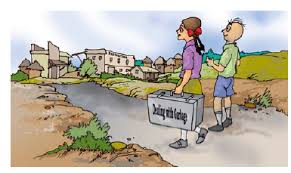
Do we have an education in which a possessor wants to elevate the less privileged that surge him round, the answer is no. Today what is the value of the education given to a young man who lives or is doing his mandatory service year in a guinea worm-infested area and yet is incapable of causing a revolution in the lives of the villagers by transforming their drinking water into healthy supply?
Please, what is the use of education given in physics to a young girl when the lights go out, she does not know what to do to get light again. In Nigerian education, how many graduates can carry aloft an oasis of light, very few because the education is short on quality and is therefore poor.
While there is despair, there is hope and despair, a case of “we can” or “we can’t”. While we battle the scourge of local terrorism, bad leadership, kidnap, health, and countless issues, there is need to come up with some measures that could help both the students and schools to improve on their output, by extension resuscitate a nation’s dying if not dead educational sector.
Our students need to develop a good understanding of questions and also learn the basic rudiments of the English language for better and clearer presentation of their answers. The sex for grade, bribe for certificate syndrome needs to be checked.
There is a need to ensure the appropriate textbooks in all subjects are procured and studied side by side with the examination syllabus, and should be completed before the commencement of examination. Libraries need to go info-tech, not littered with books of 1914. While practical hands-on learning away from just examination should be incorporated.
There is a need to provide basic infrastructure, and a conducive atmosphere in schools, only qualified and committed teachers who will teach their subjects effectively and guide students to become exemplary in their studies should be employed. Not like the teacher in Bauchi State (SUEB) that inherited his grandfather’s grade II certificate and was teaching with it or University dons that have become experts in plagiarism, selling handouts pirated from other works.
The question of whatever happened to the old school inspectorate system should be addressed.
We must move away from the exam-centric, conversation curriculum that takes away critical thinking and qualitative reasoning and educate with intention for a future world. If these and even more rigorous steps are taken, we may be saved the irony of the clowns we are churning out these days—May Nigeria win.
Dickson is a commentator on current issues.
By: Charles Dickson

Metro
From Himalayan Ice to Niger Delta Floods: How Melting Glaciers Will Reshape Nigeria’s Coastline
On Wednesday August, 26, 2026, the world watched Nepal as glacial collapse sent a wall of water tearing through the Nepal-China border mountain villages, swallowing homes, schools, roads, bridges and hydropower plants and causing significant loss of lives. All these were gone in minutes.
According to reports, the first indication that something was amiss came at 8.37 am local time,when the earth started shaking along the Nepal-China border, north of Kathmandu.
Scientists later established the fact that an enormous chunk of glacier sheared off from high on a mountain.This plunged into the river below. The section of the glacier that fell was approximately 2,000 feet wide.
A Professor of Hydrology at the Imperial College, London, Wouter Buytaert said, “this is the type of event that is triggered by climate change. Global warming strinks glaciers making it more likely for them to break apart.”
So far, more than 1000 people are found dead, 4,267 individuals rescued. As at Tuesday, 1st September, 2026, more than 4,400 people still reported missing and and more than 65,000 people affected in Nepal and Tibet. There are fears that the numbers of dead may still rise exponentially.
That disaster in the Himalayas feels far from the Niger Delta. But climate science tells us it is connected. The ice that melts in the Antarctica, Arctic, Andes, Himalayas,Alaska,Alps,Mt. Kilimanjaro and Mt. Kenya does not stay there. It flows into our oceans, and our oceans decide what happens to the Niger Delta.
For a proper understanding, we need to put this in perspective. What are glaciers?Glaciers and ice sheets are large masses of ice that form when fallen snow is compressed and recrystallised over the course of thousands of years. The two types of glaciers are the continental glaciers and the alpine (mountain)glaciers. The glaciers exist on all the world’s continent except Australia.These glaciers hold about 68-70% of the world’s freshwater. Together, they cover approximately 10 percent of the Earth’s total land mass.
For 10,000 years they were relatively stable. That changed in the 1900s. Since 1990, glaciers have lost over 9 trillion tonnes of ice. The World Meteorological Organization (WMO) and the World Glacier Monitoring Service confirms that global glacier mass loss has accelerated, and 2022-2024 were the 3 largest loss years on record.
All 19 of the world’s major glacier regions reported a net annual loss of ice mass, though, year 2023 set an individual annual record for single-year water loss with glaciers shedding approximately 600 gigatons of water.
In October of 2023, during a visit to the Everest region in Nepal, the United Nations Secretary-General, Antonio Guterres called on the world to “stop the madness” of climate change, warning that the disappearance of glaciers altogether looms even larger.
However, researchers in recent projections show that mountain glaciers will lose one quarter to one half of their mass by 2100 for global temperature change scenarios. A third of glaciers in the World Heritage sites are set to disappear by 2050.
Also, many mountain regions have already witnessed radical glacier loss with many low elevation and small glaciers around the world, including all of Africa’s remaining glaciers at risk of disappearing within this century.
The ice is melting because global temperatures have risen to almost 1.4°C since pre-industrial times. The extra heat turns ice to water. As a result, the gradual disappearance of glaciers contributes to rising sea levels, increased risk of drought in densely populated plains and atmospheric pollution,where ancient greenhouse gases like methane trapped deep beneath the ice are released.
Glaciers in Greenland, Antarctica, Alaska and the Himalayas melt into rivers into the Atlantic, Arctic and Pacific Oceans.
The meltwater adds volume to the ocean. Thermal expansion of warmer seawater adds more water. Global mean sea level has risen from 21-24cm since 1900, and the rate has doubled since 2006. All this add up to the pressure in Nigeria’s Niger Delta, which over the years has witnessed severe flooding.
The Niger Delta Coast of Nigeria has 853km of coastline facing the Atlantic Ocean along the Gulf of Guinea.It stretches to a total of nine states including Rivers,Bayelsa, Akwa Ibom, Cross River, Delta, Edo, Lagos, Ogun and Ondo. The coastline comprises inshore waters, coastal lagoons, estuaries and mangroves especially in the Niger Delta. The Niger Delta is a low-lying, sediment-based delta. Bonny, Brass, Okrika, Warri and Lagos Island generally sit across low-lying coastal terrain. .
So the meltwater from thousands of kilometers away ends up pushing against the shorelines of the Niger Delta, raising tides, and pushing saltwater into our creeks and groundwater.
The impact of the melting glaciers are enormous on the Niger Delta.The glacier melt may not cause a Himalayan-style flood, but may cause slow, compounding damage.
This is mainly due to the fact that higher sea levels mean king tides which now reach further inland. Communities in Okrika, Nembe, and Lagos Bar Beach already lose land yearly. With 0.5m rise by 2050, 30-50% of the Delta could face annual inundation.
Furthermore, as sea level rises, salt pushes into coastal aquifers and surface water. This is critical for the Niger Delta where people depend on shallow hand-dug wells and boreholes 10-20m deep for drinking water. Salinity ruins drinking water and kills agricultural crops.
Also, it will lead to worsened flooding and extreme rainfall. Climate change makes rains heavier. When high tides meet heavy rain with poor drainage in most Niger Delta communities and urban cities, floodwater has nowhere to go.
The critical impact will be the loss of livelihoods in the area. Fishing and farming in the Niger Delta area depend on brackish water balance. More salt from floods results to fish migration, and also crop failure.
The massive inflow of water may lead to Infrastructural damage: roads, refineries, industries and businesses at the coastal line are affected, while repeated flooding corrodes and disrupts production.
With the continuous melting of the glaciers, the next five years and beyond for people of the Niger Delta region is ominous.
By 2031, scientists evisage more “nuisance flooding” during high tide with 10-15cm additional sea level rise globally. And by 2050, according to the Intergovernmental Panel on Climate Change (IPCC) projects 0.28-0.55m sea level rise even if countries cut down on emissions. This will translate to more flooding and moderate coastal flooding will happen 10 times more often than it does today.
High tide will routinely flood coastal streets, damaging local infrastructure and threatens fresh water supplies. For the Niger Delta, that means displacement of communities and billions in damage.
What is worse? By 2100, if emissions continue, 1-2m sea rise is possible and this will make parts of the Niger Delta to become uninhabitable, if there are no massive defenses put in place.
While the rest of the world are preparing to abate disasters, the Niger Delta and Nigeria as a whole seem to be asleep to the reality that is beckoning.
The rest of the world are developing early warning systems for disasters, community evacuation drills and placements.
The UN 2025 report shows that 119 countries are now covered by a multi- Hazard Early Warning System. Launched in 2022 by United Nations Secretary-General, Antonio Guterres, Early Warning for All is a ground breaking initiative to ensure that every one on Earth is protected from hazardous weather, water or climate events through life saving early warning systems by the end of 2027.
In the Netherlands the government used a technique known as Delta Works. They have built a country below sea level. The Delta Works is a massive network of dams, slluices, locks and storm surge barriers built to protect the Southern part of the Netherlands from catastrophic flooding after the 1953 floods.
The Dutch also use a system to strategically open and close dams that redirect massive volumes of river water to flush salt water back into the North Sea.
The United Nations (UN) and IPCC have begun the Global Stocktake-monitoring and inventory of climate issues of countries. There is the Loss and Damage Fund under the UN Framework Convention on Climate Change agreed at the 28th annual United Nations Climate Change Conference in Dubai 2023 to help vulnerable developing countries facing climate-induced impacts.
It is important to commend the African Union for the Climate Change and Resilient Development Strategy which it is delivering on African goal for inclusive and sustainable development. Aslo, the Great Green Wall project to combat land degradation, desertification and climate change across the Sahel region. They must find a way to bridge the funding gap for the projects, which is huge.
Nigeria has to wake up from its deep slumber on these issues. What Is The solution?
If we cannot build Dutch sea walls tomorrow, we can do “smart adaptation”.
Research is key in this direction. Research institutes and the Nigerian Meteorological Agency (NIMET) must monitor sea levels, salinity in boreholes, and map vulnerable communities.You cannot adapt what you do not measure.
We must return to nature-based solutions, such as restoration of mangroves in the Niger Delta. Thick mangrove forests act as natural wall against storms, hurricanes and rising sea levels One hectare of mangrove absorbs waves better than concrete and costs less. It also stores carbon.
Another solution is Water Safety,thereby investing in rainwater harvesting, deeper boreholes >40m above saltwater intrusion, and household water treatment for communities. This tackles Sustainable Development Goal 6.
We must adopt early warning. SMS flood alerts for communities like what Nepal is doing. Recently, the Federal Government of Nigeria issued alerts that over 2000 communities would face flood risk across 30 states. Seven states were identified as critical hot-spots.
In a statement, the Director of the Erosion, Flood and Coastal Zone Management Department, Mr. Usman Bokani said Akwa Ibom, Delta, Kogi, Benue, Rivers, Bayelsa and Ebonyi states could be critical areas during the forecast period. Also, Adamawa, Kwara,Taraba and Kebbi states had been categorised as high risk locations. Some communities in Borno, the FCT, Plateau, Nasarawa and Yobe states are expected to experience moderate flooding during this period. This is a good start.
Nigerian government must do all it takes to access funds in the area of foreign policy and finance and use it appropriately. Government should access the United Nations Loss and Damage Fund. Also, integrate climate into the Niger Delta Development Commission(NDDC) Masterplan and push for “polluter pays” from oil companies to fund adaptation.
Communities ought to be involved in this through information and education. Let them be enlightened about the consequences of their actions that lead to climate change. Government must mobilze communities in this regard. Climate adaptation works when people own it.
In conclusion, it is important to stress that
the ice in Greenland and the water in the Niger Delta are linked by one ocean. Nepal’s glacier burst was a warning. Our warning may be slower, salt in our wells, water in our streets, people moving from their ancestral homes, and more.
But we still have time. If Nigeria invests now in monitoring, growing mangroves, and community resilience, we can reduce the damage. Climate change is global. The response must be local.
By: Dr. Ibinabo Ogolo
Dr. Ibinabo Ogolo is a Research Fellow at the Institute of Geosciences and Environmental Management, Rivers State University, Port Harcourt, Nigeria.
Opinion
What Do Nigerians Want?
Opinion
Life’s Strange Sense of Humour
-
Business4 days agoBayelsa Denies Delays In Infrastructure Project Execution… Task Journalists On Factual Reportage
-
Niger Delta4 days agoBayelsa Reads Riot Act To Biseni Clan Over Shutdown of Oil Firms’ Operations
-
City Crime4 days agoBayelsa Renders June, July Account Of Financial Receipt, Expenditure
-
Business4 days agoNCDMB Canvases Pan-African Local Content Synergy For Economic Diversification, Industrial Dev
-
Niger Delta4 days agoJonathan Pays Tributes To Late Septuagenarian Class Mate In Bayelsa
-
Metro4 days agoFrom Himalayan Ice to Niger Delta Floods: How Melting Glaciers Will Reshape Nigeria’s Coastline
-
Featured2 days agoFUBARA SIGNS 2026 APPROPRIATION BILL INTO LAW