
Politics
Omo-Agege, Stakeholders Seek End To Vote -Trading

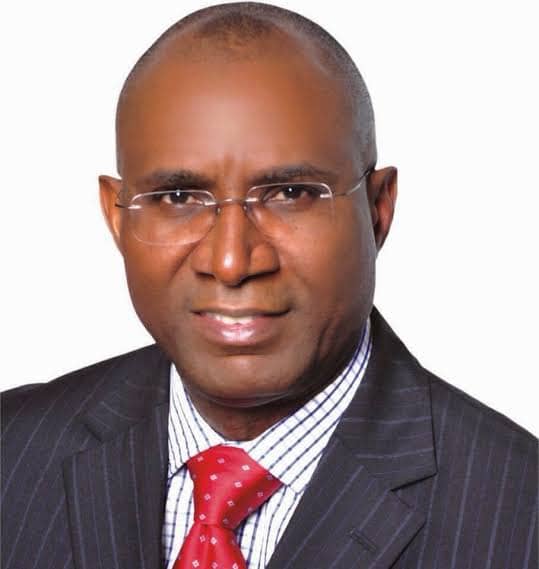
The Deputy President of the Senate, Ovie Omo-Agege; Chairman of the Independent National Electoral Commission (INEC), Prof. Mahmood Yakubu; Chairman of the Independent Corrupt Practices and other related offences Commission (ICPC), Bolaji Owasanoye and other stakeholders in Nigeria’s electoral process have identified weak sanctions and poverty as factors derailing the fight against vote buying and selling in the country.
They raised the concern at a policy dialogue on ‘Addressing Vote Trading in Nigeria from Global Comparative Experiences’ organised by The Electoral Forum in collaboration with the Open Society Initiative for West Africa (OSIWA) and MacArthur Foundation.
According to Omo-Agege, vote trading is an unusual democratic experience, which serves as a clog in the wheel of free choice and democracy.
The DSP, who was represented by his Chief of Staff, Dr Otive Igbuzor, called for stronger punitive sanctions against perpetrators as well as sustained information campaigns, community action and locally enforceable public commitments to collectively fight the menace.
“To stem the ugly behaviour, everyone should be involved, both voters and contestants. It needs sustained information campaigns, community action and locally enforceable public commitments to collectively shun vote-buying.
“Punitive sanctions strategies are more likely to be successful than moralistic pleas. Political actors who buy votes should face stringent consequences.
“Political financing reform, and ensuring election security and ballot secrecy, are equally vital in addressing vote-selling. Most of this was taken care of in the new Electoral Act 2022 passed by National Assembly and assented to by the president,” he said.
In the same vein, Prof. Yakubu not only said the speedy passage of the National Electoral Offences Commission and Tribunal Bill by the National Assembly will checkmate vote buying, but called for sustainable measures to tackle poverty as well as increased voter education and sensitisation.
“As soon as people begin to have faith in the electoral process, they will begin to see the power that they have over the people who are running for offices.
And I believe that very soon, the story will change and the power will return to the people,” the INEC boss who was represented by Mrs May Agbamuche-Mbu said.
On his part, chairman of the Independent Corrupt Practices and other related offences Commission (ICPC), Bolaji Owasanoye, warned that vote buying has a tendency of frustrating and undermining the war against corruption in Nigeria.
Earlier, Chairman of The Electoral Forum, Prof. Bayo Olukoshi said there appears to be a global consensus that seeking to eliminate the use of money in politics is almost impossible and waste of time because politicians would find ways to bring the use of money into the political equation.
He observed that democracies around the world have moved away from elimination to regulation of the use of money in politics, in a way to ensuring that the use of money does not corrupt integrity of the electoral process.
Olukoshi said: “So, money in politics is a global challenge, especially criminal money which unaccounted and very difficult to trace. However, in our context, the debate around the issue of money in politics is again not an entirely new debate for those who are old enough to know the politics of the 2nd Republic where we saw increasingly the significant role of money as opposed to issues and ideas entering the Nigerian political space.”
Speaking on the topic: ‘Sociopolitical Paradox of Vote Trading in Nigeria: Focus on the Political Party Primaries and the recent Ekiti and Osun Governorship Elections’ the immediate past Resident Electoral Commissioner in Rivers State, Obo Effanga said the malaise of vote trading requires the involvement of a multiplicity of stakeholders, agencies, and groups to address it.
He traced the root of the menace to the economic imbalance and inequality in Nigeria, which if fixed, according to him, would reduce the number of poor people in the country, to a large extent.
Effanga alleged that vote trading is also aided and abetted by officials at the polling unit, adding that this could happen either by failure to ensure adequate arrangement to guarantee secrecy of the vote or failure to take steps to prevent those who try to breach the rules.


Rt Hon. Abbas secured the party’s ticket through an affirmation exercise conducted across the 13 electoral wards in the constituency.
The wards involved include Kwarbai A, Kwarbai B, Limancin-Kona, Unguwar Fatika, Unguwar Juma, Dutsen Abba, Gyallesu, Kufena, Dambo, Wuchichiri, Tudun Wada, Tukur-Tukur, and Kaura.
The exercise, which began simultaneously in all wards at about 10 a.m., recorded large turnout of APC members who gathered at various party offices across the constituency.
At Kwarbai B Ward, the Speaker’s ward, the process was conducted peacefully under the supervision of the ward APC Returning Officer, Malam Iliyasu Muhammad Balarabe, in the presence of Rt Hon. Abbas.
According to the ward APC secretary, Nafiu Sabo, the ward has over 10,000 registered members, but 220 members were accredited for the exercise.
Before the affirmation, Mallam Balarabe informed members that Rt Hon Abbas was the only aspirant who purchased nomination forms, underwent screening, and was cleared by the APC national leadership to contest the Zaria Federal Constituency seat.
Following a voice vote by accredited members, the Speaker was affirmed as the party’s candidate in the ward, a process replicated across the remaining 12 wards.
At the constituency collation centre, the APC Returning Officer for the House of Representatives primary in Zaria Federal Constituency, Dr. Hamisu Ibrahim Kubau, announced that 1,376 APC members across the 13 wards endorsed Rt Hon. Abbas as the party’s flag bearer.
He explained that although thousands of party members participated in the exercise, only accredited delegates were allowed to vote.
Dr. Kubau declared: “There are 13 wards in Zaria Federal Constituency, and only one aspirant purchased a form, was screened, and cleared. He is Rt. Hon. Abbas Tajudeen. After due process, we conducted affirmations across all wards.”
He added that the process was peaceful and monitored by officials of the Independent National Electoral Commission (INEC) and party representatives.
Chairman of the APC House of Representatives Primary Elections in Kaduna State, Senator Yakubu Oseni, described the outcome as a reflection of the Speaker’s popularity and acceptance among constituents.
He expressed confidence that Rt Hon Abbas would secure victory in the 2027 general elections.
Speaking after his declaration, Rt Hon. Abbas expressed appreciation to APC members for reaffirming their confidence in him.
The incumbent Reps including Emily Inyang and Godwin Offionio, in separate interviews
protested the handling of the primaries conducted by the leadership of the party in the state, saying it was skewed against them.
The aspirants further described the primaries as a charade and an embarrassment to the state.
According to them, the House of Representatives primaries fell short of the provisions of both the Electoral Act as amended in 2026 and the party’s constitution.
They accused the leadership of the party in the state, backed by Governor Bassey Otu, of violating the party’s constitution in the conduct of the House of Representatives primaries across the state on Saturday.
Hon. Godwin Offiono, representing Ogoja/Yala Federal Constituency, particularly expressed disappointment with the primary that allegedly disenfranchised registered members of the party in his constituency.
Hon. Offiono asserted that having failed to arrive at a consensus, the party leadership opted for a direct primary to decide the candidate for the 2027 election.
“But what I witnessed today was not only alarming, but quite disheartening that our electoral system have not shown any improvement, especially now that we have a man of God in the person of the governor as the leader of the party.
“How do you declare a result by 9:00am even when the electoral materials were yet to arrive at Yala.
“As an aspirant, I couldn’t even vote or see the materials for my own primary at my Okuku ward in Yala Local Government Area, where I come from. But no matter what happens I am still in the race and have not stepped down for anybody.
“The governor had all the time in the world to drive the process of consensus but he never did. As a representative, I cannot even see my governor. I called, no response. I sent text no reply. I am treated as an out cast,” he lamented.
In an emotion laden tone during a telephone interview, Hon. Offiono further said: “I could not believe that first term NASS members like me can be treated in this shoddy manner even when I don’t know my offence.
“I have been a loyal party man. I appeal to the governor to do the right thing, follow the Electoral Act and party constitution in electing representatives.”
Similarly, Hon. Emil Inyang of Akamkpa/Biase Federal Constituency said he still remained in the race and had not stepped down for anybody.
According to him, “If this shenanigan called primary is allowed to stand, it would affect the party’s fortune in the general elections.
“My appeal to the governor is to allow the people to decide. And if they so voted against me, I will rest and not fight over anything.
“There was no stakeholders meeting held to decide on anything before now, and someone can not be unilaterally imposed on us all in the name of compromised primary,” he stated.
A coalition of support groups within the All Progressives Congress (APC) has protested the disqualification of former presidential aspirant, Mr Tein Jack-Rich, from the Rivers West Senatorial race ahead of the party’s primaries for the 2027 general elections.
The groups, in a statement issued on Saturday morning in Abuja, described the action of the party’s screening committee as unjust and capable of worsening internal divisions within the APC in Rivers State.
The statement, signed by the coalition’s National Coordinator, Dr. Bilal Galadima, and General Secretary, Hon. James Ogenyi, accused the party leadership in Rivers State of favouring politicians loyal to the Minister of the Federal Capital Territory, Chief Nyesom Wike, while sidelining long-standing members of the APC.
The coalition alleged that only aspirants aligned with Chief Wike were cleared to contest for elective positions in the state.
“How can our party allow only one man who is not a member of our party to make decisions or dictate the direction of our party?”, the group queried.
The coalition specifically faulted the exclusion of Mr Jack-Rich, describing him as a loyal party member who had supported the APC for more than 13 years and previously contested the party’s presidential ticket.
It also questioned the alleged clearance of Chief Felix Obua, whom it described as a recent entrant into the party and an ally of Chief Wike.
“How can our party disqualify Jack-Rich, a former presidential aspirant who has been loyal and supported our party for the last 13 years, only for our party to choose Felix Obua, a Wike loyalist who only joined the party three months ago?”, the statement read.
The group warned that failure by the APC leadership and National Working Committee (NWC) to address the matter as it could weaken the party’s structure in Rivers State ahead of the 2027 elections.
It called on party leaders to uphold internal democracy, reward loyalty and ensure a level playing field for all aspirants.
INEC TO BEGIN MEMBERSHIP VERIFICATION AS POLITICAL PARTIES SUBMIT REGISTER
All 22 registered political parties have successfully submitted their membership registers to the Independent National Electoral Commission (INEC) in compliance with the Electoral Act 2026, the Commission has said.
In a statement issued on Friday, Chairman, Information and Voter Education Committee, Mr Mohammed Haruna, said the submission followed the extension granted by the Commission after political parties raised concerns during a meeting on Tuesday, March 24, 2026, regarding the timeline provided in the Revised Timetable and Schedule of Activities for the 2027 general elections.
He said, “The Commission is pleased to note that all registered parties submitted their registers as of 8th May 2026, two days before the extended deadline.”
He recalled that following a meeting with political parties, the Commission, in a statement issued on the 27th of March, 2026, adjusted the deadline for the submission of party registers from 21st April 2026 to 10th May 2026 to align with the provisions of Section 77(4) of the Electoral Act 2026 and the actual dates fixed by political parties for their primaries.
Mr Haruna noted that political parties were accordingly allowed to conduct their primaries within the approved period from 23rd April 2026 to 30th May 2026, while the register of party members was required to be submitted to the Commission not later than 21 days before the conduct of their respective primaries.
He added, “INEC wishes to state that all registered political parties complied with the requirement within the extended timeframe and will subject the submitted registers to the necessary verification processes in line with the law.”
The Commission restated its commitment to the conduct of free, fair, credible and inclusive elections.