
Opinion
Making Girl-Child Education Compulsory

Education is a fundamental human right. It is key to development of both individuals and the nation. It is therefore, a right that should be given to all human beings, especially the girl-child. Girl-child education is particularly important and recognised by all charters. It is a form of education that aims at improving the knowledge and skills of girls. It includes general education in schools and colleges, vocational and technical education, professional education, health education etc. Girl-child education encompasses both literary and non-literary education.
Nigeria is signatory to the major conventions for the protection of the rights of children and women, especially the convention on the Rights of the Child (CRC) and the convention on the Elimination of all forms of Discrimination Against Women (CEDAW).
Girl-child education falls under goals two and three of the Millennium Development Goals enshrined under UN’s resolution in 1996, and which Nigeria is a member nation. Unfortunately, it has received worst treatment as a result of the lackadaisical/ nonchalant attitude of Nigerian leaders.
According to UNESCO report, about 90 million children are not in school and majority of them are girls who do not have access to education despite the fact that it is their rights.
Research has shown that millions of girls do not have access to schools despite the concerted efforts by some global bodies to promote girl-child education. It has, however, been established by researchers that improving female education is crucial for national development.
Illiteracy on the other hand, is one of the strongest contributing factors to poverty. Investment in girl-child education is therefore an investment in the future of an individual and the society at large. This is because both the individual and the society stand to benefit from it. Across the globe, women are under represented in government and are discriminated against in electoral contest. This is because of the belief that there are more qualified and more educated men than women.
A girl-child who is educated is less likely to contract HIV. This is because education has a direct and proven impact on the sexual and reproductive health of a child.
Women with formal education are also likely to use reliable family planning methods, and have healthier babies than women with no formal education. Girl’s education ranks among the most powerful tools for reducing girls vulnerability to diseases and other dangers. It empowers a woman’s wallet, boosting her earning capabilities through good job and creativity.
Women with some formal education are move likely to seek medical care, ensure their children are immunised, better informed about their children’s nutritional requirements and adopt improved sanitation practices. As a result, their infants and children have higher survival rates and tend to be healthier and better nourished. Also, when a girl-child is educated, she tends to know better about reproductive issues and also seek pre-and post natal care.
The education of a mother is a significant variable that can affect children’s educational attainment and opportunities. Research has also shown that an educated mother would want to send her children to school. Whereas, an illiterate mother sees her daughters as tools for generating income to sustain the family. She engages them in hawkings and other undignified jobs instead of sending them to school at their tender age. In Nigeria, many girls are often seen moving around in towns and villages hawking items of little value that hardly justify the hours spent under rain and sun. They usually become vulnerable to harassment from men. But an educated woman has self-confidence, skills as well as intelligence to understand the need to be a better daughter, sister, wife and mother and make a progressive family.
The biggest hurdle in African society is the prejudices many people have about girls’ education. They hold the erroneous belief that a woman’s life and future begins and ends in the kitchen. So, they do not bother about the education of a girl-child. This erroneous impression must be corrected. Education still remains the only tool with which a girl or a woman can empower herself and eventually her family. Without education, the future of a woman is not guaranteed.
A girl is no less than a boy, if any thing, a girl can be more diligent, dutiful, hardworking and consistent in her effort towards achieving excellence in life.
Nigeria is still rated as a developing country in spite of her huge natural resourcers. This is so because of her inability to harness her resources towards nation building, especially in the area of girl-child education.
Education has the potentials to empower women to contribute towards the development and prosperity of their country. Economic empowerment and independence can only come through proper education and employment of women.
Education helps a woman to live a good life. Her education enables her to know her rights. Her rights can never be trampled upon unnecessarily. Her identity as an individual would never get lost. Instances of violence and injustice against women, such as forced prostitution, child-marriage, female foeticide will surely reduce, if the education of a girl-child is encouraged.
Today, the society is witnessing changes in the role-status of women. The modern day mother wants to fulfill the aspiration of her children without gender parity.
In a nutshell, girls are the pride and dignity of their families and they should not be deprived of education and rights.
According to United Nations Foundation President and CEO, Kathy Calvin, “Girls are one of the most powerful forces for change in the world. When their rights are recognised, their needs are met and their voices are heard, they drive positive change in their families, their communities and the world”.
By: Favour Harry
Harry is a freelancer with The Tide.



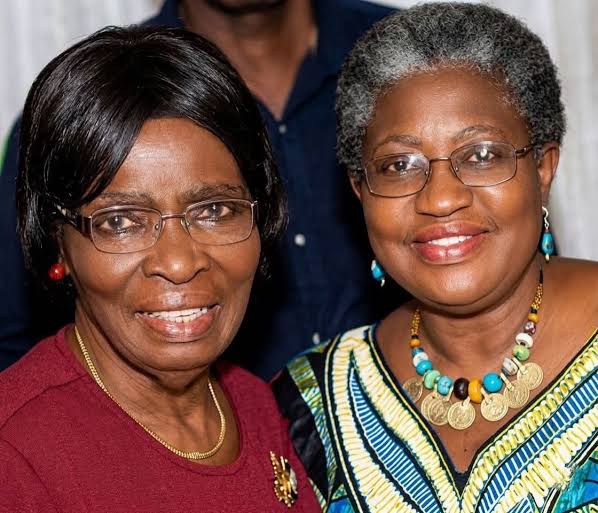
Quote “Professor Kamene Okonjo
Some women leave behind more t
Yet, to remember Professor Kam
Professor Okonjo was the belov
one of the most dramatic chapt
On December 14, 2012, the then
She leaves behind children, gr
Professor Kamene Okonjo deserv
By: Sylvia ThankGod-Amadi

Quote: An African who invokes
This is the concluding part
… Given the fact that I was
At the end of the visit by the
Back to my apartment, at abo
Under normal circumstances, yo
That all she asks is that Chie
For some reason that I do not
I believe that everyone in hu
Our ancestors have not gone fa
By: Jason Osai
The Federal Government’s approval of a N70,000 monthly transport intervention for public service workers for six months, beginning in November 2026, offers hope to employees struggling with the rising cost of living. The agreement with the Nigeria Labour Congress (NLC), reached at a conciliation meeting in Abuja on October 27, is intended to cushion transport costs and ease pressure on workers’ incomes. But for public servants in Rivers State, it raises a familiar question: will the State Government key into the intervention and ensure that its workers benefit? The agreement provides for N70,000 monthly across all levels, for six months. The Federal Government also approved peculiar allowance arrears effective from May 1, 2026, to be paid in three equal instalments beginning in November.
The parties agreed to reconvene after one month to assess implementation. Ultimately, the value of these resolutions will be measured not by announcements but by whether eligible workers receive the money. Transport costs consume a substantial share of many civil servants’ earnings before they can meet household needs. Support for commuting is therefore not a luxury or political favour; it is temporary assistance to help workers remain at their jobs without sinking further into hardship. For lower-paid employees, transport costs can turn modest salaries into a daily exercise in difficult choices and sacrifice.
The agreement also urges State and Local Governments to participate and unions to press for implementation. The federal agreement does not automatically guarantee that every State and Local Government employee will receive the support. State authorities must clarify how it will apply to their workforce, make the necessary arrangements and publish a payment timetable. Rivers State must approach the arrangement with urgency and transparency. The Government should State whether it will implement the intervention and when payments will begin. Any administrative or financial question should be addressed promptly with organised labour, not allowed to become excuses for delay.
The concern is sharpened by the earlier N35,000 monthly wage award introduced by the Federal Government in 2023 after petrol subsidy removal. It was intended as temporary relief pending a new national minimum wage. While several States negotiated and paid wage awards or related sums, implementation nationwide was uneven. Reports in 2024 indicated that many States had failed to pay the federal award, while others provided different amounts. In Rivers, labour and media reports raised concerns about implementation of the N35,000 award for State workers, amid separate announcements and arrangements concerning Local Government employees.
The wage award was meant to ease the immediate effects of subsidy removal, yet workers faced uncertainty over whether the promised relief would reach them. In February 2024, the Rivers State Government announced approval of the N35,000 award for local government workers, but subsequent reports showed that implementation across worker categories remained a concern. The lesson is clear: approval and implementation are not the same. A declaration at a meeting offers little comfort to a worker whose account does not reflect the promised payment. For workers who travel to their offices daily, the implications of delayed support are significant. Transportation expenses compete with food, rent, school fees, healthcare and other essential household needs.
As fares rise, employees may be forced to reduce spending on necessities or borrow to sustain their families. A timely transport intervention would therefore provide practical relief and demonstrate that government understands the economic pressures confronting its workforce. Its temporary nature makes prompt implementation even more important. It is fair to acknowledge that this transport intervention is a new agreement and that its administrative details may require clarification. Rivers State should not be condemned in advance for a failure that has not occurred. Nevertheless, the earlier experience gives workers legitimate grounds to seek assurances before the November commencement date. The State should avoid allowing uncertainty to persist until workers begin asking why the promised assistance has not arrived.
The NLC and unions in Rivers State should engage the State Government immediately and seek a written commitment, an implementation plan and a process for reporting missed payments. If clarification from the Federal Government is needed, the State should seek it without abandoning the goal of providing relief. Labour leaders must also keep members informed about progress and insist that any agreed arrangements are applied fairly and transparently. The Rivers State Government should treat this intervention as an opportunity to rebuild confidence. Timely support would show that workers’ welfare is more than a talking point and that the State recognises the economic realities confronting its employees.
Silence, delay or selective implementation, by contrast, would revive frustration over earlier relief measures and weaken trust between government and labour. Every month lost to administrative delay leaves workers facing the same transport burden without the intended assistance. The State should consult labour, publish arrangements and pay eligible workers on time. Rivers workers should not have to wonder whether federal relief will reach them. The Federal Government has announced the support; now the State must make its position clear. We hope the N70,000 monthly transport intervention will not follow the troubling path of the earlier wage award. Rivers State should learn from that experience and ensure that this time, relief is not merely promised but delivered.
Sylvia ThankGod-Amadi
-
Opinion4 days ago
Ancestorial Worship: My Take (1)
-

 Education1 day ago
PAMO MEDICAL UNIVERSITY -Nullifies Arrest warrant on VC
-
Niger Delta1 day ago
PANDEF Seeks 50% Oil Derivation Allocation Increase
-
Rivers24 hours ago
Don Seeks Repositioning Of Tech Education For Dev
-

 Education1 day ago
IAUE MOVES TO END GHOST WORKERS SYNDROME AS 400 NEW NON-TEACHING STAFF UNDERGO MANDATORY ETHICS TRAINING
-

 News1 day ago
Fresh Ebola Scare As NCDC Records Two Cases
-
News1 day ago
Customs Partners EFCC, NDLEA, Others To Tackle Money Laundering, Terrorism Financing
-

 News4 days ago
FG Must Address Nigerians’ Concerns On Reforms -Shettima …Warns Against Misuse of AI, Social Media