Politics
2023 Polls: IPC Begins Training Of Media Monitors
The International Press Council (IPC), last Friday began the training of 12 Media monitors in Lagos to prepare them for the monitoring of the coverage and reportage of the electoral processes and the 2023 elections by the print and online media.
The essence of the 18-month monitoring that will commence on October 1, 2023, is to assess the level of compliance with professional and ethical standards by newspapers, including online ones, being selected for the exercise.
Among others, the monitoring will be done within the context of the expectation of the Nigerian Media Code of Election Coverage, which spells out the responsibilities expected of journalists and other media professionals at elections.
The Media Election Code was endorsed by umbrella media professional bodies and associations, and close to 300 individual media outlets in 2018.
It enumerates what journalists and media management should do to ensure social responsibility and integrity; equitable access for parties and candidates; media access for disadvantaged groups including women, persons with disability and youths; conflict sensitivity and the avoidance of hate speech.
The training of the monitors is one of the activities under component 4 (Support to media) of the European Union Support to Democratic Governance in Nigeria-Phase 2 (EUSDGN II) project, being implemented by IPC, along with its partner, the Institute for Media and Society.
The overall goal of the media component is to “Support the consolidation of democracy in Nigeria with the media (broadcast, print and online media) helping to facilitate the key ingredient of credible elections through engagement and professionalism in coverage and reportage of the electoral processes.”
The specific objective is to ensure that, “The Media, including New and Social Media, provides fair, accurate, ethical and inclusive coverage of the Electoral Process.”
The two-day training , the first day of which was facilitated by Mr. Edetaen Ojo, Executive Director of Media Rights Agenda (MRA) and Mr. Sanmi Falobi, Project Manager of IPC, aimed to build the skill of the monitors on the processes and methodologies of media monitoring.
“Against the background of the prevalence of misinformation and disinformation especially by political actors, all we are seeking to achieve is for the Nigerian media to contribute to the credibility of electoral information before, during and after the 2023 elections”, said the Executive Director of IPC, Mr. Lanre Arogundade.

Politics
Jigawa PDP Rejects Lamido’s Suspension, Wants Immediate Reversal
The state chairman of the party, Dr Babandi Gumel, disclosed this in a statement signed and made available to journalists on Saturday.
According to the statement, the Jigawa PDP received news of Alhaji Lamido’s suspension with “profound shock and disappointment”.
The statement added that the suspension, which was reportedly based on allegations that Alhaji Lamido attended meetings capable of undermining party unity, amounts to an affront to justice, internal democracy and the reconciliation efforts recently championed by the PDP leadership.
The party stressed that the exercise of legal and constitutional rights within the party should not be interpreted as an act of disunity. It recalled that Alhaji Lamido approached the court after he was allegedly denied the opportunity to purchase a nomination form to contest the position of National Chairman of the PDP.
The statement further noted that the Federal High Court in Abuja, presided over by Justice Peter Lifu, ruled in Alhaji Lamido’s favour by restraining the PDP from proceeding with its national convention until his right to contest was determined.
The Jigawa PDP argued that the suspension appeared to be a punitive action against Alhaji Lamido for seeking judicial redress over an issue on which the court had already found merit.
The party also faulted the decision of the BoT for contradicting recent public statements by its chairman, Senator Adolphus Wabara, who had emphasised reconciliation within the party, admitted past mistakes and appealed to aggrieved members to return fully to the PDP fold.
However, it maintained that suspending a founding member who sought justice through legal means runs contrary to the spirit of reconciliation and healing publicly advocated by the party leadership.
The chairman said the suspension was premature and prejudicial, as the matter remains before the courts. He also described Alhaji Lamido as one of the few founding fathers of the PDP who has remained loyal to the party without defecting, warning that punishing such loyalty sends a negative signal to other committed members.
The party further argued that the action undermines party unity at a time when the PDP requires cohesion to effectively challenge the ruling All Progressives Congress (APC). It also insisted that there is no provision in the PDP constitution that allows for the suspension of a “life member”.
The party called on the BoT to immediately and unconditionally withdraw the suspension of Alhaji Lamido.
It also demanded that the BoT publicly affirm the right of all party members to aspire to leadership positions in line with the party’s constitution and the laws of the country, without fear of victimisation.
It further urged the BoT to retrace its steps, align its actions with its reconciliation agenda, and tender an apology to Alhaji Lamido.
The Jigawa PDP reaffirmed its commitment to a united, democratic and law-abiding Party.
Politics
Alleged Tax Law Changes Risk Eroding Public Trust — CISLAC
In a statement signed by its Executive Director, Comrade Auwal Musa Rafsanjani, CISLAC warned that if proven, such actions would amount to a serious breach of constitutional order, legislative integrity, and public trust.
The organisation noted that Nigeria’s law-making process is clearly defined by the Constitution, stressing that any alteration of a bill after parliamentary passage undermines democratic governance and the principle of separation of powers.
CISLAC further emphasised that taxation has direct implications for citizens, businesses, sub-national governments, and the overall economy. It stated that uncertainty or a lack of transparency in tax legislation could erode investor confidence and raise concerns about accountability and the possible abuse of executive power.
The organisation described the situation as particularly troubling given the rare inclusive, and thorough public consultation that shaped the law’s final provisions prior to its passage.
“This process brought together taxpayers, civil society groups, professional organisations, the private sector, labour unions, local governments, and technical experts, ensuring that diverse viewpoints were considered and carefully balanced.
“Any unilateral changes to these agreed-upon provisions, made outside the established legislative process and without renewed public engagement, not only breach public trust but also violate the fundamental tax principle of representation, which holds that citizens must have a meaningful voice in shaping the laws that govern how they are taxed. Such actions undermine democratic accountability, weaken the legitimacy of the tax system, and risk eroding public confidence”, it noted.
CISLAC expressed particular concern that uncertainty surrounding the authenticity of the tax law, coming at a time when a new tax regime is expected to take effect, could exacerbate the economic hardship already faced by many Nigerians.
It observed that citizens are contending with rising living costs, inflationary pressures, declining purchasing power, and reduced access to basic services, warning that implementing a disputed tax framework under such conditions, risks deepening inequality, discouraging compliance, and fuelling public resentment.
The organisation stressed that tax reforms must be anchored in clarity, legality, fairness, and social sensitivity, cautioning that any tax system introduced without full transparency, adequate public communication, and legislative certainty undermines voluntary compliance and weakens the social contract between the state and its citizens.
As part of its recommendations, CISLAC called on the Presidency to urgently publish the exact version of the tax law assented to, alongside the authenticated copy passed by the National Assembly, to allow for public and institutional verification.
It also urged the leadership of the National Assembly to promptly exercise its oversight powers to determine whether the assented law reflects the will of the legislature, including a review of the enrolled bill process.
The organisation maintained that any discrepancy discovered should be treated as unconstitutional and addressed through lawful means, such as the re-transmission of the correct bill or judicial interpretation where necessary. It further called for an independent review of the process by relevant institutions, including the Office of the Attorney-General of the Federation and, where required, the judiciary, to establish the facts and assign responsibility.
CISLAC noted that the controversy highlights the urgent need to strengthen safeguards at the legislative and executive interface. It recommended measures such as digital tracking of bills, public access to enrolled legislation, and more transparent assent procedures.
CISLAC emphasised that the issue is not about partisan politics but about safeguarding the integrity of Nigeria’s democratic institutions. It warned that allowing any arm of government to unilaterally alter laws passed by another sets a dangerous precedent and weakens constitutional democracy.
The organisation urged all parties involved to act with restraint, openness, and fidelity to the Constitution, noting that Nigerians deserve laws that reflect due process, the public interest, and the collective decisions of their elected representatives.
CISLAC added that it will continue to monitor developments and engage relevant stakeholders to promote accountability, transparency, and the rule of law in Nigeria’s governance processes.
Politics
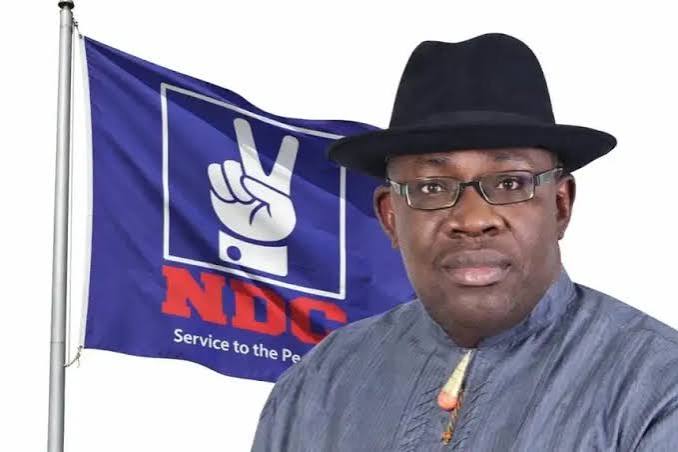
DEFECTION: FUBARA HAS ENDED SPECULATIONS ABOUT POLITICAL FUTURE — NWOGU
-
News4 days agoRSIPA Outlines Plans To Boost Investors’ Confidence …China Applauds Fubara As Listening Gov
-
Politics1 day ago
Alleged Tax Law Changes Risk Eroding Public Trust — CISLAC
-
Maritime1 day agoStakeholders Advocate Legal Framework For NSW Project
-
Politics1 day ago
HILDA DOKUBO ASSUMES CHAIRMANSHIP, DENIES FACTIONS IN RIVERS LP
-
Politics1 day ago
DEFECTION: FUBARA HAS ENDED SPECULATIONS ABOUT POLITICAL FUTURE — NWOGU
-
Sports1 day ago
New Four Yr Calendar For AFCON
-
Maritime1 day agoImo Category C Victory: NIMASA Staff Host Executive Management Party
-
Sports1 day ago
Brighton’s Disappointing Run Continues