Business
Co-Operatives Do Better In Business – Director
The Director of Co-operatives, Ministry of Commerce and Industry, Rivers State, Mrs. Elizabeth Chidi-Wike, has said that Co-operatives do better in every aspect of business than individuals.
The Director, who stated this in an interview shortly after the recent 2022 International Day of Co-operatives organised by the Ministry in Port Harcourt, said the programme is expected to challenge Co-operative members on the achievements of other groups, adding that agricultural businesses has great opportunities to grow.
“Agricultural Co-operatives should take advantage of the opportunities and information provided by the grogramme to better their businesses.
“I get worried when entrepreneurs, both in other businesses and agric sectors, access loans and use it to marry more wives and take tittles instead of building their businesses.
“Co-operatives play a major role in agriculture, production, retail, wholesale, finance, housing, employment, education and social services”, she said.
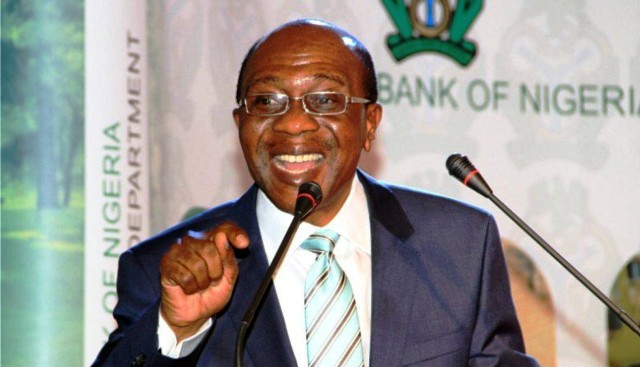
Earlier, a resource person from the Central Bank of Nigeria (CBN), Mr. Oruveigha Stanley, who lectured on the topic, “Intervention and the abounding opportunities for wealth creation and poverty reduction through Co-operative Societies”, said CBN has mandated for intervention and development of businesses.
Stanley noted that the apex bank has over 50 financial intervention programmes that would benefit the society, adding that three out of the 50 have become very relevant.
“These are, Anchor Borrower Programme (ABP), Agricultural Credit Guarantee Scheme and Fertilizer initiative”, he added, stating that co-operatives can come together and take loans for their members.
He expressed disatisfaction that Rivers farmers have not shown interest in Anchor Borrowers and Fertiliser Initiative Fund, which can only be given to agriculturists that have cleared farm lands.
He called on farmers in the state to come up and partner with CBN in agricultural development, adding that communities can approach the bank with cleared lands for cassava, maize, rice and other crops.
He reiterated that farmers and other co-operatives can access millions of naira to grow and develop their businesses to achieve food security for economic growth.
By: Lilian Peters

Business
FG Approves ?758bn Bonds To Clear Pension Backlogs, Says PenCom
Business
Banks Must Back Innovation, Not Just Big Corporates — Edun
Edun made the call while speaking at the 2025 Fellowship Investiture of the Chartered Institute of Bankers of Nigeria (CIBN) in Lagos, where he reaffirmed the federal government’s commitment to sustaining ongoing reforms and expanding access to finance as key drivers of economic growth beyond four per cent.
“We all know that monetary policy under Cardoso has stabilised the financial system in a most commendable way. Of course, it is a team effort, and those eye-watering interest rates have to be paid by the fiscal side. But the fight against inflation is one we all have to participate in,” he said.
The minister stressed the need for banks to broaden credit access and finance innovation-driven enterprises that can create jobs for young Nigerians.
“The finance and banking industry has more work to do because we must finance their ideas, deepen the capital and credit markets down to SMEs. They should not have to go to Silicon Valley,” he said.
The minister who described the private sector as the engine of growth, said the government’s reform agenda aims to create an enabling environment where businesses can thrive, access funding, and contribute meaningfully to job creation.
Business
FG Seeks Fresh $1b World Bank loan To Boost Jobs, Investment
The facility, known as the Nigeria Actions for Investment and Jobs Acceleration (P512892), is a Development Policy Financing (DPF) operation scheduled for World Bank Board consideration on December 16, 2025.
According to the Bank’s concept note , the financing would comprise $500m in International Development Association (IDA) credit and $500m in International Bank for Reconstruction and Development (IBRD) loan.
If approved, it would be the second-largest single loan Nigeria has received from the World Bank under President Bola Tinubu’s administration, following the $1.5 billion facility granted in June 2024 under the Reforms for Economic Stabilisation to Enable Transformation (RESET) initiative.
The World Bank said the new programme aims to support Nigeria’s shift from short-term macroeconomic stabilisation to sustainable, private sector–led growth.
“The proposed Development Policy Financing (DPF) supports Nigeria’s pivot from stabilization to inclusive growth and job creation. Structured as a two-tranche standalone operation of US$1.0 billion (US$500 million IDA credit and US$500 million IBRD loan), it seeks to catalyse private sector–led investment by expanding access to credit, deepening capital markets and digital services, easing inflationary pressures, and promoting export diversification,” the document read.
The document further stated that Nigeria’s private sector credit-to-GDP ratio stood at only 21.3 per cent in 2024, significantly below that of emerging-market peers, while capital markets remain shallow, with sovereign securities dominating the bond market.
To address these weaknesses, the DPF will support the implementation of the Investment and Securities Act 2025, operationalisation of credit-enhancement facilities, and introduction of a comprehensive Central Bank of Nigeria rulebook to strengthen risk-based regulation and consumer protection.
The operation also includes measures to deepen digital inclusion through the passage of the National Digital Economy and E-Governance Bill 2025, which will establish a legal framework for electronic transactions, authentication services, and digital records.
Beyond the financial and digital sectors, the programme targets reforms to lower production and living costs by tackling Nigeria’s restrictive trade regime. High tariffs and import bans have long driven up consumer prices and constrained competitiveness, particularly for manufacturers and farmers.
Under the proposed reforms, Nigeria would adopt AfCFTA tariff concessions, rationalise import restrictions, and simplify agricultural seed certification to increase the supply of high-quality varieties for maize, rice, and soybeans. The World Bank projects that these measures will help reduce food inflation, attract private investment, and enhance export potential.
The operation is part of a broader World Bank FY26 package that includes three complementary projects—Fostering Inclusive Finance for MSMEs (FINCLUDE), Building Resilient Digital Infrastructure for Growth (BRIDGE), and Nigeria Sustainable Agricultural Value-Chains for Growth (AGROW)—all focused on expanding access to finance, strengthening institutions, and mobilising private capital.