
Opinion
Another Saro-Wiwa Trial?

In the early 1960s, around Ibikunle Street, Yaba-Lagos, there was a unique man, known by area boys as Baba Orinoco; he was a master of legerdemain. After every magical performance, to amuse youths, he always retired into the Army Engineers’ barracks (NAEME), close to Ibikunle Street. What is vital about Baba Orinoco is that he had a personal philosophy which he would share with those who would hear the story of his life. He would say that wise magicians rarely use same trick too often, because, the public can become wiser, soon.
The experiences of the Ogoni community in Rivers State under military rule, with special reference to the Movement for the Survival of Ogoni People (MOSOP), left lasting trauma and bruises on many people, not only the Ogonis. With the indictment, prosecution and hanging of late Ken Saro-Wiwa with some of his kinsmen for agitating, without arms, for a clean Ogoni environment, Nigeria had a unique experience of what power can do. Agitation for self-preservation through protest against environmental degradation, via oil and gas activities in Ogoniland by an oil company, turned MOSOP into an anti-government agency.
A Special Adviser on Legal Affairs to the then Head of State, ( late General Sani Abacha), Professor Auwal Yadudu, declared Saro-Wiwa as being “responsible for the murders” in Ogoniland. Of particular significance in the Ogoni experience was the allegation by late Saro-wiwa that “the communal clashes perpetrated by Nigerian troops were blamed on the Ogoni, so the murders are now being placed on innocent Ogoni men: Lt. Col. Paul Okuntimo’s ‘Wasting operations’ was said to be the means of destabilising Ogoniland as a prelude to bringing MOSOP and its leaders on trial.
To quite a large number of discerning Nigerians, what played out in Ogoniland prior to 1995, provided vital insight into the working of statecraft and what power can do. Apart from Okuntimo and his “Wasting operations” in Ogoniland, the Presidency and the Nigerian Judiciary also showed peculiar styles of statecraft and what power can do. At the heart of all the intrigues was the protection of economic interests which MOSOP had the audacity to challenge. Lives can be wasted in order to retain and stress the awesomeness of power!
A similar scenario comparable to the Ogoni and Saro-Wiwa experiences in 1995, under military rule, appears to be taking shape currently, with regards to Nnamdi Kanu, IPOB and Sunday Igboho. MOSOP, under the leadership of Saro-Wiwa, was an agitation for social justice, with regards to the environmental dangers arising from the oil and gas industry in Ogoniland. IPOB under Nnamdi Kanu is also an agitation for social justice, with emphasis for a referendum in view of perceived marginalisation. In the case of Igboho and the Yoruba Nation, there is a similar non-violent agitation against destruction of farmlands by cattle. Are rights of protests abridged?
The arrests of the two agitators, Kanu and Igboho, followed similar patterns, comparable to the arrest of Saro-Wiwa in 1994, all characterised by some controversies. Now, more controversies are rearing up, whereby possible charges of murders and aiding of terrorism are being contemplated against Kanu and Igboho. Is it not possible and advisable that a better step in these issues would be to look into and address the root causes of agitations in the country, rather than adopt the strategy of arms-twisting?
In the past 10 years, there have been more acts of violence and terrorism in the northern part of Nigeria which have brought about rising state of insecurity, than the situations have been in southern part of the country. There was also a suggestion that a woman in labour who was murdered by a lynching mob in Kano, December 1966, who in her last agony placed a curse on that part of the country, demanded some attention. Those who know and see better, would warn that no deliberate wrong-doing goes without some atonement, which includes genuine penitence, and a vow to live better.
But in a situation where more acts of violence are being committed, without recourse to penitence, then a state of instability would continue to increase. Let us not shy away from the fact that in the recent past, there were spirited clamours in Northern Nigeria for an implementation of Shariah Law. Even Shariah police had to be established in some states. Possible implications of that move included a suspicion across the country that some goal was meant to be achieved through some clever strategies. At the end of the day, someone opened up to tell Nigerians about Islamisation and Fulanisation agenda. That vital allegation has not been addressed hitherto.
Rather, what we observe have ranged from an unstoppable, disturbing activities of Boko Haram brigands, to appointments in strategic positions which give some sections of the country cause to talk about marginalisation. The impression which anybody can have is that something is fishy in the way that Nigeria is being managed. A situation where the masses have the impression that they are not being told the truth on vital national issues, what would follow includes careless statements or speculations which can undermine public confidence or stability.
Those who knew Saro-Wiwa closely would testify that he was not a man of violence or meanness, but stood for justice. Perhaps, it may be true that “wiving and hanging goes by destiny,” but numerous friends of Saro-Wiwa felt quite sad that he died a dusty death. Whether a “state pardon” is granted him after 26 years of such dusty death, or not, the truth is that Saro-Wiwa did not deserve the kind of treatment and death that were meted out on him. What played out, with him as a scapegoat, was the show of raw power!
Now, a similar scenario must not be allowed to repeat itself, with charges of murders, terrorism and treasonable felony being trumped upon agitators for social justice. It is not social justice for any section of the country to use religion or any other opportunity and power, to foist some ideology or lifestyle on the entire country, without recourse to due process. Let us not leave the obvious causes of social unrest and agitation, and then adopt a strategy of intimidation, blusters and subterfuge, to achieve the peace of the grave yard. Awo’s trial for treason comes to mind too.
When my late friend and colleague, Professor Tam David-West, was in prison detention for “causing the economic adversity of Nigeria” by accepting a cup of tea and a gold wristwatch from foreigners, he made a statement that we are “not serious” in Nigeria. From David-West, Saro-Wiwa, Deziani Allison-Madueke, etc, to Kanu and Igboho, it is becoming glaring that Federal Character Principle is not being observed in the task of cleansing Nigeria. Someone described Nigerians as jokers. When we get serious, things would change for the better. Nigerians are much wiser now, such that Baba Orinoco’s tricks would not work any magic.
By: Bright Amirize
Dr Amirize is a retired lecturer in the Rivers State University, Port Harcourt.



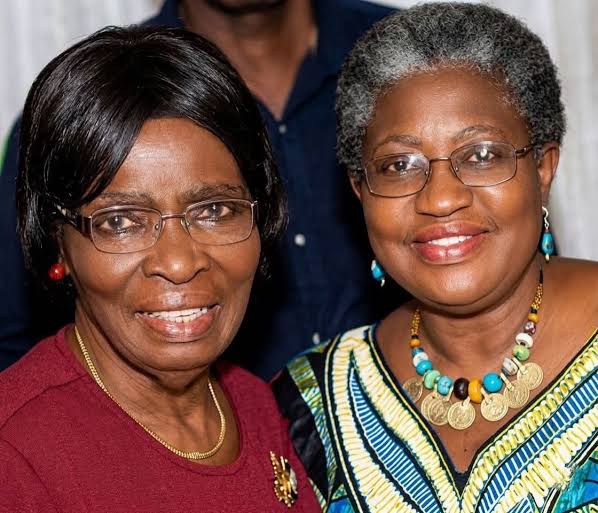
Quote “Professor Kamene Okonjo
Some women leave behind more t
Yet, to remember Professor Kam
Professor Okonjo was the belov
one of the most dramatic chapt
On December 14, 2012, the then
She leaves behind children, gr
Professor Kamene Okonjo deserv
By: Sylvia ThankGod-Amadi

Quote: An African who invokes
This is the concluding part
… Given the fact that I was
At the end of the visit by the
Back to my apartment, at abo
Under normal circumstances, yo
That all she asks is that Chie
For some reason that I do not
I believe that everyone in hu
Our ancestors have not gone fa
By: Jason Osai
The parties agreed to reconvene after one month to assess implementation. Ultimately, the value of these resolutions will be measured not by announcements but by whether eligible workers receive the money. Transport costs consume a substantial share of many civil servants’ earnings before they can meet household needs. Support for commuting is therefore not a luxury or political favour; it is temporary assistance to help workers remain at their jobs without sinking further into hardship. For lower-paid employees, transport costs can turn modest salaries into a daily exercise in difficult choices and sacrifice.
The agreement also urges State and Local Governments to participate and unions to press for implementation. The federal agreement does not automatically guarantee that every State and Local Government employee will receive the support. State authorities must clarify how it will apply to their workforce, make the necessary arrangements and publish a payment timetable. Rivers State must approach the arrangement with urgency and transparency. The Government should State whether it will implement the intervention and when payments will begin. Any administrative or financial question should be addressed promptly with organised labour, not allowed to become excuses for delay.
The concern is sharpened by the earlier N35,000 monthly wage award introduced by the Federal Government in 2023 after petrol subsidy removal. It was intended as temporary relief pending a new national minimum wage. While several States negotiated and paid wage awards or related sums, implementation nationwide was uneven. Reports in 2024 indicated that many States had failed to pay the federal award, while others provided different amounts. In Rivers, labour and media reports raised concerns about implementation of the N35,000 award for State workers, amid separate announcements and arrangements concerning Local Government employees.
The wage award was meant to ease the immediate effects of subsidy removal, yet workers faced uncertainty over whether the promised relief would reach them. In February 2024, the Rivers State Government announced approval of the N35,000 award for local government workers, but subsequent reports showed that implementation across worker categories remained a concern. The lesson is clear: approval and implementation are not the same. A declaration at a meeting offers little comfort to a worker whose account does not reflect the promised payment. For workers who travel to their offices daily, the implications of delayed support are significant. Transportation expenses compete with food, rent, school fees, healthcare and other essential household needs.
As fares rise, employees may be forced to reduce spending on necessities or borrow to sustain their families. A timely transport intervention would therefore provide practical relief and demonstrate that government understands the economic pressures confronting its workforce. Its temporary nature makes prompt implementation even more important. It is fair to acknowledge that this transport intervention is a new agreement and that its administrative details may require clarification. Rivers State should not be condemned in advance for a failure that has not occurred. Nevertheless, the earlier experience gives workers legitimate grounds to seek assurances before the November commencement date. The State should avoid allowing uncertainty to persist until workers begin asking why the promised assistance has not arrived.
The NLC and unions in Rivers State should engage the State Government immediately and seek a written commitment, an implementation plan and a process for reporting missed payments. If clarification from the Federal Government is needed, the State should seek it without abandoning the goal of providing relief. Labour leaders must also keep members informed about progress and insist that any agreed arrangements are applied fairly and transparently. The Rivers State Government should treat this intervention as an opportunity to rebuild confidence. Timely support would show that workers’ welfare is more than a talking point and that the State recognises the economic realities confronting its employees.
Silence, delay or selective implementation, by contrast, would revive frustration over earlier relief measures and weaken trust between government and labour. Every month lost to administrative delay leaves workers facing the same transport burden without the intended assistance. The State should consult labour, publish arrangements and pay eligible workers on time. Rivers workers should not have to wonder whether federal relief will reach them. The Federal Government has announced the support; now the State must make its position clear. We hope the N70,000 monthly transport intervention will not follow the troubling path of the earlier wage award. Rivers State should learn from that experience and ensure that this time, relief is not merely promised but delivered.
Sylvia ThankGod-Amadi
-
Rivers3 days ago
Don Seeks Repositioning Of Tech Education For Dev
-

 Education3 days ago
PAMO MEDICAL UNIVERSITY -Nullifies Arrest warrant on VC
-
Niger Delta3 days ago
PANDEF Seeks 50% Oil Derivation Allocation Increase
-

 Education3 days ago
IAUE MOVES TO END GHOST WORKERS SYNDROME AS 400 NEW NON-TEACHING STAFF UNDERGO MANDATORY ETHICS TRAINING
-

 News3 days ago
Fresh Ebola Scare As NCDC Records Two Cases
-
News3 days ago
Customs Partners EFCC, NDLEA, Others To Tackle Money Laundering, Terrorism Financing
-

 Politics3 days ago
2027: RIVERS GUBER CANDIDATES SIGN CHARTER TO PRIORITIZE CITIZENS’ DEMANDS
-
 Politics3 days ago
2027: South-East Govs Insist On Tinubu’s Re-election