
Opinion
Texas Of Icy Trauma

I had earlier stated in this column that even with all the hoopla about the United States of America being a very lovely dwelling place on Earth, her geography still comprises a tale of some deadly weather vagaries.
Depending on which part of the vast subcontinent one looks at, disaster can come from a severe snowstorm, tornado, hurricane, earthquake or wildfire. While snow and wildfire can be associated with particular seasons of the year, the rest are very likely to occur at any moment and on any day. The good thing, though, is that nearly all can be predicted by the relevant agencies of government with alerts posted in advance and emergency preparations made. Of course, things work pretty well over there – quite unlike they do here.
However, climate change seems to be testing the skills of geographers and their weather instruments. In the US, the government had since signed up to the Paris protocol on climate but that was until the outgone administration of President Donald Trump elected to pull the nation out of the deal. Luckily, his successor, President Joe Biden, is pushing to take God’s Own Country back to the comity of nations on global warming.
No doubt, Trump’s action must have angered the likes of Sen. Al Gore, a former vice president and the Democratic Party’s presidential candidate in 2000, who has garnered global acclaim on account of his effort to promote a sustainable green culture in the world.
It is already obvious that the erstwhile Republican president never reckoned with the fact that states in southern US which had hitherto served as hibernation grounds for people from the snowy northern and central regions are now beginning to experience blizzards of their own. Texas, Louisiana, Mississippi, Tennessee, North Carolina, South Carolina, Georgia and Florida are among states in this region.
Until recently, snowfall in the region had reportedly been mostly mild and incident-free. Whereas the winter season became evident in the north from late November, its effect was rarely felt in these southern states until January. So also did it recede fast, sometimes beginning from late February. But last winter was of an entirely different species. Not only were there reports of strong winds and snowstorms, the ice also manifested an unprecedented staying strength. The case of Texas was made particularly more pathetic because of its energy systems collapse which left many families without electricity, gas or even coal to heat their homes.
Texas is said to operate about 15,000 wind turbines aimed at providing electricity while also promoting green energy; but at the onset of the cold snap, ice on the rotor blades had reduced the speed of more than half of them; thereby hampering their collective power generation capability. More than four million Texans were said to be without electricity for much of the period. And the state obtains a quarter of its electricity from these turbines.
Gas pipes and water supply lines were also reported to have been frozen by the extreme weather condition. Those who still had running taps were advised to boil their water before use as water treatment plants lacked electricity to function. Some of the unlucky ones simply collected snow from outside their homes to melt for water. Believe me, it was said to be that bad in America’s Lone Star State. Close friends and relatives living in Texas and Georgia called to confirm this to me.
The deadly storm which was said to have begun on February 13, had endured for five days. And while it lasted, temperatures plummeted to as low as zero degree Fahrenheit; resulting in the closure of schools and some hospitals. A number of popular roads were also closed due to the unprecedented build-up of snow. People, especially the more vulnerable children and the elderly, were mostly wrapped in layers of heavy clothing and restrained indoors for much of the day. Food became scarce as grocery stores quickly ran out of stock with anxiety over the arrival of any fresh supplies. Even the delivery of COVID-19 vaccines was hampered.
Residents who could not stand the frightening scenario and had the means reportedly left for nearby Central American countries; including Texas Republican senator and former presidential aspirant, Ted Cruz, who was berated by the American press for going on vacation at a sunny beach resort in Cancun, Mexico when his state’s voters were battling with freezing conditions made worse by food and utility shortages. As at July, the total tally of casualties across Texas was put at 210. I want to believe that Texans have now shaken off their trauma and are fully braced for the start of the next winter season this November.
The big lesson here is that while nations are making attempts to embrace renewable energy, they should not be in a haste to jettison fossil fuels. It would have been worse if not that Texas had a strategic reserve of refined petroleum products to serve as a stop-gap measure at the time the wind turbines packed up. It is even said that officials in New York, Massachusetts, Connecticut and some other Northeast US states have suddenly become sceptical of their ongoing development of wind turbines following the Texas experience.
For the people of Mexico, the events in Texas can only suggest one thing – severe winter is just a matter of years, if not months. Climate change is real. But rather than being checked by the increasing global heat, snowstorms are fast reaching for the tropics. For Nigeria, who said we’re unlikely to witness icy weather sooner than later?
Howbeit, some experts have opined that, considering its huge investment in wind turbines, Texas officials should have equipped such facilities with heaters and anti-freeze fluids as is the case in some parts of Alaska and Canada which experience equally harsh but longer winter seasons.
Much of Texas already lies in America’s Tornado Alley. Its major southern towns of Houston, Corpus Christi and Beaumont are often battered by tropical winds from the Gulf of Mexico. The oil-rich state is also known to be earthquake prone. And now it has joined the infamous club of deadly snowstorm states. Haba, Texas!
By: Ibelema Jumbo




Quote “Professor Kamene Okonjo
Some women leave behind more t
Yet, to remember Professor Kam
Professor Okonjo was the belov
one of the most dramatic chapt
On December 14, 2012, the then
She leaves behind children, gr
Professor Kamene Okonjo deserv
By: Sylvia ThankGod-Amadi

Quote: An African who invokes
This is the concluding part
… Given the fact that I was
At the end of the visit by the
Back to my apartment, at abo
Under normal circumstances, yo
That all she asks is that Chie
For some reason that I do not
I believe that everyone in hu
Our ancestors have not gone fa
By: Jason Osai
The parties agreed to reconvene after one month to assess implementation. Ultimately, the value of these resolutions will be measured not by announcements but by whether eligible workers receive the money. Transport costs consume a substantial share of many civil servants’ earnings before they can meet household needs. Support for commuting is therefore not a luxury or political favour; it is temporary assistance to help workers remain at their jobs without sinking further into hardship. For lower-paid employees, transport costs can turn modest salaries into a daily exercise in difficult choices and sacrifice.
The agreement also urges State and Local Governments to participate and unions to press for implementation. The federal agreement does not automatically guarantee that every State and Local Government employee will receive the support. State authorities must clarify how it will apply to their workforce, make the necessary arrangements and publish a payment timetable. Rivers State must approach the arrangement with urgency and transparency. The Government should State whether it will implement the intervention and when payments will begin. Any administrative or financial question should be addressed promptly with organised labour, not allowed to become excuses for delay.
The concern is sharpened by the earlier N35,000 monthly wage award introduced by the Federal Government in 2023 after petrol subsidy removal. It was intended as temporary relief pending a new national minimum wage. While several States negotiated and paid wage awards or related sums, implementation nationwide was uneven. Reports in 2024 indicated that many States had failed to pay the federal award, while others provided different amounts. In Rivers, labour and media reports raised concerns about implementation of the N35,000 award for State workers, amid separate announcements and arrangements concerning Local Government employees.
The wage award was meant to ease the immediate effects of subsidy removal, yet workers faced uncertainty over whether the promised relief would reach them. In February 2024, the Rivers State Government announced approval of the N35,000 award for local government workers, but subsequent reports showed that implementation across worker categories remained a concern. The lesson is clear: approval and implementation are not the same. A declaration at a meeting offers little comfort to a worker whose account does not reflect the promised payment. For workers who travel to their offices daily, the implications of delayed support are significant. Transportation expenses compete with food, rent, school fees, healthcare and other essential household needs.
As fares rise, employees may be forced to reduce spending on necessities or borrow to sustain their families. A timely transport intervention would therefore provide practical relief and demonstrate that government understands the economic pressures confronting its workforce. Its temporary nature makes prompt implementation even more important. It is fair to acknowledge that this transport intervention is a new agreement and that its administrative details may require clarification. Rivers State should not be condemned in advance for a failure that has not occurred. Nevertheless, the earlier experience gives workers legitimate grounds to seek assurances before the November commencement date. The State should avoid allowing uncertainty to persist until workers begin asking why the promised assistance has not arrived.
The NLC and unions in Rivers State should engage the State Government immediately and seek a written commitment, an implementation plan and a process for reporting missed payments. If clarification from the Federal Government is needed, the State should seek it without abandoning the goal of providing relief. Labour leaders must also keep members informed about progress and insist that any agreed arrangements are applied fairly and transparently. The Rivers State Government should treat this intervention as an opportunity to rebuild confidence. Timely support would show that workers’ welfare is more than a talking point and that the State recognises the economic realities confronting its employees.
Silence, delay or selective implementation, by contrast, would revive frustration over earlier relief measures and weaken trust between government and labour. Every month lost to administrative delay leaves workers facing the same transport burden without the intended assistance. The State should consult labour, publish arrangements and pay eligible workers on time. Rivers workers should not have to wonder whether federal relief will reach them. The Federal Government has announced the support; now the State must make its position clear. We hope the N70,000 monthly transport intervention will not follow the troubling path of the earlier wage award. Rivers State should learn from that experience and ensure that this time, relief is not merely promised but delivered.
Sylvia ThankGod-Amadi
-
Opinion3 days ago
Ancestorial Worship: My Take (1)
-

 News3 days ago
FG Must Address Nigerians’ Concerns On Reforms -Shettima …Warns Against Misuse of AI, Social Media
-

 Featured3 days ago
Tinubu Jets To S’Arabia For Lesser Hajj …Unveils Free Healthcare For Pensioners
-
News4 hours ago
Customs Partners EFCC, NDLEA, Others To Tackle Money Laundering, Terrorism Financing
-
Niger Delta3 days ago
Police Rescue Woman, 24, From Online Dating Kidnappers … Arrest Five Suspects
-
 Featured3 days ago
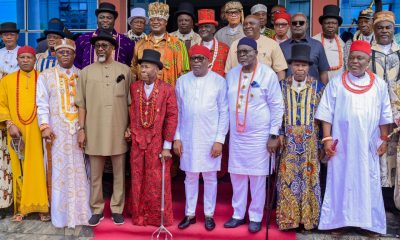
2027: Be Politically Neutral, Fubara Tasks Traditional Rulers
-
News3 days ago
FG Approves King Amachree Airport In Rivers, Sets Conditions For Construction
-
News3 days ago
Lawmaker Sets Sights On Assembly Return …As Mammoth Crowd Grace Flag Handover Rally