
Business
FG Suffers N15trn Revenue Shortfalls In Six Years

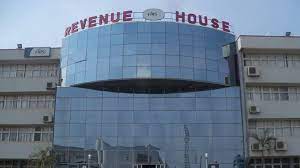
The Federal Government recorded a revenue shortfall of N15 trillion from 2015 to 2020, official data obtained by The Tide have shown.
The revenue shortfall led to a funding gap of N3.75 trillion in the implementation of capital projects of Ministries, Departments and Agencies (MDAs), according to an analysis of the budgetary provisions and budget implementation reports from the Budget Office of the Federation.
According to the documents, the total revenue projection for the six-year period was N31.9trn, while about N16.9trn was generated, resulting in a shortfall of N15 trillion.
The total revenue allocated for capital projects in the period under review was N11.9 trillion, while the actual amount released to the MDAs was estimated at N8.2 trillion.
The data showed that in the 2015 fiscal year, the Federal Government approved the sum of N557 billion for capital projects, out of which N387bn was actually released, resulting in a funding gap of N169.6 billion.
From the N1.58 trillion budgeted for capital projects in 2016, the sum of N1.21trillion was released, creating a deficit of N368 billion.
For 2017, N1.56trn was released for the execution of capital projects out of the budgeted amount of N2.17trillion. This resulted in a funding shortfall of N611.35 billion.
In 2018, the government approved N2.8trn for capital projects but released N1.8 trillion for implementation. This caused a funding deficit of N1.01trillion.
Further analysis of the data revealed that in 2019, a funding gap of N863.9 billion for the execution of capital projects was recorded.
In the 2019 annual budget, the total amount of N2.03 trillion was allocated for capital expenditure, out of which N1.16 trillion was released.
An analysis of the revised budget for the 2020 fiscal year showed that N2.6 trillion was projected to be spent on capital projects, but N1.94 trillion was released. This resulted in a funding gap of N733 billion.
Economists were of the opinion that the annual revenue shortfalls could be largely attributed to the disproportionate reliance of the Nigerian economy on crude oil.
They advise the Federal Government to focus on expanding its revenue sources in order to generate adequate revenue to finance capital projects for the benefit of the country’s economy.
They explained that the revenue projections contained in the annual budgets were largely based on crude oil prices.


-

 Niger Delta3 days ago
Warri Airport Manager Disputes Air Peace Bird Strike Claim
-

 News3 days ago
Nigeria Won’t Surrender Any Territory To Criminals -Tinubu
-

 News3 days ago
FG Begins Trial Of Over 600 Terrorism Suspects
-

 Politics3 days ago
Parties’ Deregistration: How Justice Lifu Overruled Appeal Court Justices
-

 Rivers3 days ago
79th IAUE Inaugural Lecture: Prof Anero Advoctes Tuition-Free Education For Children
-

 Politics3 days ago
ADC: Okonkwo Rejects Amaechi As Presidential Running Mate, Withdraws Support
-

 Politics3 days ago
2027: Tinubu’s Projects Give APC Edge In South East – Yilwatda
-
News3 days ago
Forum Expresses Confidence In APC Candidates’ Performance In Rivers